
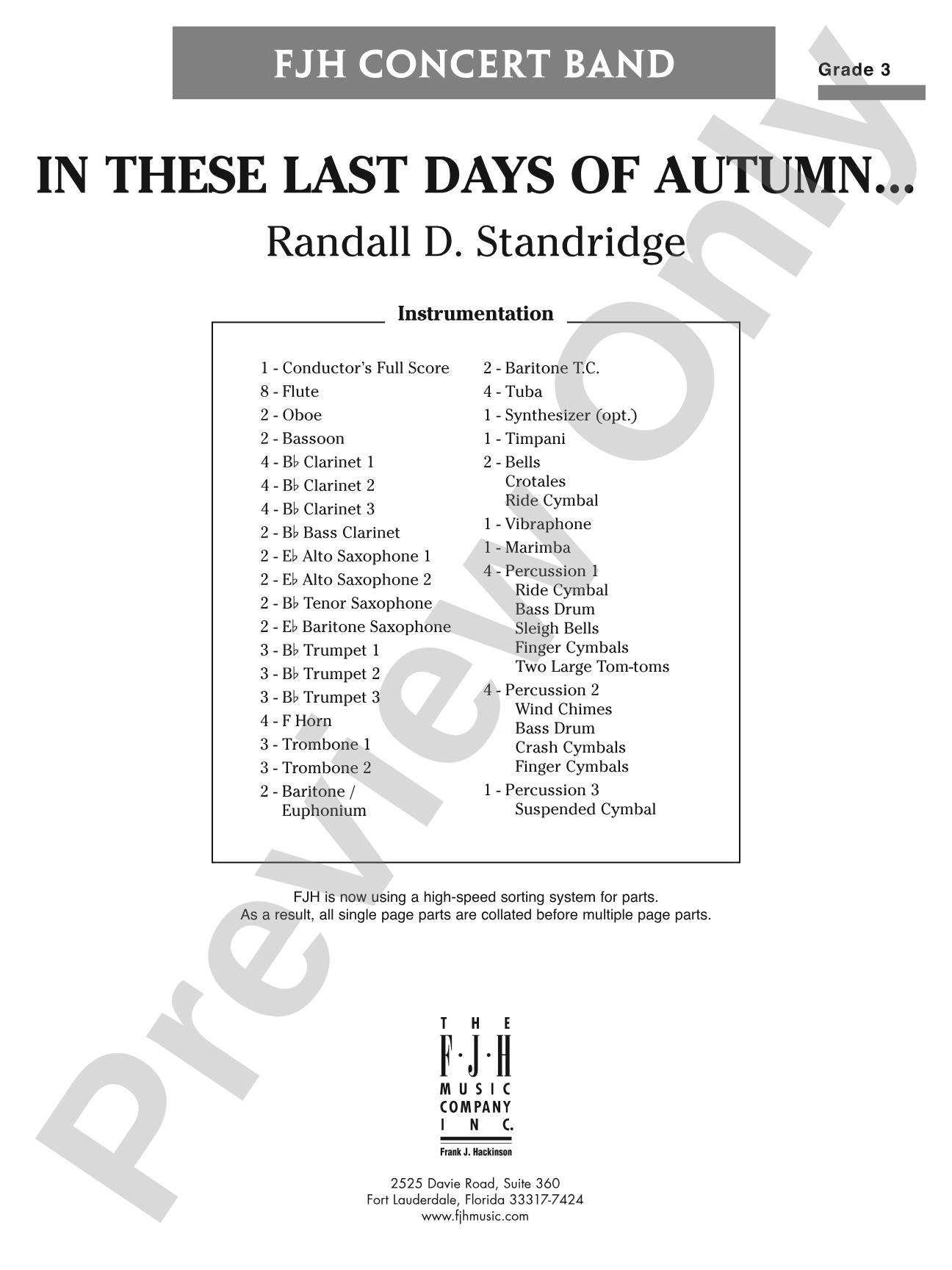
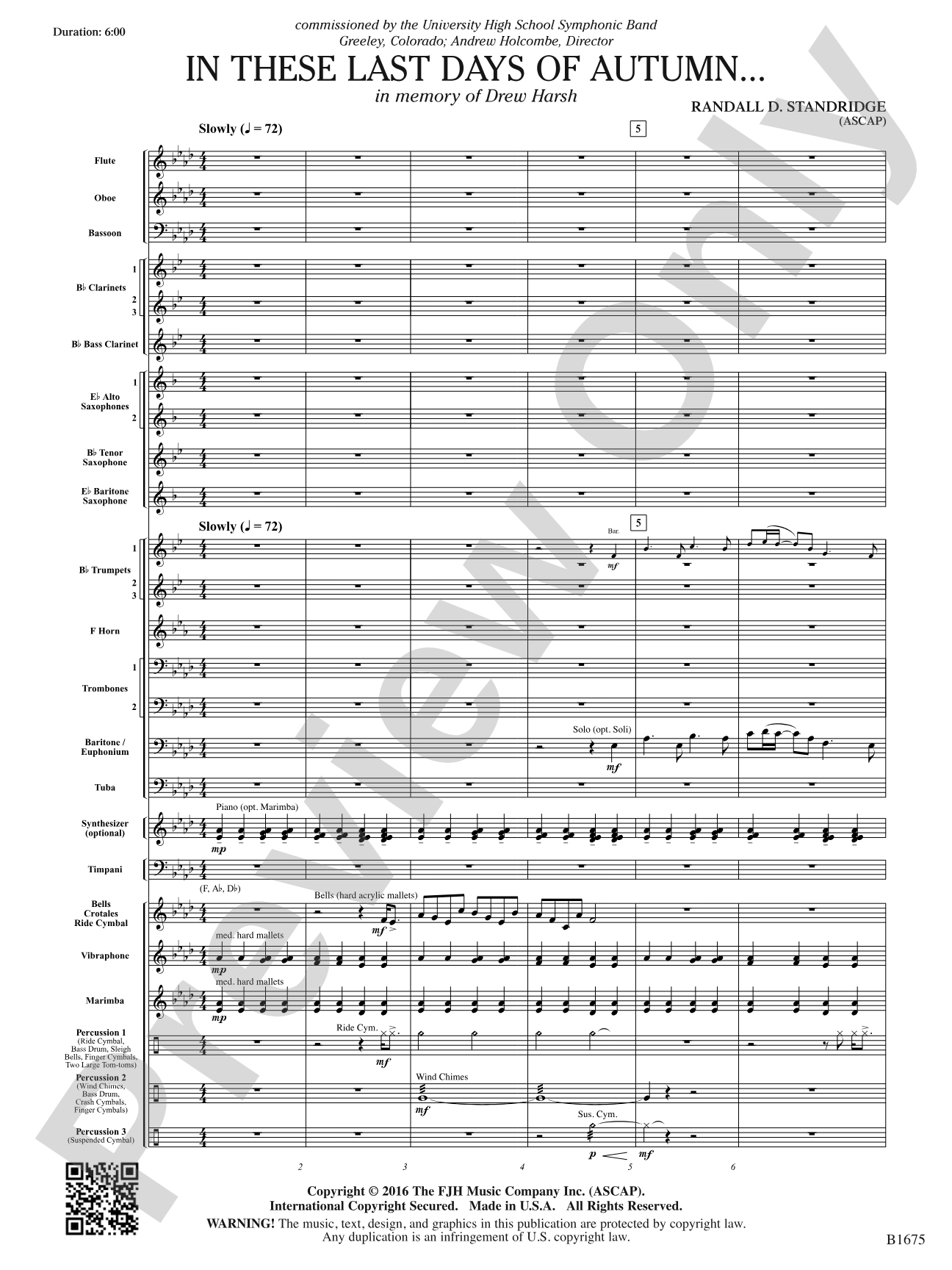
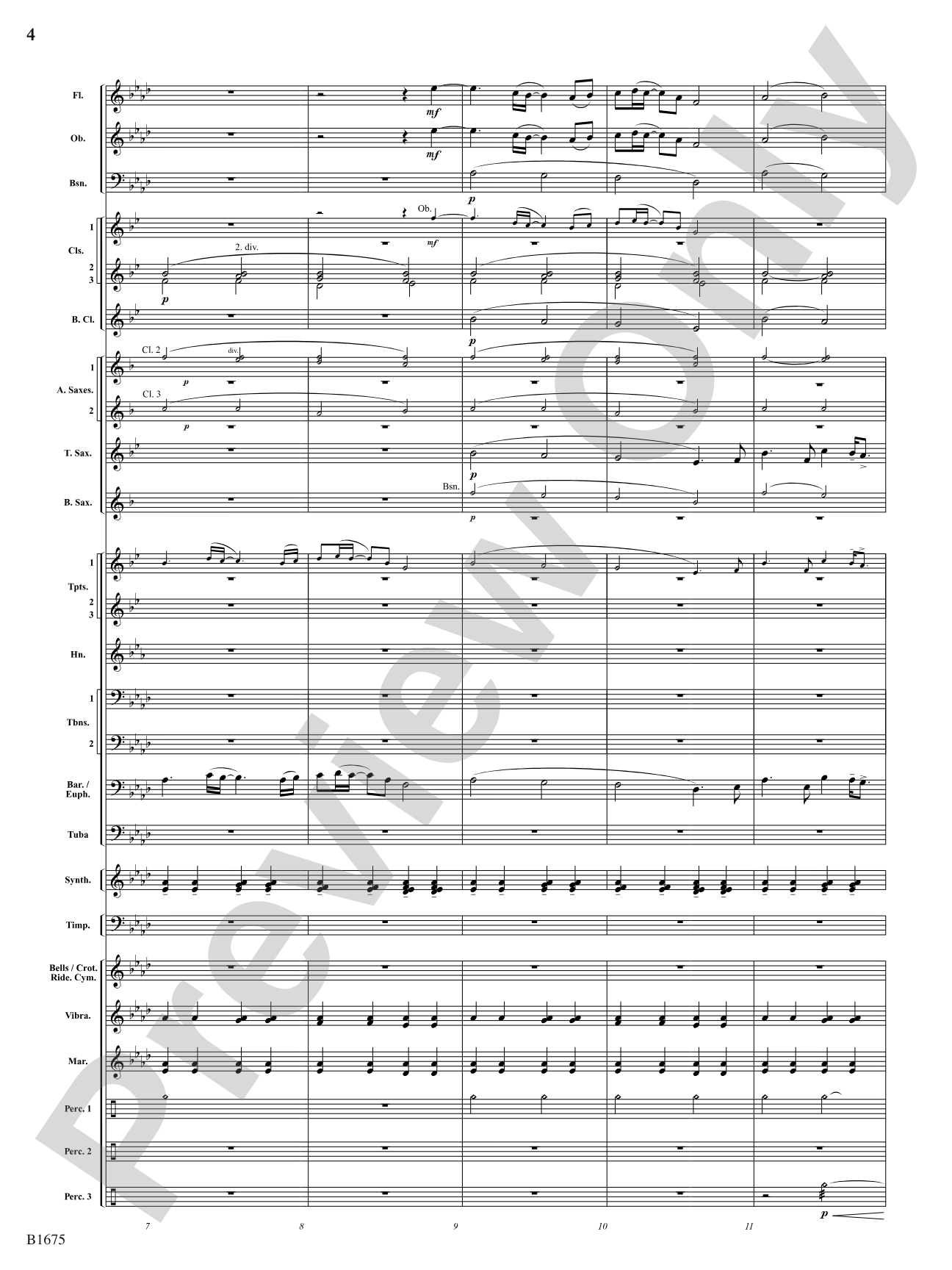
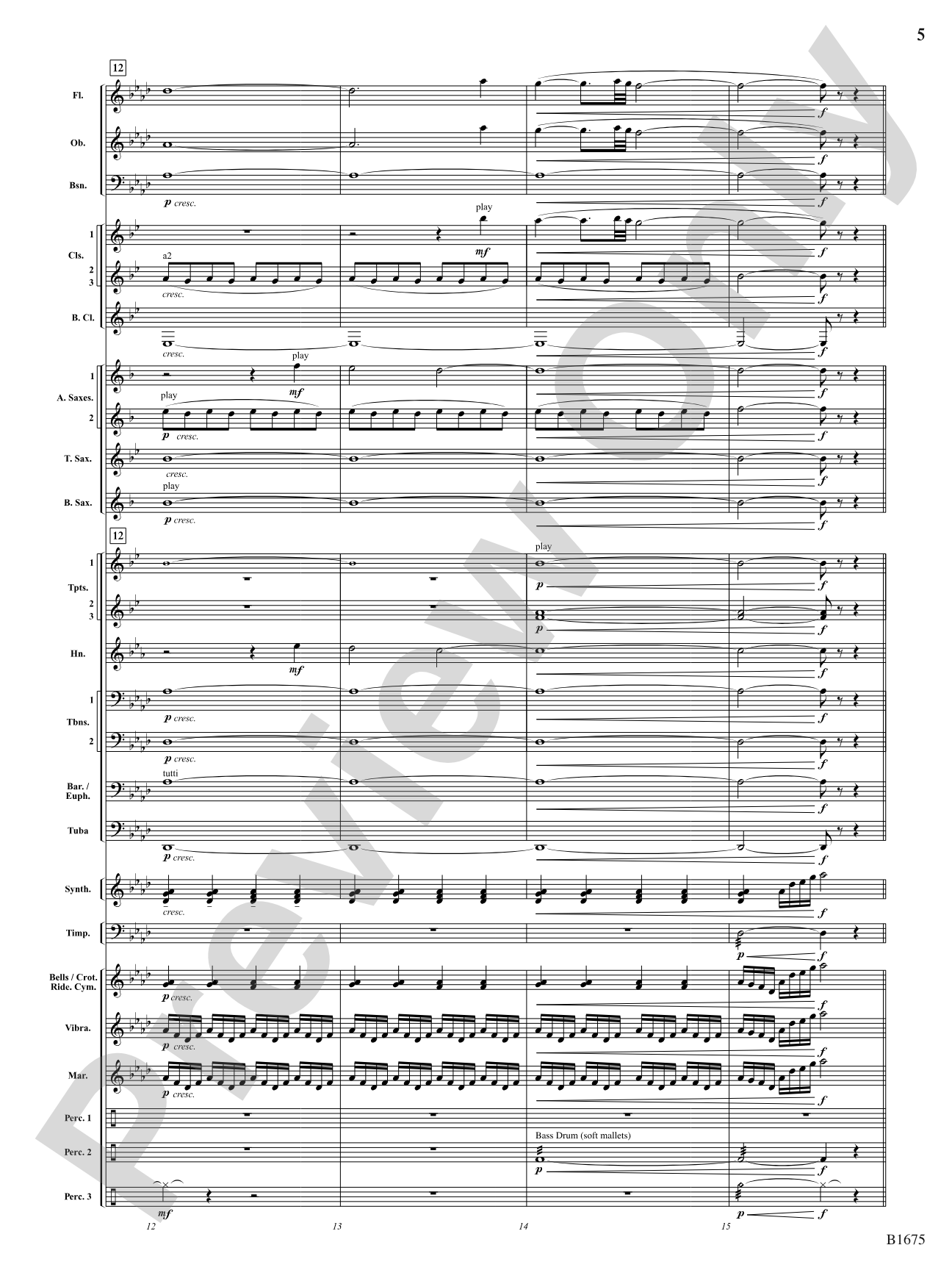
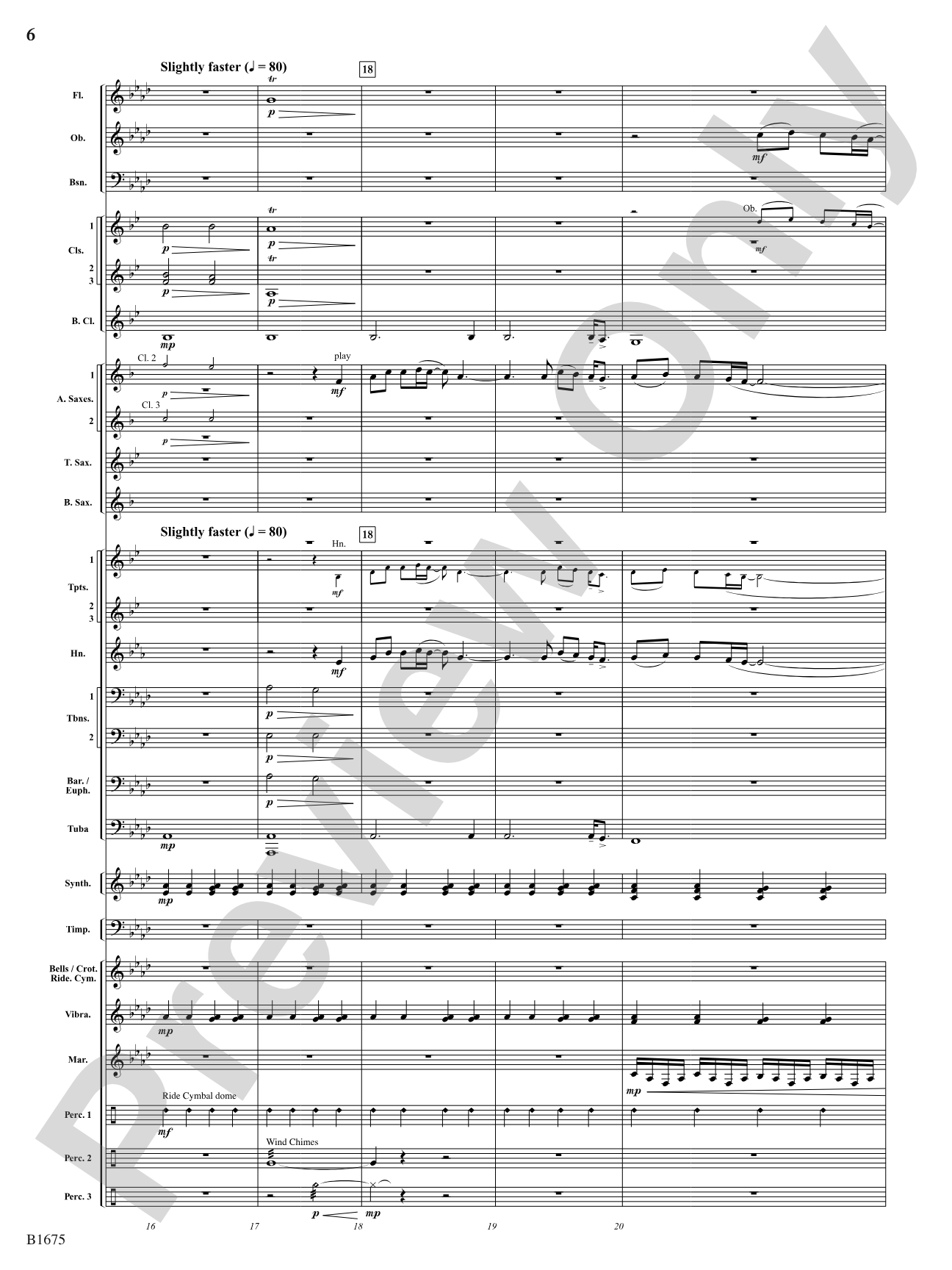
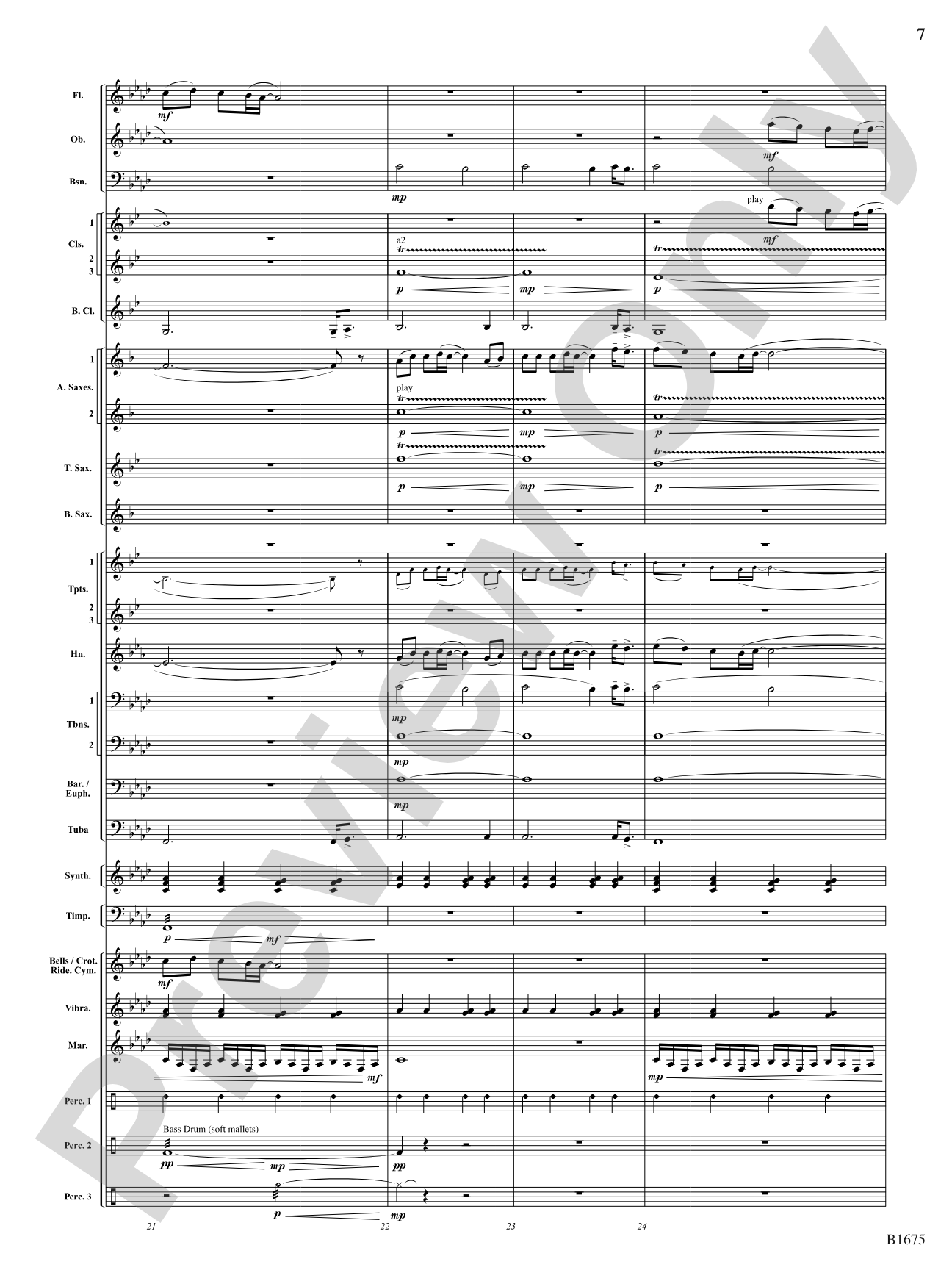
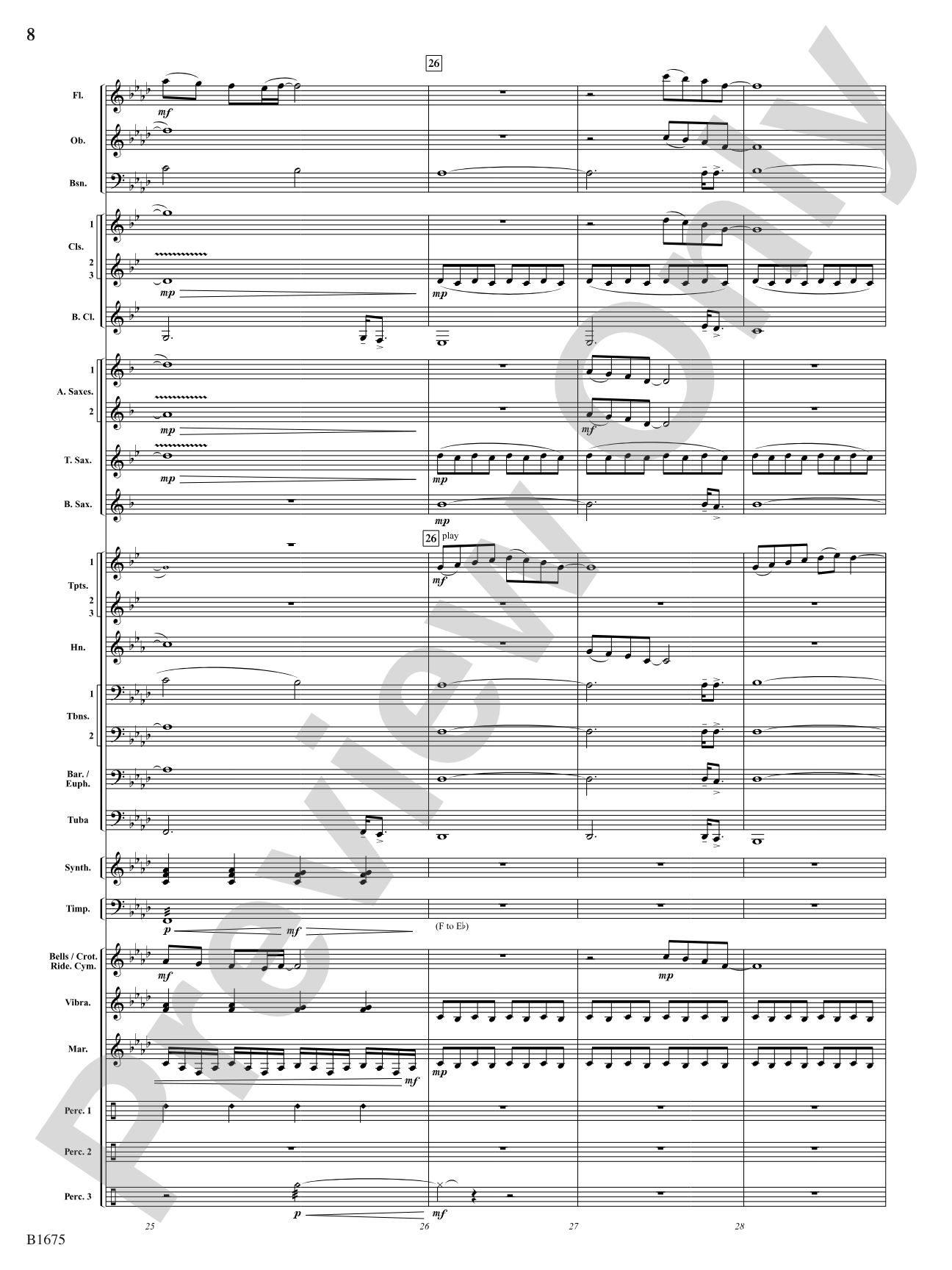
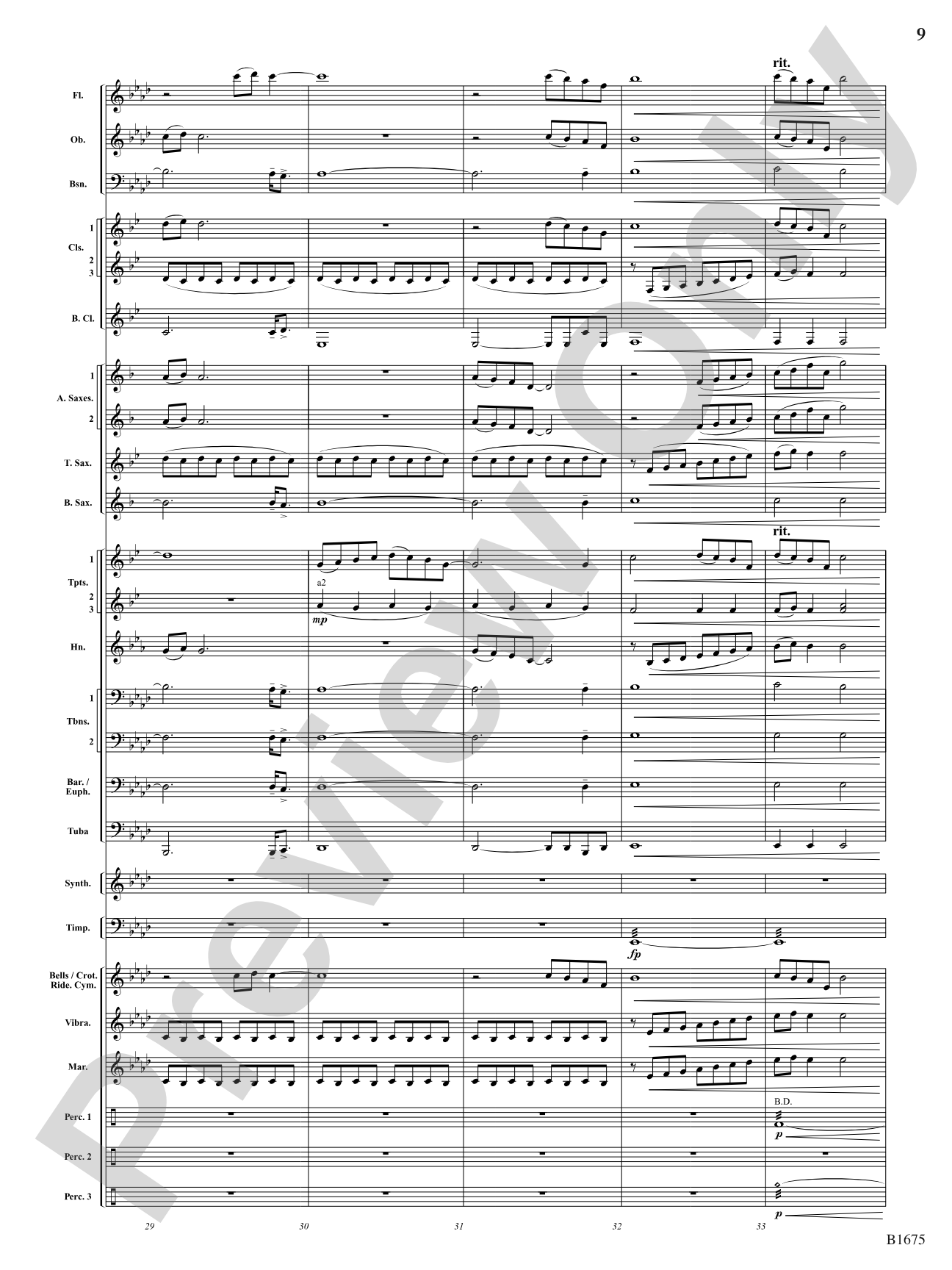
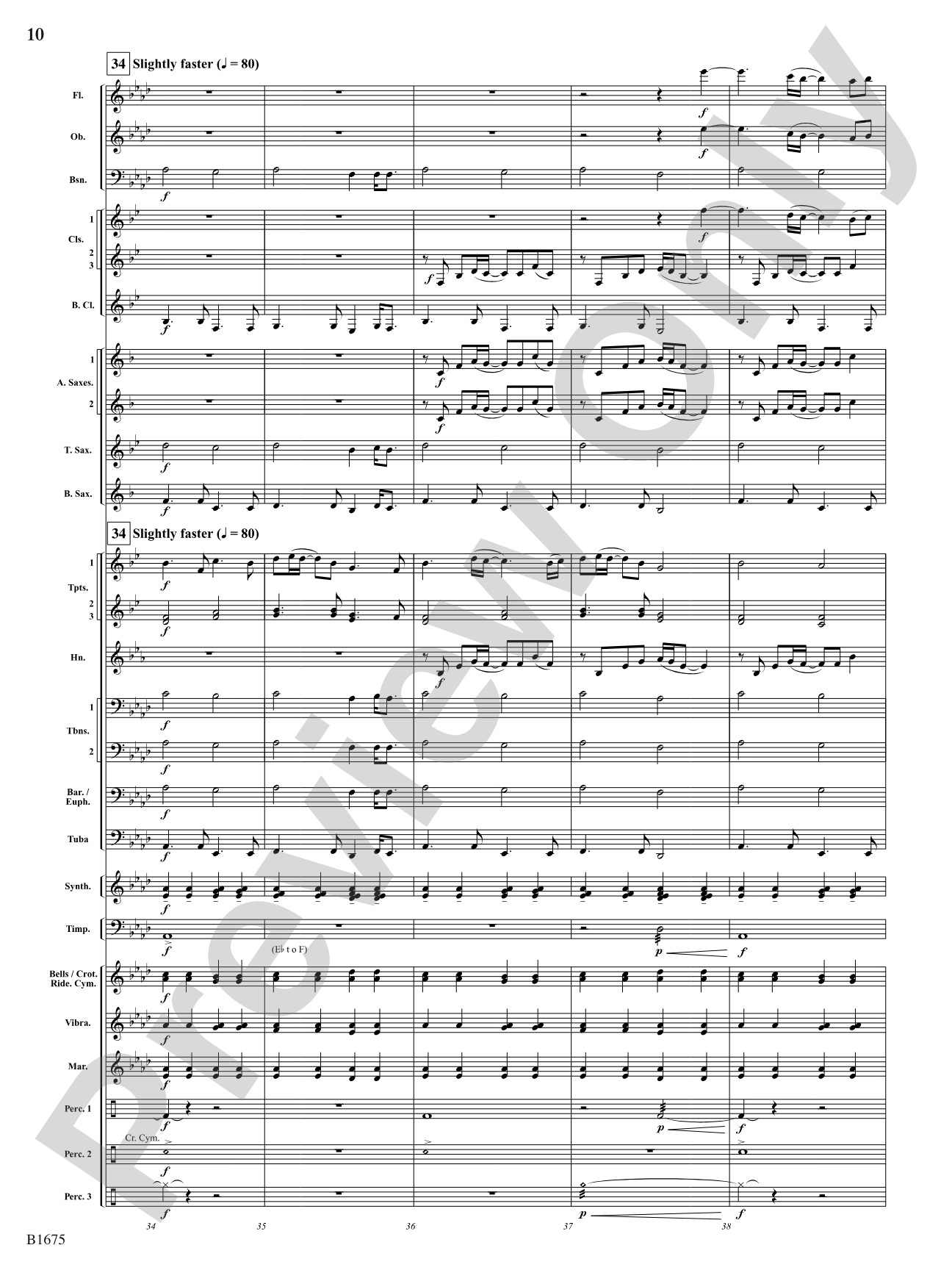
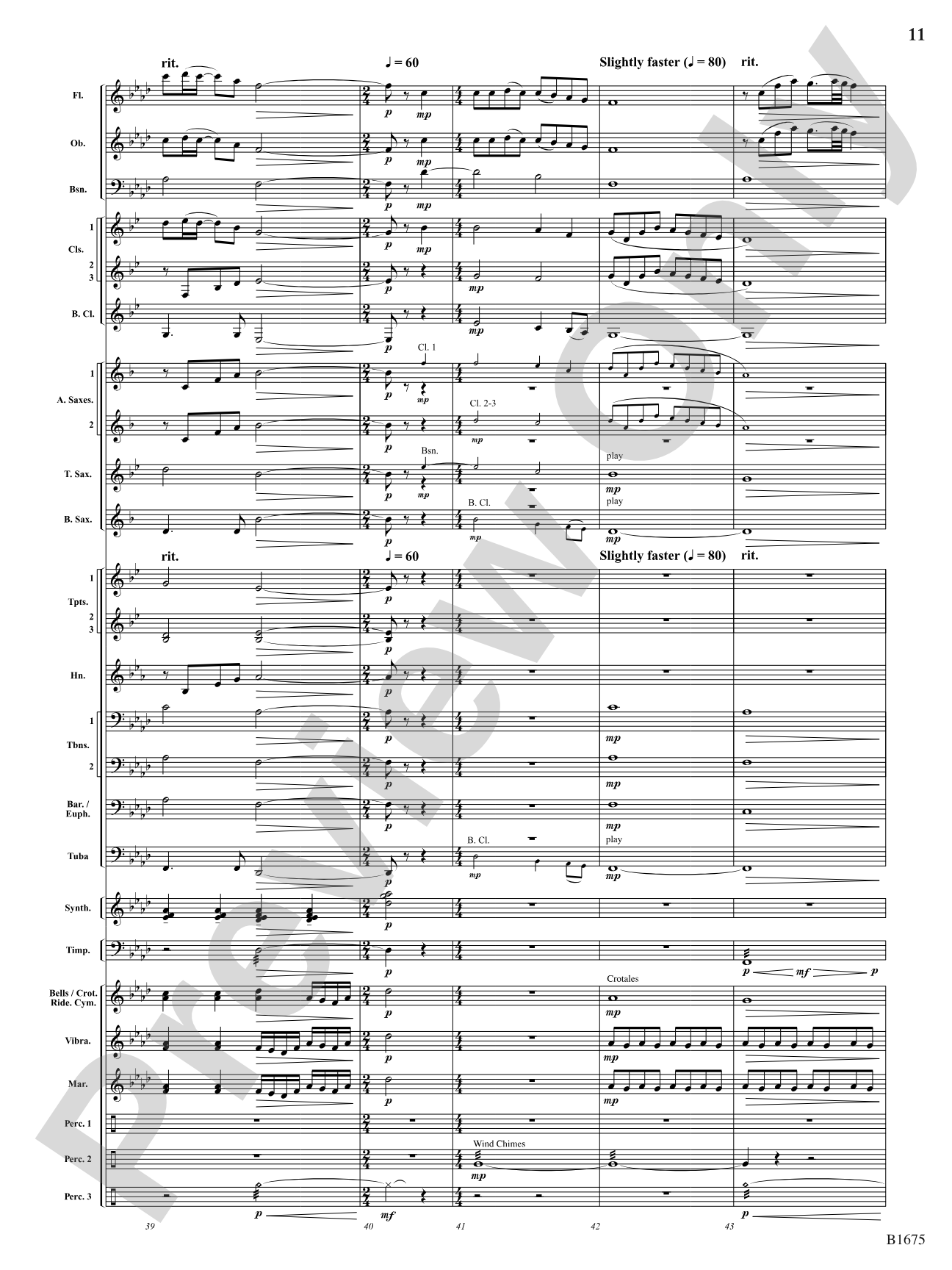
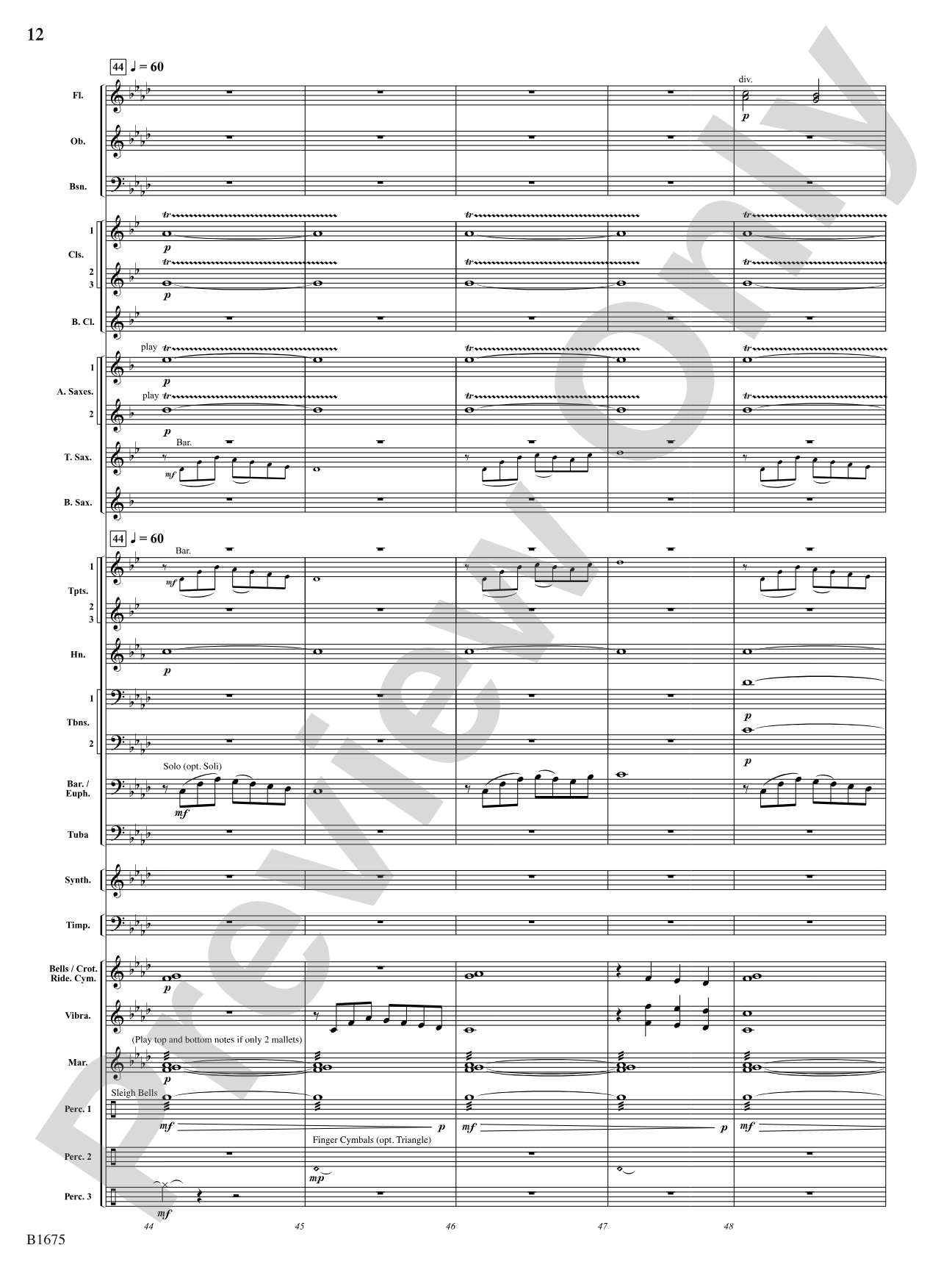
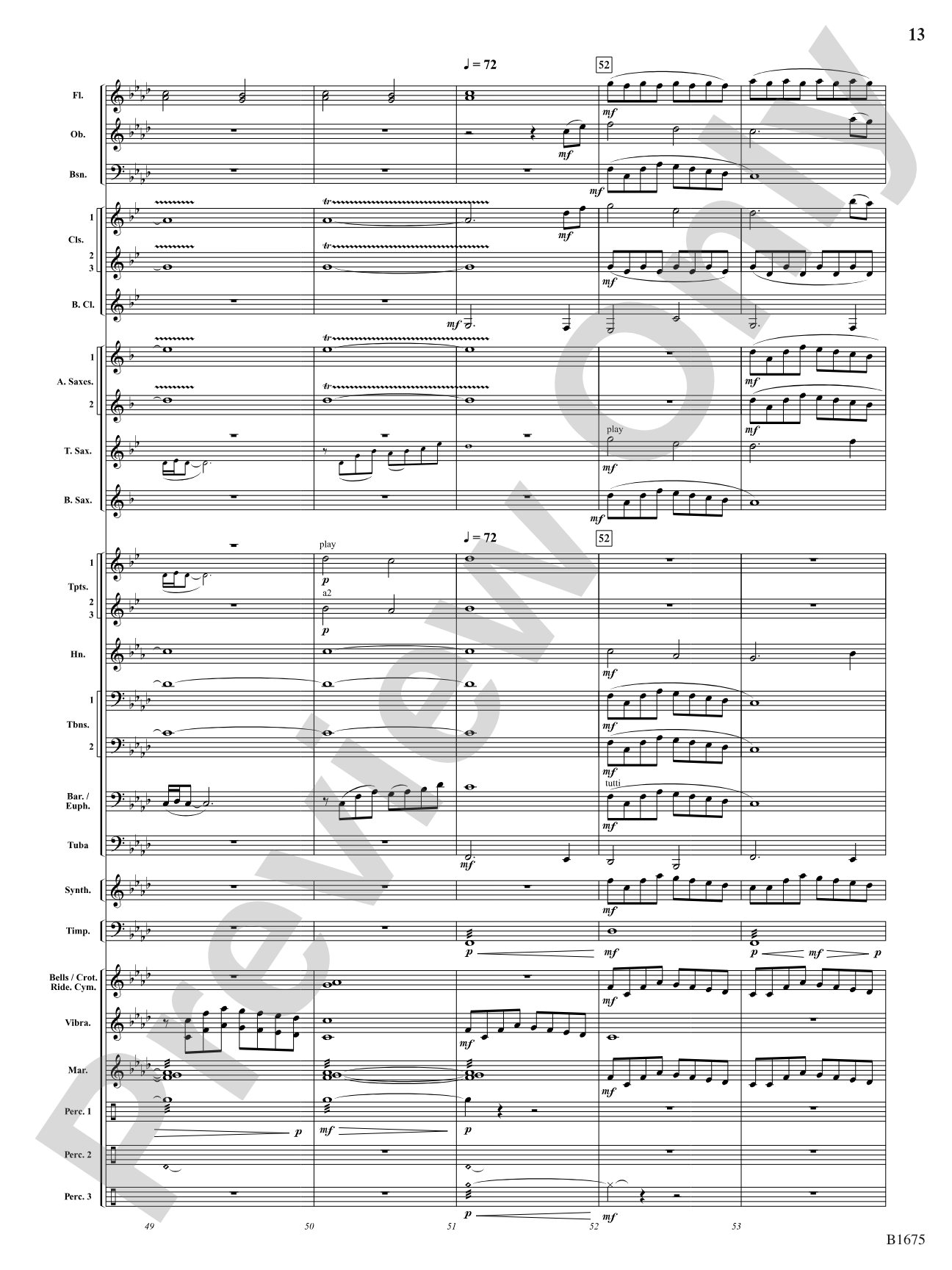
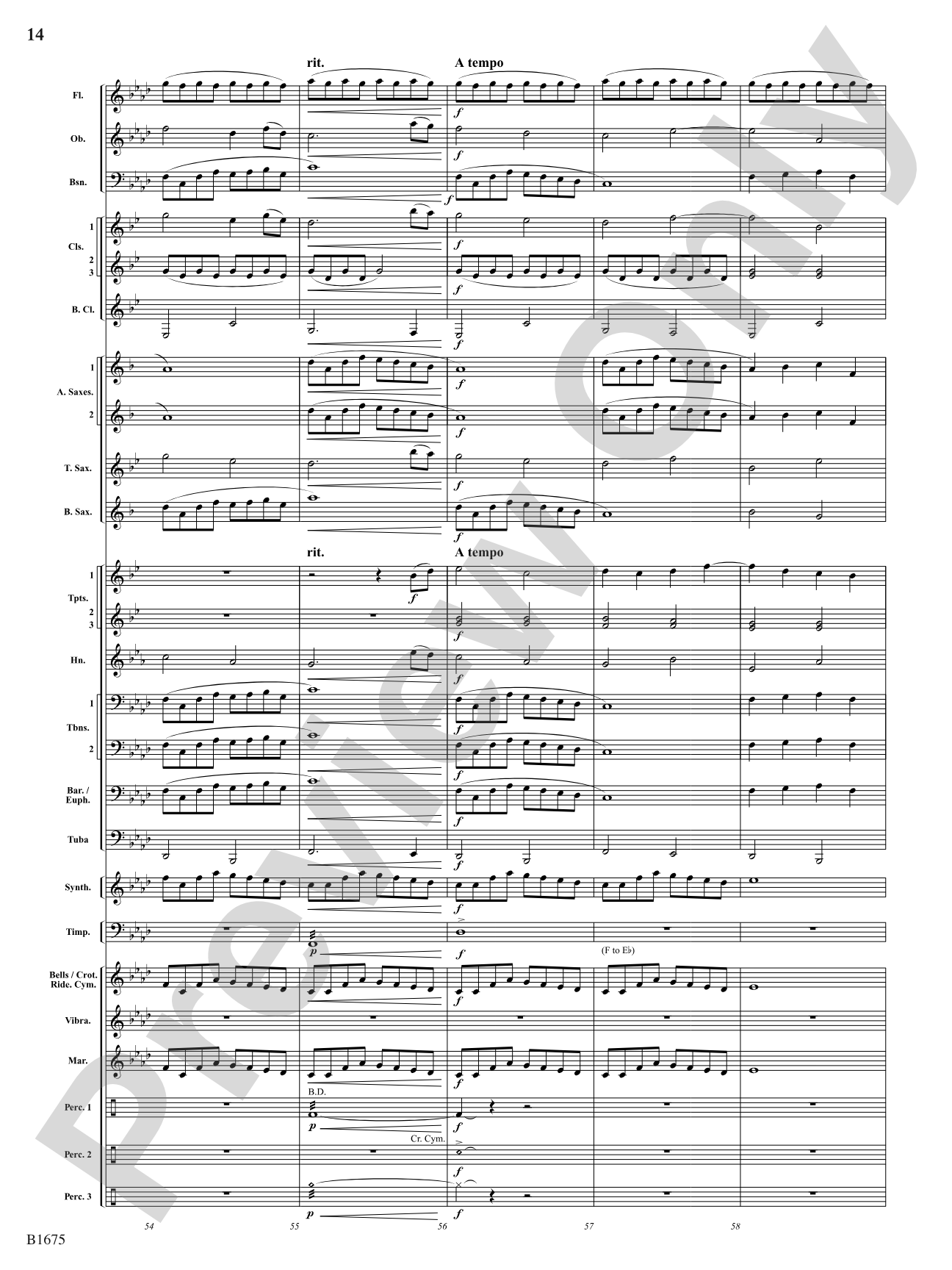
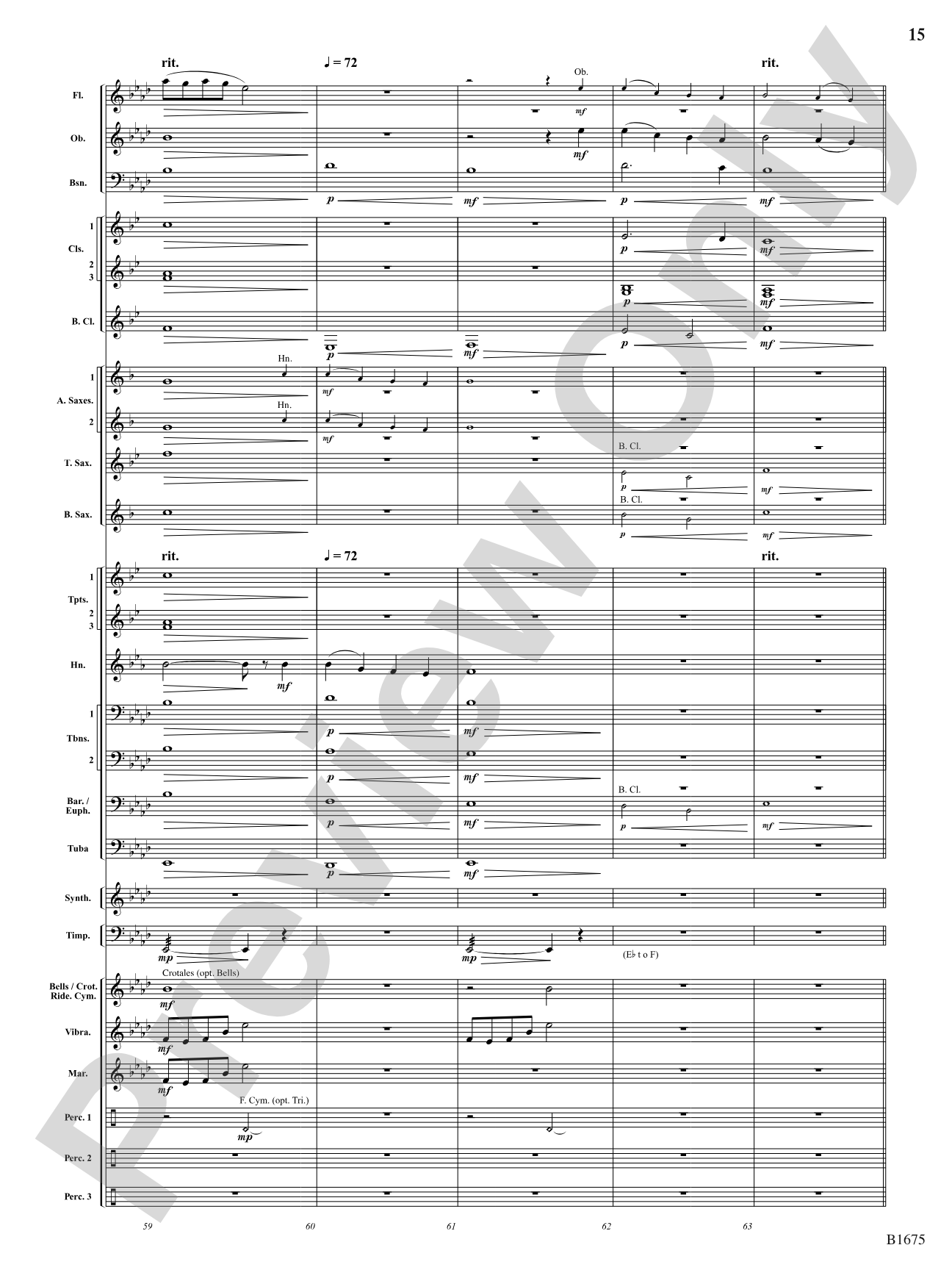
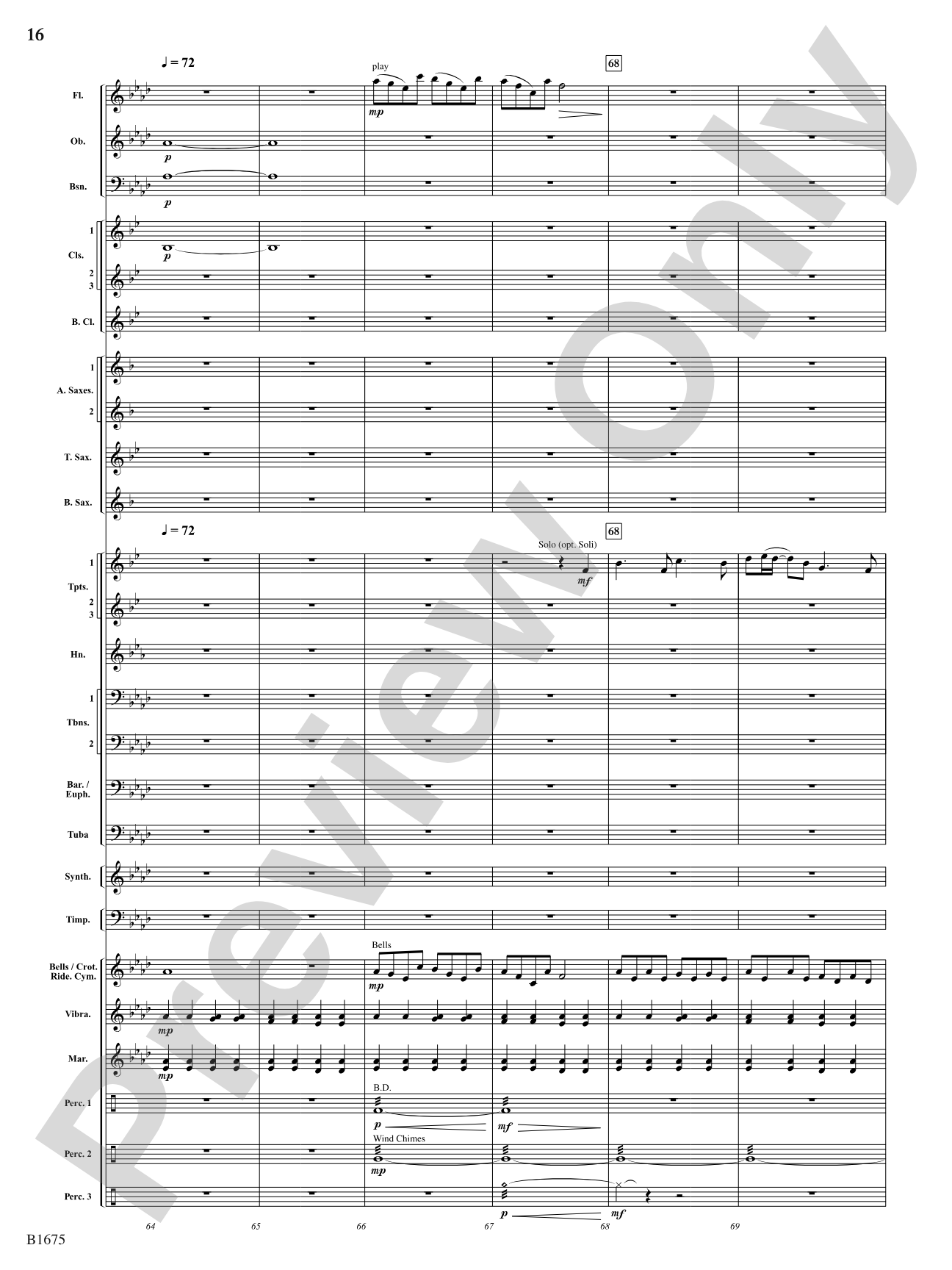
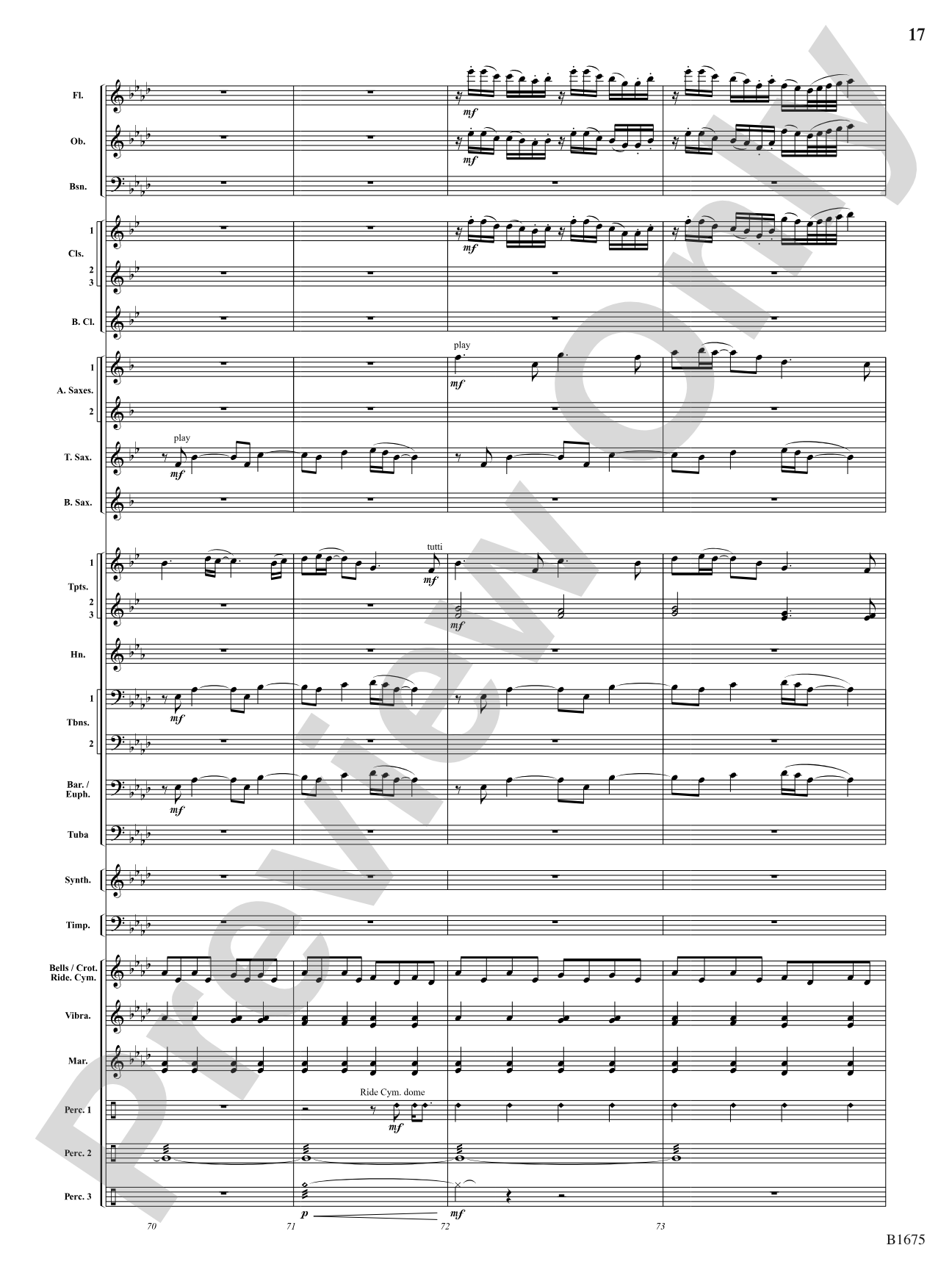
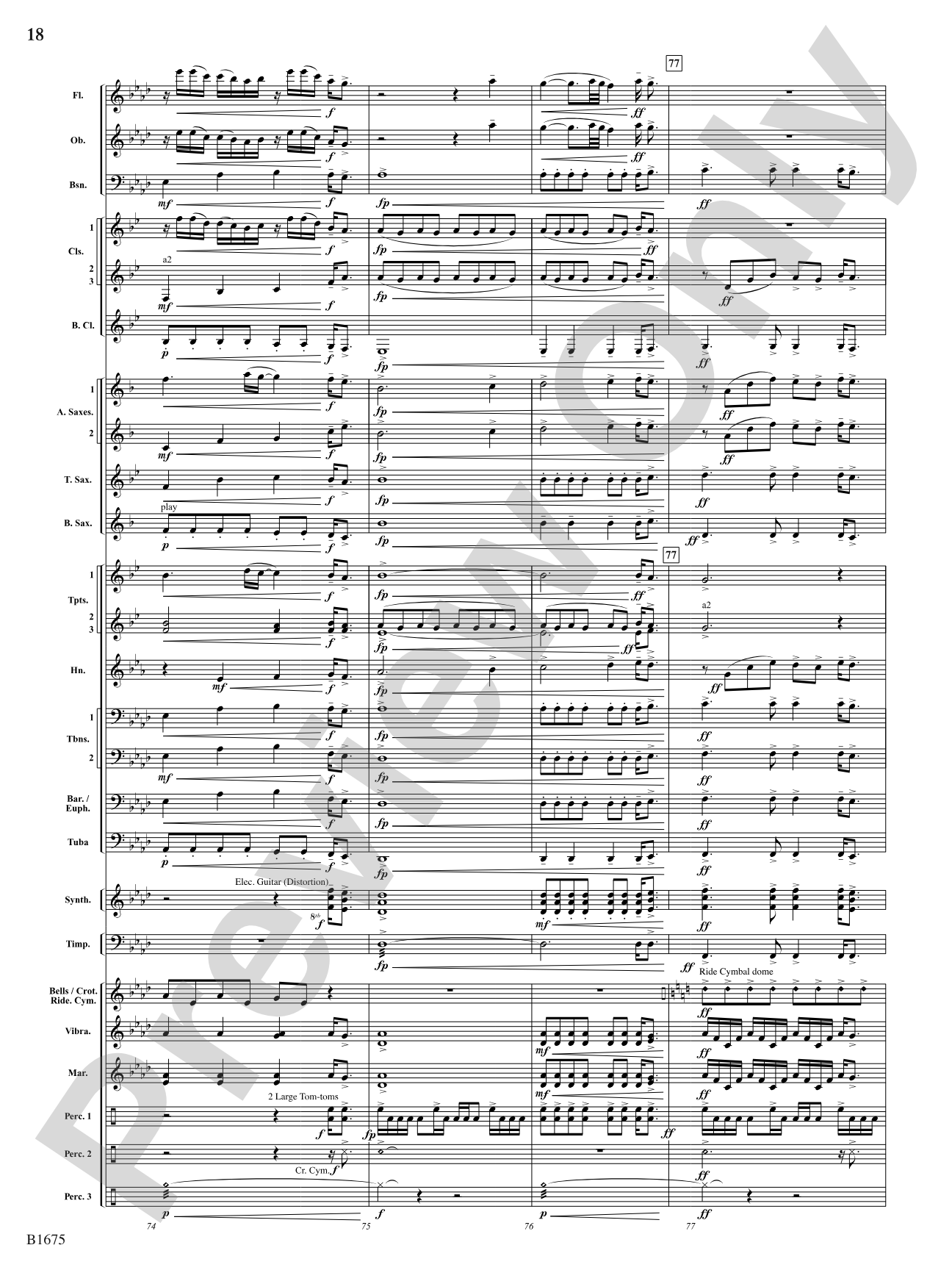
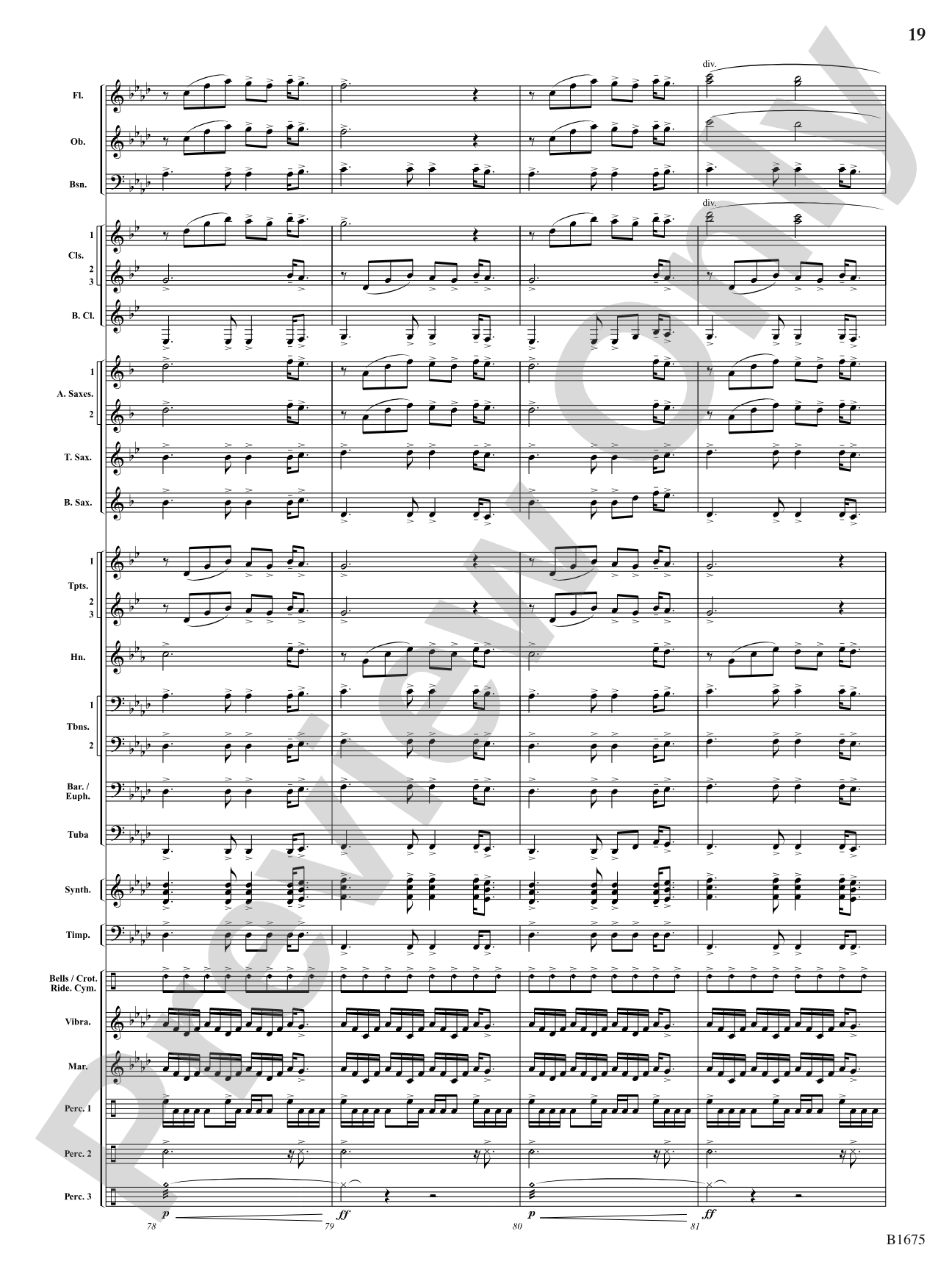
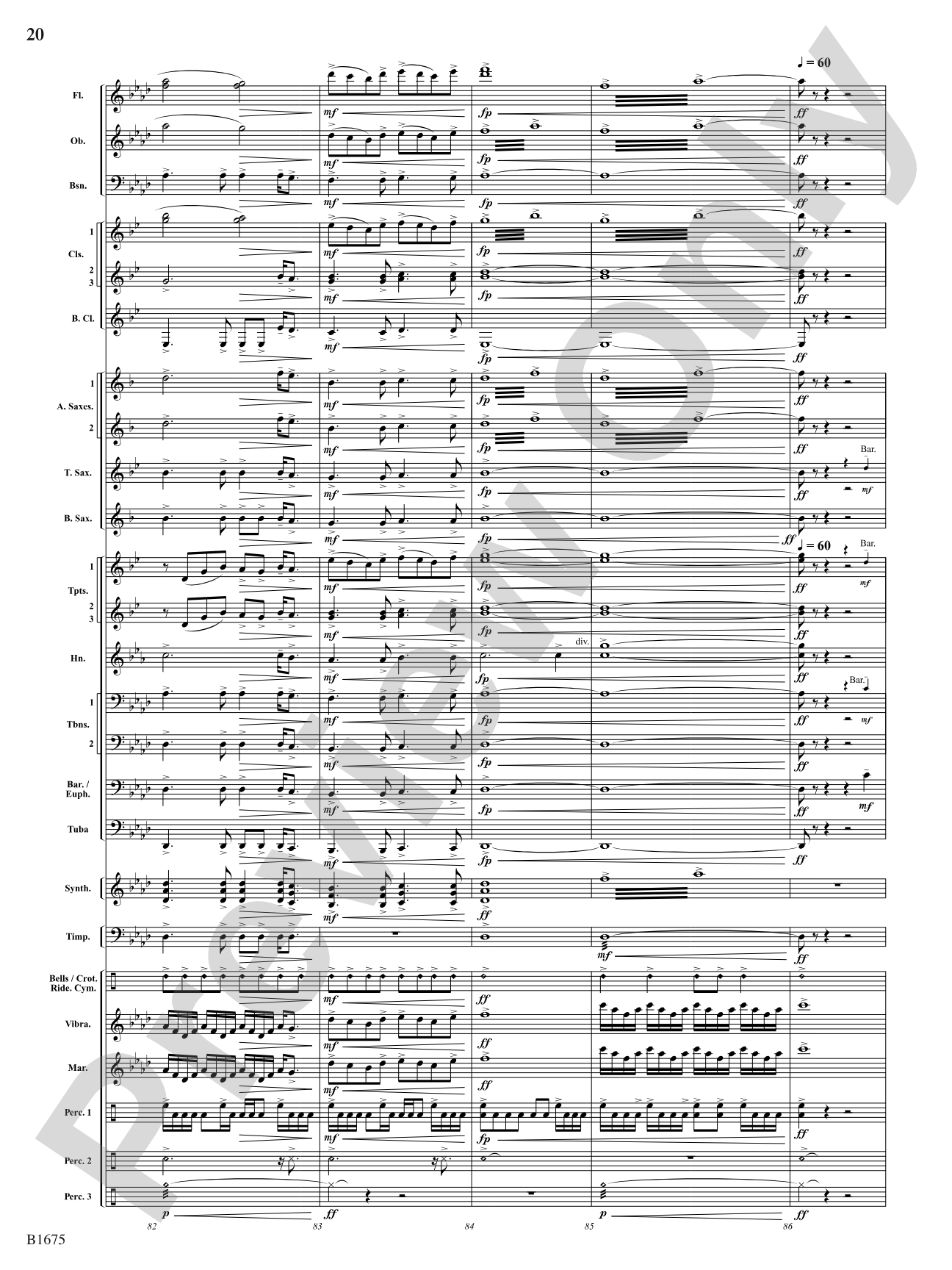
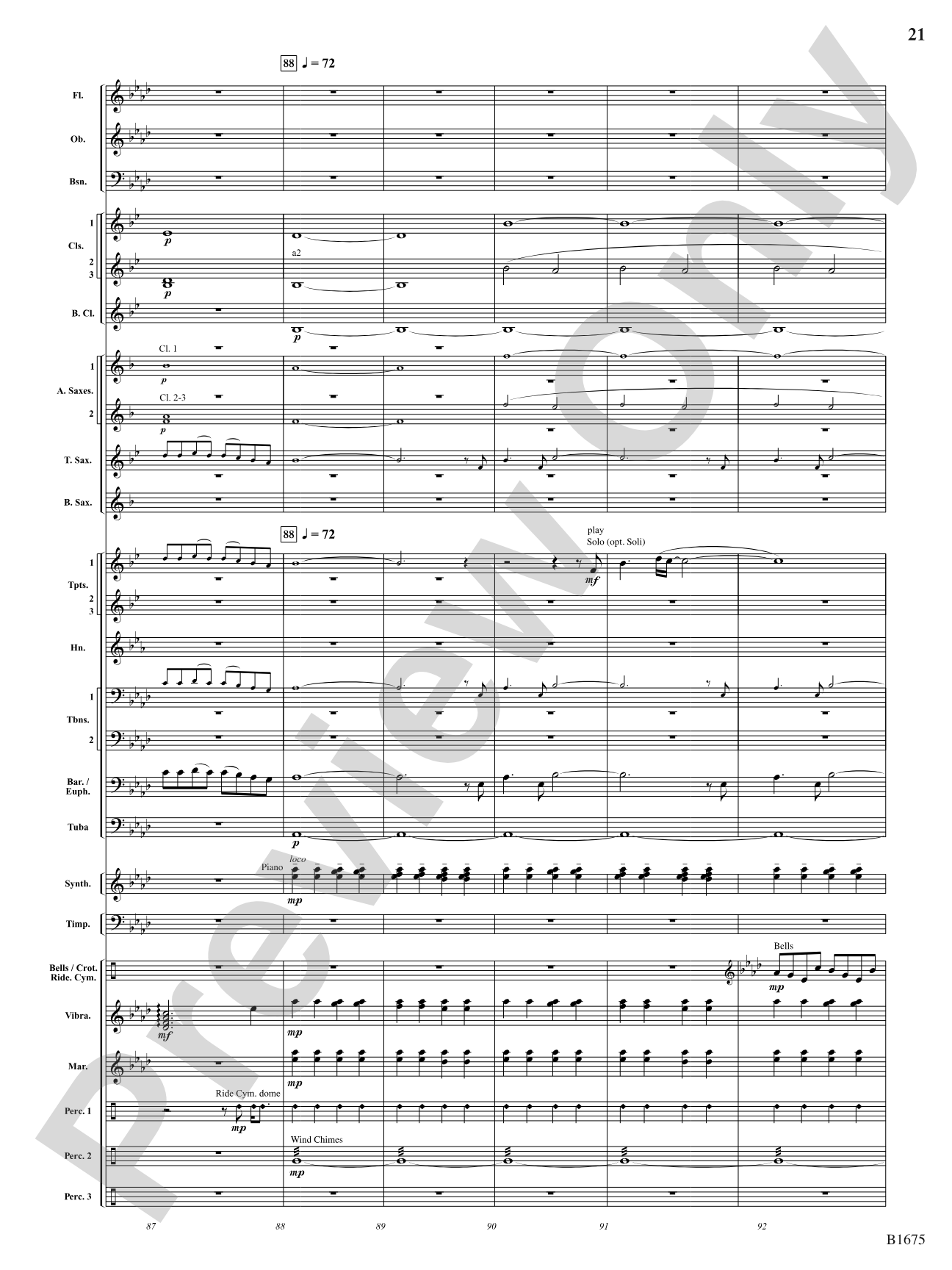
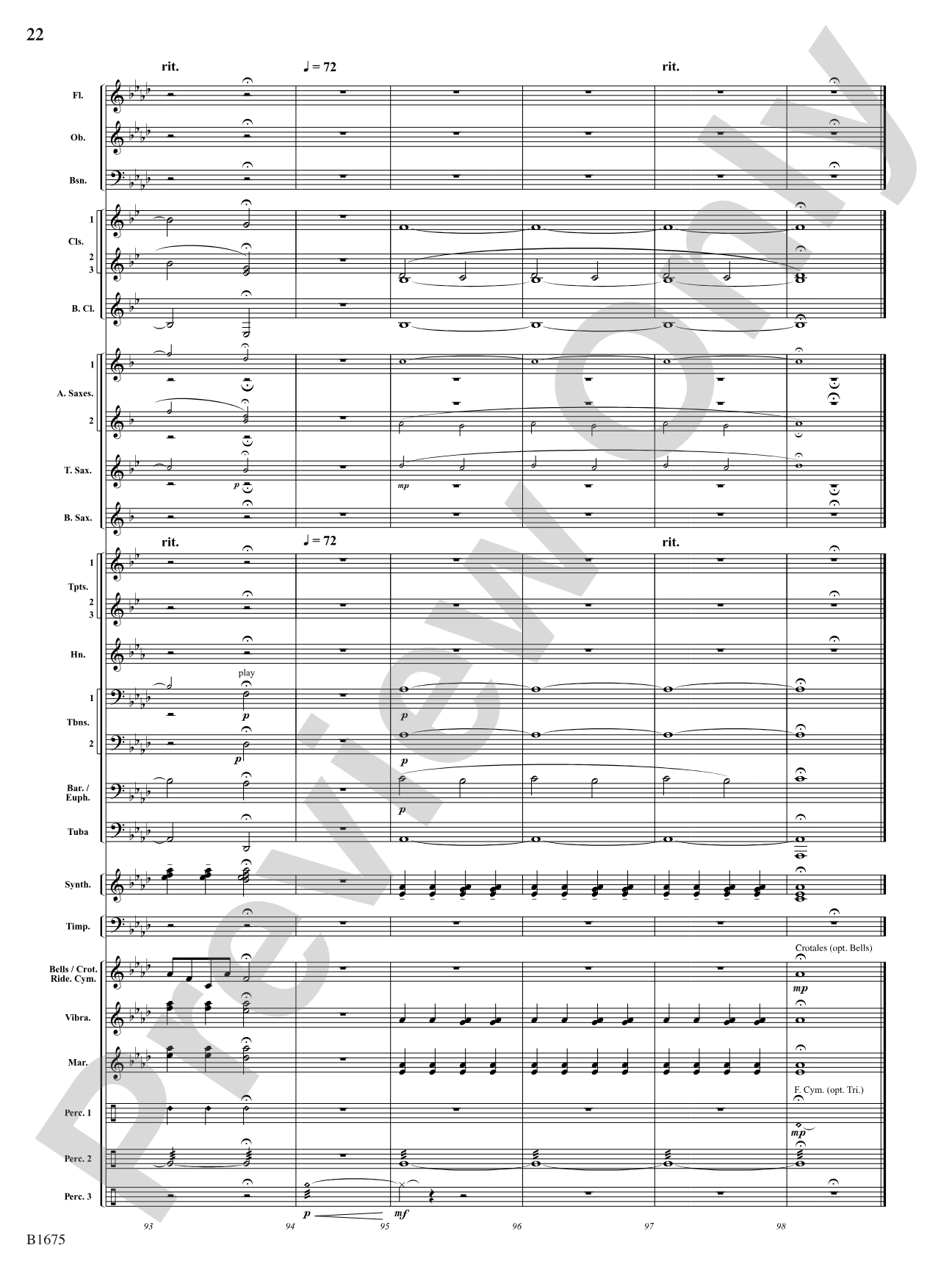

In These Last Day of Autumn...: Score
By Randall D Standridge
Grade: 3
Item: 98-DB1675S
$14.00
Pickup currently not available
Description
This emotionally charged piece was written in memory of an aspiring rock musician. At turns nostalgic and triumphant, this new work for concert band brings together elements of symphonic and pop music to create both a memorial for a young life lost as well as a portrait of the final days of Autumn, fading in their golden glory.


In These Last Day of Autumn...: Score isn't in MakeMusic Cloud just yet...but it could be. Let us know you'd like to see it, and you'll help shape what comes next. In the meantime, start a free trial and dive into thousands of interactive titles your students can play along with today.
Request This Title
Tell us you want it.
Start Your Free Trial
Explore everything that's ready to play right now.
Sample Audio
1
Audio File
--:--
0:00
0:00
Sample Video
No sample videos found.
Additional Details
Series:
FJH Concert Band
Publisher:
The FJH Music Company, Inc.
SKU:
98-DB1675S
More about this title
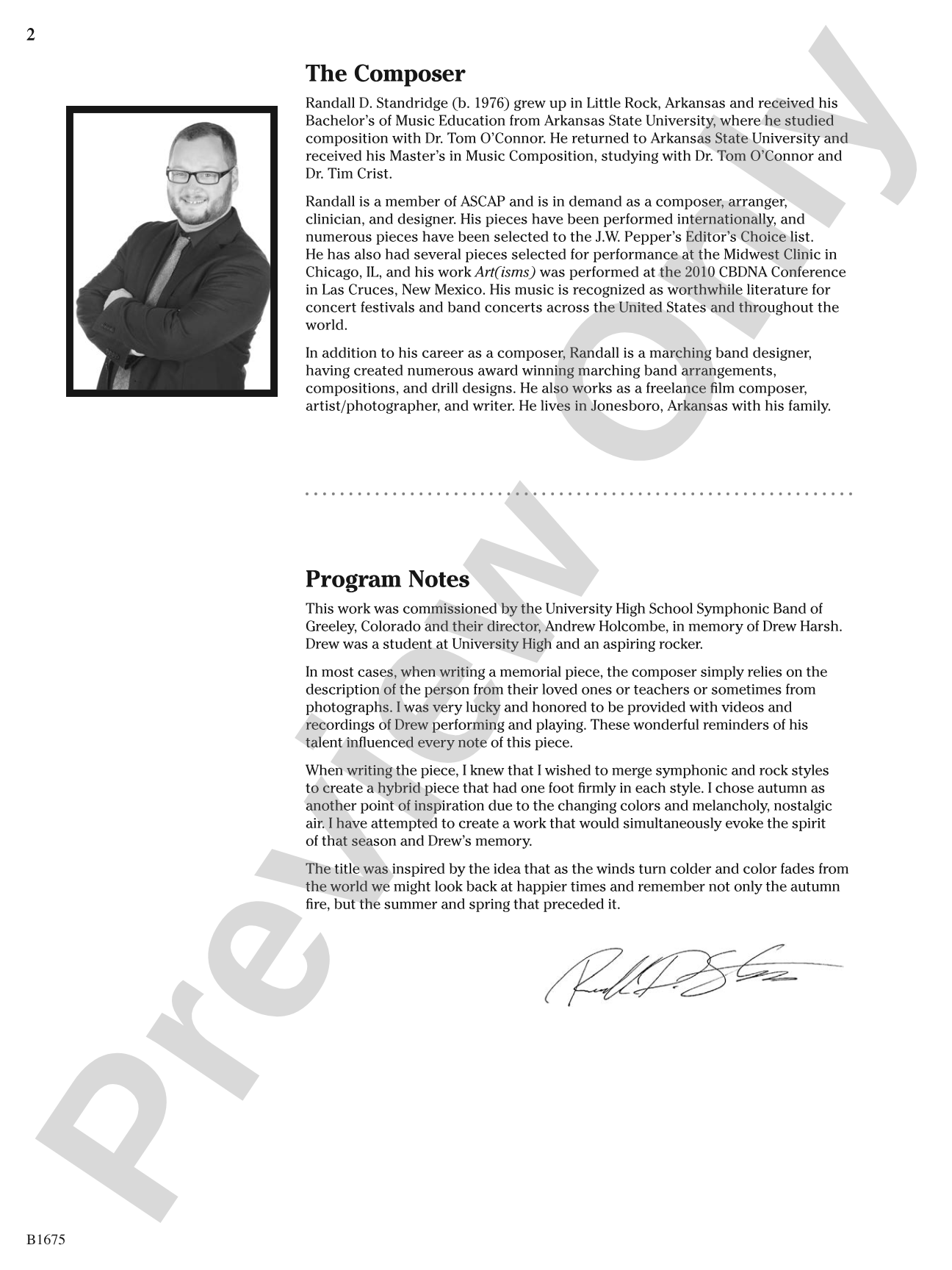
About the Composer: Randall D Standridge
Randall D Standridge is a prolific composer and arranger whose work spans concert band, jazz ensemble, and educational settings. His compositions are known for their accessibility without sacrificing musical depth, making them popular choices for high school and college bands seeking repertoire that challenges students while remaining performable at multiple levels.
Why we love this
Standridge has crafted something rare here: a piece that honors loss without becoming maudlin, and that genuinely integrates popular music language into the concert band idiom rather than simply quoting it. The Grade 3 scoring means your full ensemble can tackle something emotionally mature and programmatically meaningful, which students recognize and play with real investment.
What to expect
The opening evokes autumn's fading light, moving between nostalgia and acceptance with a contemporary sensibility that acknowledges both orchestral tradition and modern musical language. As the piece unfolds, moments of brightness emerge alongside deeper reflection, building toward a conclusion that feels both sad and affirming, much like memory itself.
Who it's for
Conductors programming concerts that call for substance and emotional resonance at the Grade 3 level will find this piece speaks directly to that need. It works equally well for groups performing a memorial concert, a fall festival, or a program themed around loss and reflection. The inclusion of solo opportunities also makes it valuable for recognizing student soloists within an ensemble context.
How to get the most out of it
- Balance the solo voices against the ensemble carefully; these moments of individual expression need to cut through without the band overwhelming them.
- Find the nostalgic quality in the softer passages by committing fully to the sustained harmonies rather than letting them drift or thin out.
- Approach the triumphant sections with genuine forward momentum, distinguishing them from the reflective material through both tempo and articulation clarity.
- Attend to dynamic shape across entire phrases rather than hitting marked dynamics flatly; this piece rewards gradual swells and releases that build emotional arc.
How to use it
This piece serves beautifully as a concert centerpiece rather than a filler, particularly in spring or fall programming when thematic coherence matters. It pairs well with lighter fare on either side, allowing audiences to sit with its emotional weight without exhaustion. Consider it for senior night or tribute concerts where the personal stories of young musicians can connect directly to the music's intent.
Skills your students will build
- Balancing solo voices with ensemble accompaniment
- Sustaining tone and phrase shape in slower tempos
- Integrating contemporary harmonic language with traditional concert band texture
- Emotional maturity in performance interpretation
- Ensemble cohesion across contrasting musical styles