
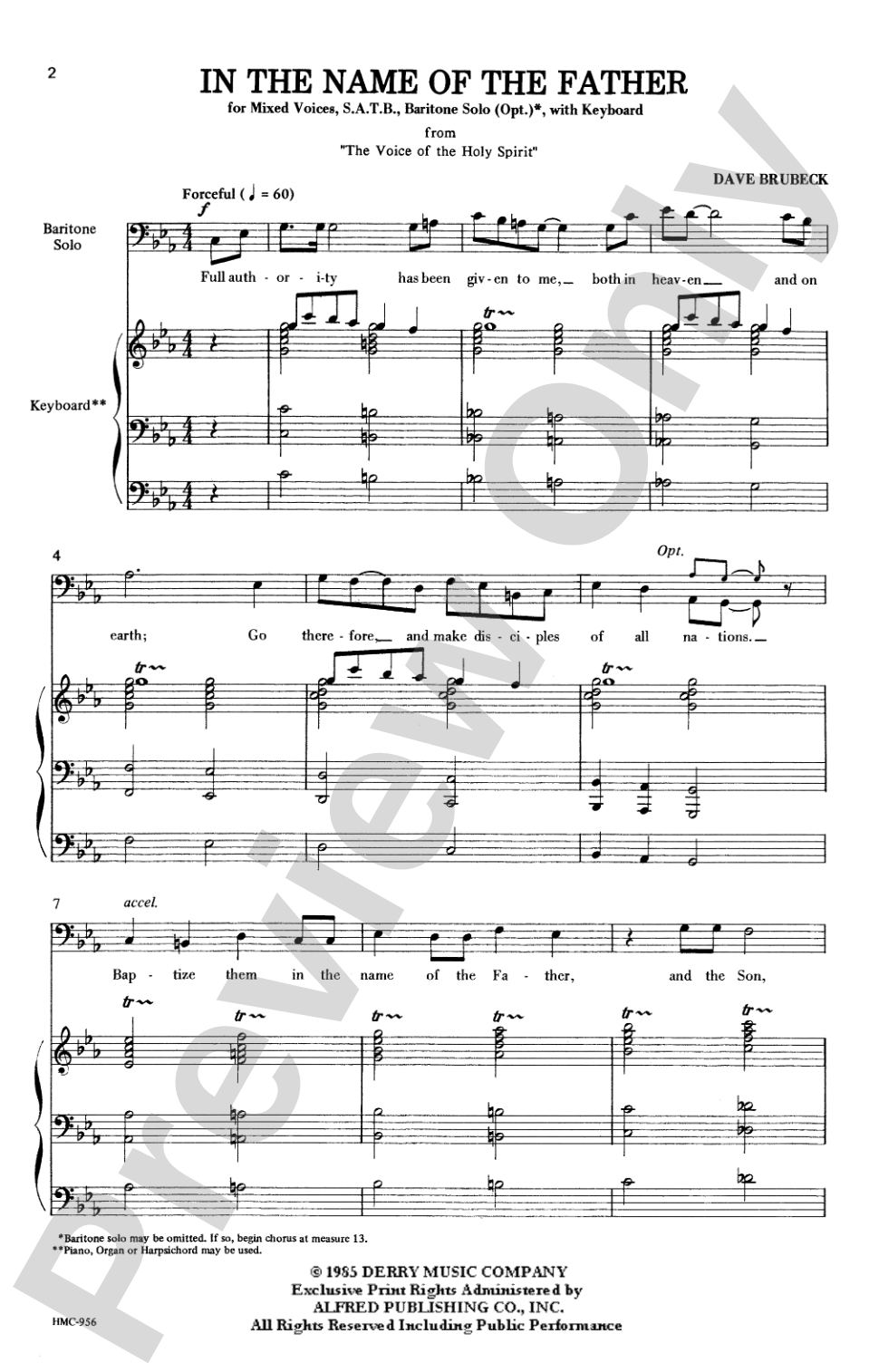
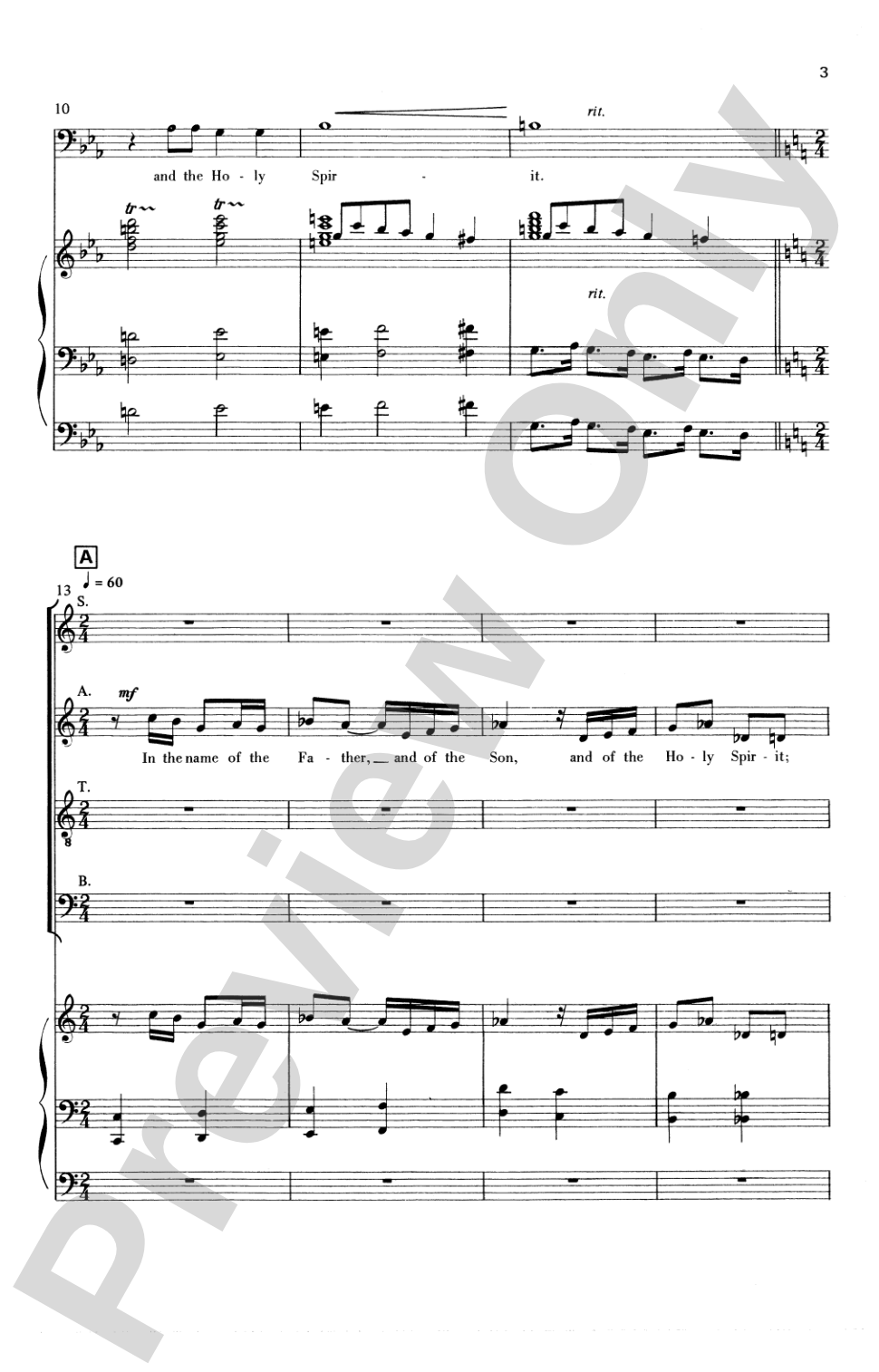
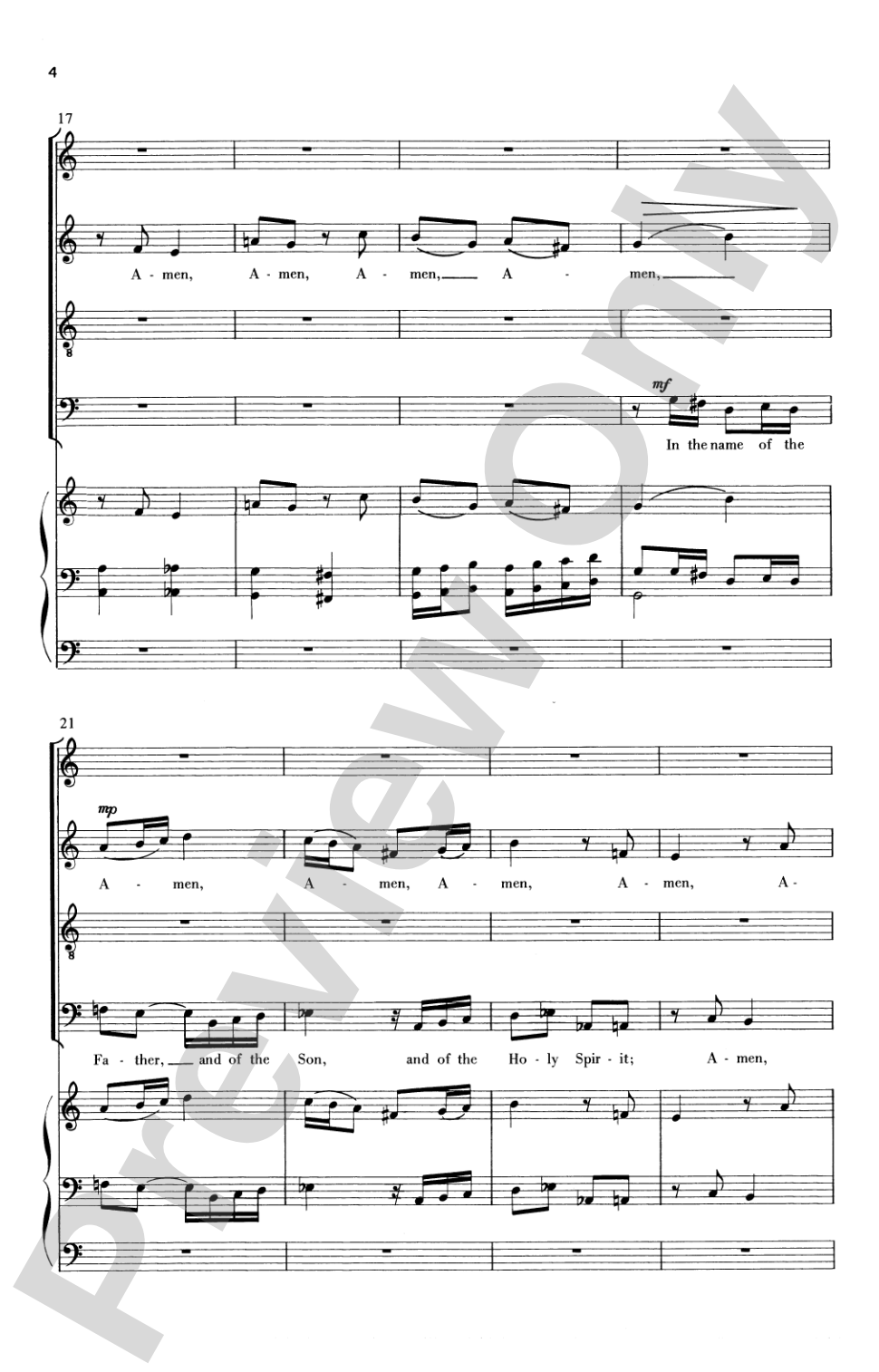

In the Name of the Father (from The Voice of the Holy Spirit): SATB, with Opt. Baritone Solo Choral Octavo
By Dave Brubeck
Item: 00-PO-0004916
$2.95
Minimum order quantity: 20 copies
Pickup currently not available
Description


In the Name of the Father (from The Voice of the Holy Spirit): SATB, with Opt. Baritone Solo Choral Octavo isn't in MakeMusic Cloud just yet...but it could be. Let us know you'd like to see it, and you'll help shape what comes next. In the meantime, start a free trial and dive into thousands of interactive titles your students can play along with today.
Request This Title
Tell us you want it.
Start Your Free Trial
Explore everything that's ready to play right now.
Sample Audio
No sample audio found.
Sample Video
No sample videos found.
Additional Details
Series:
Lawson-Gould: The Dave Brubeck Series
Publisher:
Alfred Music
Page Count:
16
SKU:
00-PO-0004916
Instrumentation:
Opt. Baritone Solo
More about this title
About the Composer: Dave Brubeck
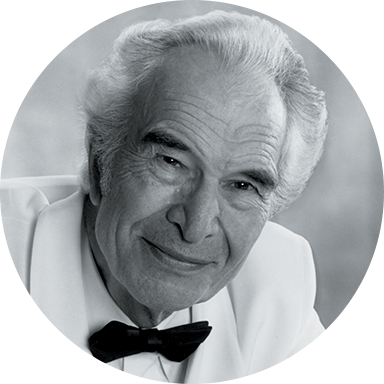
Dave Brubeck built his legacy on two parallel paths: as a jazz innovator whose improvisational brilliance helped define modern jazz, and as a classical composer whose catalog spans choral works, orchestral compositions, chamber music, and large-scale vocal forces. His education under Darius Milhaud at Mills College proved transformative, encouraging him to synthesize the languages of jazz and classical music. Beyond "Take Five" and the groundbreaking album "Time Out," Brubeck composed sacred works of substantial scope, including the oratorio "The Voice of the Holy Spirit" (from which this piece is drawn), the mass "To Hope!," and works like "Pange Lingua Variations" and "Beloved Son" that have been recorded by major ensembles including the London Symphony Orchestra and London Voices.
Throughout his career, Brubeck was recognized as a cultural ambassador who broke racial barriers in mid-20th-century America while advancing music education and interfaith dialogue through his compositions. His honors included the Presidential Medal of the Arts from President Clinton, a Grammy Lifetime Achievement Award, a lifetime achievement award from the London Symphony Orchestra, and induction into the American Classical Music Hall of Fame in 2003. His music continues to be performed internationally, reflecting both his technical mastery and his commitment to using art as a bridge across musical genres and social divides.
Why we love this
Brubeck's sacred choral writing carries the harmonic sophistication and rhythmic clarity that made him a jazz legend, but channeled through fully notated, singable lines that reward careful preparation. The optional baritone solo adds flexibility for choirs with strong soloists while remaining fully functional as a four-part work, making this a genuine addition to the sacred repertoire rather than a novelty feature. Programming a piece from "The Voice of the Holy Spirit" positions your choir within Brubeck's broader artistic vision, connecting contemporary concert music to the spiritual questions that animated his later compositional life.
What to expect
The piece inhabits a contemplative space where classical restraint meets jazz-informed harmonic movement, creating a sense of spiritual inquiry rather than declarative statement. Brubeck's approach to sacred text is meditative and architecturally clear, inviting singers into a musical experience that feels both reverent and intellectually engaged.
Who it's for
Choirs with secure four-part voicing and interest in 20th-century sacred music beyond hymn settings and motets. The optional baritone solo works for groups with a soloist capable of sustained line singing, though the piece stands complete without it.
How to get the most out of it
- Balance the weight of each voice part carefully; Brubeck's jazz-influenced voice leading can obscure text if any section dominates. Listen for the arc of the melody as it passes between parts.
- If using the baritone solo, prepare it as a prominent moment without letting it overshadow the ensemble writing that surrounds it. The solo should feel integrated, not inserted.
- Attend to Brubeck's harmonic language, which may sit outside the expected resolutions of traditional sacred writing. Allow singers to hear the full sonorities before adjusting intonation.
How to use it
This works effectively in a concert pairing other 20th-century choral works, particularly those that bridge classical and American vernacular idioms. It also serves well in interfaith or ecumenical programming, where Brubeck's own commitment to spiritual dialogue across traditions can be part of the concert narrative. Consider programming it where you want to move beyond expected sacred literature without abandoning the genre entirely.
Skills your students will build
- Reading jazz-influenced harmonic movement in four-part writing
- Sustaining line quality through unexpected harmonic progressions
- Ensemble balance when melodic material passes between voice parts
- Interpreting 20th-century sacred text setting with compositional clarity