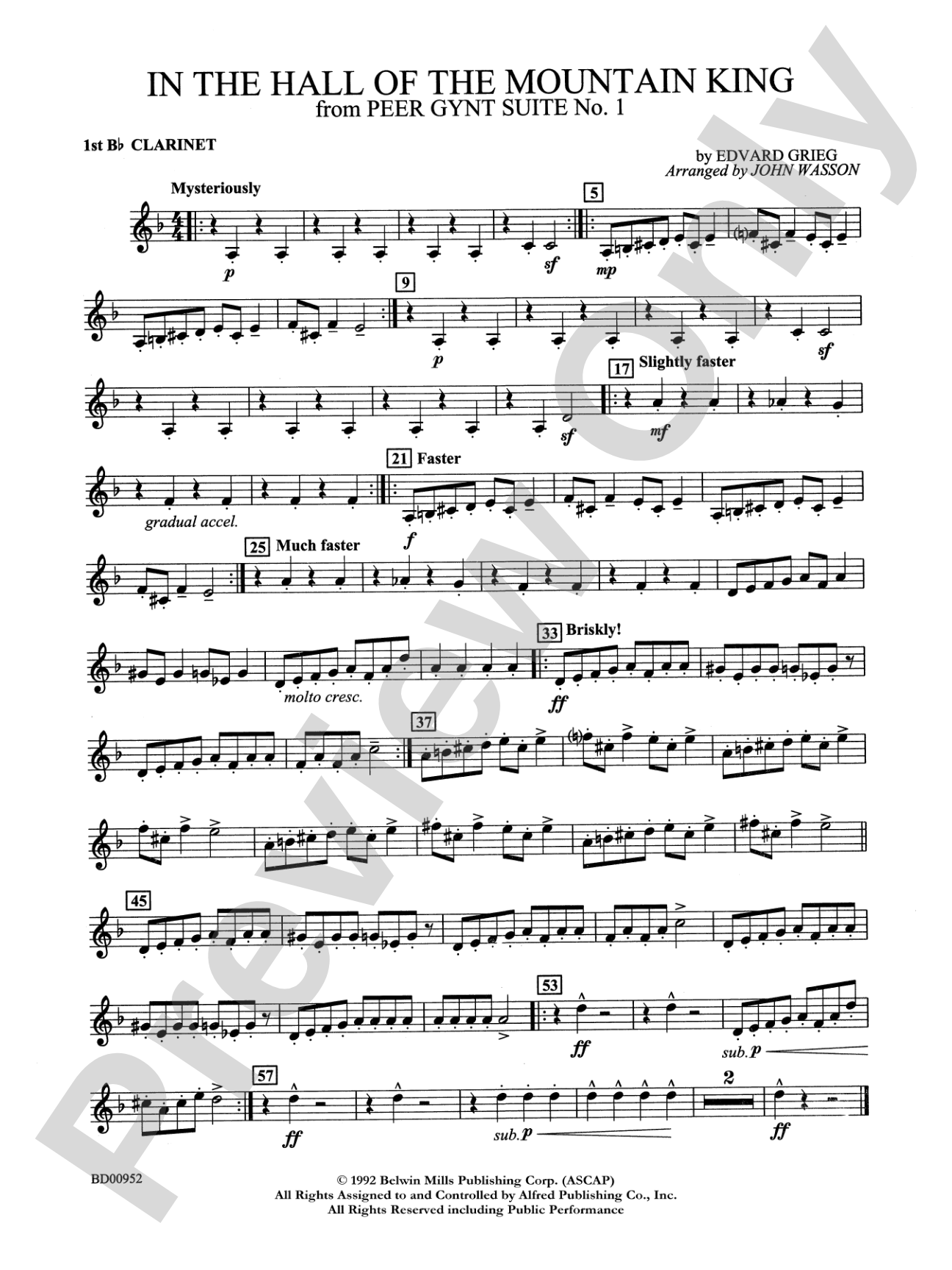
In the Hall of the Mountain King (from Peer Gynt Suite No. 1): 1st B-flat Clarinet Sheet Music Preview

In the Hall of the Mountain King (from Peer Gynt Suite No. 1): 1st B-flat Clarinet

From Peer Gynt Suite No. 1

By Edvard Grieg / arr. John Wasson

Grade: 2 (Easy)

Item: 00-PC-0001984_C1

Digital Download
$3.00
Description
'We all know the tune' fittingly describes this work. In the transfer to the concert band medium, none of the charm has been lost. Careful voicing makes each part very playable.

Don't just read it, hear it, play along with it, and watch your students grow with it. In MakeMusic Cloud, In the Hall of the Mountain King (from Peer Gynt Suite No. 1): 1st B-flat Clarinet comes alive with professional accompaniment, adjustable tempo, and built-in practice tools that turn solo practice into real progress.

Sample Audio
No sample audio found.
Sample Video
Additional Details
Series: Belwin Young Band
Publisher: Alfred Music
Page Count: 128
SKU: 00-PC-0001984_C1

More about this title

About the Composer: Edvard Grieg

Edvard Grieg (1843-1907) stands as Norway's most celebrated composer, and his music remains a cornerstone of the Romantic repertoire. His gift for melody and his ability to capture the character of his native Scandinavia made him one of the most performed composers worldwide, with works that range from intimate piano miniatures to grand orchestral suites.

Peer Gynt Suite No. 1, from which "In the Hall of the Mountain King" comes, was composed as incidental music for Henrik Ibsen's 1876 play. Grieg's four movements from the suite have become concert staples, and this particular movement stands out for its infectious, driving energy—a musical depiction of the protagonist's frantic escape through a troll kingdom. The piece's accessibility and immediate appeal have made it a gateway work for generations of music students.

Why we love this

This arrangement preserves everything that makes the original unforgettable: the relentless forward momentum, the distinctive melodic hook, and that brilliant sense of mischief and panic. John Wasson's voicing keeps parts well within reach for young players while maintaining the textural clarity that lets the melody soar. Directors know this piece gets immediate engagement from audiences, and Grade 2 bands will feel genuine accomplishment pulling off something this recognizable.

What to expect

Grieg's music evokes panic, mischief, and relentless forward motion all at once. The piece tumbles along with nervous energy, carrying the listener through a musical landscape of mounting tension and darkly comic vitality. It's a ride: thrilling, immediate, and impossible to ignore.

Who it's for

Young concert bands working at Grade 2 level will find a piece that feels substantial and rewarding without excessive technical demand. This arrangement works equally well for bands seeking a crowd-pleasing contest entry or a program highlight that connects with audiences of all ages.

How to get the most out of it

  • Build rhythmic precision in the opening theme by locking the pulse across woodwinds and low brass; this propulsive foundation matters more than dynamic subtlety early on.
  • Articulate the main melody crisply without overemphasizing; the tune's character comes from clean, light tonguing rather than aggressive attacks.
  • Balance the accompanying parts carefully so accompaniment figures support rather than crowd the melodic line, especially when the theme passes between sections.
  • Maintain steady energy through dynamic changes rather than rushing into the forte passages; the escalation should feel inevitable, not abrupt.

How to use it

Program this as a mid-concert energizer where you need to recapture audience attention or showcase your ensemble's rhythmic precision and melodic clarity. It pairs well with other Romantic-era arrangements or lighter concert fare, and its fame works as both an asset (immediate recognition) and a challenge (familiarity demands excellent execution).

Skills your students will build

  • Executing steady rhythmic pulse and forward motion across multiple measures
  • Balancing accompaniment figures against a prominent melodic line
  • Sustaining consistent articulation in rapid melodic passages
  • Managing dynamic growth and intensity without rushing tempo
  • Playing clear, supported lines that cut through an active accompaniment

You May Also Like