

In the Evening: SATB Choral Octavo
Words and music by Jay Althouse
Item: 00-PO-0003568
$1.90
Minimum order quantity: 20 copies
Pickup currently not available
Description
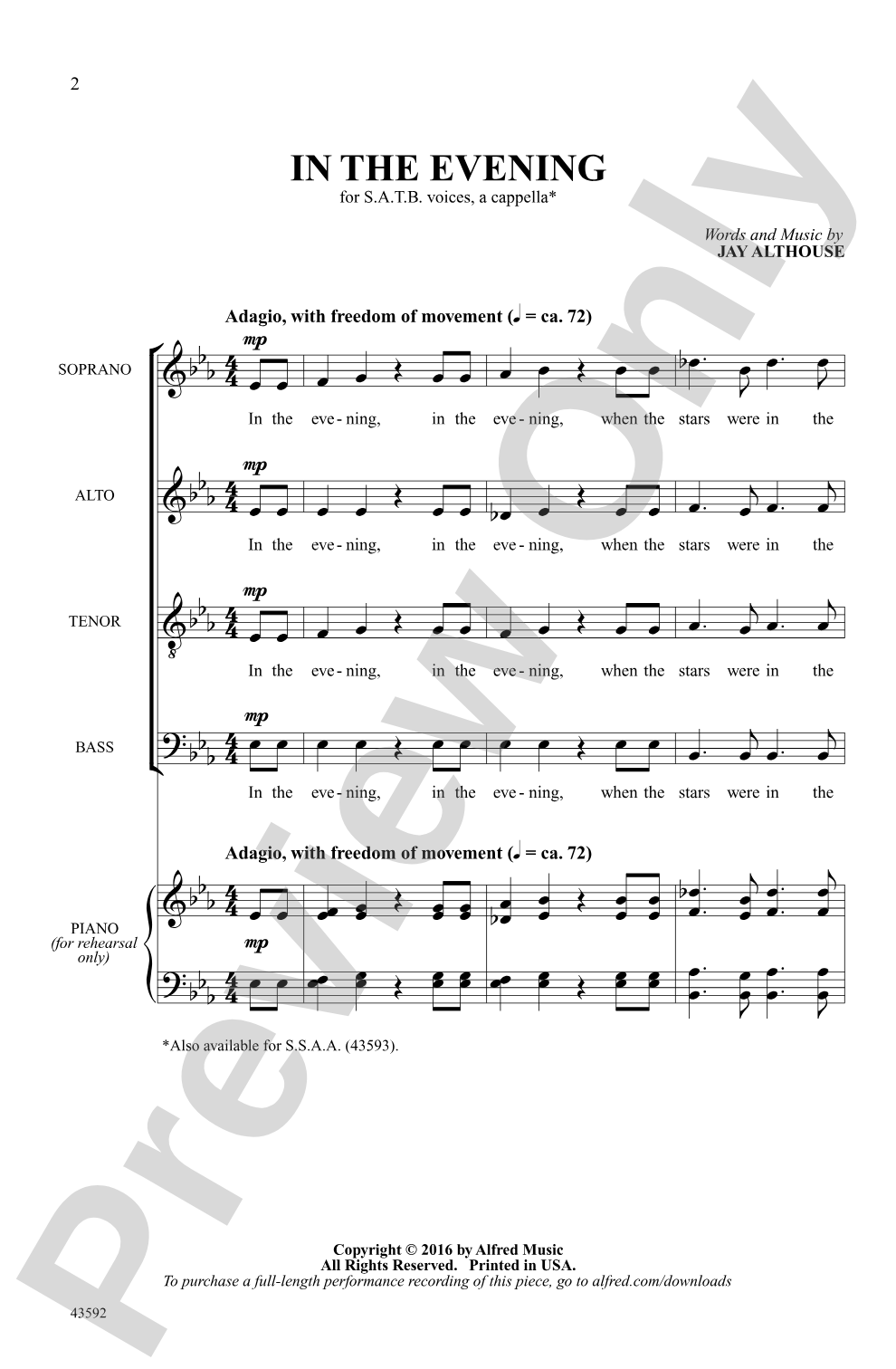
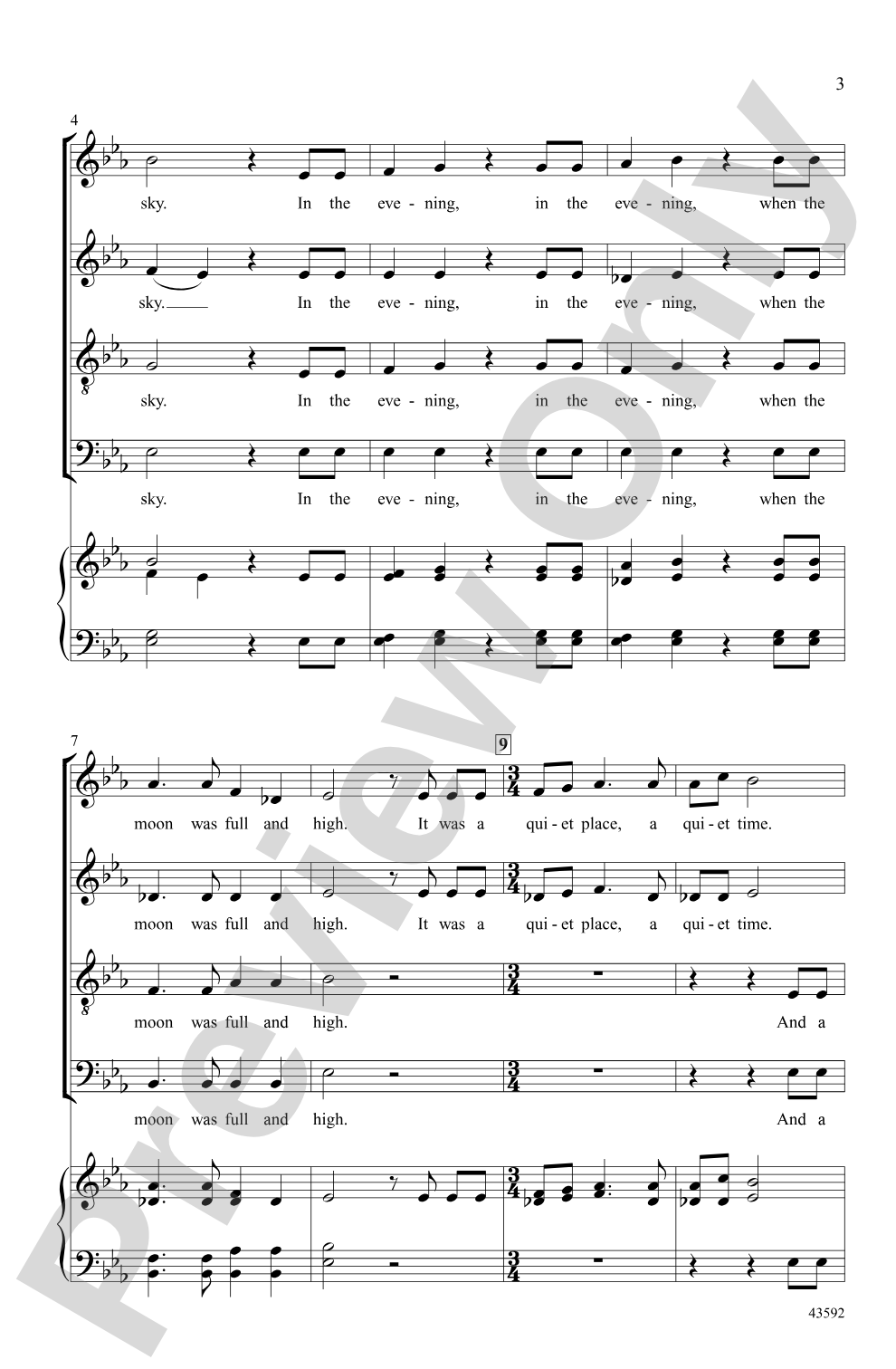
A unison pitch becomes a cluster chord and then blossoms into full contemporary choral harmony. Ample text painting, passing dissonance, and sensitive tempo and dynamic changes make this an excellent choice for accomplished choirs.


In the Evening: SATB Choral Octavo isn't in MakeMusic Cloud just yet...but it could be. Let us know you'd like to see it, and you'll help shape what comes next. In the meantime, start a free trial and dive into thousands of interactive titles your students can play along with today.
Request This Title
Tell us you want it.
Start Your Free Trial
Explore everything that's ready to play right now.
Sample Audio
1
Audio File
--:--
0:00
0:00
Sample Video
Additional Details
Series:
Alfred Choral Designs
Publisher:
Alfred Music
Page Count:
8
SKU:
00-PO-0003568
More about this title
About the Composer: Jay Althouse

Jay Althouse holds degrees in Music Education and Music from Indiana University of Pennsylvania, where he was honored as a Distinguished Alumnus. His career in music publishing gave him eight years of experience in rights and licensing administration, including a term on the Executive Board of the Music Publishers Association of America. As a composer, he has created more than 800 choral works performed across the English-speaking world and maintains membership in ASCAP, earning the organization's Special Award multiple times for his compositions.
Beyond composition, Althouse has co-written children's musicals with Sally K. Albrecht, curated vocal solo collections including Folk Songs for Solo Singers, and authored widely used classroom resources such as Ready to Read Music and One-Page Composer Bios. His choral work I Hear America Singing, written with Albrecht, was performed by the San Francisco Girls and Boys Choirs at President Obama's inauguration in 2009. He has contributed to the Folk Art Society of America's National Advisory Board and continues to write for its publications from his home in North Carolina.
Why we love this
The harmonic architecture here is what sets this apart from typical pop-style choral arrangements. Watching a unison line transform into cluster harmony and then into fully voiced contemporary chords gives your singers a visceral experience of how timbre and density shape meaning. The text painting throughout keeps the piece intellectually engaging while remaining singable for an accomplished ensemble.
What to expect
The opening unison feels spare and contemplative, almost fragile. As the harmony thickens and the cluster chord emerges, there's a sense of expansion and gentle tension. The piece breathes through its dynamic and tempo changes with the quality of someone reflecting quietly at day's end.
Who it's for
This octavo belongs in the hands of choirs with secure intonation, comfort with contemporary harmony, and interpretive maturity. It works equally well for concert programming and festival competition, as long as your ensemble has the technical foundation to navigate passing dissonance and sustain attention through harmonic complexity.
How to get the most out of it
- Isolate the cluster chord moment in rehearsal and explore its timbral color without forcing blend. Let singers discover how intonation affects the perceived density.
- Mark all dynamic and tempo shifts clearly in parts; Althouse's sensitive shaping requires ensemble attention to detail at each transition.
- Use the a cappella texture to your advantage by rehearsing phrases independently by section first, then layering carefully to balance dissonance resolution.
- Consider staging the progression from unison to harmony visually or spatially to reinforce the musical architecture for both singers and audience.
How to use it
Program this as a standalone concert piece or as part of a set exploring contemporary secular choral writing. Its modest page count makes it accessible for festival sight-reading while its harmonic sophistication ensures it remains rewarding for concert audiences who expect musical substance.
Skills your students will build
- Singing sustained tones with pure intonation in cluster harmonies
- Balancing independent vocal lines while maintaining harmonic blend
- Responding to detailed dynamic and tempo markings in real time
- Interpreting text through harmonic and registral choices
- Managing passing dissonance and resolving tension through voice leading