
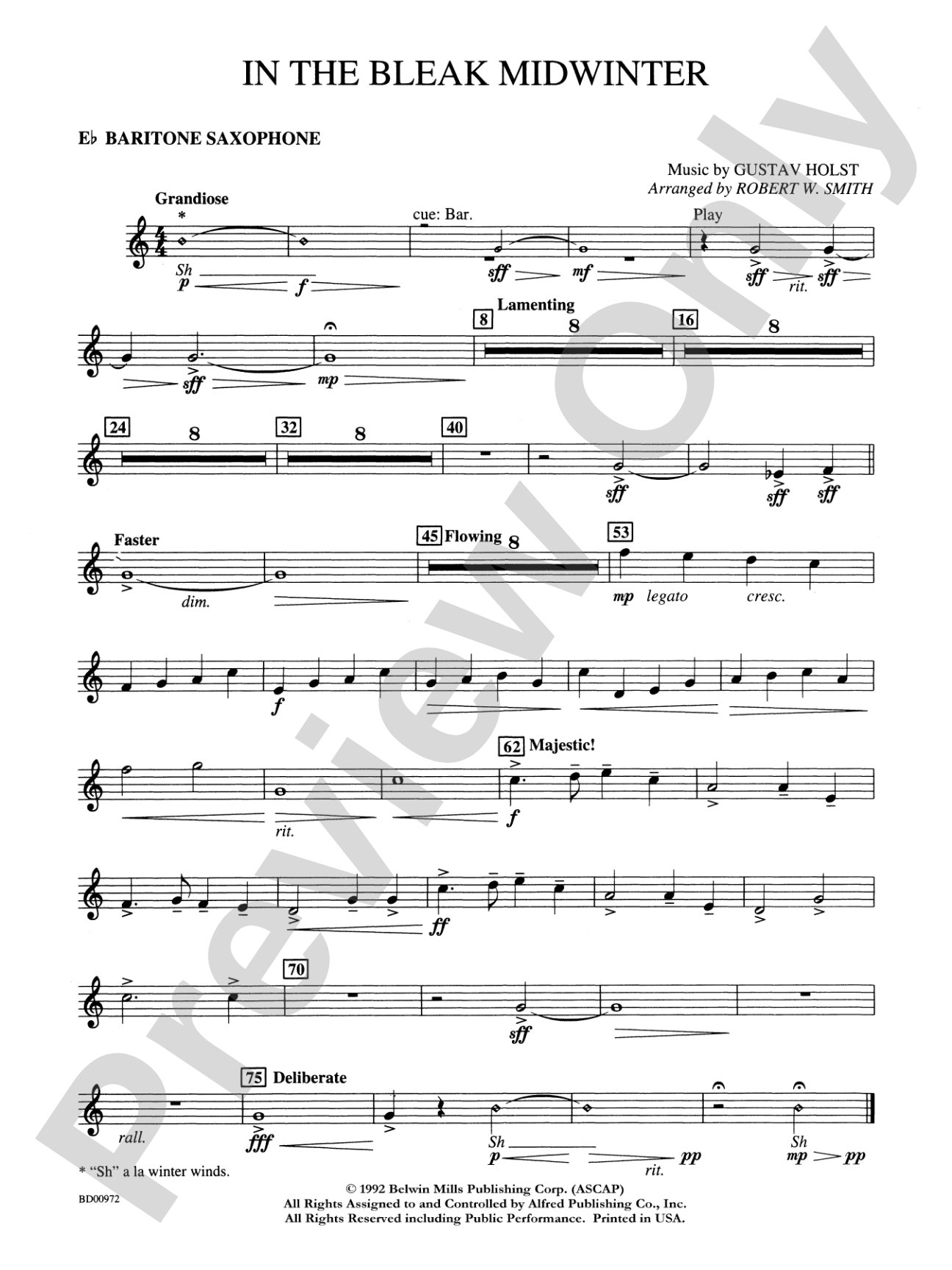

In the Bleak Midwinter: E-flat Baritone Saxophone
By Gustav Holst / arr. Robert W. Smith
Grade: 3 (Medium Easy)
Item: 00-PC-0001986_BTX
$5.99
Pickup currently not available
Description
Gustav Holst's beautiful melody serves as the foundation from which Robert W. Smith fashions this remarkable work. From a haunting single voice, a stunning climax is reached before giving way to a simple restatement. This is a highly moving, emotion-packed work for concert band.


Don't just read it, hear it, play along with it, and watch your students grow with it. In MakeMusic Cloud, In the Bleak Midwinter: E-flat Baritone Saxophone comes alive with professional accompaniment, adjustable tempo, and built-in practice tools that turn solo practice into real progress.
Open in the Player
Jump straight in and assign it today.
Start Your Free Trial
Open this title and explore the full library in minutes.
Sample Audio
1
Audio File
--:--
0:00
0:00
Sample Video
Additional Details
Series:
Belwin Concert Band
Publisher:
Alfred Music
Page Count:
150
SKU:
00-PC-0001986_BTX
More about this title
About the Composer: Gustav Holst
Gustav Holst (1874-1934) shaped modern British music through his bold orchestrations and gift for memorable melody. His output spans operas, ballets, choral works, and instrumental pieces; he remains best known for The Planets, but his sacred and seasonal music has endured in concert halls and rehearsal rooms for over a century.
Holst's approach to composition valued clarity and emotional directness. He drew from folk traditions, hymn tunes, and literary sources, creating works that speak across generations. In the Bleak Midwinter began as a hymn tune, and its dignified simplicity made it perfect material for arrangement and reinterpretation by musicians who came after him.
Why we love this
Robert W. Smith's arrangement honors Holst's original melody while building a full emotional arc that works beautifully in the concert band medium. The progression from solo voice through orchestrated texture to climax and back gives players at every section something meaningful to shape. This is one of those pieces that sounds far more complex than its Grade 3 level suggests, rewarding thoughtful conducting and lending genuine depth to a winter concert without demanding virtuosity.
What to expect
The piece opens with intimate, crystalline simplicity, as if a single voice is singing into still air. As the band enters and the harmony deepens, warmth and fullness emerge without losing that luminous quality. The climax swells with genuine emotional power before settling into quiet reflection, leaving performers and listeners moved rather than drained.
Who it's for
Concert bands at the Grade 3 level will find this work accessible in terms of technical demands while gaining experience with expressive, large-scale musical thinking. Directors seeking a meaningful winter or holiday program piece that avoids sentimentality will appreciate Smith's craftsmanship here.
How to get the most out of it
- Balance the opening solo line so it cuts through without overwhelming the ensemble; the vulnerability of that single voice sets the emotional foundation for everything that follows.
- Shape the dynamic arc toward the climax with intention, resisting the urge to jump ahead. Let the crescendo breathe and build in layers rather than all at once.
- In the restatement, find a quality of acceptance or peace. The return to simplicity should feel earned, not retreated into, which affects phrasing and articulation choices.
- Pay attention to the harmonic support beneath sustained melodies. Inner voices and lower voices anchor the sound; clarity there prevents muddiness during louder passages.
How to use it
This works beautifully as a centerpiece in a winter concert or as a moment of contemplative contrast in a program that includes more energetic works. Its length and emotional weight make it suitable for festival or contest play at the Grade 3 level. The piece also pairs well alongside other sacred or seasonal concert band arrangements when you want to build a thematic set.
Skills your students will build
- Balancing exposed melodic lines against harmonic accompaniment
- Sustaining and shaping dynamic arcs across extended passages
- Responding to large-scale structural form (statement, development, climax, restatement)
- Playing with tonal consistency and blend through texture changes
- Maintaining ensemble cohesion during shifts in density and orchestration