
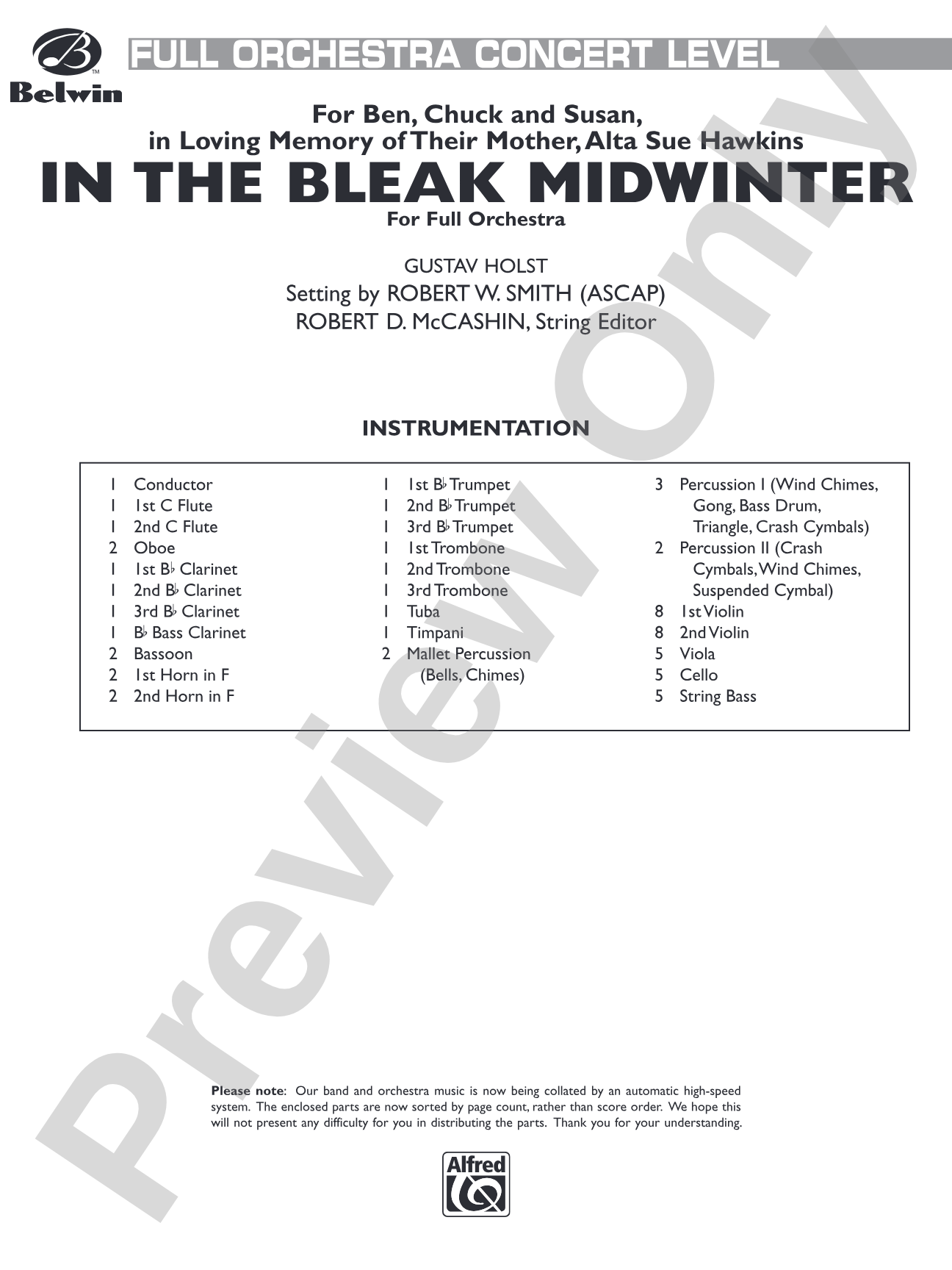
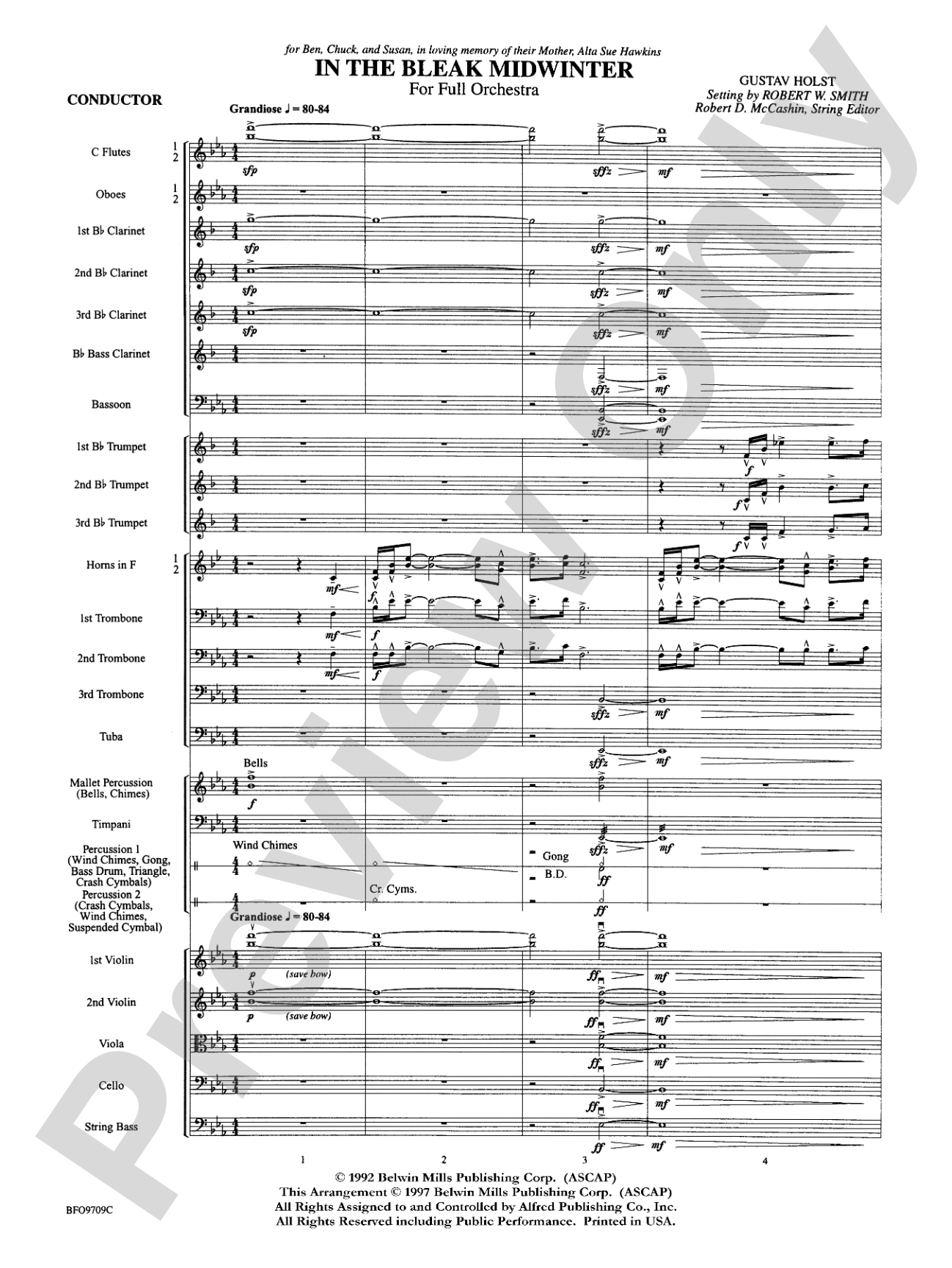
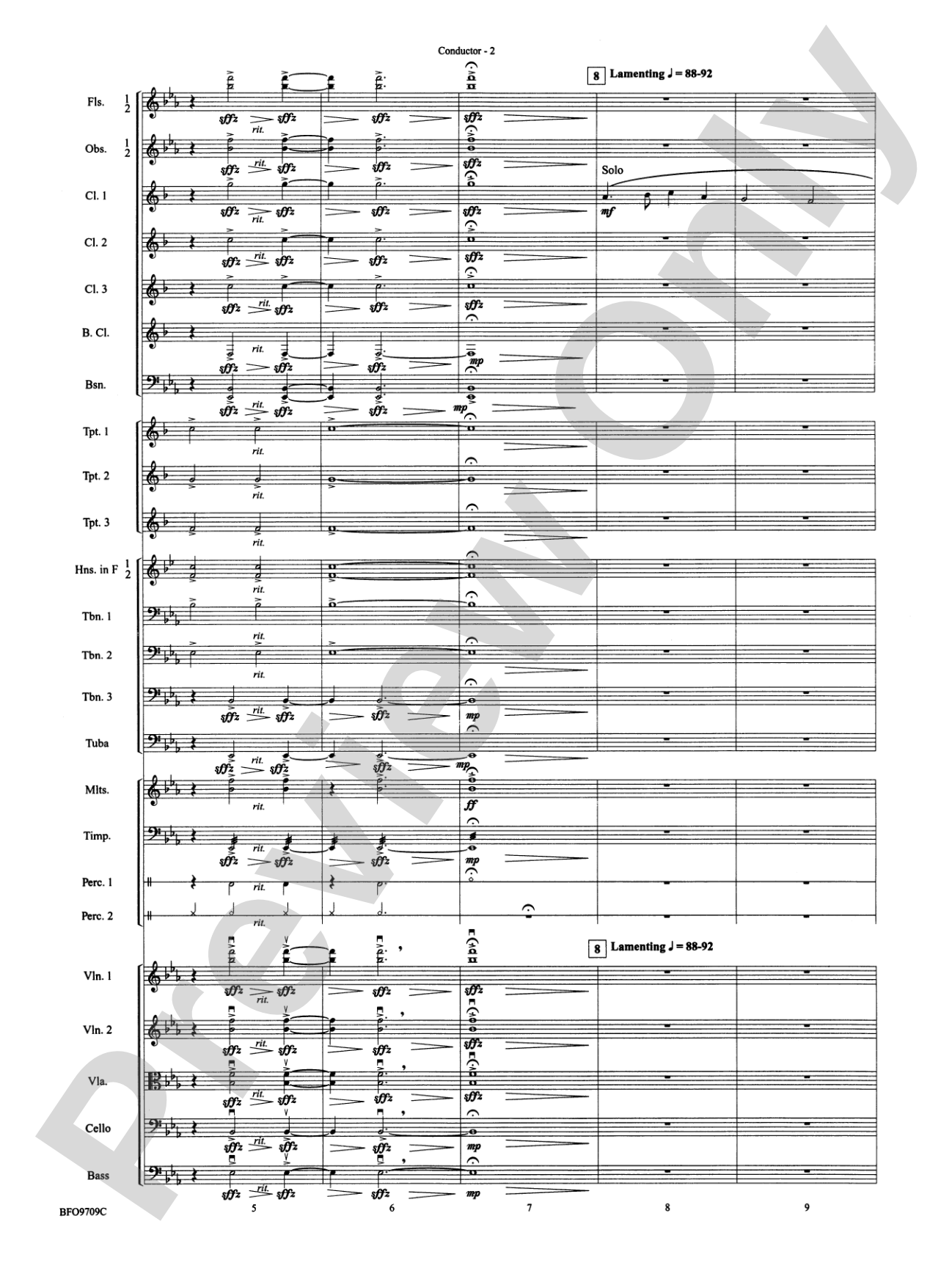
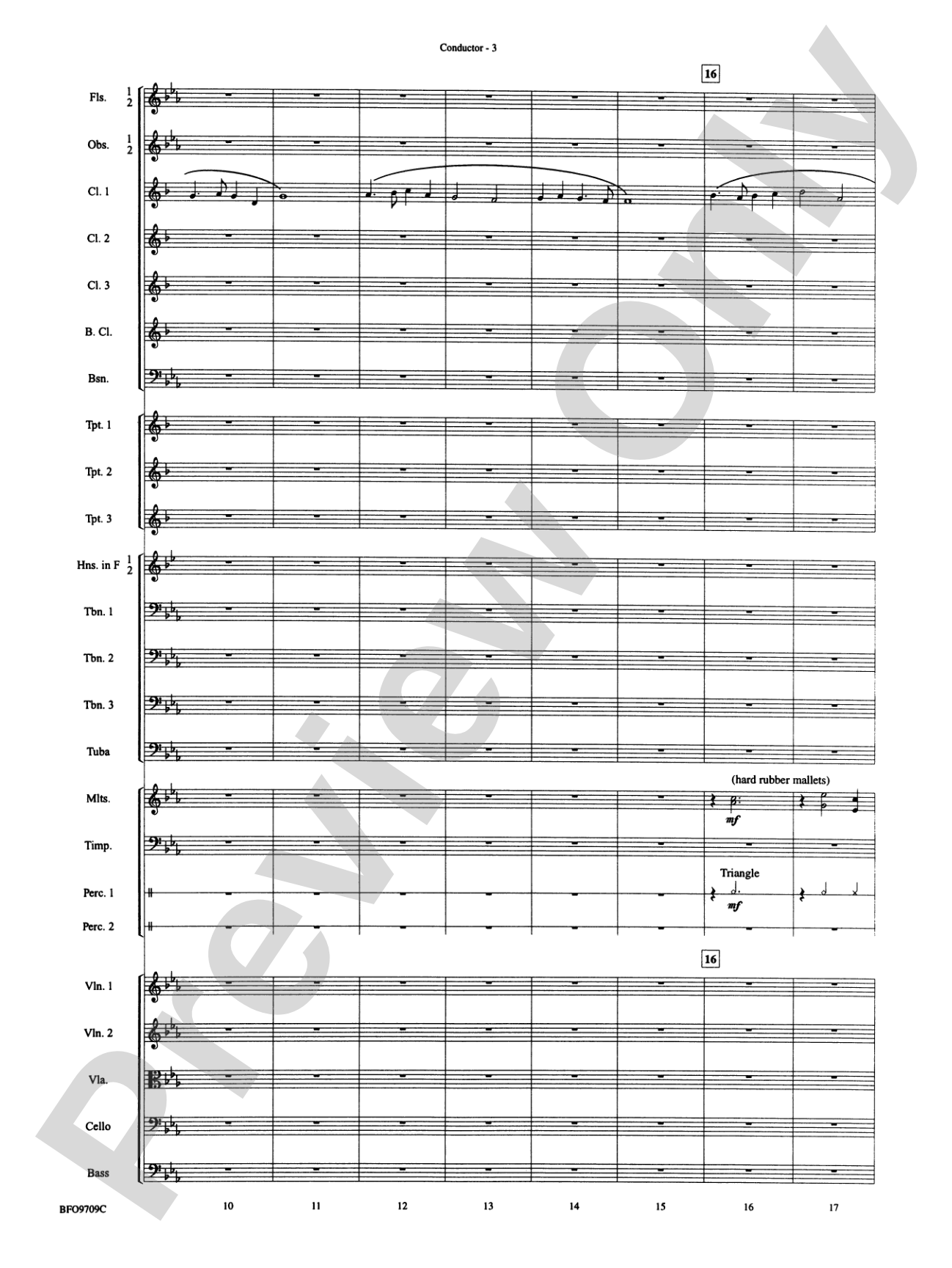
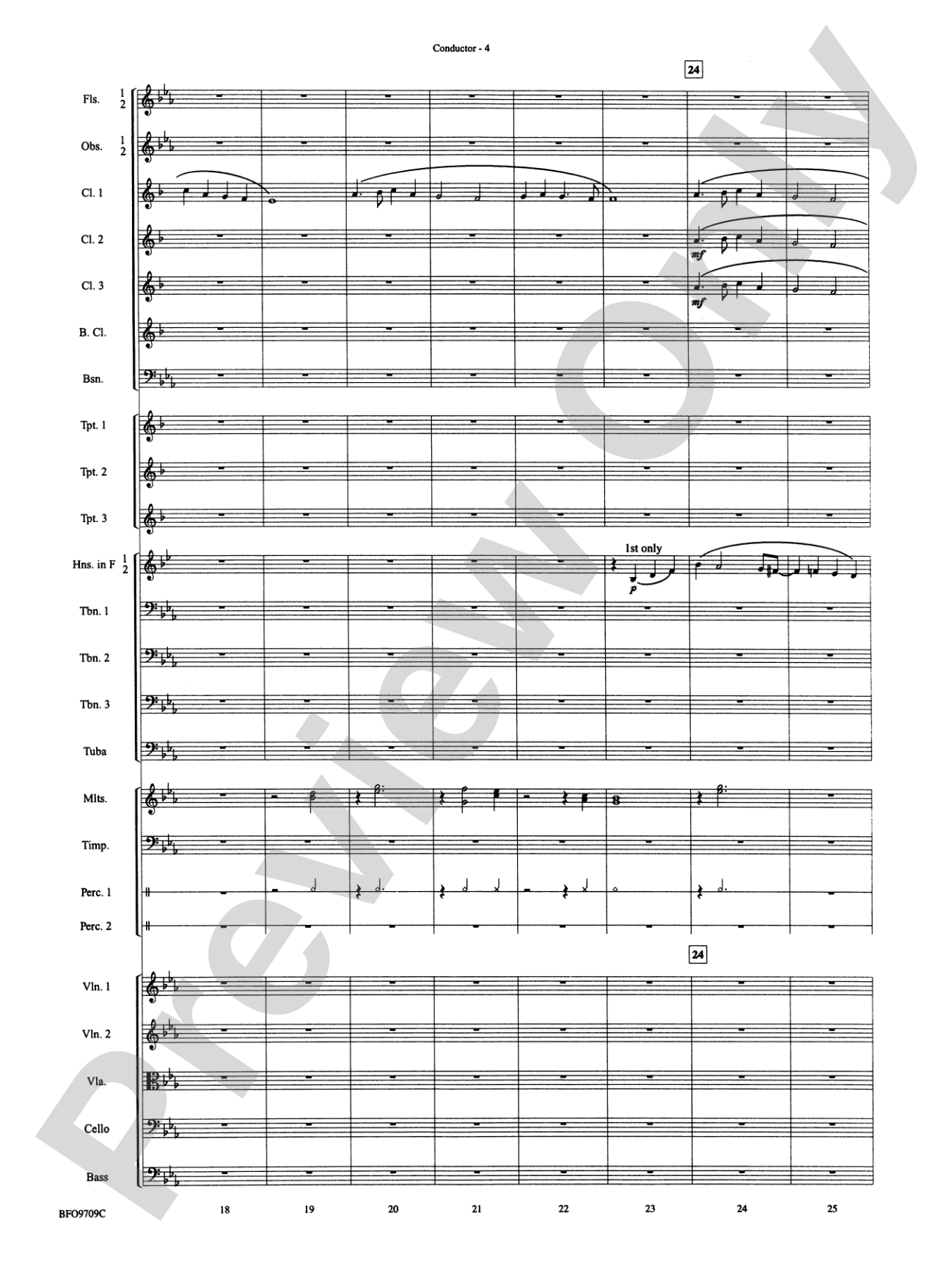
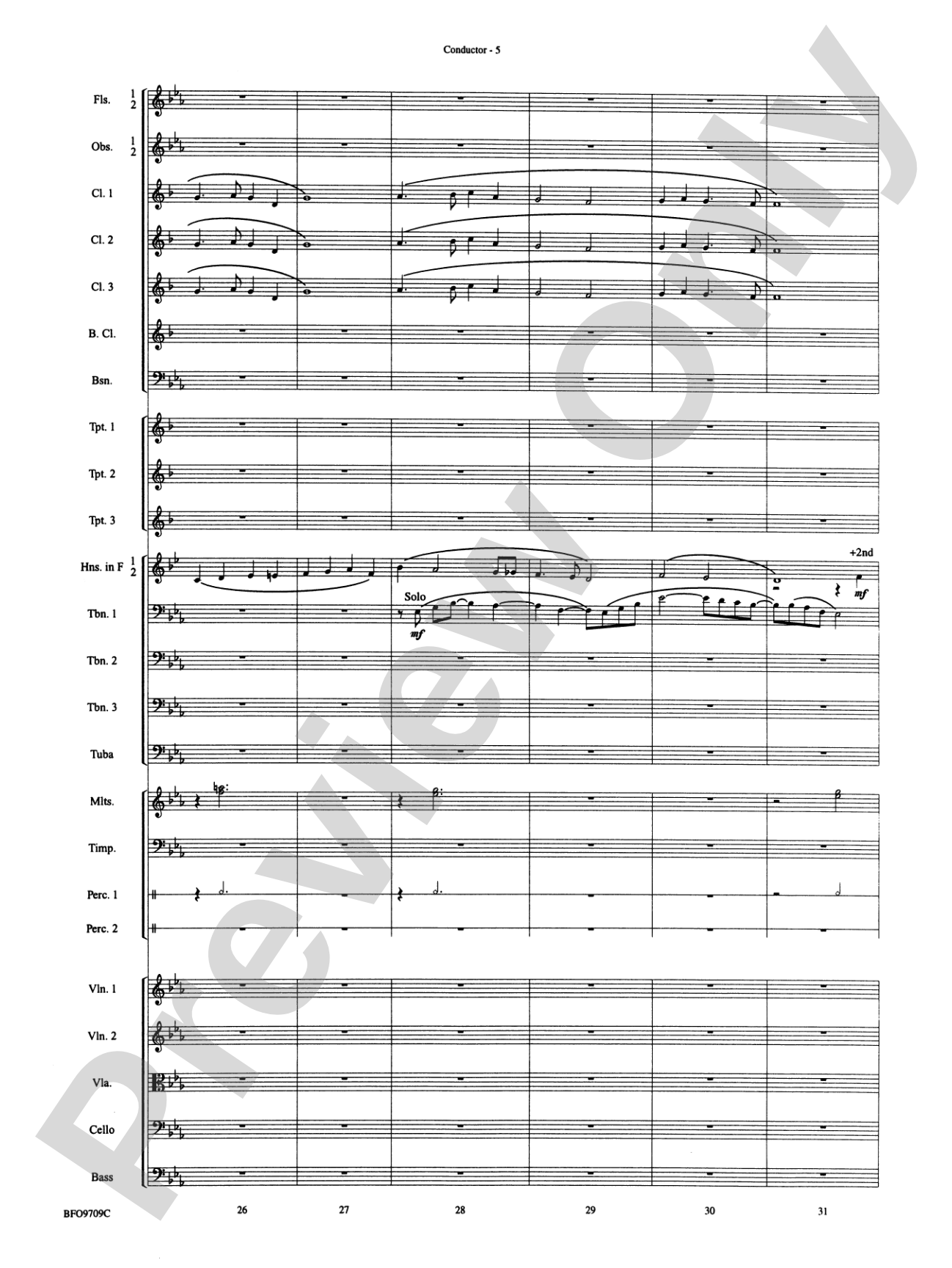
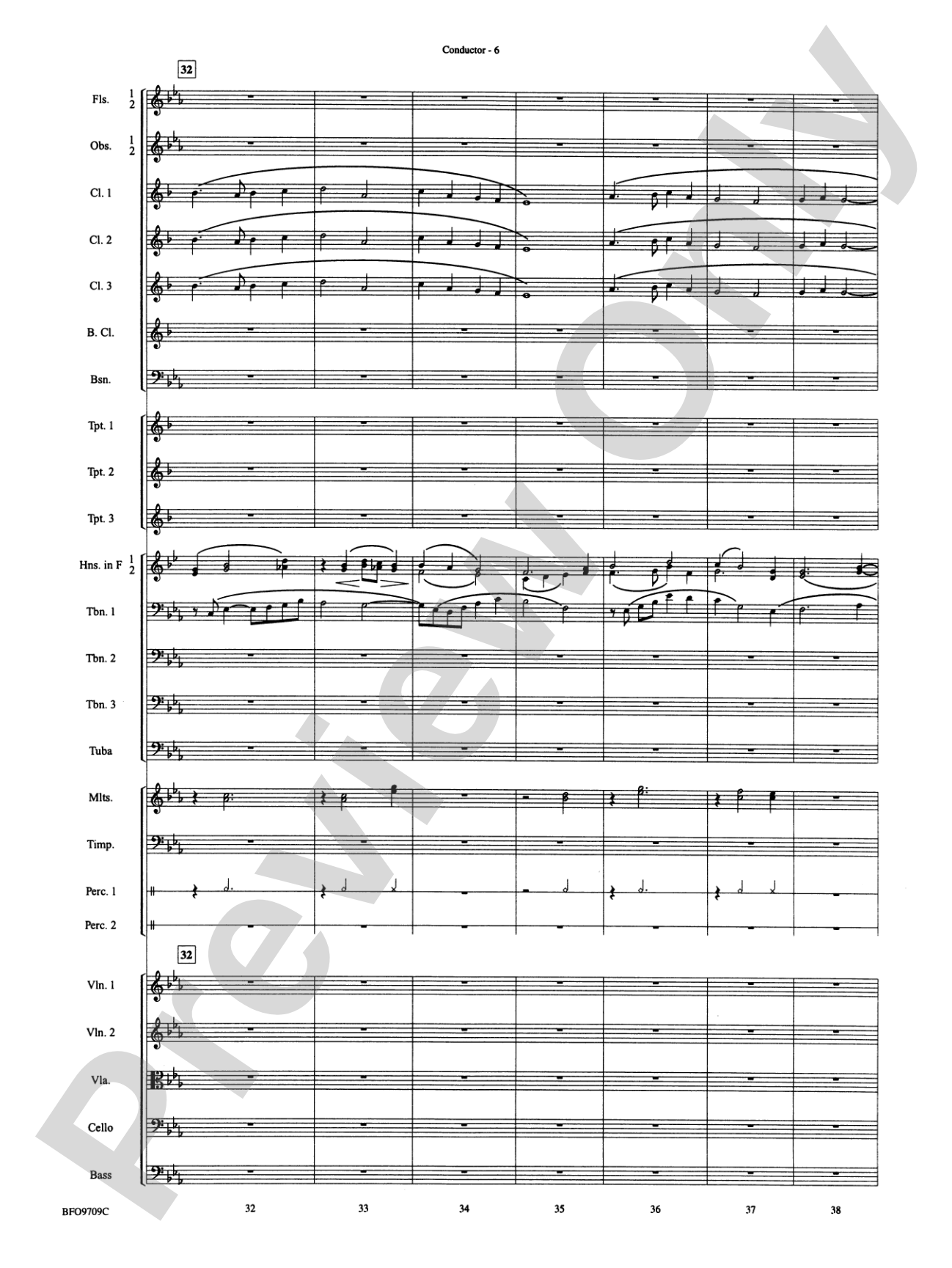
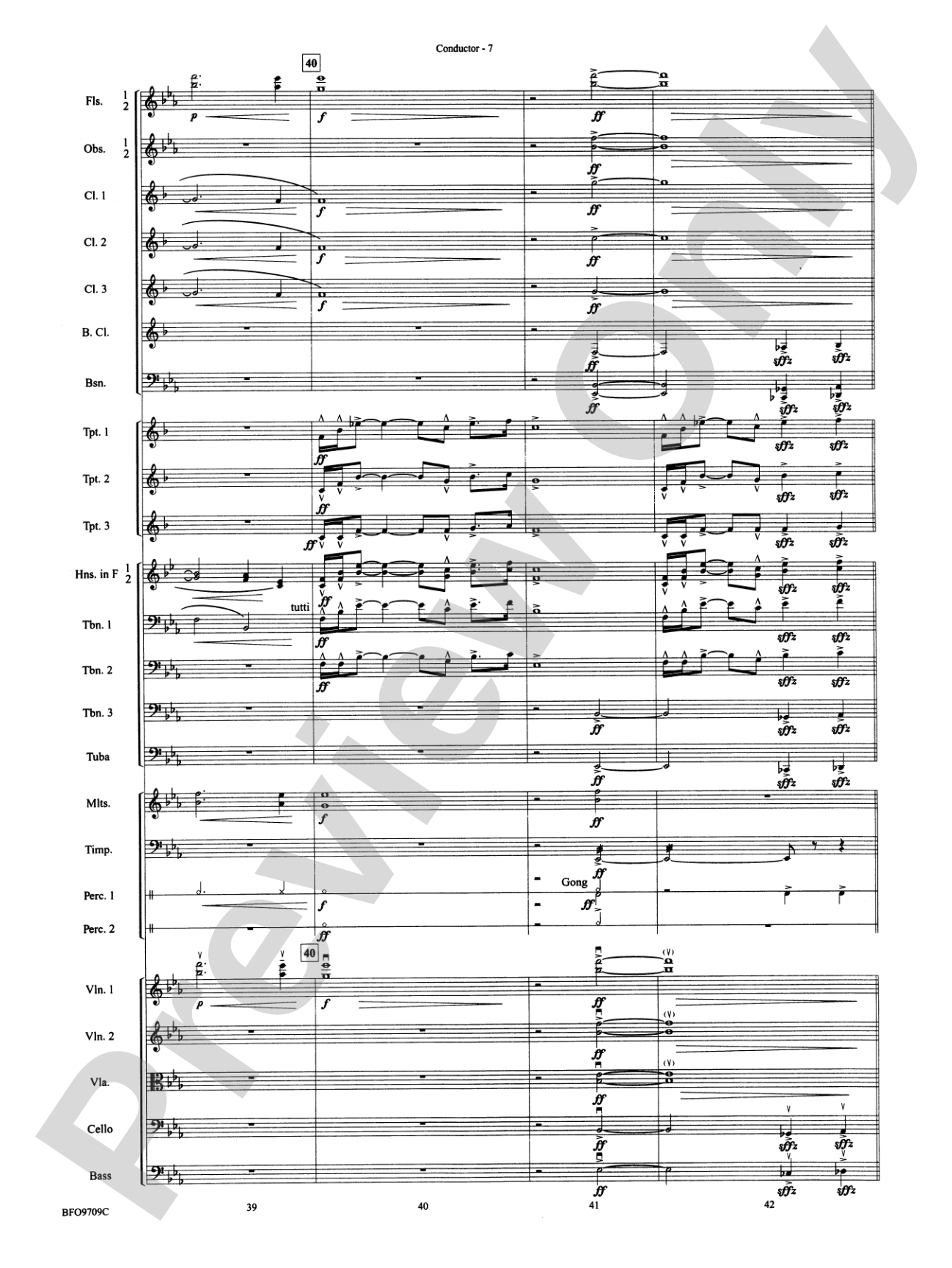
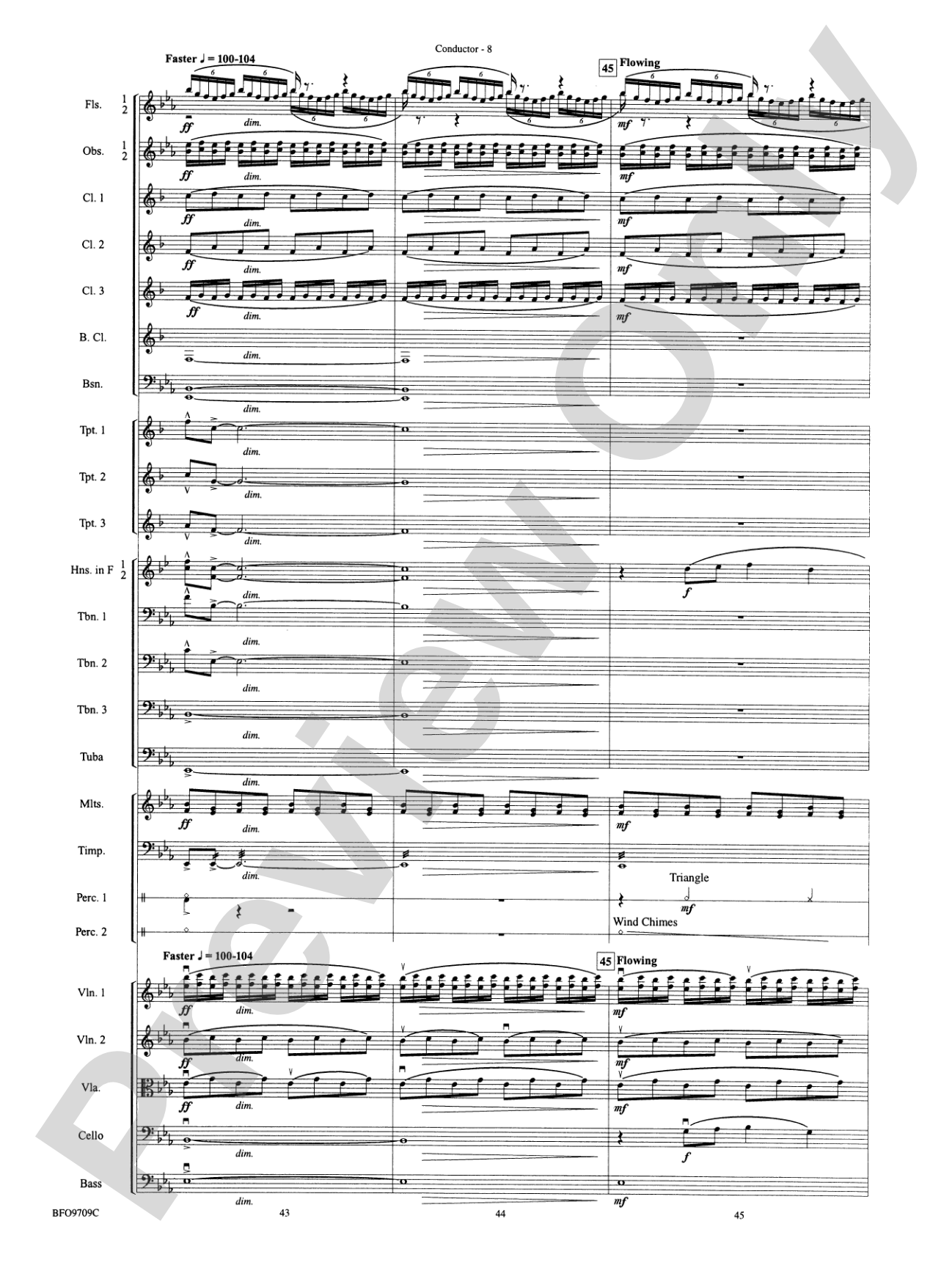
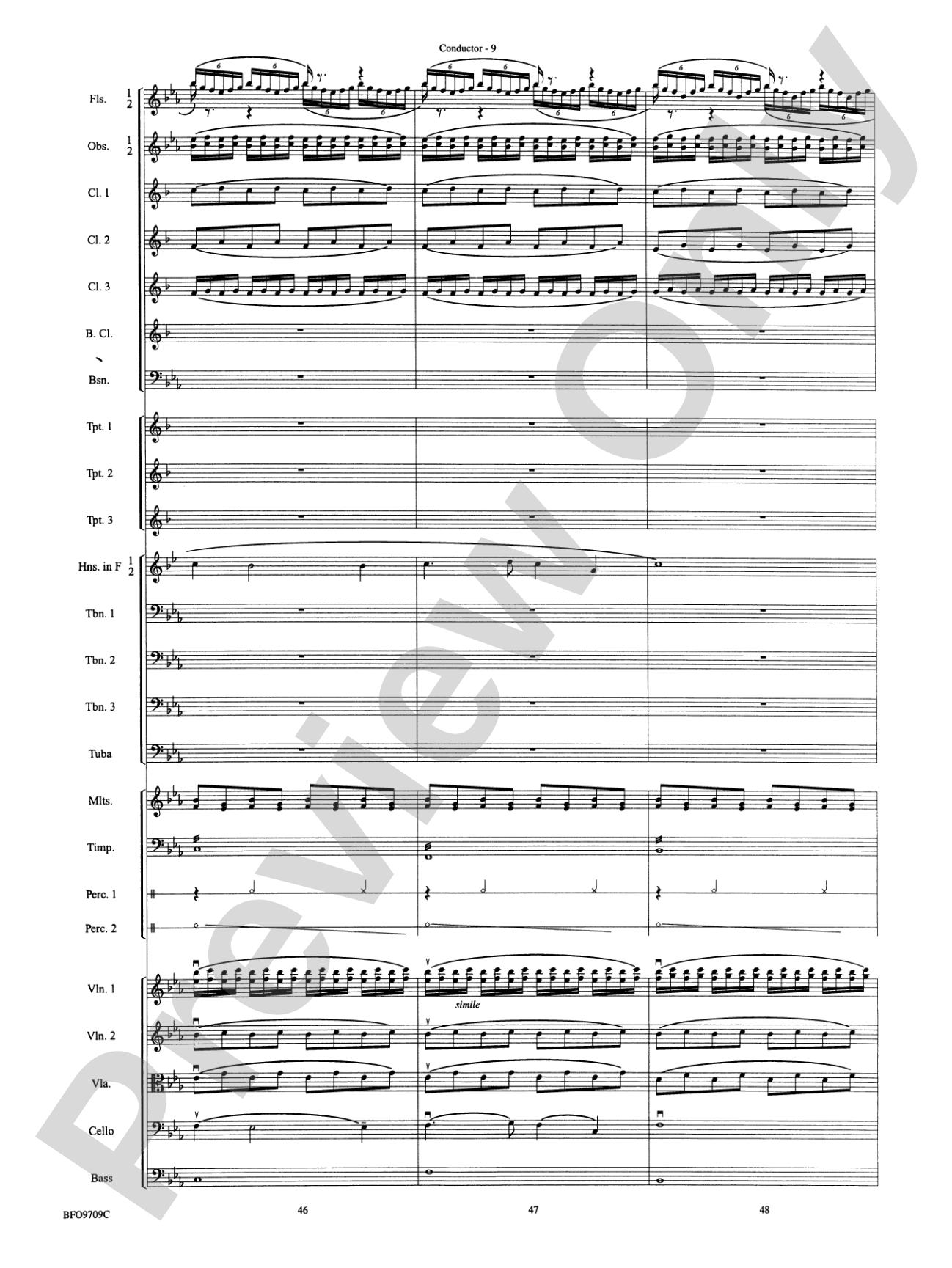
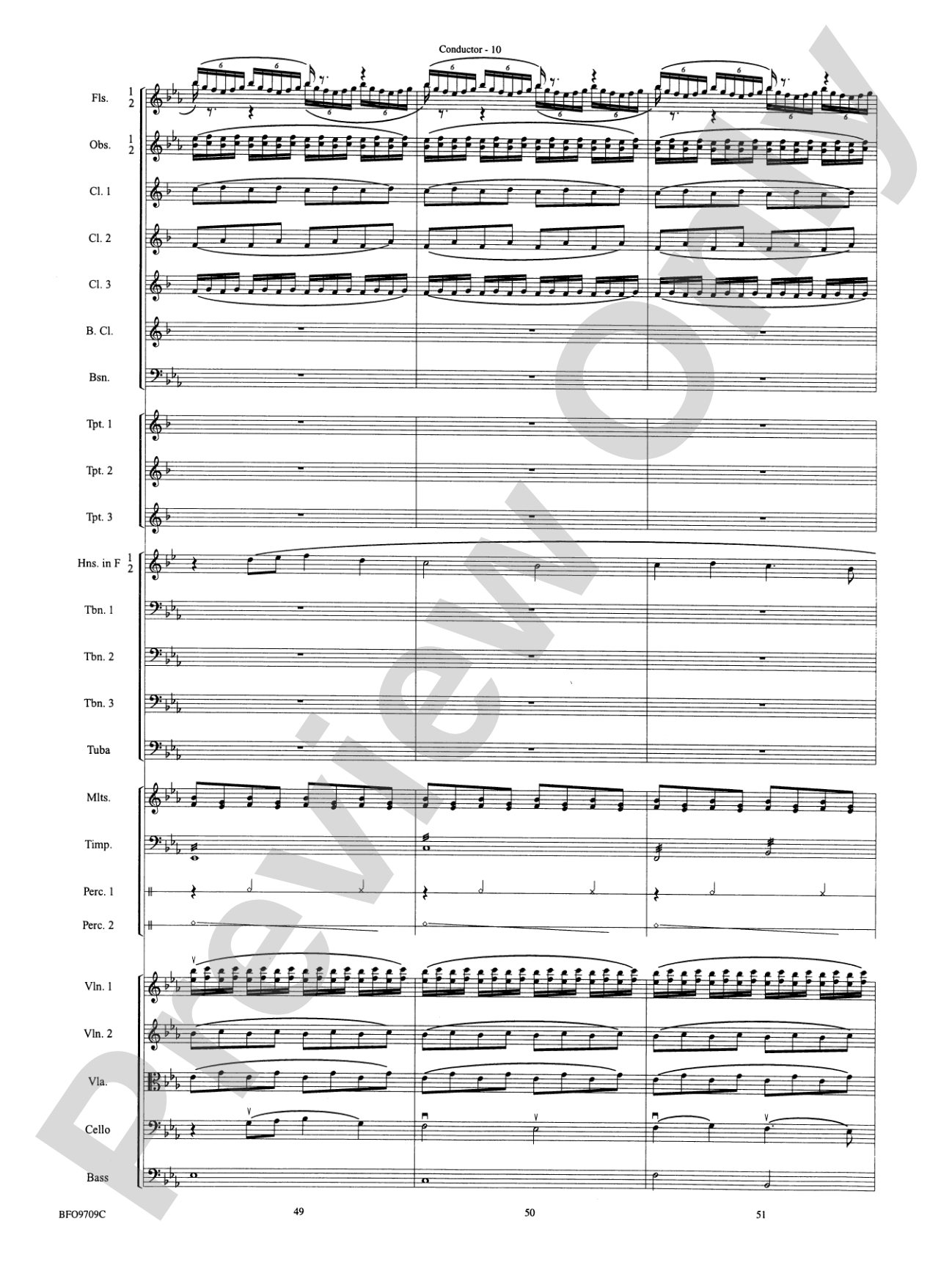
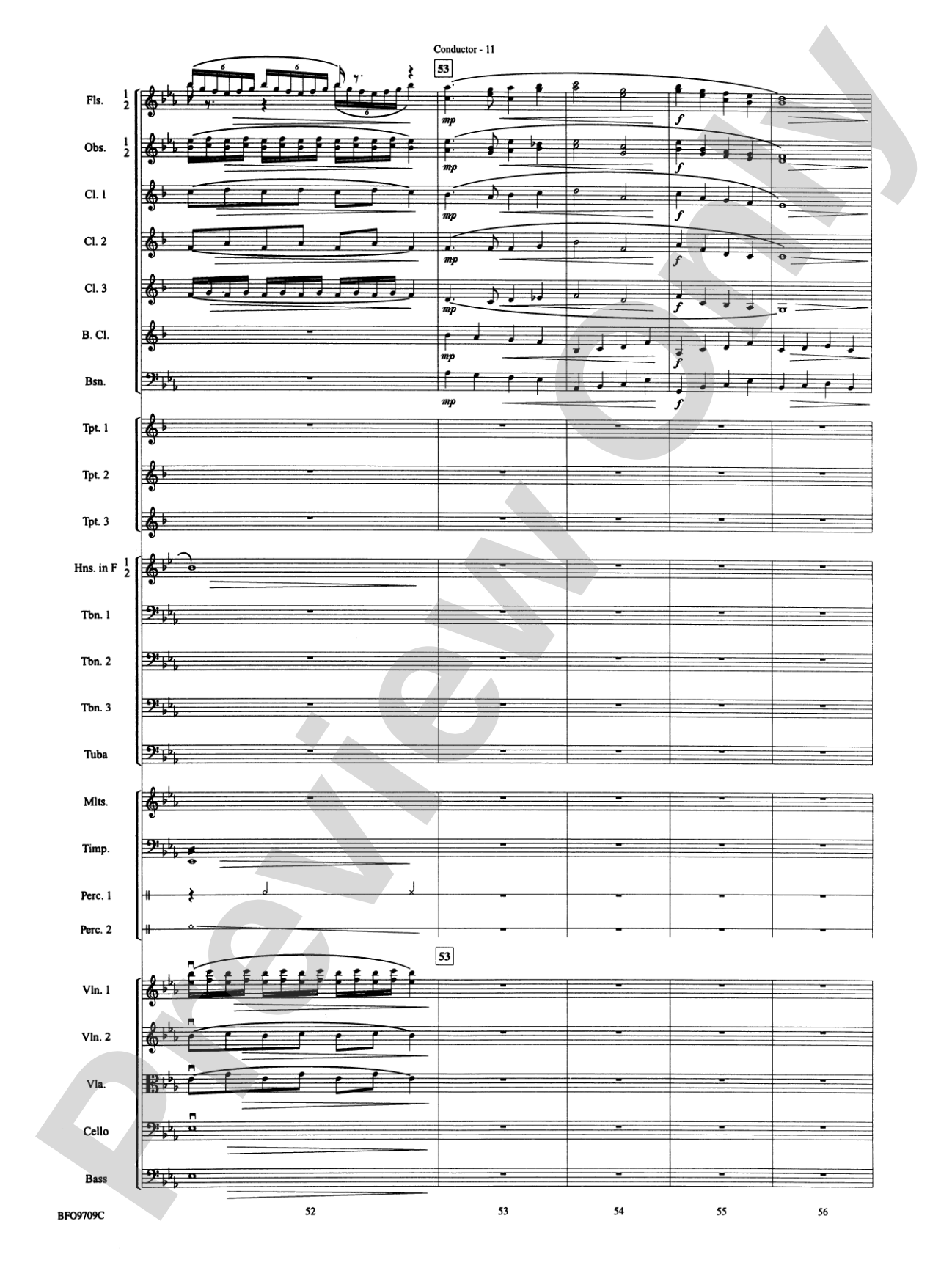
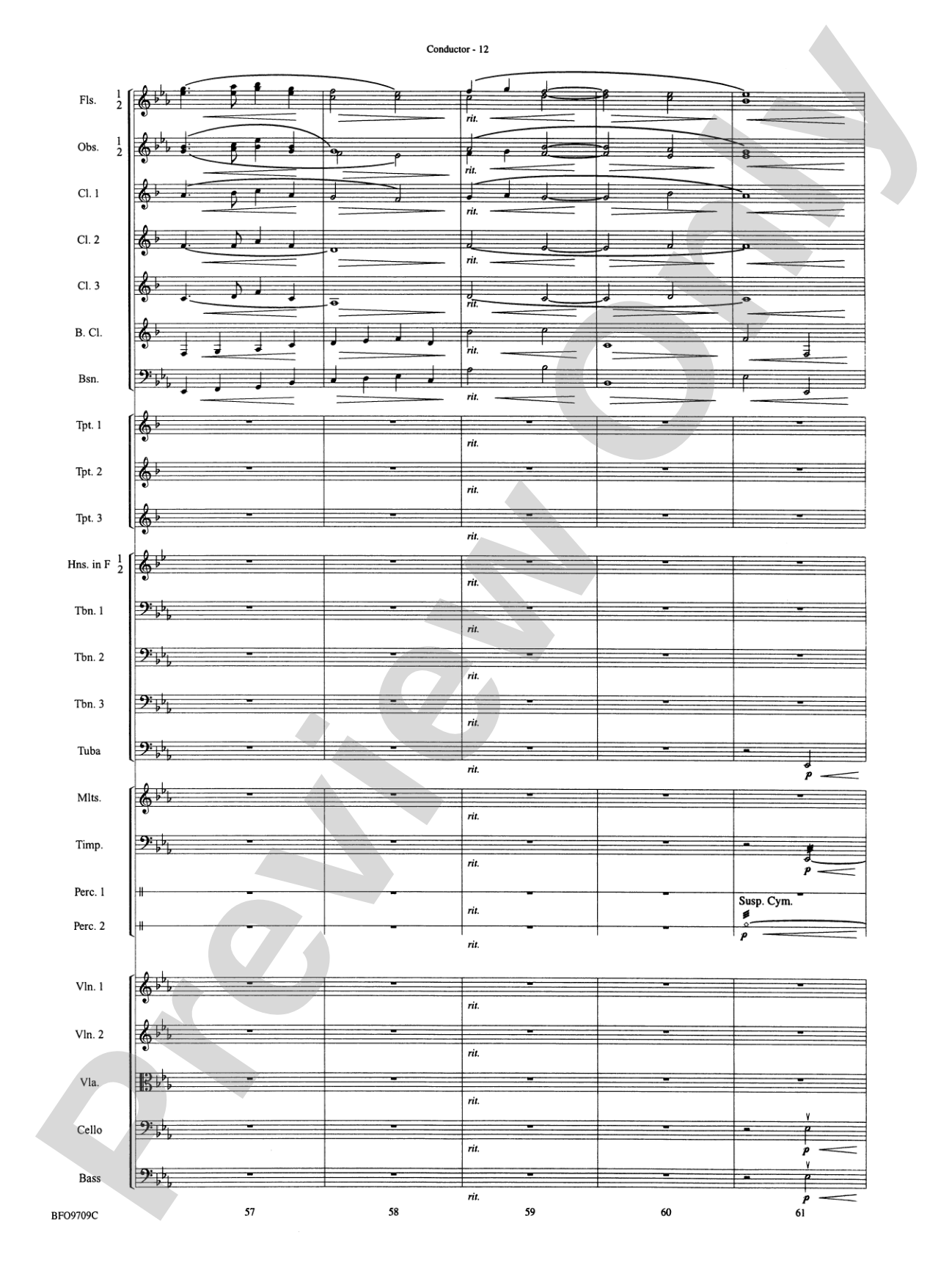
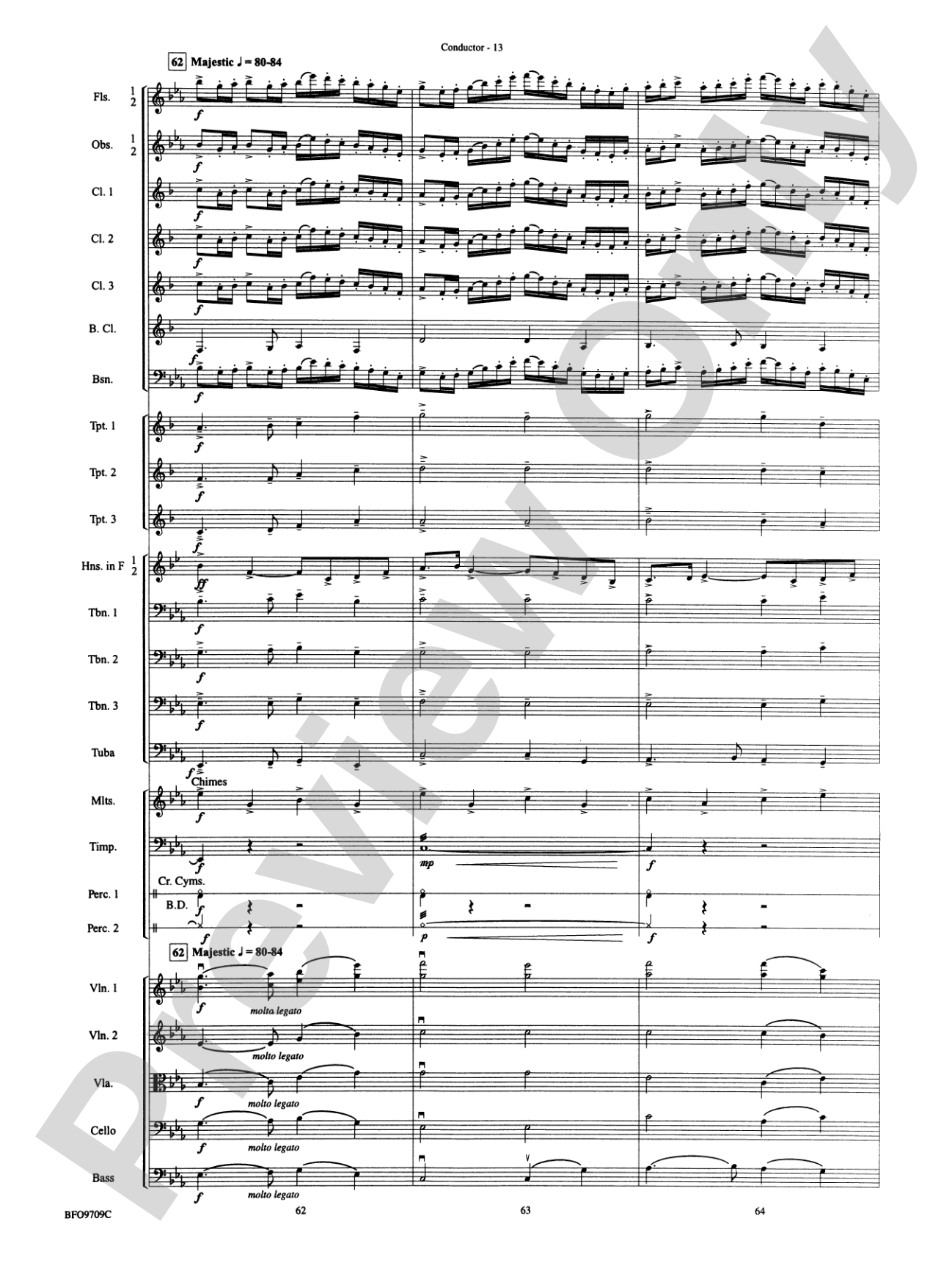
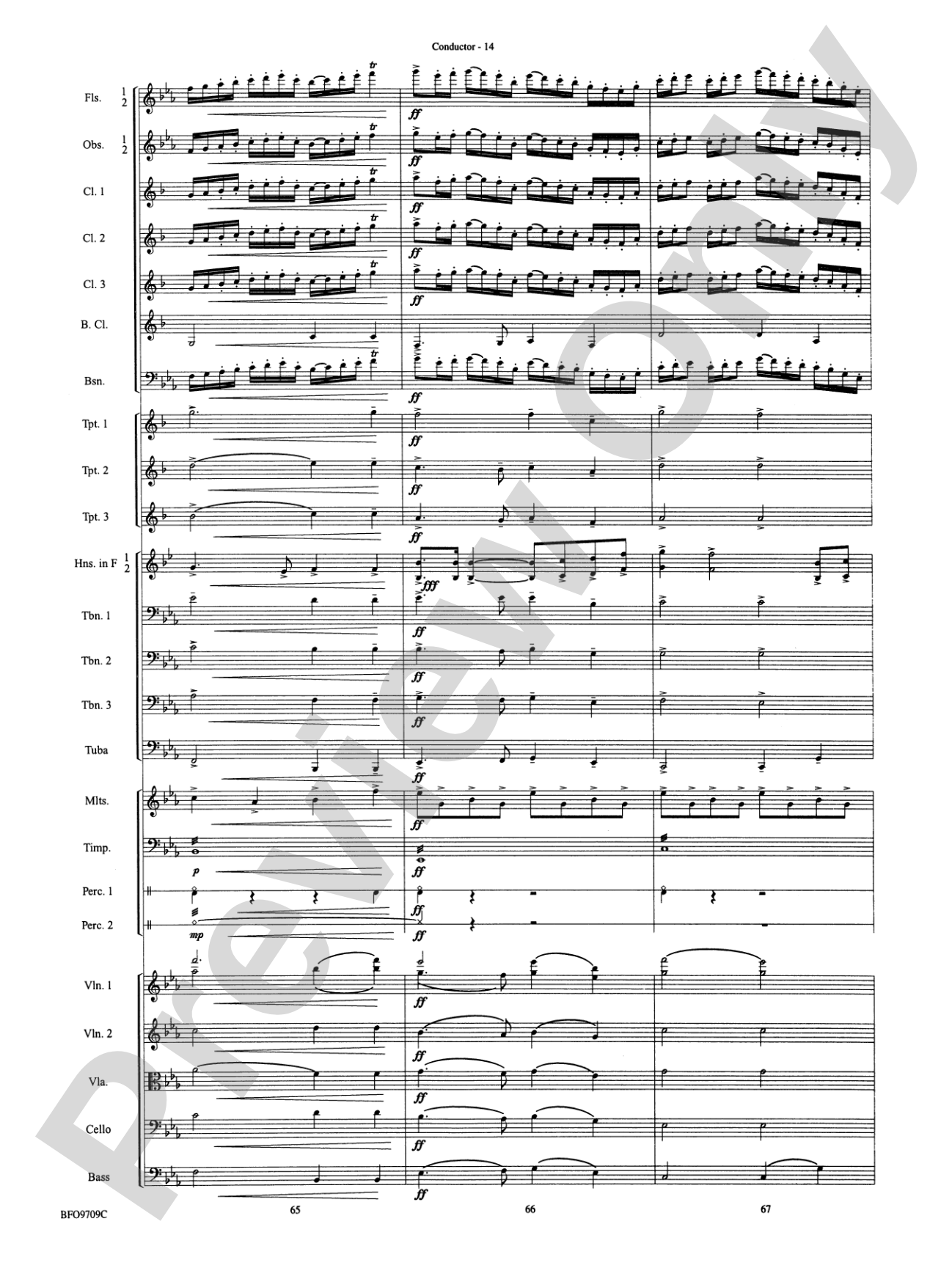
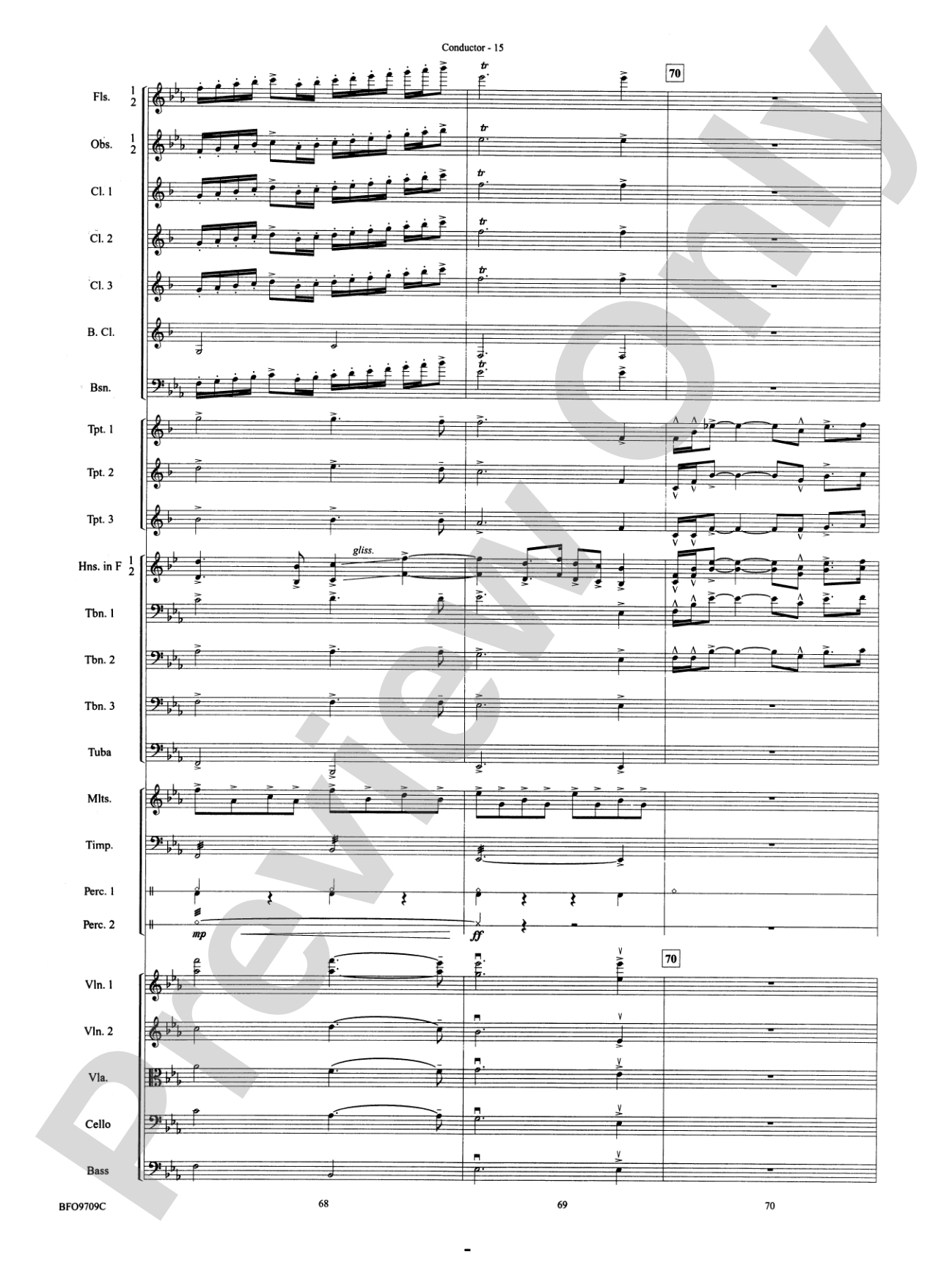
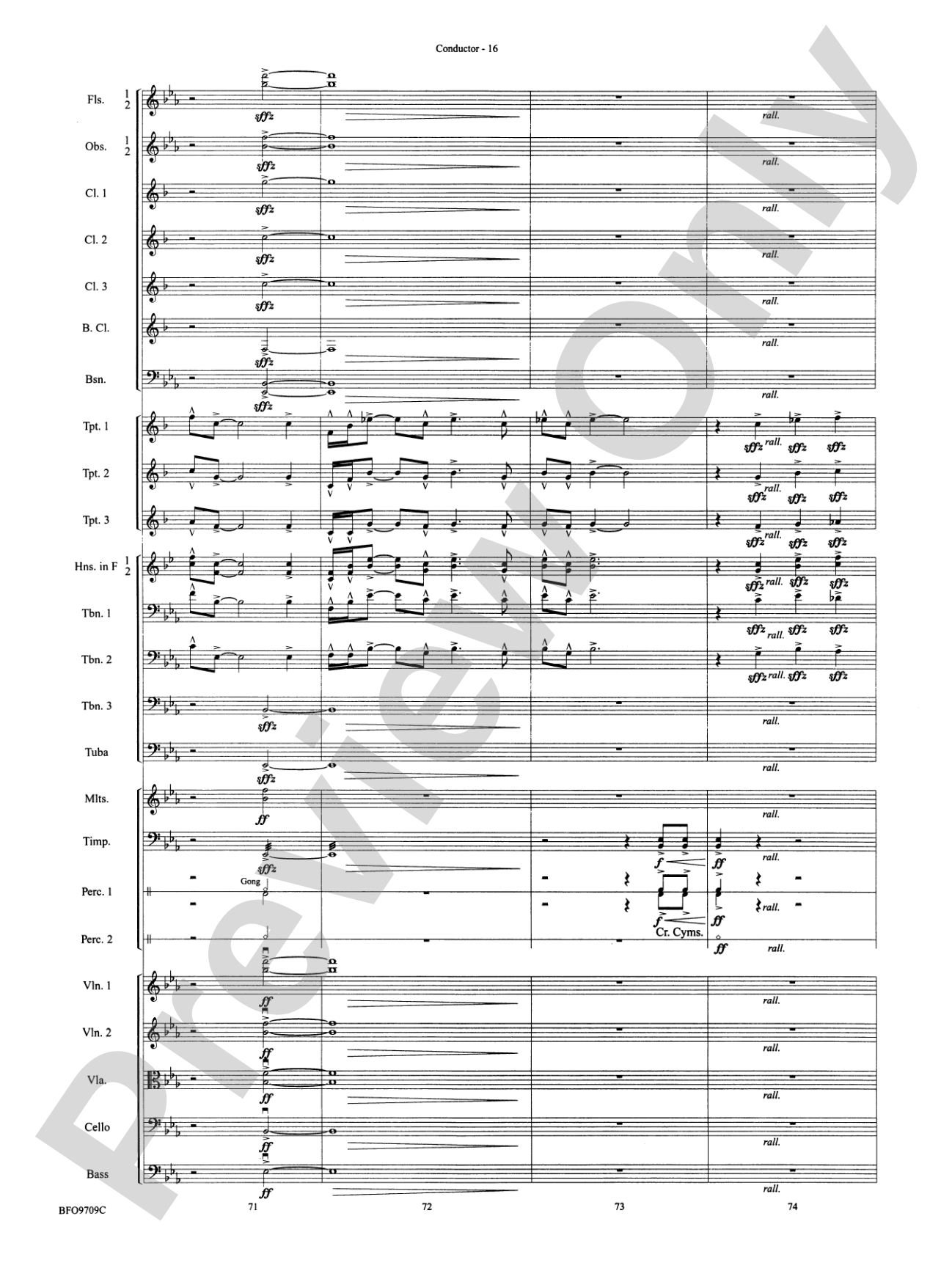
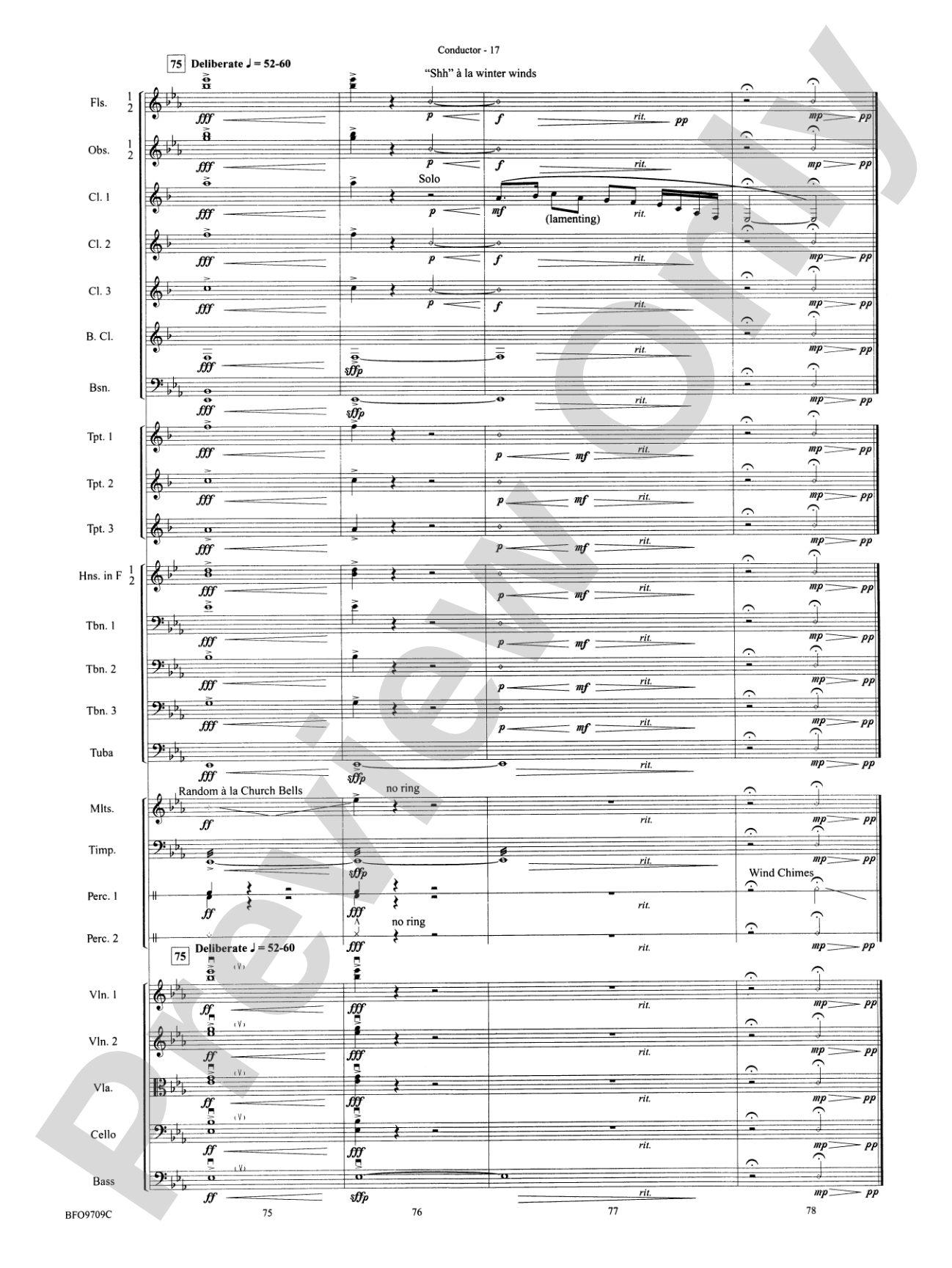


In the Bleak Midwinter: Full Orchestra Conductor Score & Parts
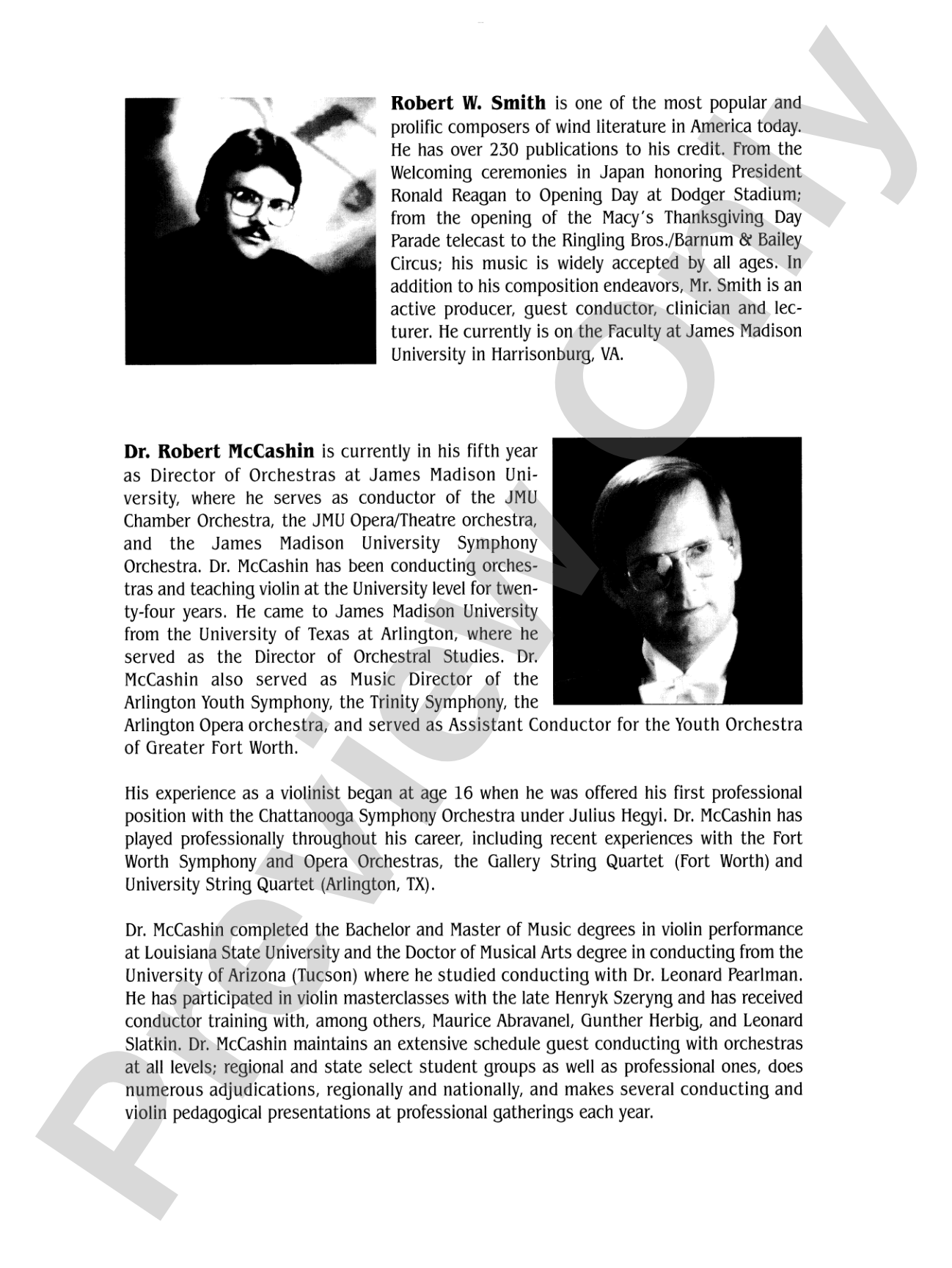
By Gustav Holst / arr. Robert W. Smith
Grade: 3.5
Item: 00-PK-0002237

$73.00
Pickup currently not available
Buy Extra Parts (Digital PDF Download)
Parts Added to Cart!
Related Items
In the Bleak Midwinter: Concert Band Conductor Score & Parts |
$75.00
|
View | |
In the Bleak Midwinter: Concert Band Conductor Score & Parts |
$45.00
|
View | |
In the Bleak Midwinter: Concert Band Conductor Score & Parts |
$75.00
|
View | |
In the Bleak Midwinter: Concert Band Conductor Score |
$12.00
|
View | |
In the Bleak Midwinter: Full Orchestra Conductor Score & Parts |
$73.00
|
View | |
In the Bleak Midwinter: Full Orchestra Conductor Score |
$9.00
|
View | |
In the Bleak Midwinter: Concert Band Conductor Score & Parts |
$45.00
|
View | |
In the Bleak Midwinter: Concert Band Conductor Score |
$8.00
|
View |
Description
Written in honor of the mother of the arranger's wife and her musician children, each solo voice represents the chosen instrument of each individual. Woven together into an astonishingly moving, emotion-filled scoring, this piece uses the many colors, shadings, and dynamic levels of your orchestra very effectively. This is a work of major importance. (4:30)


Don't just read it, hear it, play along with it, and watch your students grow with it. In MakeMusic Cloud, In the Bleak Midwinter: Full Orchestra Conductor Score & Parts comes alive with professional accompaniment, adjustable tempo, and built-in practice tools that turn solo practice into real progress.
Open in the Player
Jump straight in and assign it today.
Start Your Free Trial
Open this title and explore the full library in minutes.
Sample Audio
1
Audio File
--:--
0:00
0:00
Sample Video
Additional Details
Series:
Belwin Concert Full Orchestra
Publisher:
Alfred Music
Page Count:
182
SKU:
00-PK-0002237
More about this title
About the Composer: Gustav Holst
Gustav Holst (1874-1934) stands as one of the twentieth century's most distinctive orchestral voices. His gift for luminous orchestration and harmonic innovation shaped generations of composers and conductors, making his works staples of the concert repertoire and music education.
Why we love this
Robert W. Smith's arrangement honors the original carol's spiritual depth while unlocking the full expressive palette of your orchestra. Each instrumental voice carries personal weight, making this far more than a holiday encore; it becomes a meaningful tribute that moves both musicians and audiences. The Grade 3½ scoring makes Holst's sophisticated harmonic language accessible without diluting its emotional impact.
What to expect
The piece radiates quiet reverence before gradually opening into warmer, more confident harmonic spaces. Holst's harmonic language, here orchestrated with remarkable sensitivity, creates moments of luminous beauty alongside passages of genuine depth and contemplation.
Who it's for
This arrangement serves orchestras of intermediate-to-advancing skill seeking meaningful holiday programming with depth beyond typical seasonal fare. It works equally well for conductors building winter concert repertoire that satisfies both ensemble learning and audience connection, and for directors seeking sacred concert material that doesn't require a choir.
How to get the most out of it
- Shape the dynamic arc across the full four-and-a-half minutes as a single emotional arc rather than movement-by-movement. Let the accumulating orchestral colors build gradually toward moments of intensity, then pull back to allow space for reflection.
- Balance the solo instrumental lines carefully so each voice emerges distinctly during its featured passage. These solos carry programmatic meaning, not mere decoration, so they need clarity without dominating the ensemble texture.
- Use the range of mutes and special effects sparingly but intentionally. The scoring exploits orchestral colors effectively, so subtle choices in articulation and tone production will enhance the emotional storytelling.
- Establish a slow enough tempo that allows the piece's harmonic movement and orchestral shifts to register clearly with your ensemble and audience. Rushing diminishes both the contemplative opening and the climactic moments.
How to use it
Program this as the emotional centerpiece of a winter concert rather than a filler encore. Its four-and-a-half minute duration and programmatic architecture make it strong programming alongside secular works, or as the anchor of a spring memorial concert if you're observing Mother's Day. The Grade 3½ level means it will challenge developing orchestras meaningfully while remaining achievable in rehearsal time.
Skills your students will build
- Balancing independent instrumental solos within full ensemble texture
- Shaping extended dynamic arcs and harmonic movement across a longer form
- Reading and executing subtle articulation and tone color changes to support musical storytelling
- Ensemble coordination through shifting orchestral weights and sectional prominence