

In That Great Gettin' Up Mornin'!: SATB, a cappella Choral Octavo
Traditional Spiritual / arr. Greg Gilpin
Item: 00-PO-0005808
$2.30
Minimum order quantity: 20 copies
Pickup currently not available
Related Items
In That Great Gettin' Up Mornin'!: SATB, a cappella Choral Octavo |
$2.30
|
View |
Description
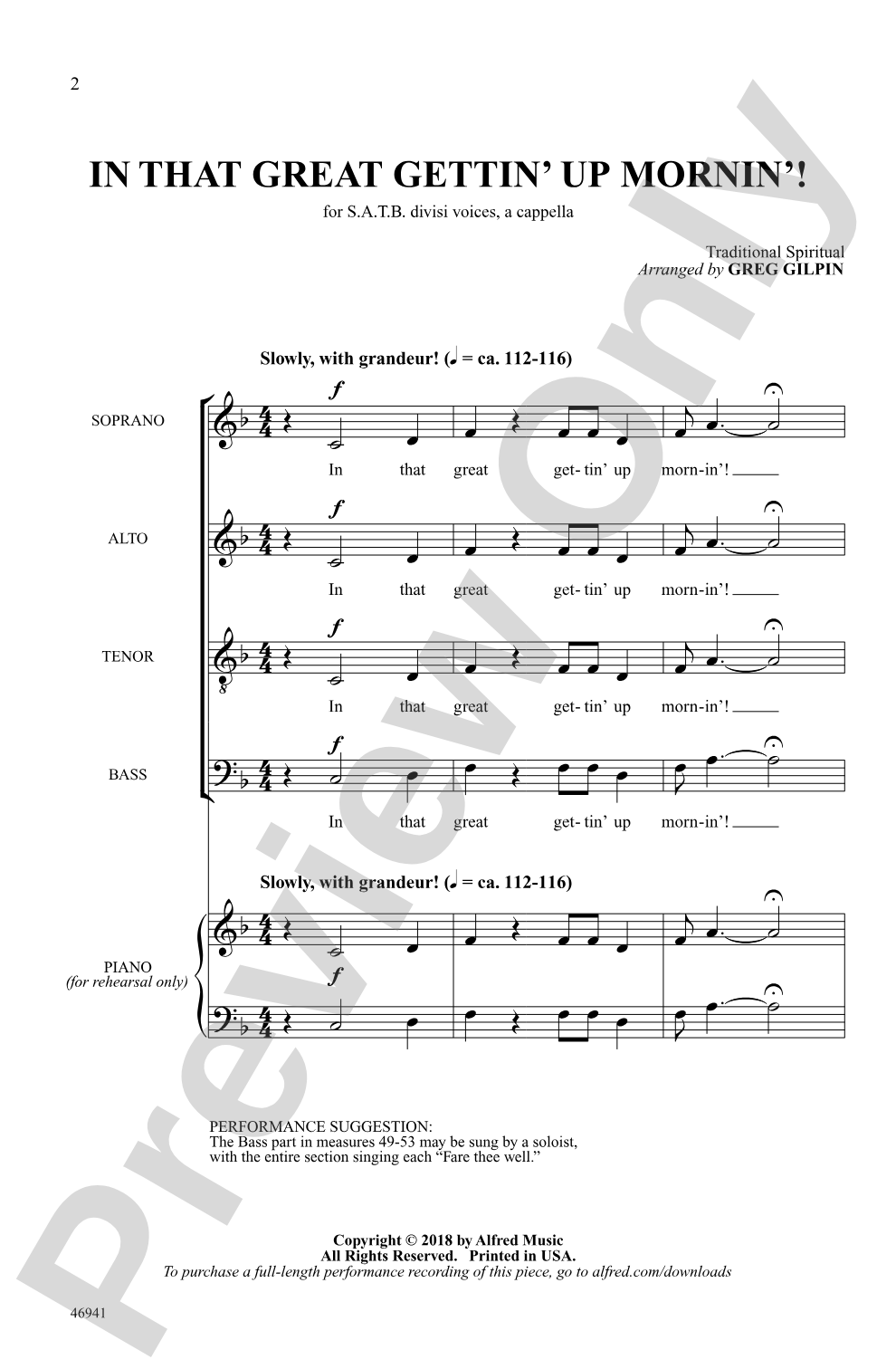
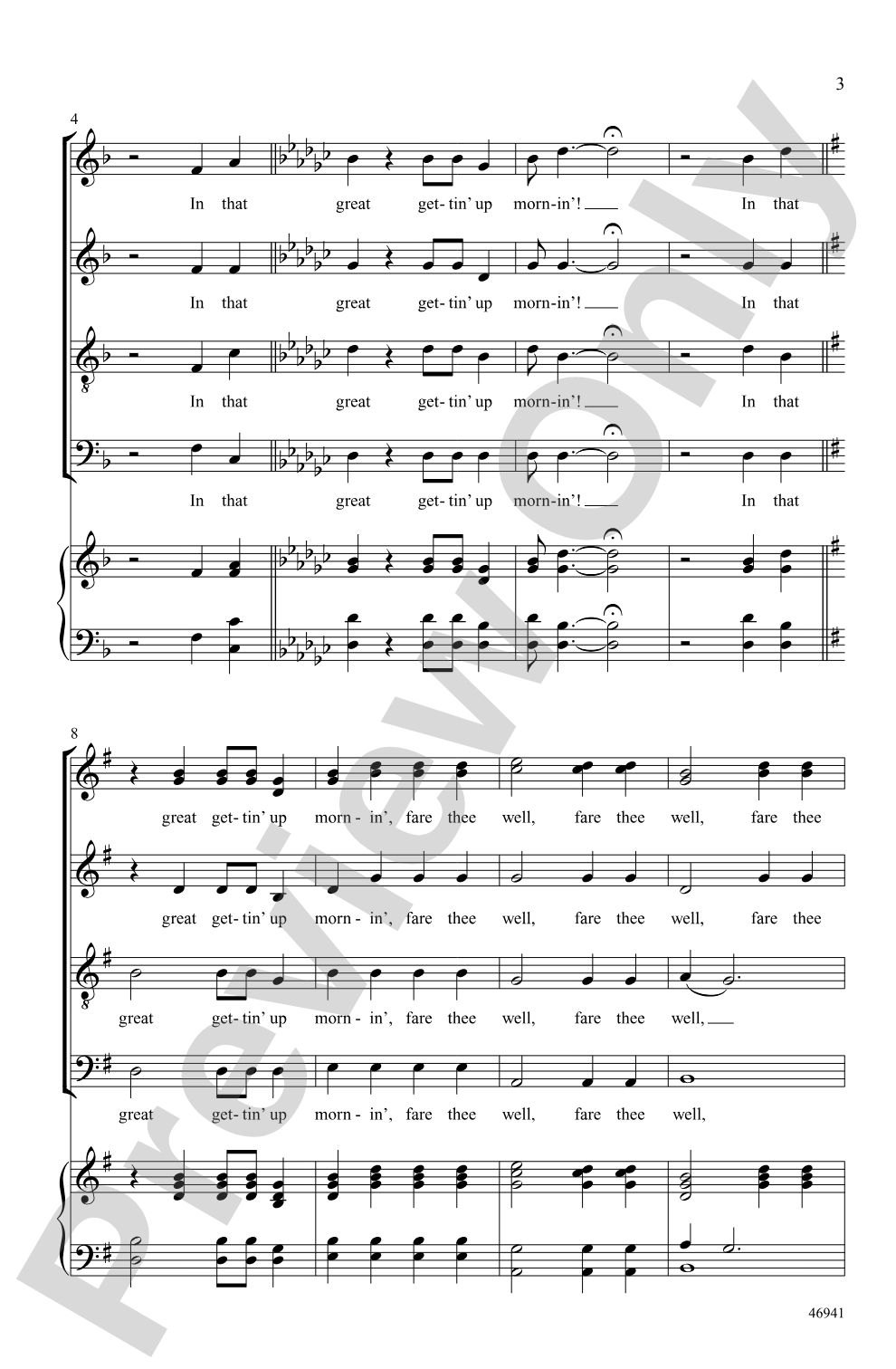
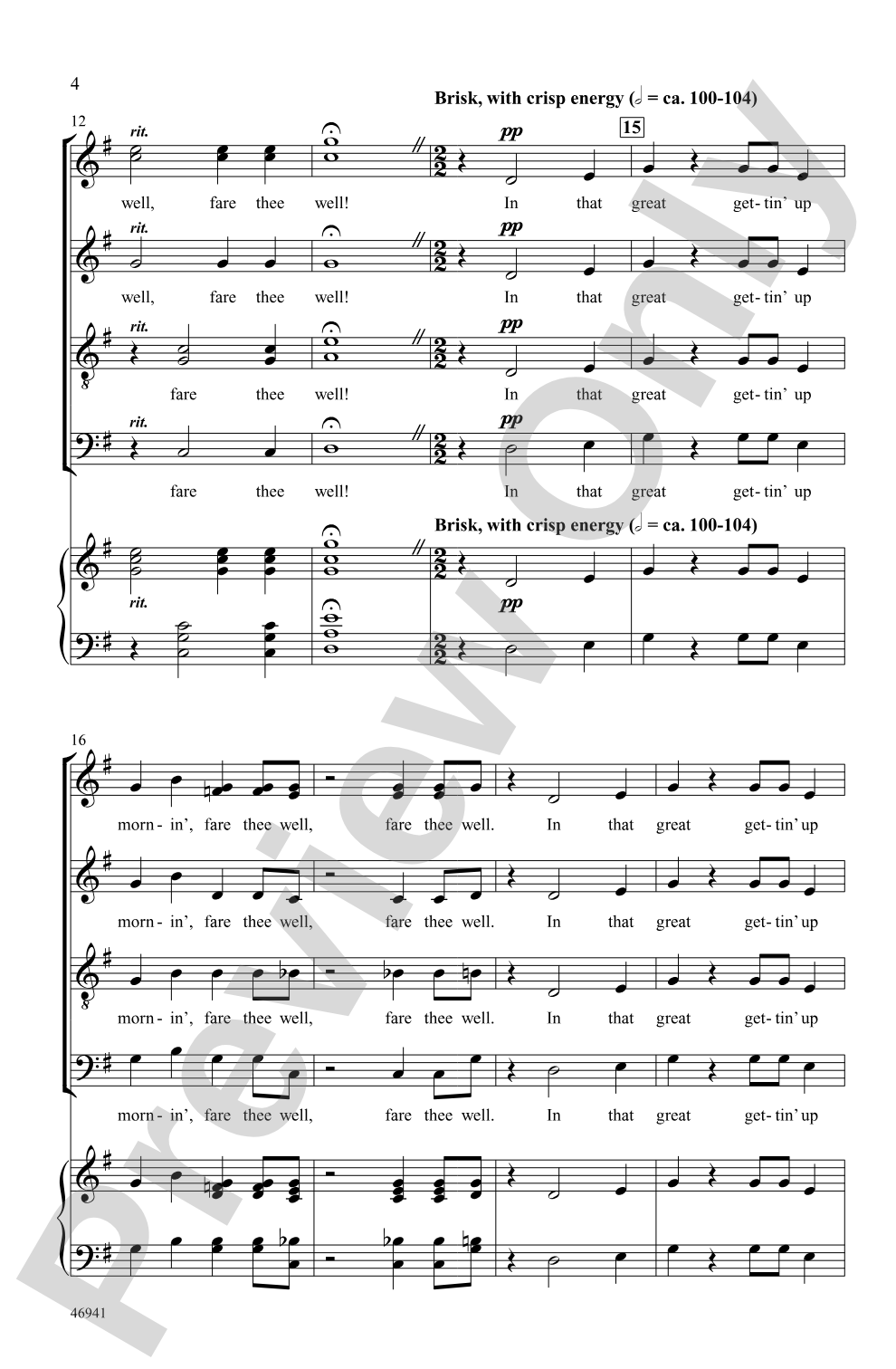
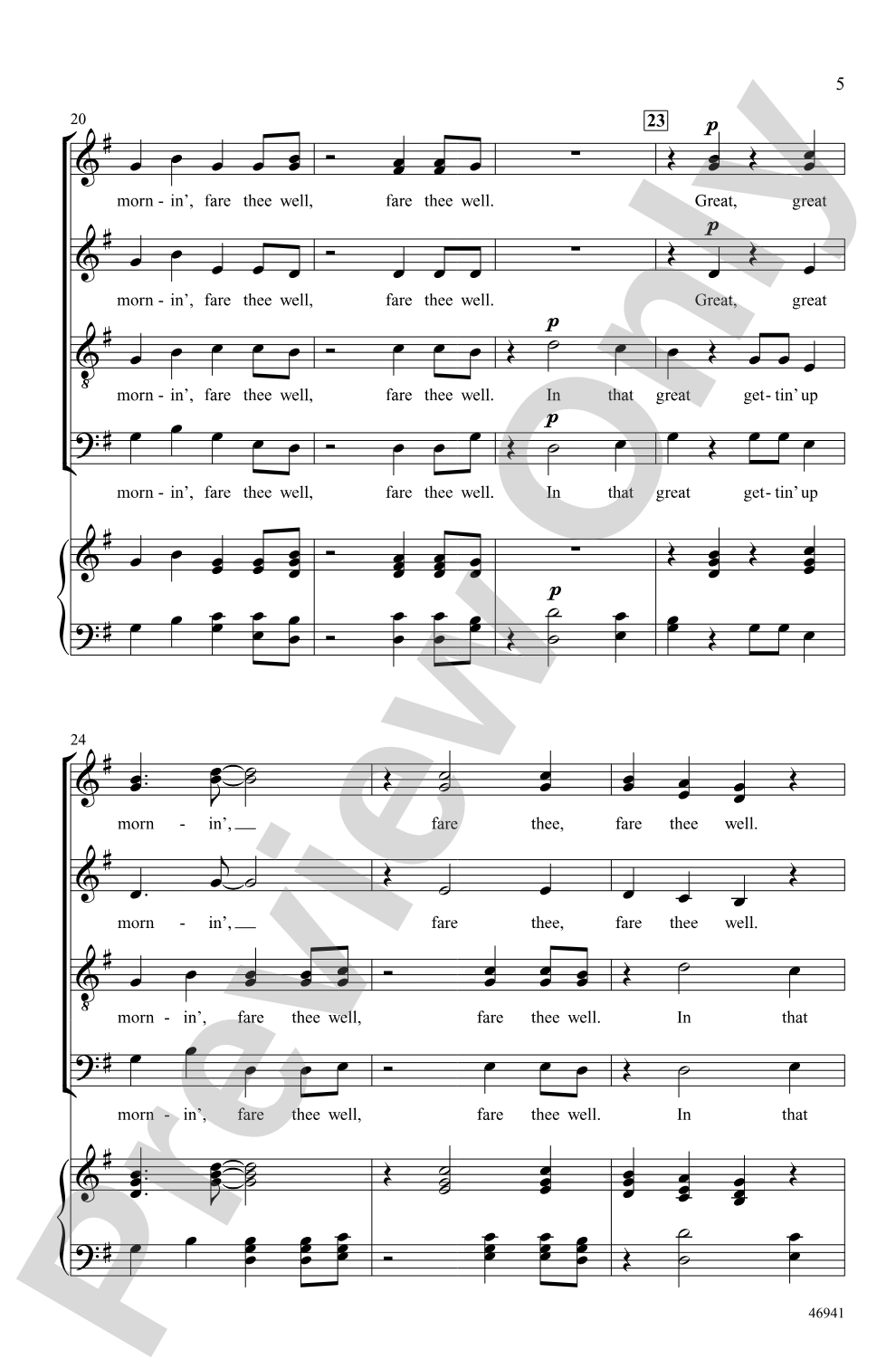
A grandiose choral introduction travels through several keys to open this polished setting of the traditional spiritual, which soon breaks into a joyously brisk treatment featuring call-and-response between sections, terraced dynamic contrasts, and thick divisi textures. Fantastic a cappella writing for advanced choirs.


In That Great Gettin' Up Mornin'!: SATB, a cappella Choral Octavo isn't in MakeMusic Cloud just yet...but it could be. Let us know you'd like to see it, and you'll help shape what comes next. In the meantime, start a free trial and dive into thousands of interactive titles your students can play along with today.
Request This Title
Tell us you want it.
Start Your Free Trial
Explore everything that's ready to play right now.
Sample Audio
1
Audio File
--:--
0:00
0:00
Sample Video
Additional Details
Series:
Alfred Choral Designs
Publisher:
Alfred Music
Page Count:
20
SKU:
00-PO-0005808
More about this title
About the Arranger: Greg Gilpin

Greg Gilpin brings both compositional sophistication and deep choral leadership experience to his arrangements. An ASCAP award-winning composer, he has conducted performances at Carnegie Hall, Lincoln Center, Ryman Auditorium, Sydney Opera House, Royal Festival Hall, and Harpa Concert Hall. As Director of Educational Choral Publications for Shawnee Press, Gilpin shapes choral literature for singers at all levels while maintaining his own active conducting and composing career.
Beyond music, Gilpin is a certified financial coach and professional organizer, work that has brought him appearances on Fox and NBC network television. In 2021, he composed the award-winning score for the short film "Rosie's Rescue" and collaborated with opera singer Angela Brown on a new arrangement of "What Child is This?" premiered with the Indianapolis Symphonic Choir. He holds membership in ACDA, NAfME, SAG-AFTRA, and is a Life Loyal Member of Phi Mu Alpha Sinfonia.
Why we love this
Gilpin's arrangement stakes out genuine dramatic territory by opening with a modulatory introduction that travels through several keys before settling into the spiritual itself. The contrast between that polished, serious opening and the brisk, exuberant call-and-response section that follows gives your choir a genuine arc to shape. Directors will appreciate how the terraced dynamics and thick divisi textures create space for every voice to lock in meaningful parts without ever feeling overcomplicated.
What to expect
The opening unfolds with contemplative grandeur as the voices move through shifting harmonic territory, creating an almost processional sense of arrival. Once the main treatment kicks in, the mood becomes celebratory and infectious, with call-and-response sections that spark genuine conversation between voice parts. The divisi writing thickens the texture into something rich and full, drawing the listener into a joyous communal moment.
Who it's for
Advanced SATB choirs with secure ensemble blend and the ability to hold independent lines in divisi passages. This arrangement rewards groups comfortable with sophisticated harmonic movement and those looking to program spirituals with real musical depth.
How to get the most out of it
- Balance the harmonic movement in the opening introduction carefully; each key shift should feel deliberate rather than accidental. Have sections rehearse their individual lines across the modulations so everyone hears where they're heading.
- Lock in the call-and-response rhythmically before worrying about blend. Once the antiphonal exchanges sit solidly, the energy will carry the piece forward naturally.
- Mark your divisi moments clearly in rehearsal. Assign singers to specific octaves or doublings so they understand exactly which notes belong to their part, not just their voice section.
- Shape the terraced dynamics as architectural choices, not as sudden level shifts. Each dynamic level should feel earned by the harmonic or textural change it accompanies.
How to use it
This works beautifully as the centerpiece of a spiritual-focused concert or festival program, especially when paired with other arrangements that take the genre seriously. It also serves as a powerful closing number for a general concert, providing both musical substance and the kind of uplifting energy that sends an audience out energized.
Skills your students will build
- Reading and executing call-and-response antiphonal structures
- Maintaining independent lines through multiple divisi doublings
- Following harmonic modulations across an opening section
- Shaping terraced dynamics as expressive tools rather than volume changes
- Blending sectional writing while keeping individual voice clarity