
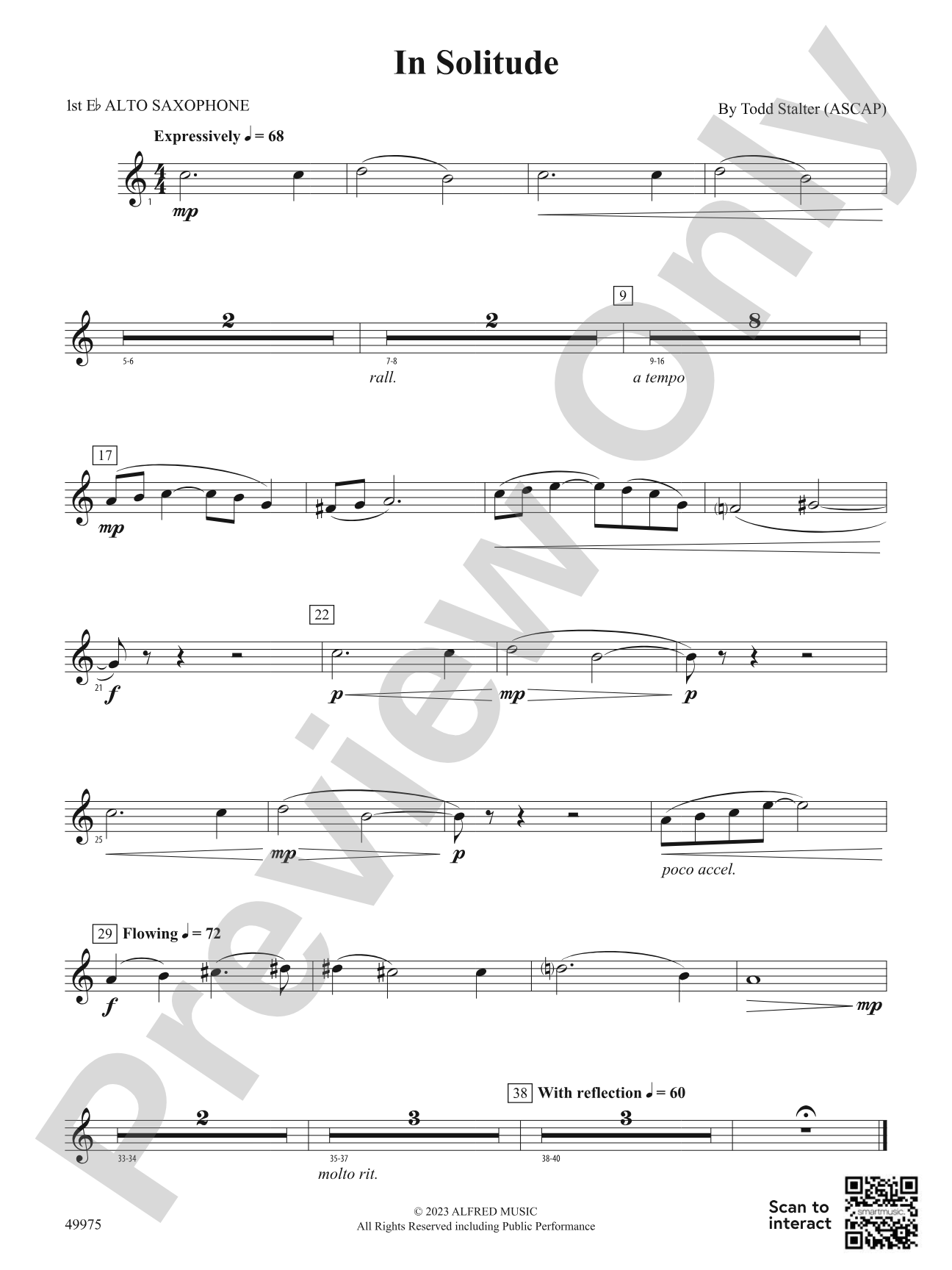

In Solitude: E-flat Alto Saxophone
By Todd Stalter
Grade: 2
Item: 00-PC-0019037_AX1
$3.00
Pickup currently not available
Description
Sometimes we seek solitude on purpose. Occasionally, we are left in it. Solitude can often be a calming and relaxing experience but also an anxious and fearful one. In Solitude, by Todd Stalter, is expressive, intimate music that seeks to connect with the different emotions we experience while alone. Featuring cinematic techniques like Lydian scale movement and appoggiaturas, the atmospheric sound of In Solitude is sure to resonate both musically and personally with performers and audiences. (2:35)


Don't just read it, hear it, play along with it, and watch your students grow with it. In MakeMusic Cloud, In Solitude: E-flat Alto Saxophone comes alive with professional accompaniment, adjustable tempo, and built-in practice tools that turn solo practice into real progress.
Open in the Player
Jump straight in and assign it today.
Start Your Free Trial
Open this title and explore the full library in minutes.
Sample Audio
1
Audio File
--:--
0:00
0:00
Sample Video
Additional Details
Series:
Young Symphonic
Publisher:
Alfred Music
SKU:
00-PC-0019037_AX1
More about this title
About the Composer: Todd Stalter

Todd Stalter spent 34 years as Director of Bands at Eureka High School in Illinois, building a program recognized statewide for musical achievement. His marching band won 16 Class 1A state championships, his concert band earned consistent Superior ratings at IHSA competitions, and his ensembles performed at Orchestra Hall in Chicago and Walt Disney World, as well as at Cotton Bowl and Liberty Bowl music festivals. He holds membership in the Illinois State Marching Band Championships Hall of Fame.
Beyond the high school podium, Stalter has conducted All-State Bands in Georgia and Delaware, led numerous honor bands and district ensembles, and appeared as guest conductor with regional wind bands. His compositions for band and string orchestra are performed across the United States and appear regularly on state contest and festival programs. Several of his works are featured in the "Teaching Music Through Performance in Band" series published by GIA. Stalter holds degrees from Illinois State University in Music Education and Trumpet Performance, where he studied conducting with Dr. Stephen K. Steele.
Why we love this
Stalter writes with real emotional intelligence, using accessible Grade 2 orchestration to explore genuine introspection rather than sentimentality. The Lydian harmonic color and appoggiaturas create an atmospheric soundscape that engages young musicians in expressive playing without demanding advanced technical skills, making this an ideal choice for building musicianship alongside program relevance.
What to expect
In Solitude creates an intimate, contemplative atmosphere that can shift between quiet calm and subtle unease. The harmonic color and musical gestures suggest introspection without heaviness, inviting both performers and listeners into a moment of genuine solitude.
Who it's for
This work suits Grade 2 concert bands preparing for festival or contest performance, as well as programs seeking expressive, accessible repertoire that doesn't rely on flashy technique. Directors will find it engaging material for teaching musical storytelling and tonal beauty at a manageable technical level.
How to get the most out of it
- Shape the Lydian scale passages with subtle dynamic shaping to highlight the mode's characteristic brightness; avoid playing these figures mechanically or with excessive vibrato in the winds.
- Balance the appoggiaturas carefully so they register as intentional expressive gestures rather than wrong notes; conductor cuing and rehearsal time on these resolutions pays musical dividends.
- Use the cinematic quality of the piece to encourage students to think beyond the notes; ask them what emotion each section evokes and let that guide their phrasing and tone production.
How to use it
Position this piece as a concert highlight that provides emotional contrast to more rhythmic or energetic selections. At 2:35, it works well as a standalone item or paired with other expressive works to frame a concert around themes of reflection and inner life.
Skills your students will build
- Expressive phrasing and dynamic shaping at the phrase level
- Lydian mode recognition and characteristic sound
- Balance and blend in sustained harmonic textures
- Musical storytelling and emotional communication
- Appoggiatura execution and resolution