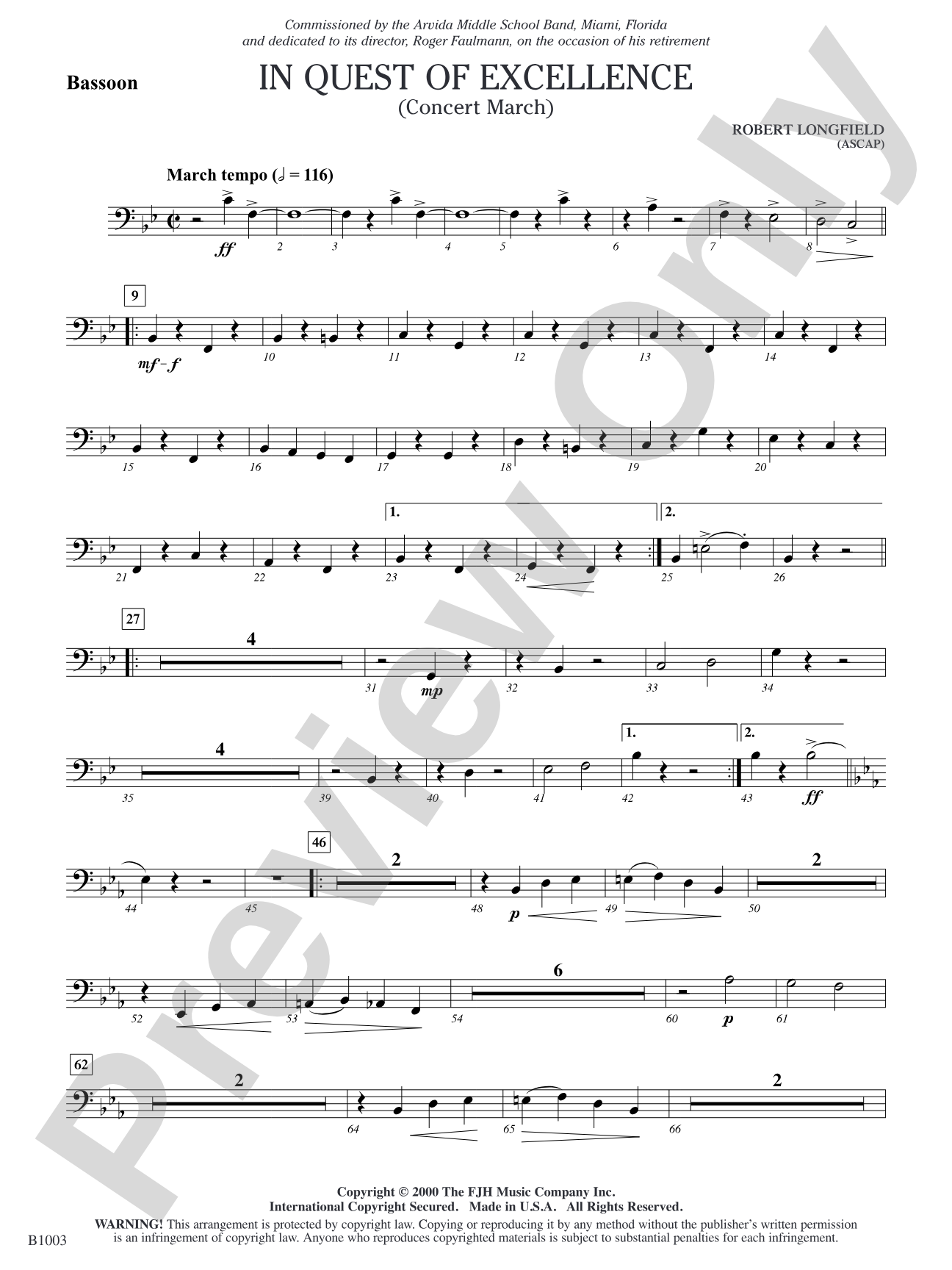
A great new march in cut time from Robert Longfield, one of America's brightest concert composers. The march begins in Bb and moves up to Eb at the trio strain. Modest ranges throughout. In your quest for that winning contest opener, take a look at this excellent selection! (3:30)
Discover MakeMusic Cloud: thousands of interactive titles your students can play along with today.
Robert Longfield has established himself as a versatile and prolific composer for concert band, with a particular gift for writing accessible yet musically sophisticated works. His compositions balance technical craftsmanship with practical considerations for educational ensembles, earning him recognition among directors seeking quality literature that engages both performers and audiences.
Why we love this
Longfield nails the contest march formula without relying on clichés. The modulation from Bb to Eb gives the trio real lift, and the modest ranges mean your entire section can breathe and play with confidence rather than fighting the staff.
What to expect
Purposeful and energetic, with the clean lines and forward motion you expect from a march in cut time. The move from Bb to Eb feels earned rather than arbitrary, giving the trio a sense of triumph that lands well with audiences.
Who it's for
Directors building a strong contest program or seeking an opener that showcases solid musicianship without placing enormous technical demands on the ensemble. Grade 3 bands preparing for spring assessments will find the modest ranges and clear form particularly manageable.
How to get the most out of it
Maintain crisp articulation in cut time throughout; the march's clarity depends on clean attacks and releases, especially in the opening theme.
Shape the transition into the trio with a slight push in tempo and dynamic lift to justify the key change and make the modulation feel like a real arrival.
Balance the melodic interest between upper woodwinds and brass to avoid one section dominating; Longfield distributes the material deliberately across voices.
Pay attention to dynamic contrast in repetitions; small changes in balance and articulation keep the march from feeling mechanical despite its straightforward structure.
How to use it
Open a contest program with this; the structure and style will settle your band into performance mode while demonstrating musicality and ensemble cohesion. It also pairs effectively on concert programs where you need something substantial but not exhausting before a longer work or choral feature.
Skills your students will build
Cut time reading and subdivision stability
Modulation and key change preparation
Articulation consistency in march style
Ensemble balance between melodic and accompaniment voices
Controlled dynamics and phrasing within a single-key harmonic framework
You May Also Like
Scan to Complete Your Purchase
Use your phone's camera to scan the code below
You'll log in on your phone and the order will be added to your account