
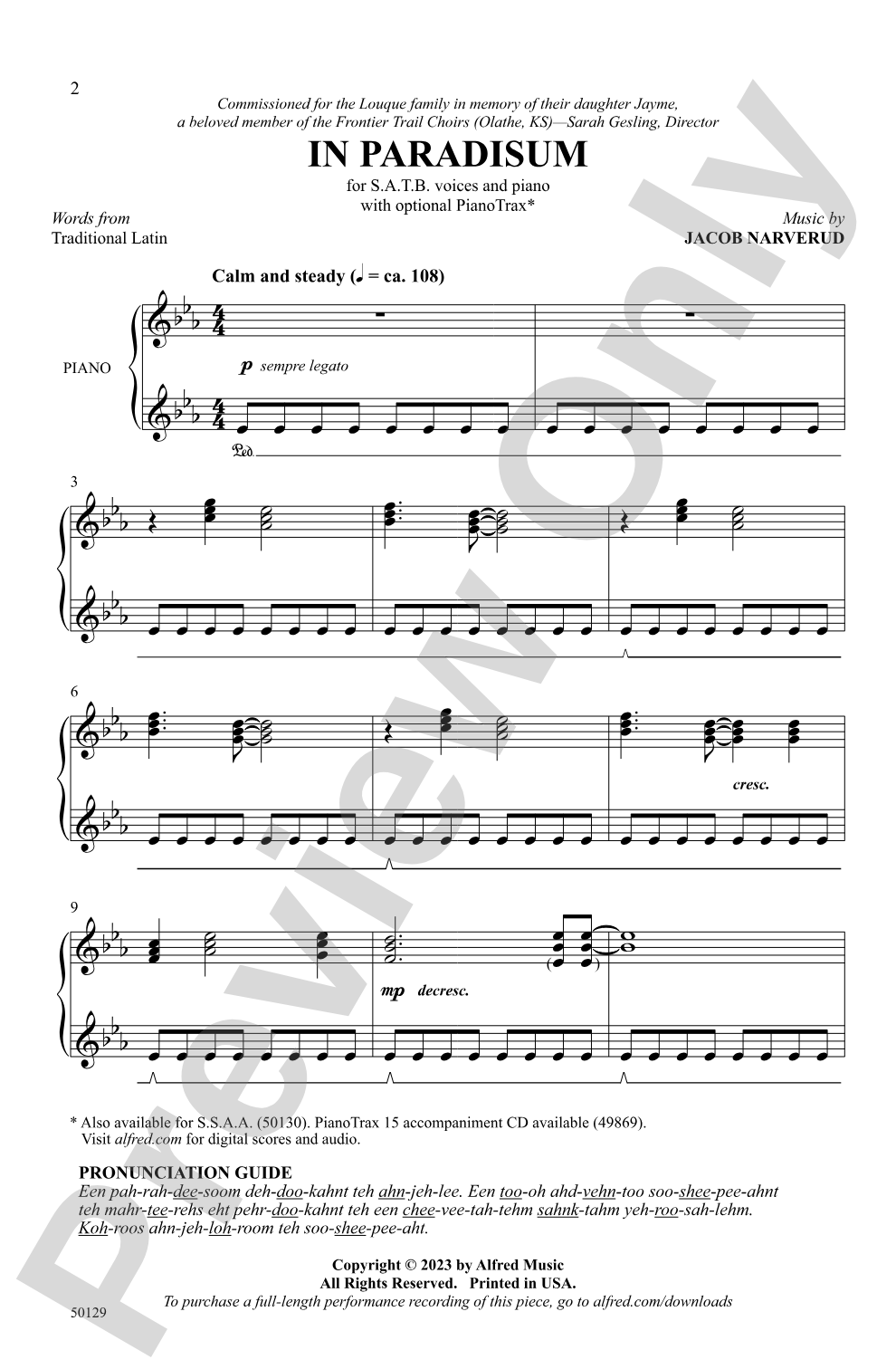

In Paradisum: SATB Choral Octavo
Words from Traditional Latin, music by Jacob Narverud
Item: 00-PO-0007007
$2.05
Minimum order quantity: 20 copies
Pickup currently not available
Description
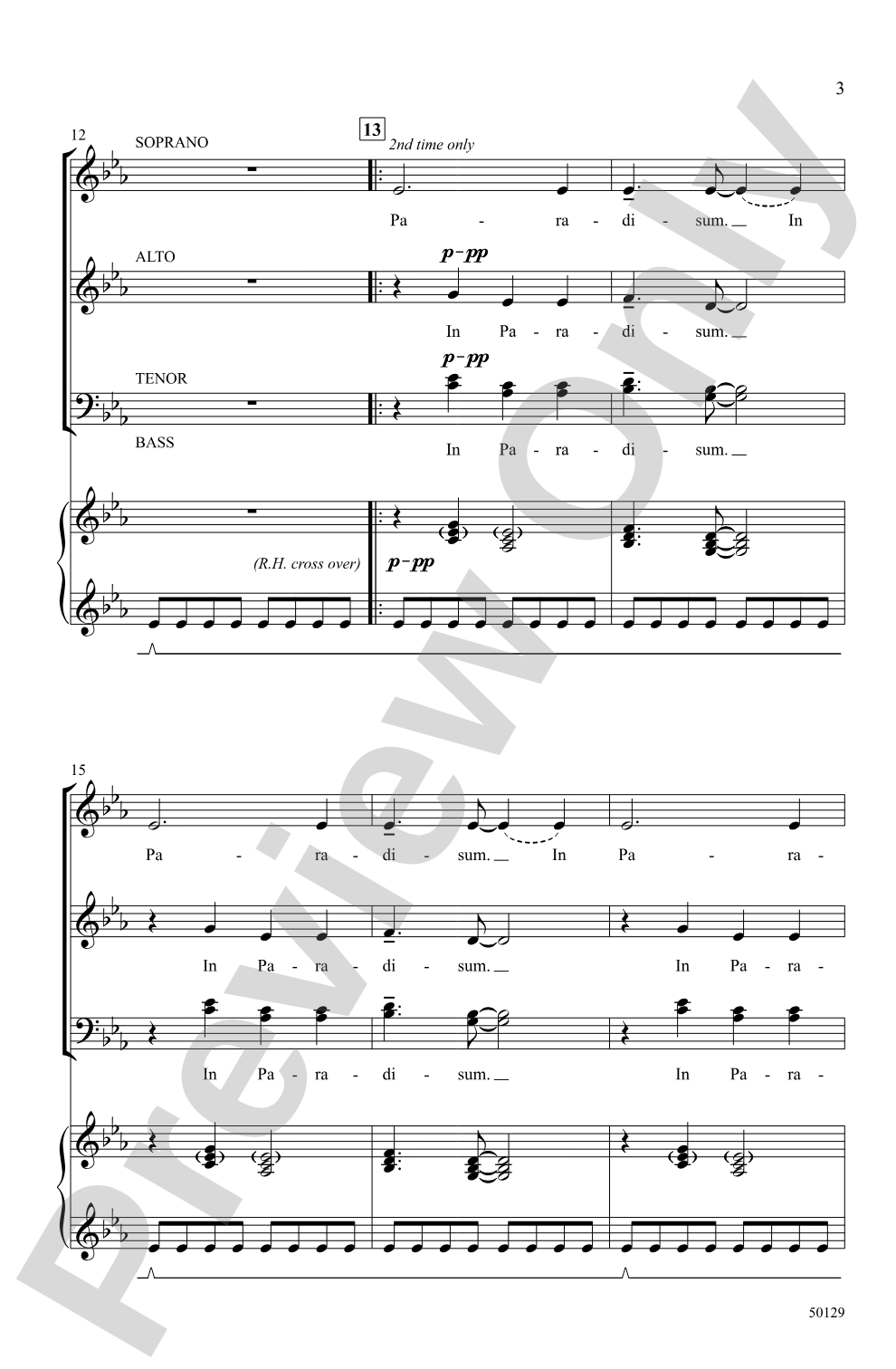
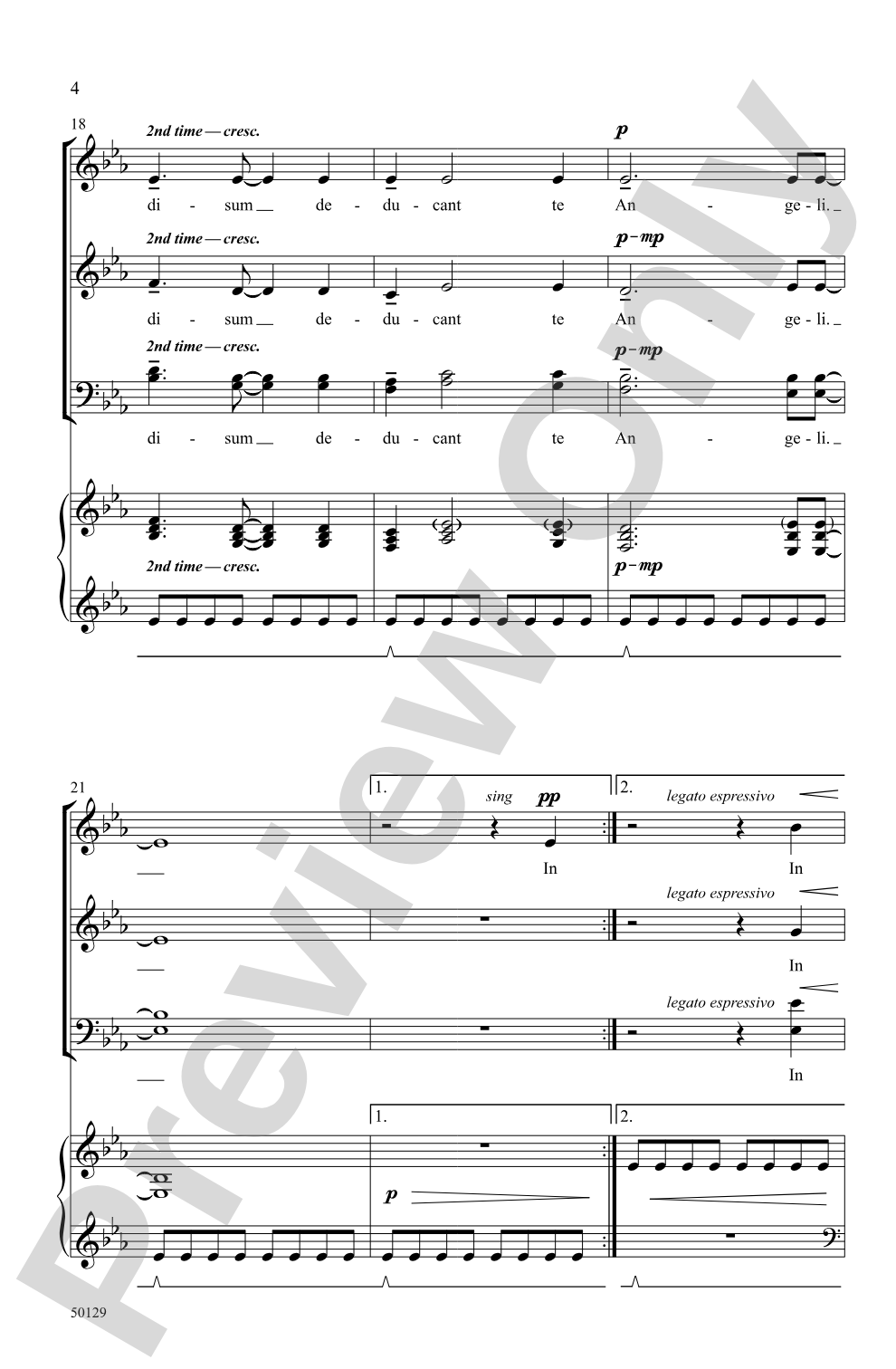
Colorful choral sonorities emerge over a steady "heartbeat" piano part in this contemporary treatment of the traditional Latin text. Composer Jacob Narverud remains faithful to the tonic scale degree throughout, creating plenty of ethereal cluster chords as the piece unfolds. A contrasting spoken section quotes a biblical verse about perseverance. Impressive in concert or contest.


In Paradisum: SATB Choral Octavo isn't in MakeMusic Cloud just yet...but it could be. Let us know you'd like to see it, and you'll help shape what comes next. In the meantime, start a free trial and dive into thousands of interactive titles your students can play along with today.
Request This Title
Tell us you want it.
Start Your Free Trial
Explore everything that's ready to play right now.
Sample Audio
1
Audio File
--:--
0:00
0:00
Sample Video
Additional Details
Series:
Alfred Choral Designs
Publisher:
Alfred Music
Page Count:
12
SKU:
00-PO-0007007
More about this title
About the Composer: Jacob Narverud

Jacob Narverud was born in Kansas in 1986 and has established himself as one of the most frequently performed contemporary choral composers in North America. He founded and directs the Tallgrass Chamber Choir, a professional ensemble drawing musicians from across the Great Plains, while also serving as editor for Santa Barbara Music Publishing. His work as a signature artist at Musicnotes has given him a direct pipeline to choirs worldwide.
Narverud's compositional voice resonates across skill levels and ensemble types. Over fifty choral organizations have commissioned original works from him, with performances extending to Australia and Japan. His catalog spans sacred and secular texts, and many titles have become international bestsellers, performed regularly by community, collegiate, and professional choirs alike.
Why we love this
Narverud's harmonic language here feels both contemporary and accessible. The tonal anchor combined with shimmering cluster chords creates an ethereal soundworld without alienating singers or audiences unfamiliar with avant-garde writing. The spoken section adds theatrical dimension and pacing variety, making this work genuinely exciting to rehearse and perform in both concert and competitive settings.
What to expect
A journey into light and reflection. The steady piano heartbeat creates intimate groundedness while ethereal cluster chords bloom overhead, as though watching daylight filter through stained glass. The spoken text brings stillness and spiritual contemplation before the sonorities dissolve into peaceful resolution.
Who it's for
This work suits advanced high school choirs, collegiate ensembles, and professional/community choirs seeking contemporary sacred music with immediate appeal. The SATB voicing and moderate technical demands make it accessible to accomplished singers, while the compositional sophistication rewards careful, thoughtful rehearsal.
How to get the most out of it
- Balance the cluster harmonies carefully in rehearsal by isolating each voice part on the ethereal sections, then layering them back in. These chords only shimmer when each singer hears their relationship to the whole.
- The piano's steady heartbeat should remain metronomic and unhurried. Resist the temptation to rush during the choral sections; let the pulse anchor the soloists who deliver the spoken biblical quotation.
- Work the spoken section as dialogue or meditation rather than as declamation. The text's spiritual weight deepens the piece's emotional arc when treated with reverence and clarity.
How to use it
Program this as a centerpiece for a sacred or contemplative concert section, or use it as a contest piece for groups confident in their blend and intonation. Its moderate length and single-movement arc make it a strong opener or closer, and the contemporary harmonic language complements both traditional and modernist choral repertoire equally well.
Skills your students will build
- Sustaining pitch in dissonant cluster chords
- Reading and executing contemporary harmonic language rooted in tonal centers
- Balancing individual voice lines within complex vertical sonorities
- Unified ensemble phrasing over a steady accompaniment pattern
- Expressive delivery of spoken text integrated with choral singing