In Glorious Splendour: Piano Accompaniment Sheet Music Preview

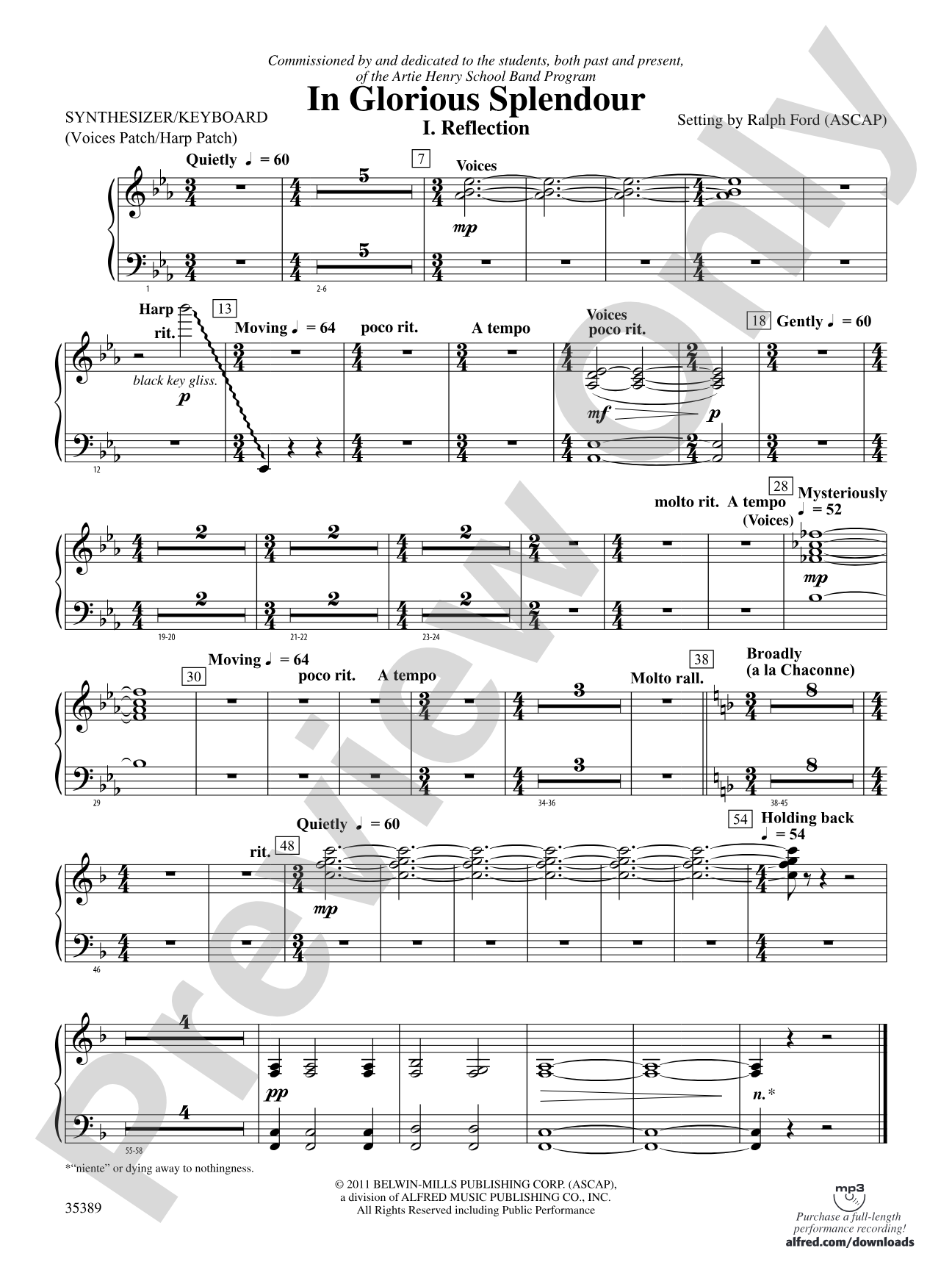
In Glorious Splendour: Piano Accompaniment

I. Reflection, II. Celebration

Setting by Ralph Ford

Grade: 3.5 (Medium Easy to Medium)

Item: 00-PC-0014936_K

Digital Download
$3.00
Description
In Glorious Splendour references three well-known hymns---the popular Christmas carol, "Lo, How a Rose E'er Blooming," and the hymns "It Is Well with My Soul" and "Were You There." Able to be programmed alone or in tandem, this setting of three cherished hymns is glorious indeed. Rich with texture and emotion!

Don't just read it, hear it, play along with it, and watch your students grow with it. In MakeMusic Cloud, In Glorious Splendour: Piano Accompaniment comes alive with professional accompaniment, adjustable tempo, and built-in practice tools that turn solo practice into real progress.

Sample Audio
0:00
0:00
Sample Video
Additional Details
Series: Belwin Concert Band
Publisher: Alfred Music
Page Count: 260
SKU: 00-PC-0014936_K

More about this title

About the Arranger: Ralph Ford

Ralph Ford

Ralph Ford brings nearly three decades of university teaching alongside a prolific career as a composer and arranger. His work spans orchestral, concert band, jazz ensemble, and marching band repertoire, with over 250 titles published through Alfred Music's Belwin division and performed by ensembles ranging from school groups to professional orchestras worldwide.

Ford's foundation in arrangement began at fifteen and deepened during his undergraduate years at Troy State University, where he directed the jazz ensemble and served as staff arranger before joining the faculty. Beyond the concert hall, his expertise extends to media production, broadcast music, and commercial composition, bringing a versatile sensibility to every project he undertakes.

Why we love this

Ford's gift is taking beloved hymn texts and reimagining them with fresh harmonic sophistication and layered orchestration that keeps each hymn distinct while weaving them into a unified work. Conductors appreciate that this arrangement sits comfortably at Grade 3.5, making it accessible for developing ensembles without sacrificing the emotional weight and textural richness that audiences expect from a feature work.

What to expect

Three familiar hymns emerge from rich orchestral textures, each one glowing with reverence and care. The arrangement invites quiet moments of intimacy alongside fuller passages that allow the band to sing with genuine warmth and weight.

Who it's for

Band directors seeking a substantial concert work that honors sacred tradition while offering medium-level ensembles a piece with real depth. This is equally suited to concert performance and festival programming, and works for ensembles that want to program a meaningful sacred work without stepping into full choral territory.

How to get the most out of it

  • Balance the three hymns as distinct musical statements rather than treating them as equal variations. Allow each to breathe with its own character before transitioning to the next.
  • Listen for moments where thinner textures emerge among the richer passages. These exposed moments require secure intonation and clear articulation from your ensemble.
  • Shape phrases based on the hymn texts themselves, even though the band is instrumental. This keeps the musical line singable and emotionally coherent throughout.
  • Attend carefully to dynamic layering across the sections. Ford's arrangement likely uses divisi and interior voice work to create texture; make sure these details aren't buried by the outer parts.

How to use it

Program this as a standalone feature on a concert devoted to sacred or seasonal themes, or pair it with other hymn-based works for a cohesive set. Its accessibility also makes it a strong choice for festival competitions where you want to showcase both musicality and ensemble maturity.

Skills your students will build

  • Reading and balancing divisi parts within sections
  • Singing phrased lines across sustained harmonies
  • Layering textures to create depth without losing clarity
  • Responding to dynamic and expressive nuance that mirrors hymn text and tradition

You May Also Like