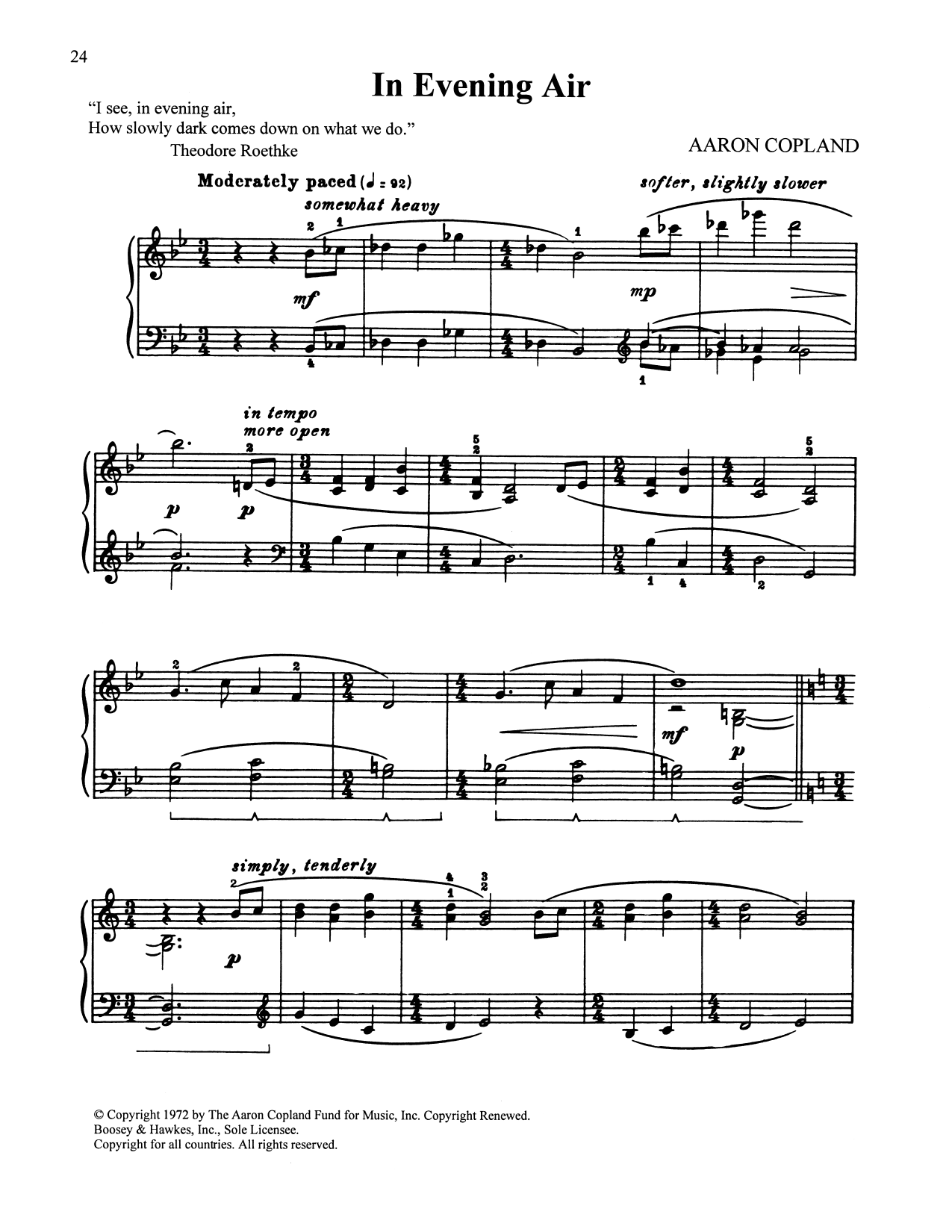
Aaron Copland (1900-1990) shaped the sound of American concert music by weaving folk idioms, open harmonies, and accessible melodic writing into works that resonate across classical and popular audiences alike. His compositional voice grew from serious study in Paris and a lifelong commitment to music education; he believed that great art could speak directly to ordinary listeners without sacrificing sophistication.
Why we love this
Copland's piano writing here captures the reflective quietness that made him a master of atmosphere, offering students a genuine American classic that doesn't rely on virtuosic flash. The piece rewards careful listening to harmony and voice leading, qualities often overlooked in flashier piano repertoire. Programming this alongside early 20th-century European art song or contemporary minimalism reveals how Copland's restraint shaped modern concert music.
What to expect
The piece unfolds like an evening reflection, unhurried and introspective. Copland's harmonies evoke amber light and vast open spaces, using sparse textures and gentle motion to create intimacy rather than grandeur. The overall effect is one of quiet contemplation, rewarding performers and listeners who embrace stillness.
Who it's for
Intermediate to advanced pianists seeking repertoire that develops musical maturity and interpretive sensitivity without extreme technical demands. Teachers building programs around American composers or exploring 20th-century piano literature will find this ideal for students ready to think beyond mechanics.
How to get the most out of it
Shape the melody with a singing tone while allowing the accompaniment to remain transparent; resist the impulse to fill every moment with sound.
Attend closely to Copland's dynamic markings and pedal indications. These details define the harmonic color and emotional arc rather than loud and soft effects.
Let silence breathe. The spaces between phrases are as expressive as the notes themselves, especially in this spare three-page work.
Explore the relationship between the melodic line and harmonic support; clarity here reveals the beauty of Copland's harmonic language.
How to use it
Place this work in a recital devoted to American piano music or pair it with Copland's orchestral works arranged for piano to show his compositional consistency. The modest length and reflective character also make it an effective prelude to a longer concert, establishing an introspective mood before larger ensemble pieces.
Skills your students will build
Voice leading and harmonic hearing in sparse textures
Pedal technique for sustaining harmonies without muddiness
Interpretive choice-making with minimal notational guidance
Legato touch and control of dynamic subtlety
Phrasing and breathing in non-verbal melodic forms
You May Also Like
Scan to Complete Your Purchase
Use your phone's camera to scan the code below
You'll log in on your phone and the order will be added to your account