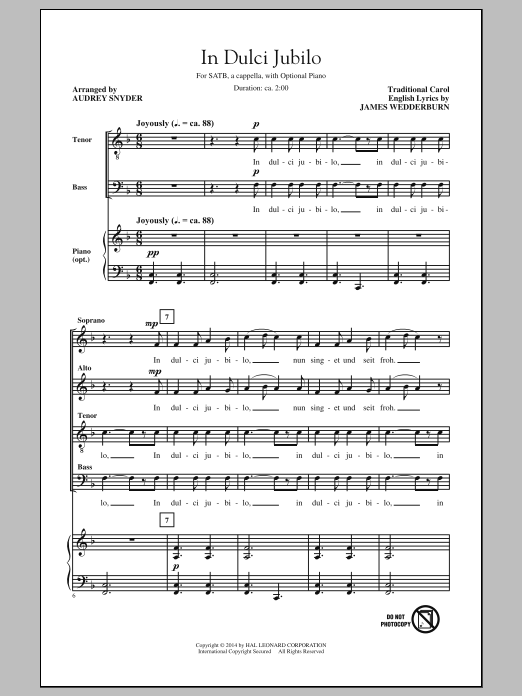
In Dulci Jubilo originates from medieval German carol tradition, with roots reaching back to the 14th century. The text combines Latin and German, reflecting the devotional practices of early Christian communities and their desire to express joy through multilingual worship. This piece has endured centuries of adaptation and arrangement, becoming a cornerstone of Christmas repertoire across cultures and musical traditions.
Why we love this
Audrey Snyder's setting captures the carol's inherent warmth while respecting its historical roots, making it accessible for choirs of moderate skill without sacrificing musicality. The two-page format works perfectly for holiday programming when rehearsal time is compressed, yet the arrangement contains enough harmonic interest to keep singers engaged throughout the season. This is the kind of piece that sounds fuller and richer than its modest page count suggests.
What to expect
In Dulci Jubilo radiates genuine celebration tempered by contemplation. There's a quality of quiet delight in the harmonies, as though the singers are sharing an intimate moment of joy rather than performing for an audience. The piece carries centuries of singing in its DNA, grounding performers in something both timeless and immediate.
Who it's for
This arrangement serves choirs ranging from community and church singers to high school vocal groups who want a Christmas piece that feels both familiar and fresh. Directors seeking accessible yet musically satisfying holiday repertoire will find this particularly valuable when building a mixed program that needs both reverent and joyful moments.
How to get the most out of it
Balance the text carefully between the Latin opening phrase and the English "Good Lord, deliver us" refrain; let the shift in language register clearly without losing the carol's conversational warmth.
Shape each phrase with gentle forward motion rather than stopping at obvious cadence points; this carol breathes better when you allow it to flow naturally from one thought to the next.
Pay attention to vowel consistency across sections, especially in the sustained notes where harmonic blend becomes audible. Open vowels help the chord resonate without sounding forced.
How to use it
Position this after more elaborate or complex pieces to offer listeners a moment of graceful simplicity; the carol's directness becomes even more affecting in contrast. It works beautifully in the latter half of a holiday concert when audiences are settled and receptive, or as an opening gesture if you want to establish intimacy from the start.
Skills your students will build
Latin pronunciation and text clarity in a liturgical context
Blend and balance in four-part harmony with sustained melodic lines
Phrase shaping across moderate phrase lengths without compromising harmonic unity
Singing in the style of a traditional carol while maintaining contemporary choral technique
You May Also Like
Scan to Complete Your Purchase
Use your phone's camera to scan the code below
You'll log in on your phone and the order will be added to your account