
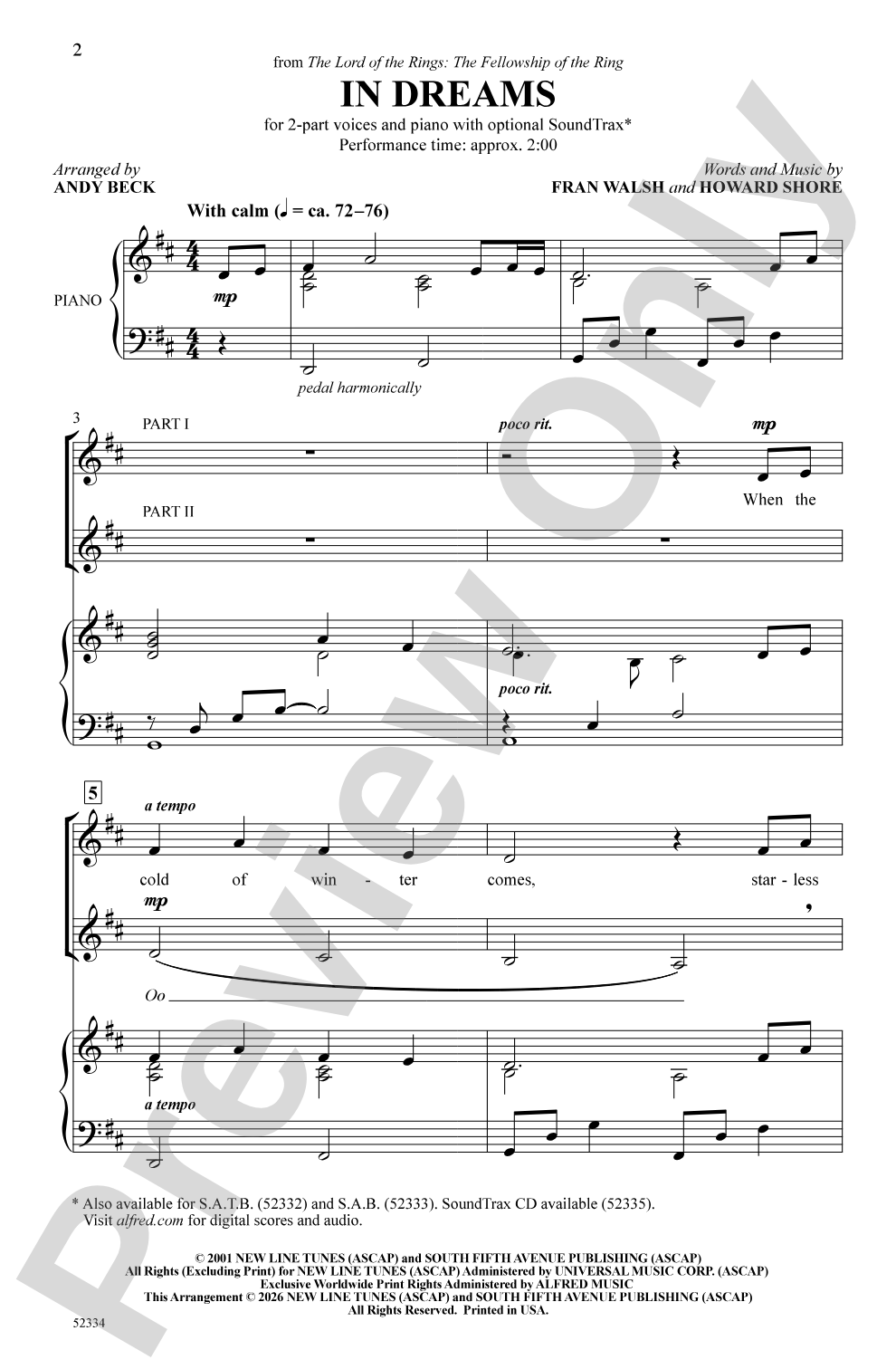
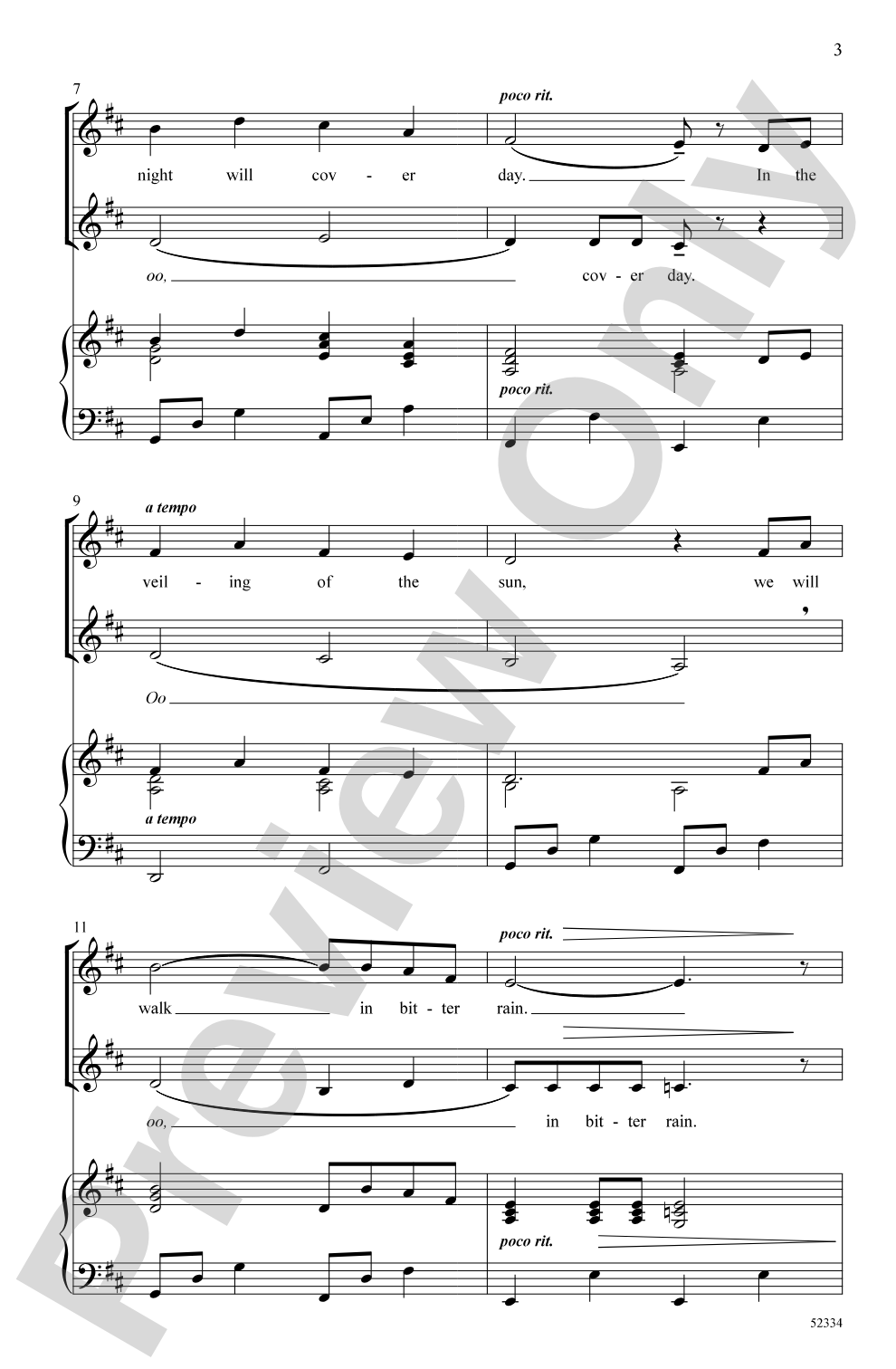

In Dreams: 2-Part Choral Octavo
from The Lord of the Rings: The Fellowship of the Ring
Words and music by Fran Walsh and Howard Shore / arr. Andy Beck
Item: 00-PO-0007888

$2.55
Minimum order quantity: 20 copies
Pickup currently not available
Description
Journey to Middle-Earth with this ethereal arrangement from The Lord of the Rings. A tranquil introduction sets a hushed tone before Howard Shore's hymn-like melody emerges over a bed of gentle choral "oo's." This poignant two-minute song reflects enduring hope, companionship, and the bittersweet nature of the hobbits' fellowship. Lyrics symbolize finding strength through separation, promising reunion despite darkness and hardship. Sing with a sweeping cinematic orchestra on the SoundTrax, or evoke a more intimate performance with piano alone.


Don't just read it, hear it, play along with it, and watch your students grow with it. In MakeMusic Cloud, In Dreams: 2-Part Choral Octavo comes alive with professional accompaniment, adjustable tempo, and built-in practice tools that turn solo practice into real progress.
Open in the Player
Jump straight in and assign it today.
Start Your Free Trial
Open this title and explore the full library in minutes.
Sample Audio
1
Audio File
--:--
0:00
0:00
Sample Video
Additional Details
Series:
Alfred Pop Choral Series
Publisher:
Alfred Music
Page Count:
8
SKU:
00-PO-0007888
More about this title
About the Composer: Fran Walsh
Fran Walsh is a New Zealand composer and lyricist who has become synonymous with cinematic storytelling through music. Her work on The Lord of the Rings trilogy, created in collaboration with Howard Shore and Philippa Boyens, earned her Academy Award nominations and established her as a master of adapting literature into emotionally resonant musical moments. Her compositions balance accessibility with sophistication, making her a frequent presence in choral and film music arrangements.
Why we love this
This arrangement captures the quiet strength that makes "In Dreams" unforgettable without requiring large forces or technical virtuosity from your singers. The two-part voicing keeps the focus on ensemble blend and emotional delivery, while the optional SoundTrax gives you flexibility to match your concert needs, whether you're building a thematic program around film scores or seeking a reflective moment in a secular concert.
What to expect
The piece unfolds like a waking dream: tentative and spacious at first, then warmly enveloping as the melody takes shape over those floating vocal harmonies. There's an elegance to the restraint, a cinematic quality that lets silence speak as loudly as sound, creating an intimate moment despite the grandeur of its source material.
Who it's for
Choirs with solid fundamental blend and musical maturity will find this arrangement manageable and deeply rewarding. It suits intermediate to advanced high school choirs, adult community groups, and university ensembles looking for repertoire that connects with audiences through familiar film artistry while building genuine musical expression.
How to get the most out of it
- Shape the opening measures with careful dynamic control; the hushed introduction establishes mood before the melody enters, so resist any impulse to swell until the choir breathes together into Shore's hymn-like theme.
- Balance the "oo" vocal pads beneath the melody by keeping lower voices transparent and supportive, allowing the top line to float clearly without drowning them out.
- If using the recorded accompaniment, rehearse extensively without it first to ensure your ensemble owns the phrasing and timing, then layer the track in during final rehearsals so singers respond to the orchestra rather than follow it mechanically.
- Attend to the lyrical text throughout; this piece carries narrative weight about fellowship and hope, so mark breath points that honor the poetry rather than purely musical phrases.
How to use it
Program this piece in the second half of a concert where you've already established rapport with your audience; its quiet power lands most effectively when listeners are fully attentive. It pairs naturally with other film music arrangements, but works equally well as a standalone moment of reflection in a secular or general music concert, or as a bridge between lighter and more substantial choral works.
Skills your students will build
- Singing sustained vowels with clarity and blend in a 2-part texture
- Shaping long phrases with appropriate dynamic arc and textual awareness
- Balancing melody and accompaniment lines within the same voice part
- Responding to orchestral or accompaniment tracks without losing independent ensemble control
- Interpreting cinematic or narrative meaning through vocal color and phrasing choices