
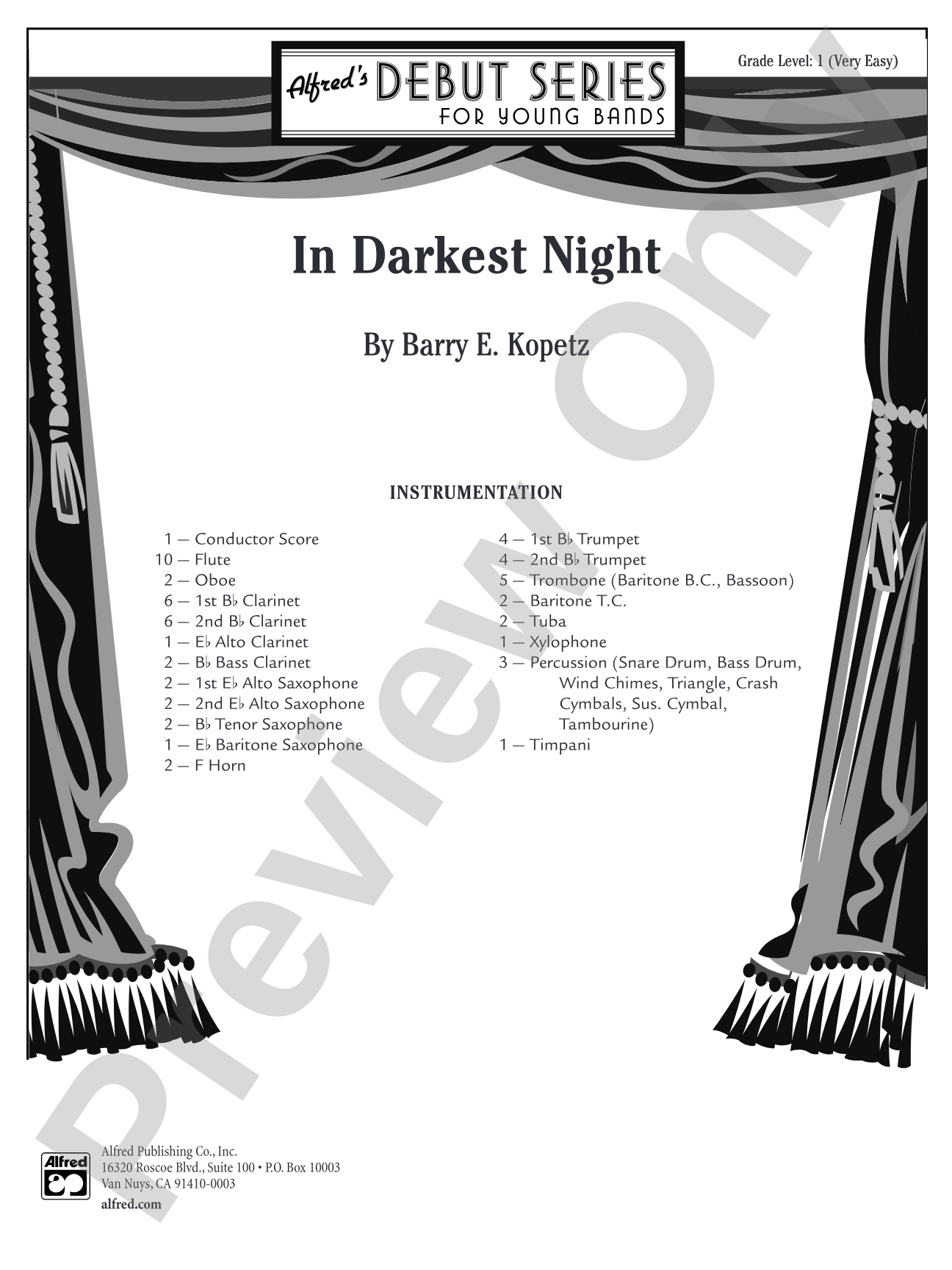

In Darkest Night: Score
By Barry E. Kopetz
Grade: 1 (Very Easy)
Item: 00-PR-0000442
$7.00
Pickup currently not available
Description
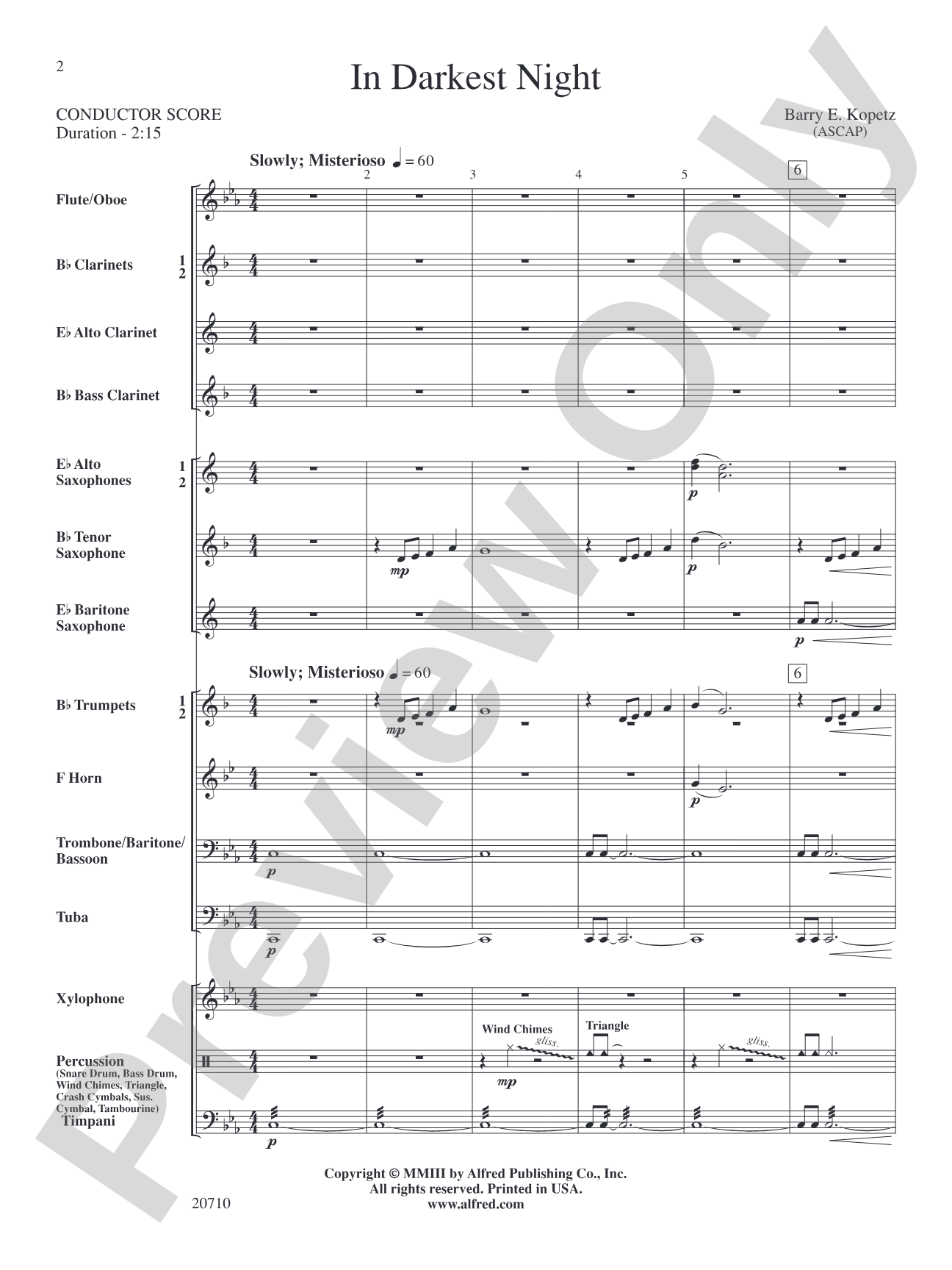
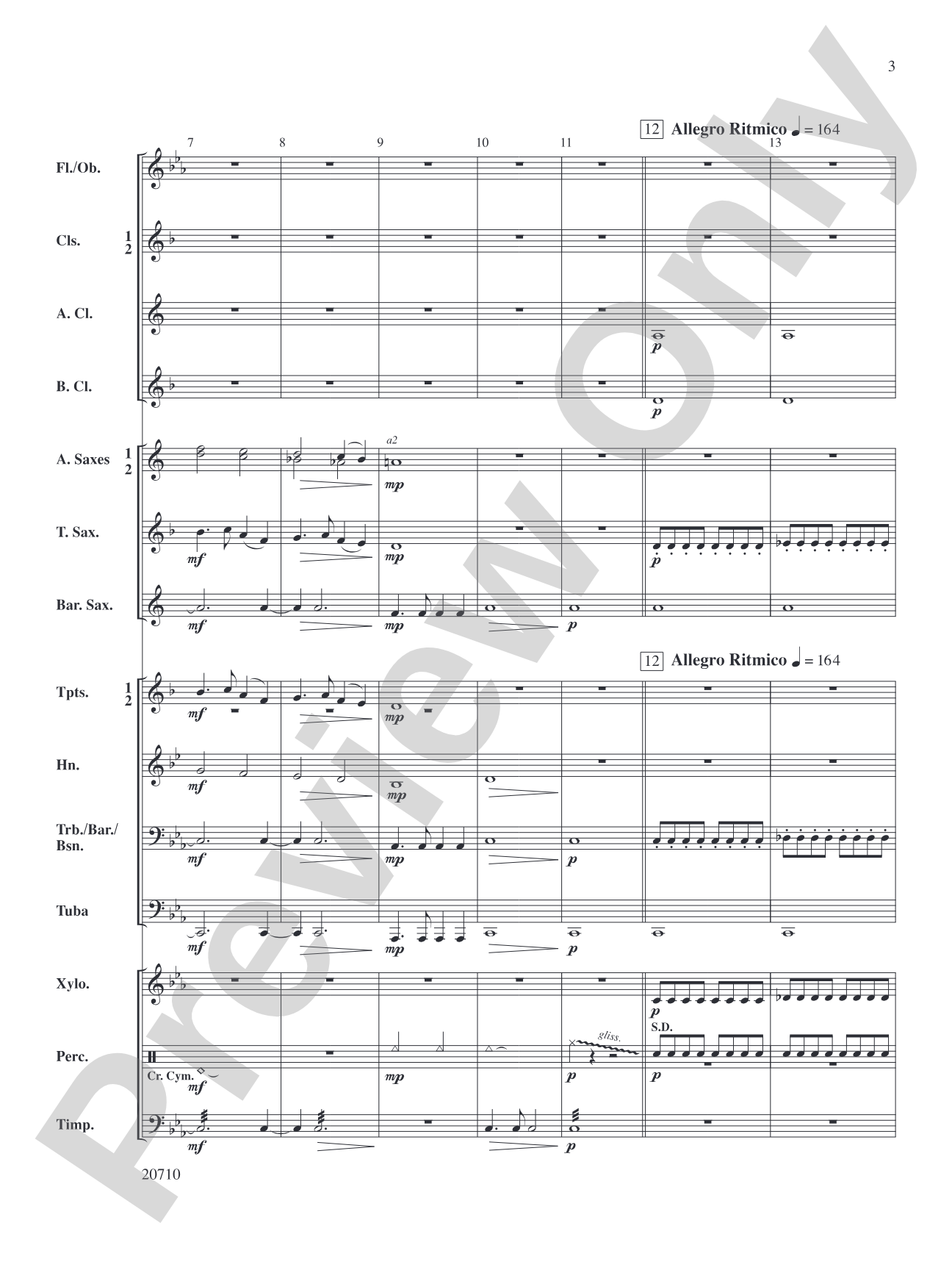
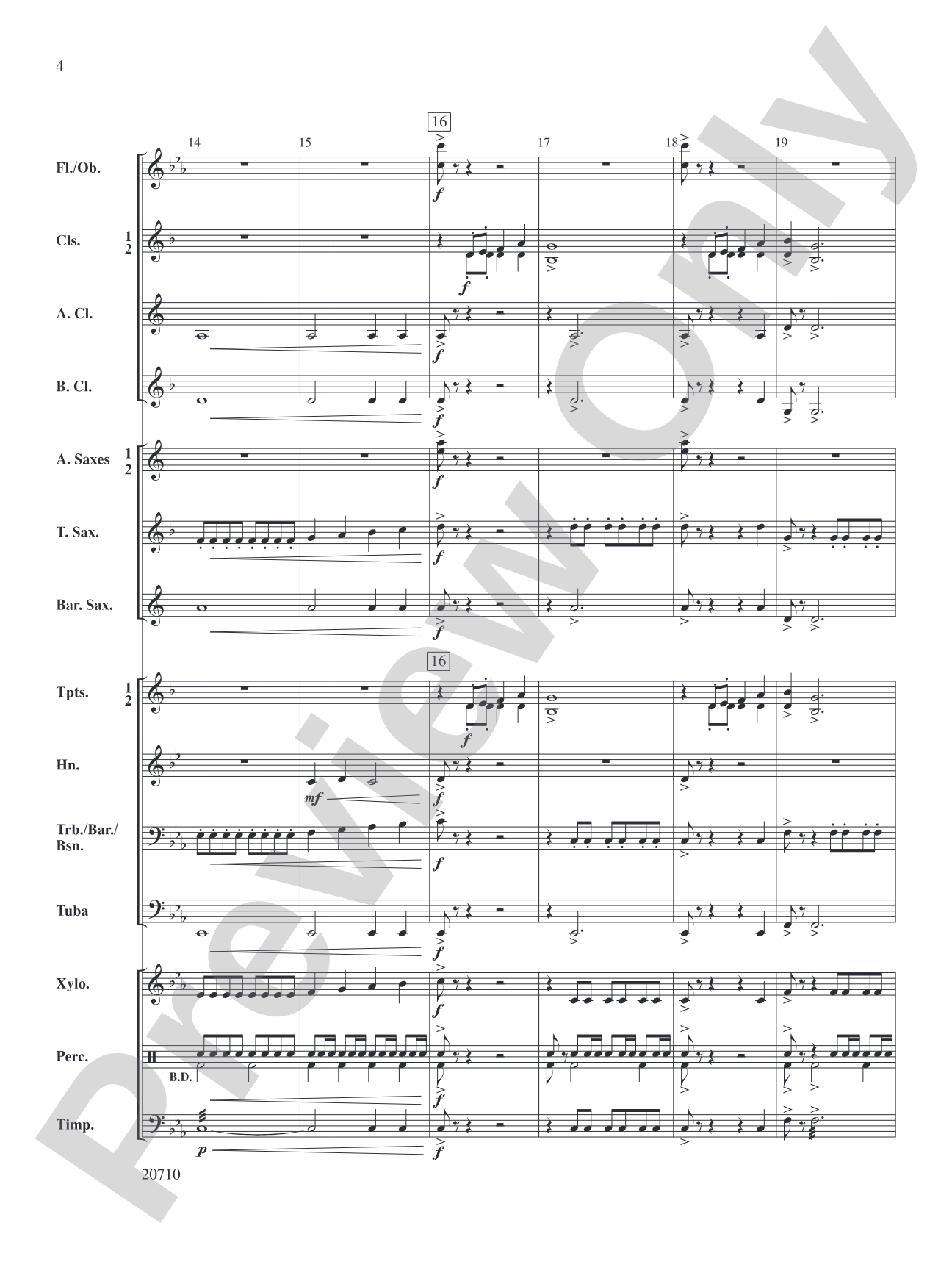
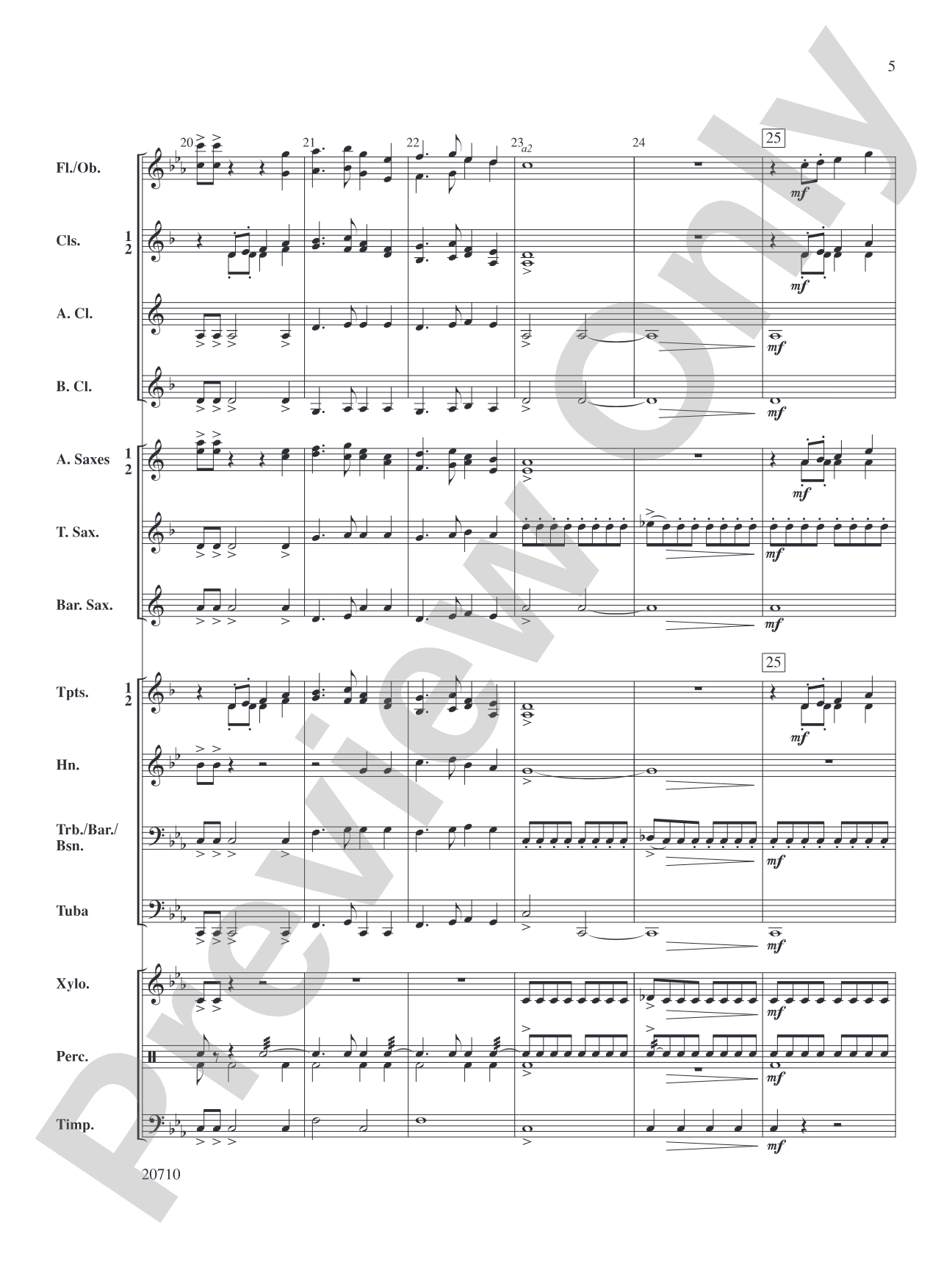
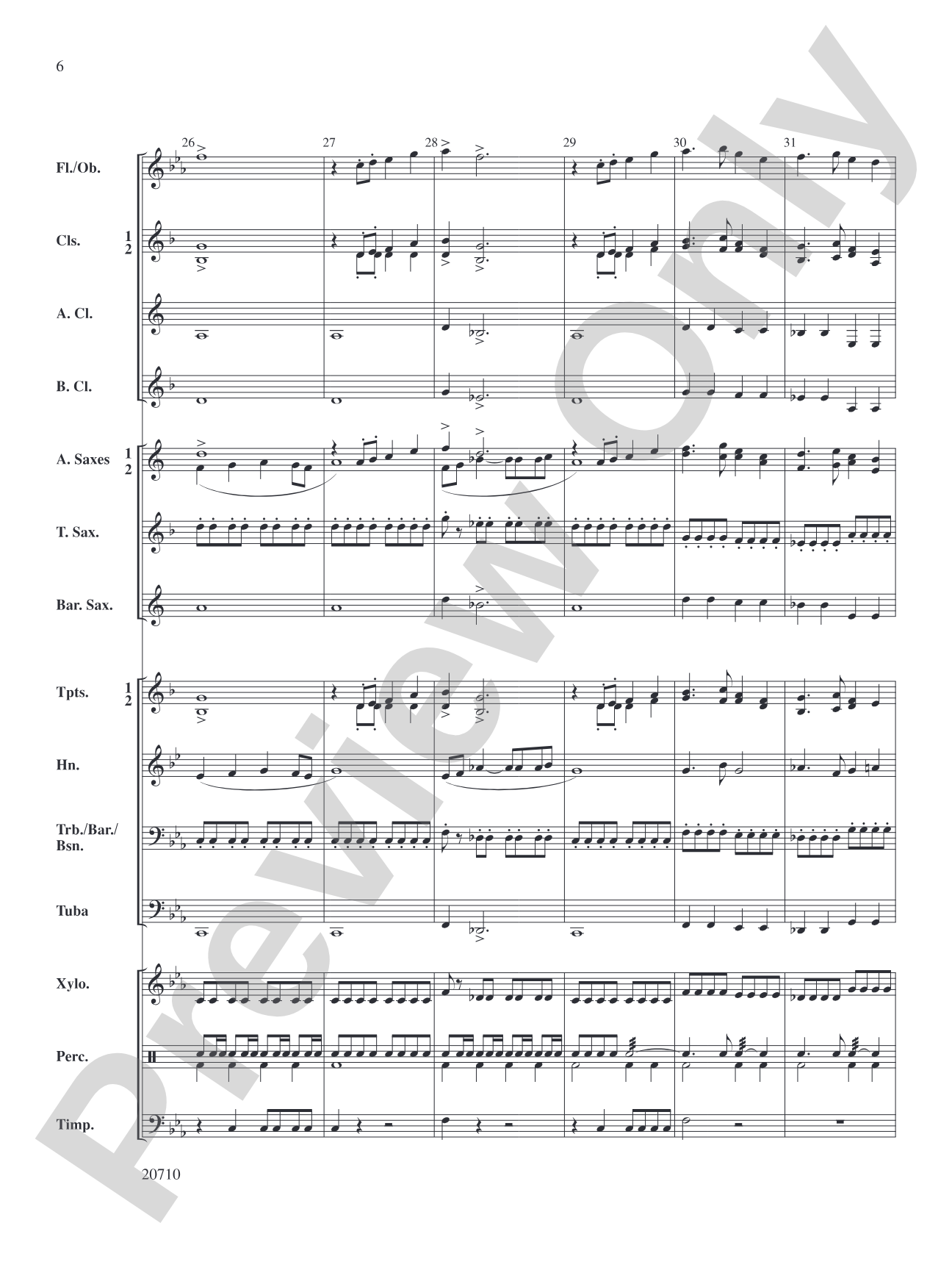
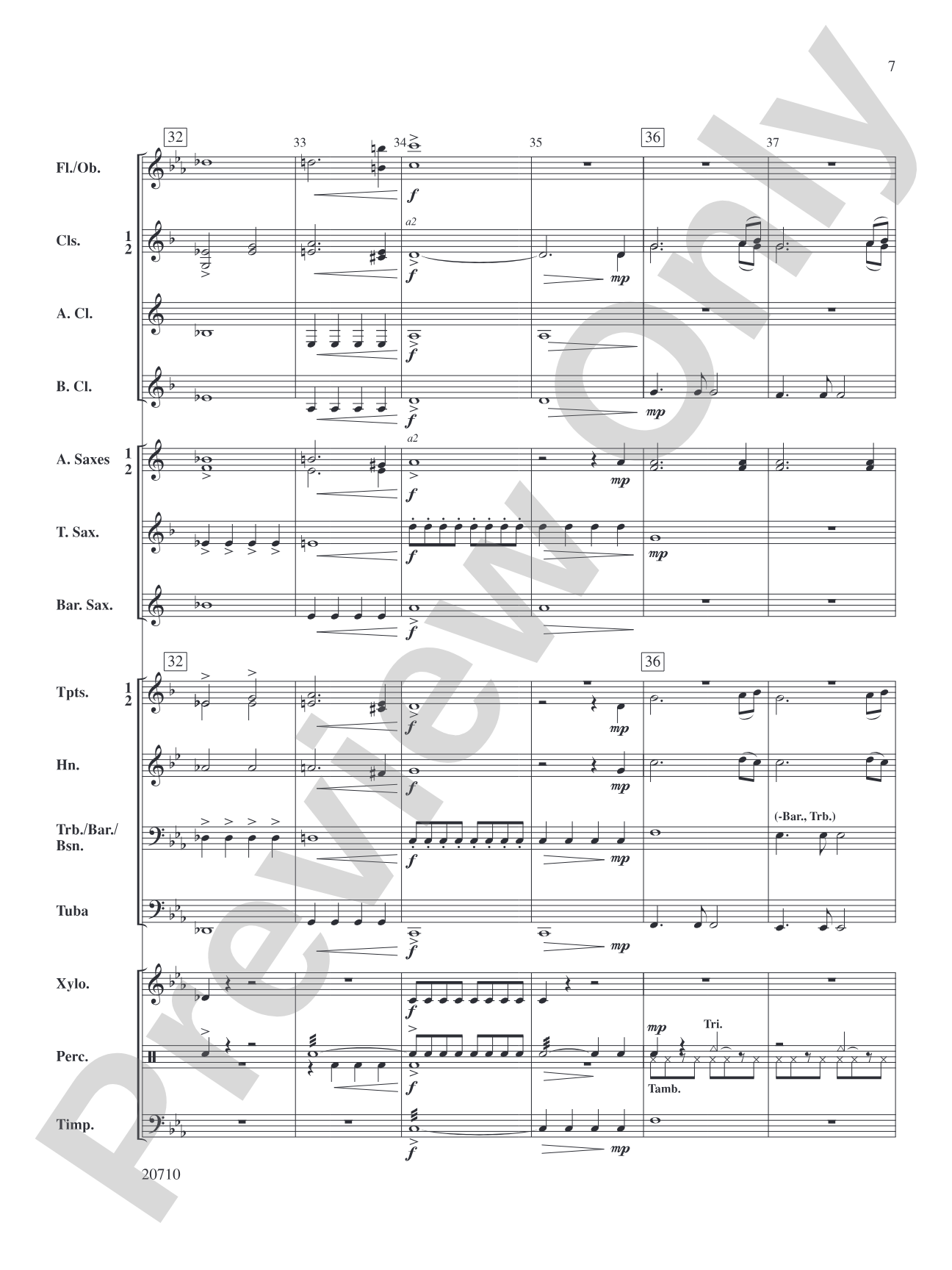
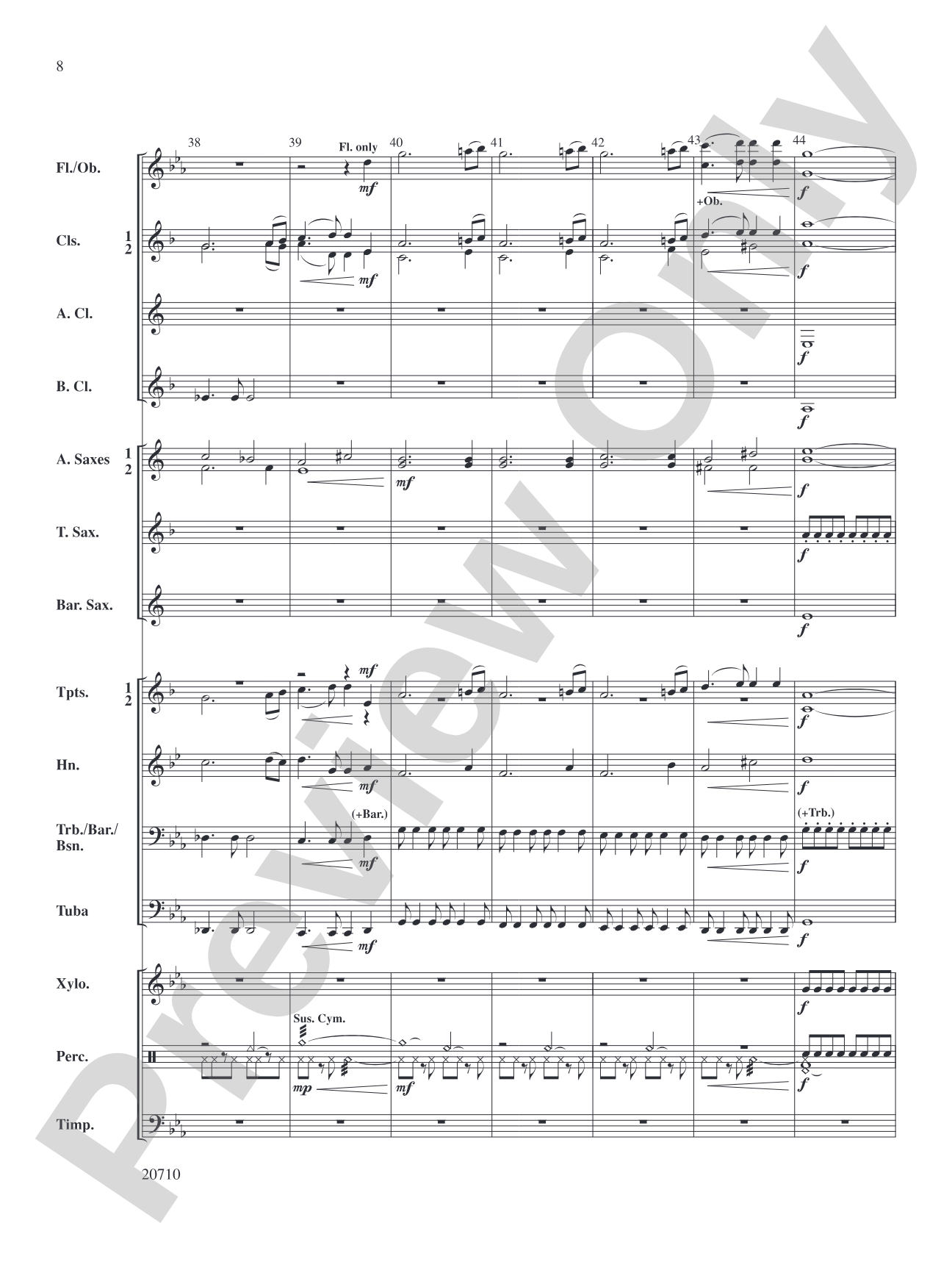
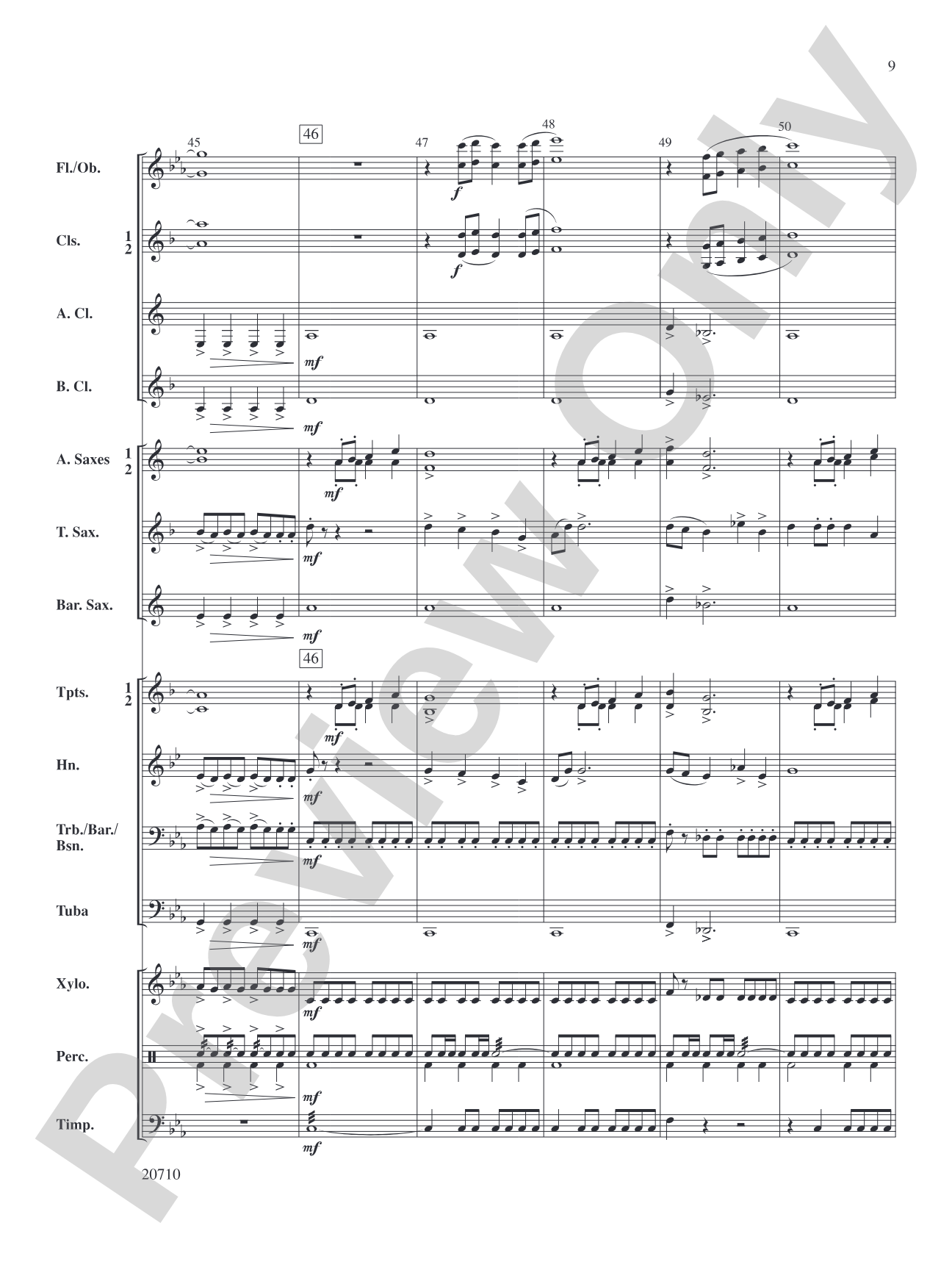
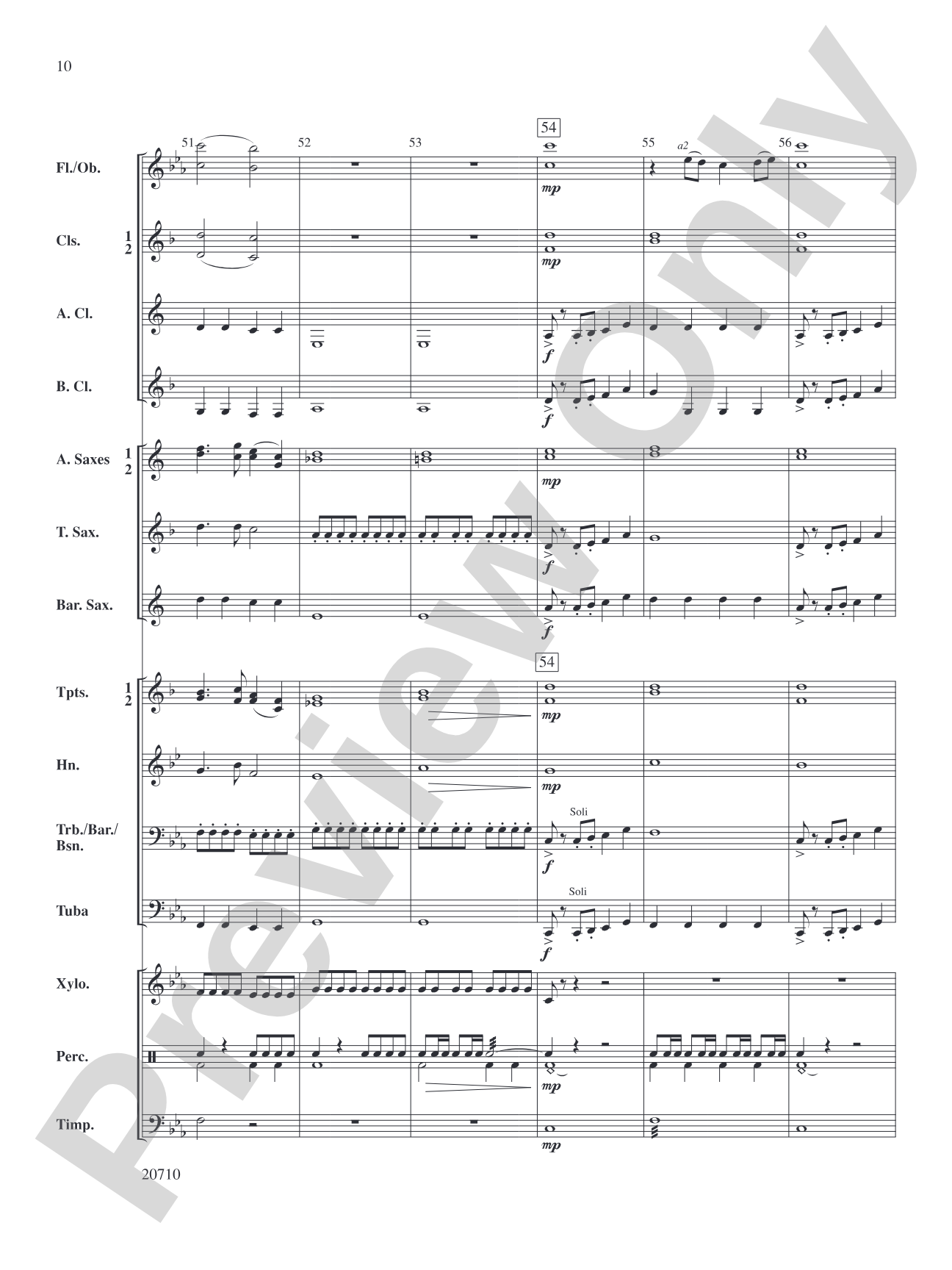
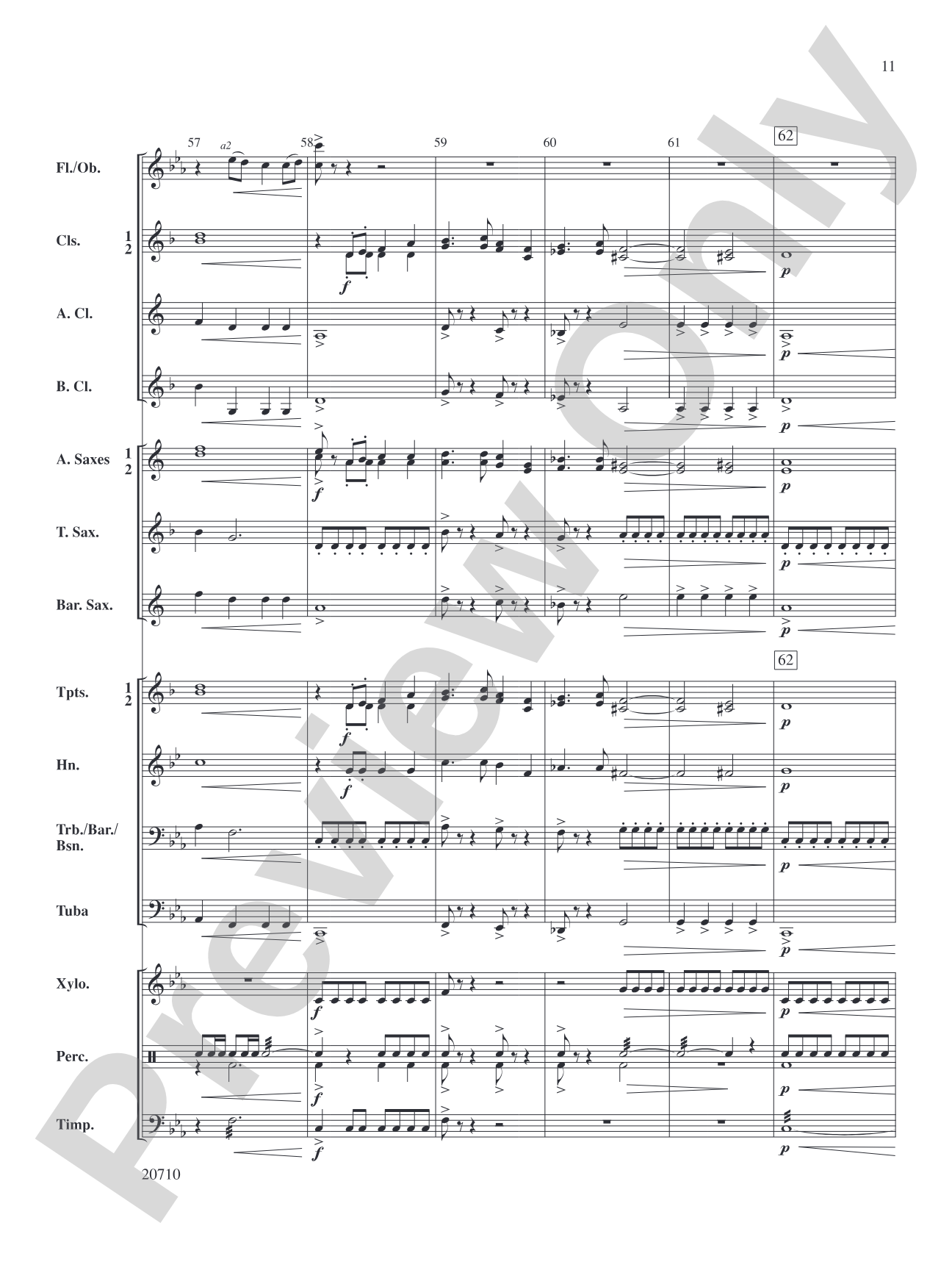
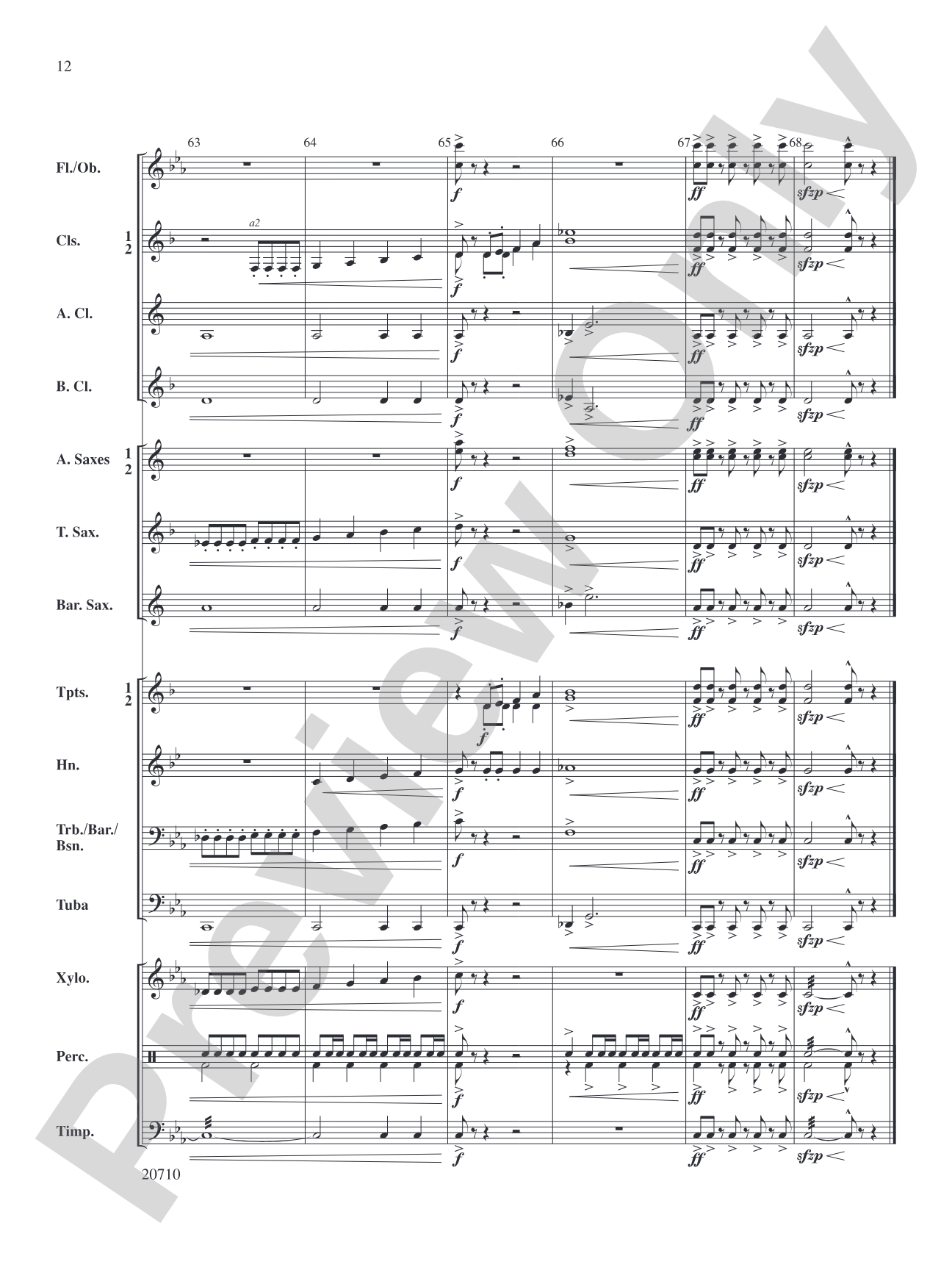
In Darkest Night was composed to highlight the dark, thick and rich quality of the key of C minor. As musical keys have long been associated with various states of emotion, C minor has often been called the "key of darkness." The slow introduction presents the primary theme in augmented fashion over a C pedal point, leading to the robust Allegro Ritmico. The theme is aggressive, poignant, terse, and yes . . . dark! The piece concludes with a series of rapid, pounding, off-beat C minor triads preceding the final chord. This title is available in MakeMusic Cloud.


Don't just read it, hear it, play along with it, and watch your students grow with it. In MakeMusic Cloud, In Darkest Night: Score comes alive with professional accompaniment, adjustable tempo, and built-in practice tools that turn solo practice into real progress.
Open in the Player
Jump straight in and assign it today.
Start Your Free Trial
Open this title and explore the full library in minutes.
Sample Audio
1
Audio File
--:--
0:00
0:00
Sample Video
No sample videos found.
Additional Details
Series:
Alfred Debut Series
Publisher:
Alfred Music
Page Count:
122
SKU:
00-PR-0000442
More about this title
About the Composer: Barry E. Kopetz
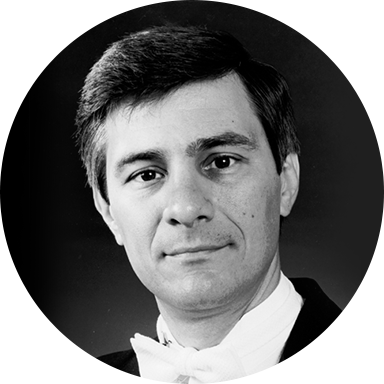
Barry E. Kopetz has spent his career bridging composition, conducting, and music education. He earned degrees from Ohio State University (B.A. and M.A.) and a doctorate with distinction from Indiana University's School of Music, where his conducting studies included time in Tokyo with Frederick Fennell. His published catalog includes more than 50 works for band, orchestra, and various chamber ensembles.
At Capital University in Columbus, Ohio, Kopetz directs the Wind Symphony and Chamber Winds while teaching conducting, rehearsal techniques, and arranging. He has held faculty positions at the University of Utah, University of Minnesota, and Bowling Green State University, and earlier served in public school programs throughout Ohio and South Carolina. Active as a guest conductor and adjudicator across the United States and Australia, he also contributes analytical essays on band repertoire to Instrumentalist magazine and has recently worked on orchestrations for television and film. He was elected to membership in the American Bandmasters Association in 1998.
Why we love this
Kopetz delivers a Grade 1 concert piece that respects the intelligence of developing musicians without sacrificing genuine musical substance. The deliberate choice to explore C minor's character within a structurally clear arc (slow introduction to energetic Allegro Ritmico) gives students an early experience with emotional coloring through tonality and textural contrast, all within their technical reach. It's the kind of opening work that convinces a beginning band that there is real music to discover.
What to expect
Foreboding and deliberate. The slow opening unfolds over a steady pulse, introducing a theme that feels weighty and augmented, like a bell tolling underwater. When the Allegro Ritmico arrives, the energy shifts to something urgent and relentless, with those off-beat triads hammering like a warning before the final resolution settles into dark C minor territory.
Who it's for
Beginning concert band students who are ready to engage with pieces that explore mood and character through compositional choice rather than technical pyrotechnics. Directors seeking a Grade 1 work that holds up as real music and demonstrates how key relationships can carry emotional weight will find an ideal choice here.
How to get the most out of it
- Shape the slow introduction with a clear sense of the C pedal point underneath. Have the band listen for that anchor tone as the augmented primary theme enters, creating the foundation for everything that follows.
- Attack the Allegro Ritmico with confidence and rhythmic precision. The theme's aggressive character depends on crisp articulation and unified rhythmic alignment, so lock in the pulse early and maintain it through the pounding triads.
- Balance the texture during the robust middle section. With a Grade 1 ensemble, transparency matters more than volume; make sure harmonic voices don't obscure the thematic material.
- Plant the final chord firmly. After the rapid off-beat triads, that concluding C minor harmony should land with weight and presence, leaving no doubt about the piece's tonal center.
How to use it
Open a concert with this piece to establish a serious, contemplative tone before moving into lighter fare, or pair it with another work in a minor key to explore how different composers approach darkness and introspection. Its brevity and Grade 1 accessibility make it ideal for festival programming or a showcase of what young musicians can accomplish when given purposeful repertoire.
Skills your students will build
- Sustaining a steady pedal point while tracking melodic material above it
- Coordinating rhythmic precision across the ensemble, especially for off-beat figures
- Balancing harmonic texture to support rather than obscure the primary theme
- Interpreting key and tonality as tools for emotional expression
- Responding to tempo and dynamic shifts within a single movement structure