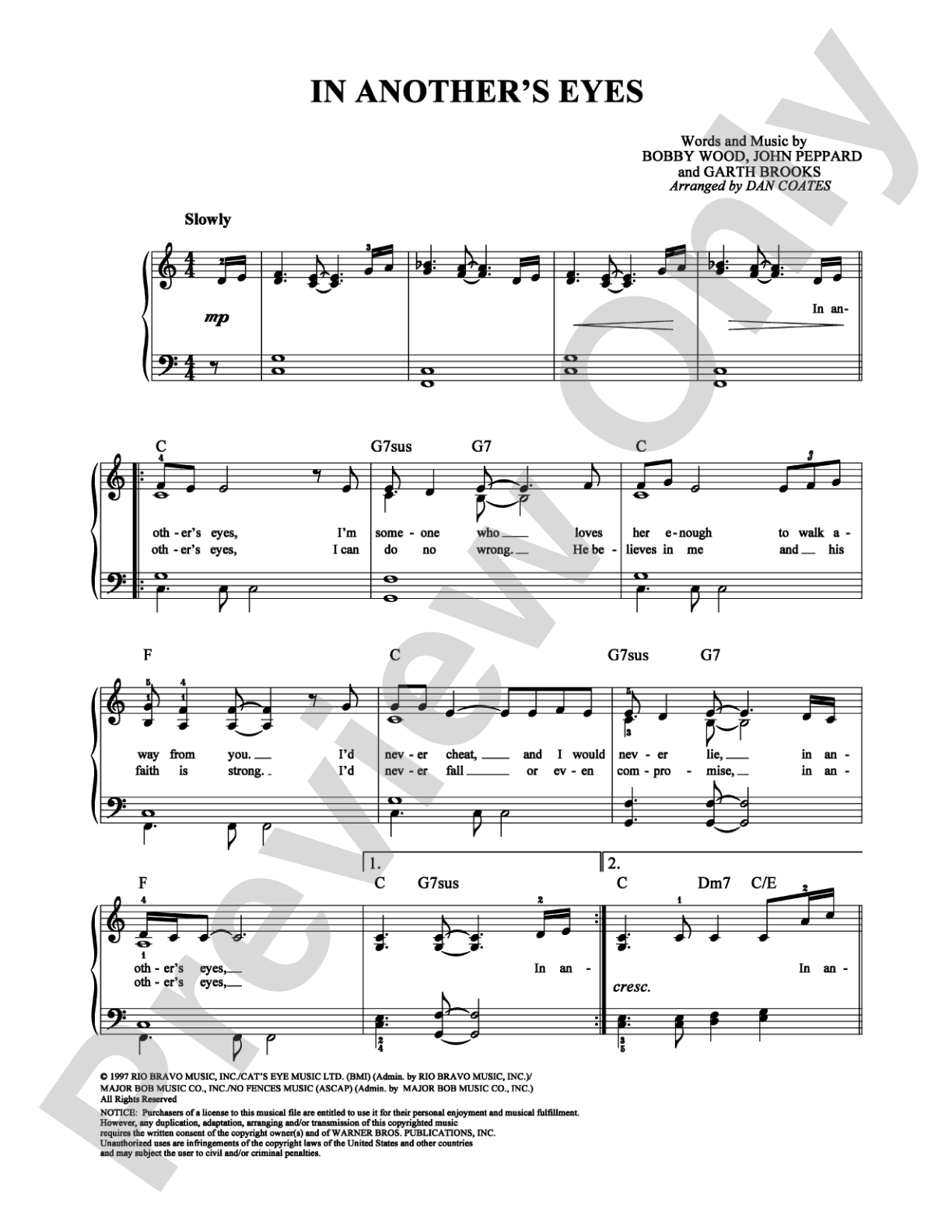
In Another's Eyes: Easy Piano Digital Sheet Music

In Another's Eyes: Easy Piano Digital Sheet Music

Trisha Yearwood, Garth Brooks, Bobby Wood, John Peppard

Item: 00-PS-0008009

Digital Download
$3.99
Description

In Another's Eyes: Easy Piano Digital Sheet Music isn't in MakeMusic Cloud just yet...but it could be. Let us know you'd like to see it, and you'll help shape what comes next. In the meantime, start a free trial and dive into thousands of interactive titles your students can play along with today.

Sample Audio
No sample audio found.
Sample Video
Additional Details
SKU: 00-PS-0008009

More about this title

About the Artist: Trisha Yearwood

Trisha Yearwood is a country music artist and actress whose recording career spans decades. She has won multiple Grammy Awards and Country Music Association Awards, and her work encompasses both solo recordings and notable duets, including this collaboration with Garth Brooks.

Why we love this

This duet gives piano students access to a beloved country crossover hit in an accessible arrangement. The Easy Piano setting removes technical barriers while preserving the song's emotional warmth, making it an engaging choice for students who respond to contemporary country repertoire.

What to expect

Intimate and conversational, this duet captures the warmth of two voices in dialogue. The arrangement opens space around the melody, creating a reflective quality that invites expressive playing rather than technical display.

Who it's for

Piano students in early to intermediate stages who connect with country music and want to learn songs beyond traditional classical or contemporary pop repertoire. Teachers seeking repertoire that bridges popular culture and piano skill-building will find this accessible entry point valuable.

How to get the most out of it

  • Balance the two melodic lines carefully; even though one hand carries the primary tune, both parts deserve clarity and phrasing attention
  • Lean into the rubato natural to country music; allow space and slight rhythmic flexibility rather than metronomic precision
  • Shape the accompaniment to support the vocal melody without overwhelming it, treating the left hand as responsive rather than strictly steady

How to use it

This works well as a solo performance piece for a student recital or studio showcase, especially in a program exploring different musical genres. It can also serve as a bridge-building piece for students exploring their own musical interests beyond assigned method book repertoire.

Skills your students will build

  • Voicing two distinct melodic lines within a single staff system
  • Maintaining rhythmic independence between hands while keeping them musically connected
  • Shaping a simple arrangement with intentional phrasing and dynamic contrast
  • Performing familiar popular music with interpretive choices

You May Also Like