

In All Keys, Book 1: Sharp Keys: Intermediate to Late Intermediate Piano Solos in All Major and Minor Sharp Keys: Piano
Intermediate to Late Intermediate Piano Solos in All Major and Minor Sharp Keys
By Melody Bober
Level: Intermediate / Late Intermediate
Item: 00-PB-0000620
$12.99
Pickup currently not available
Related Items
In All Keys, Book 1: Sharp Keys: Piano Book |
$12.99
|
View |
Description
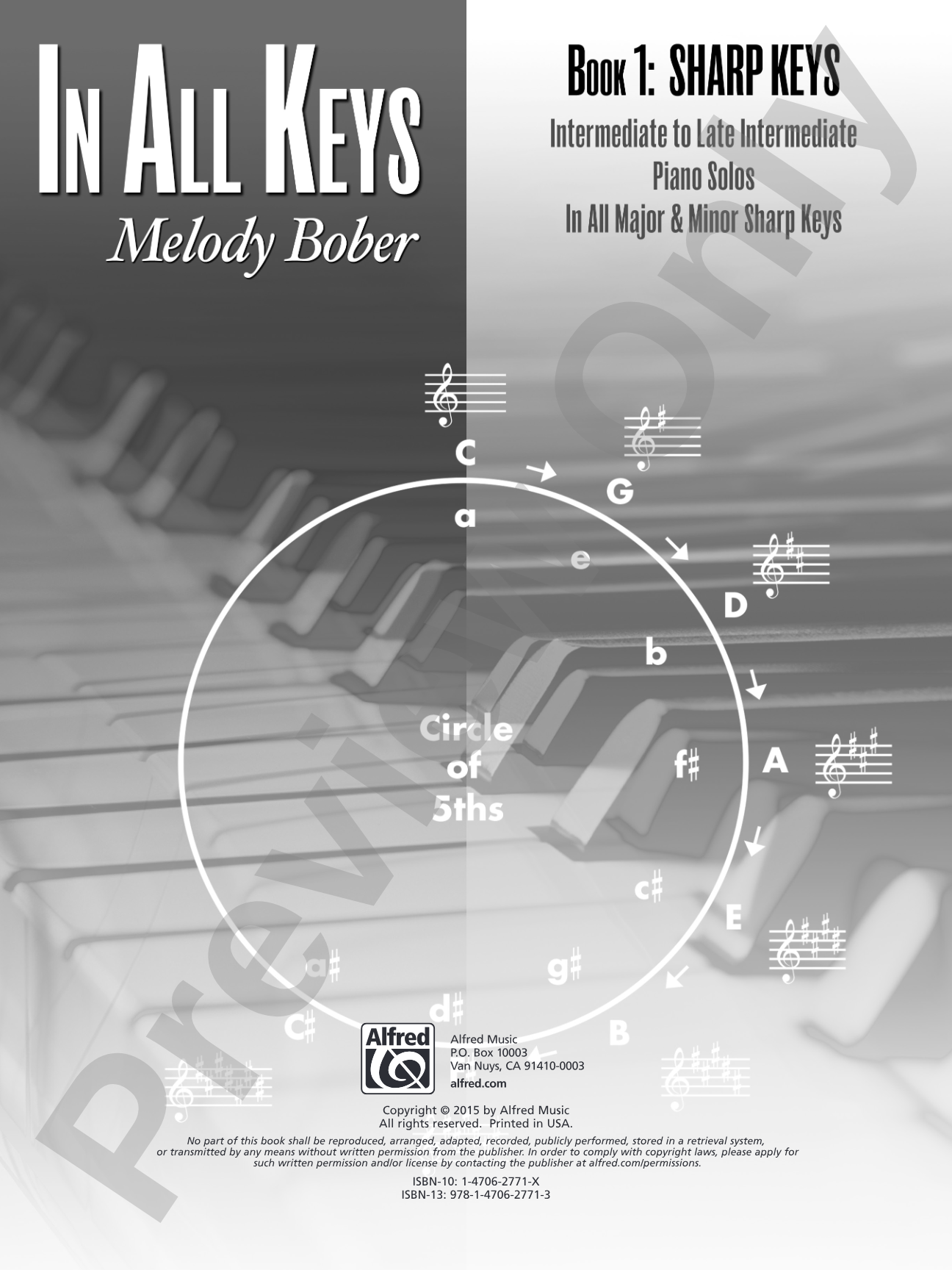
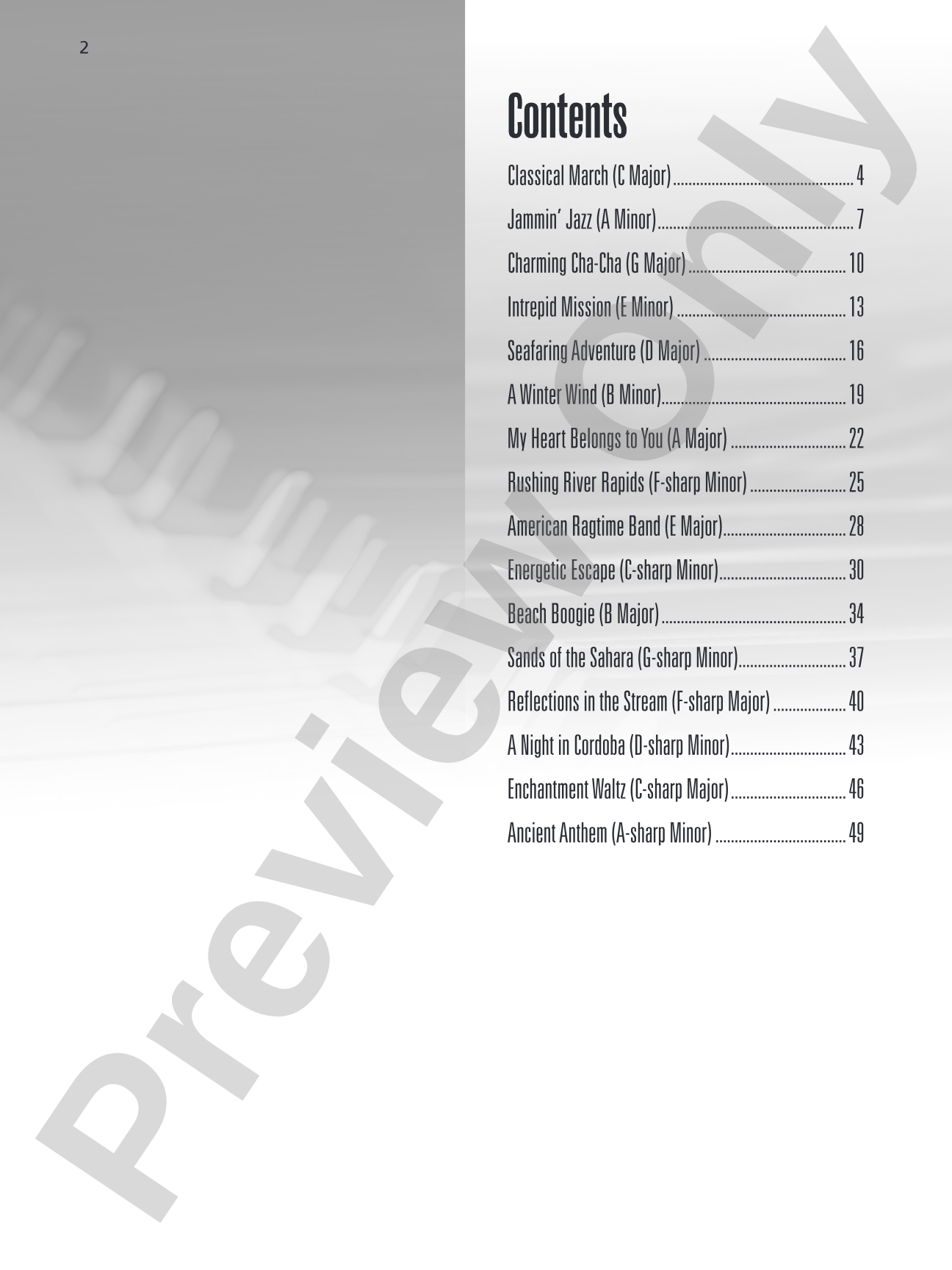
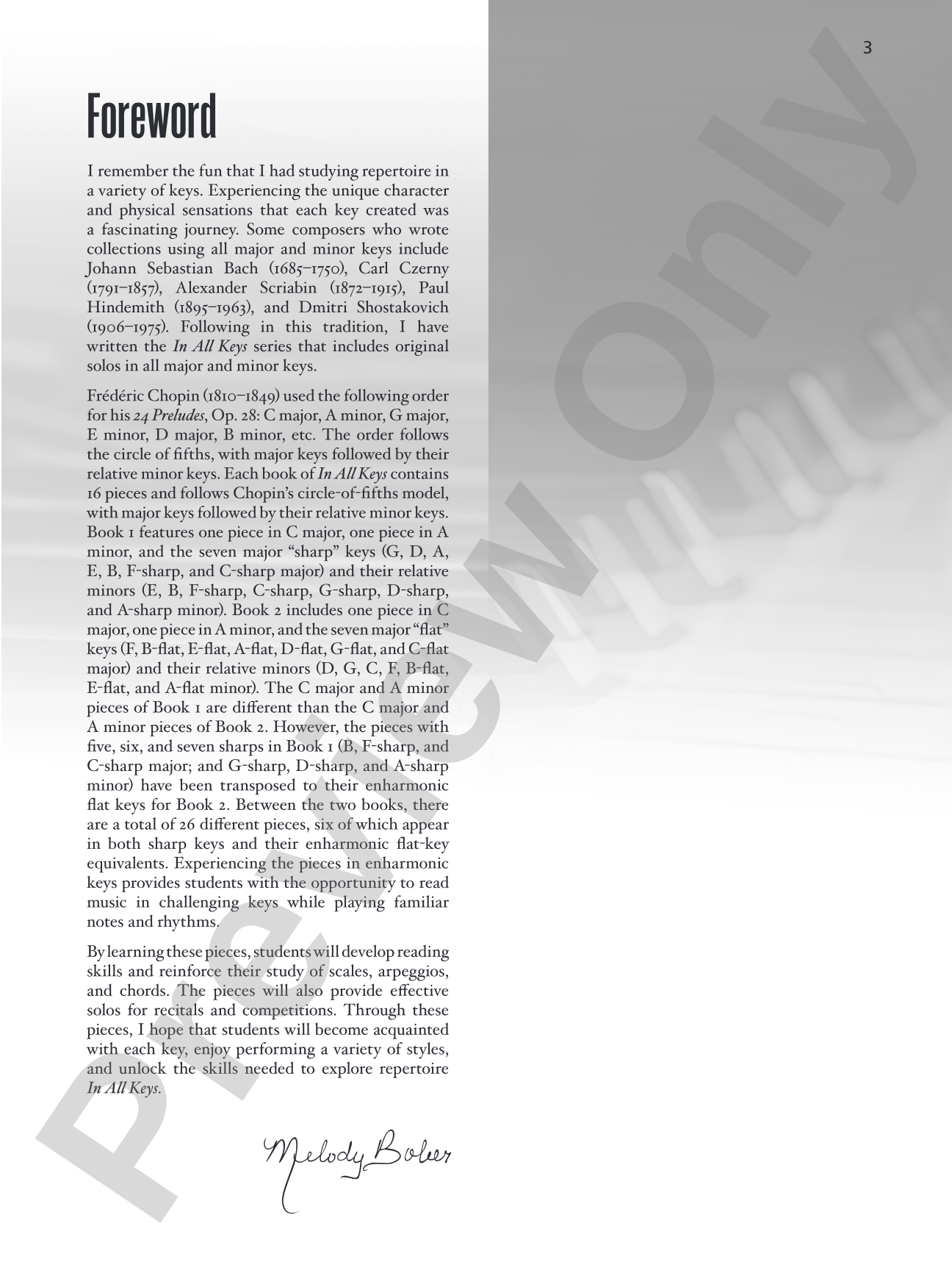
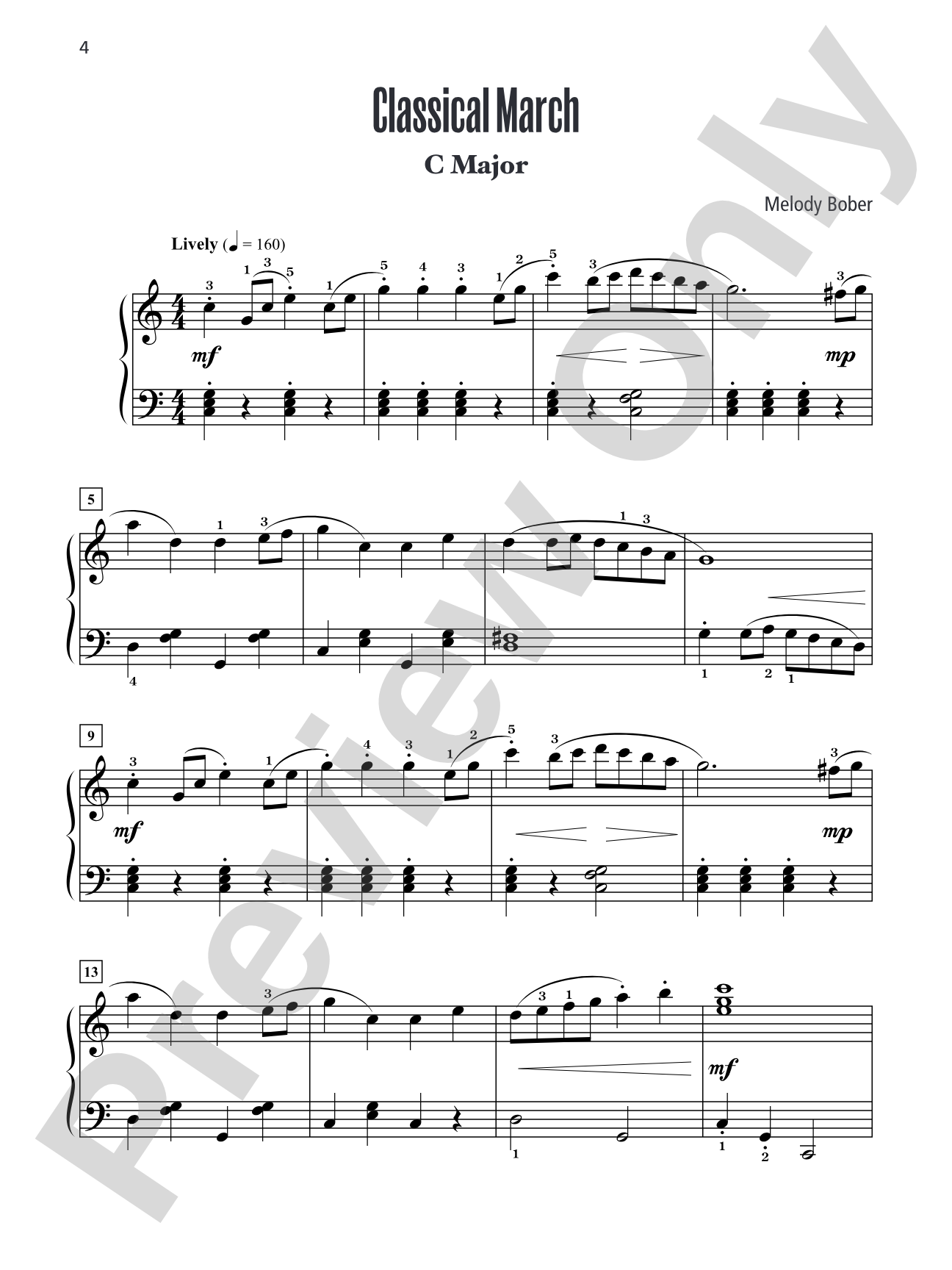
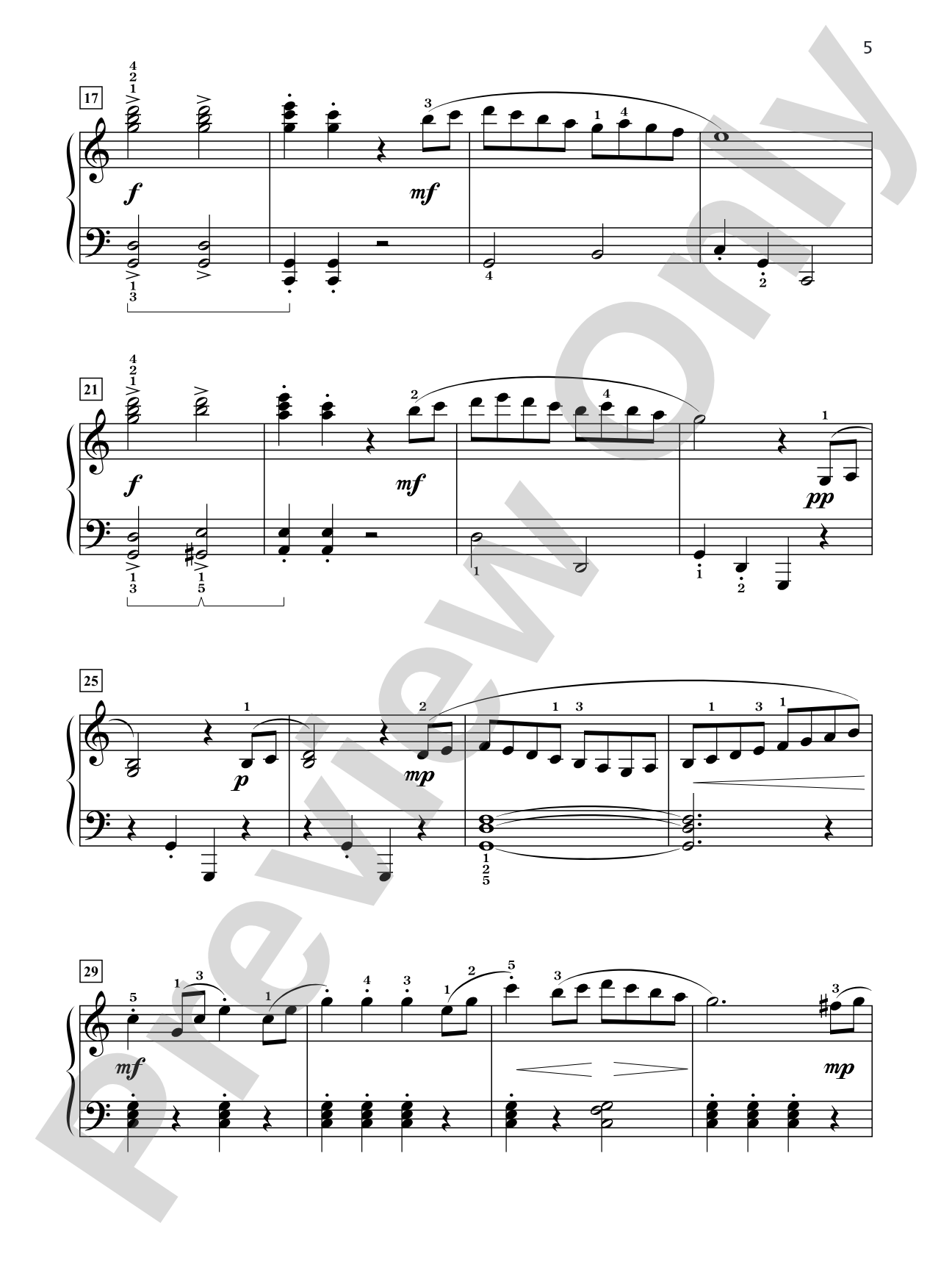
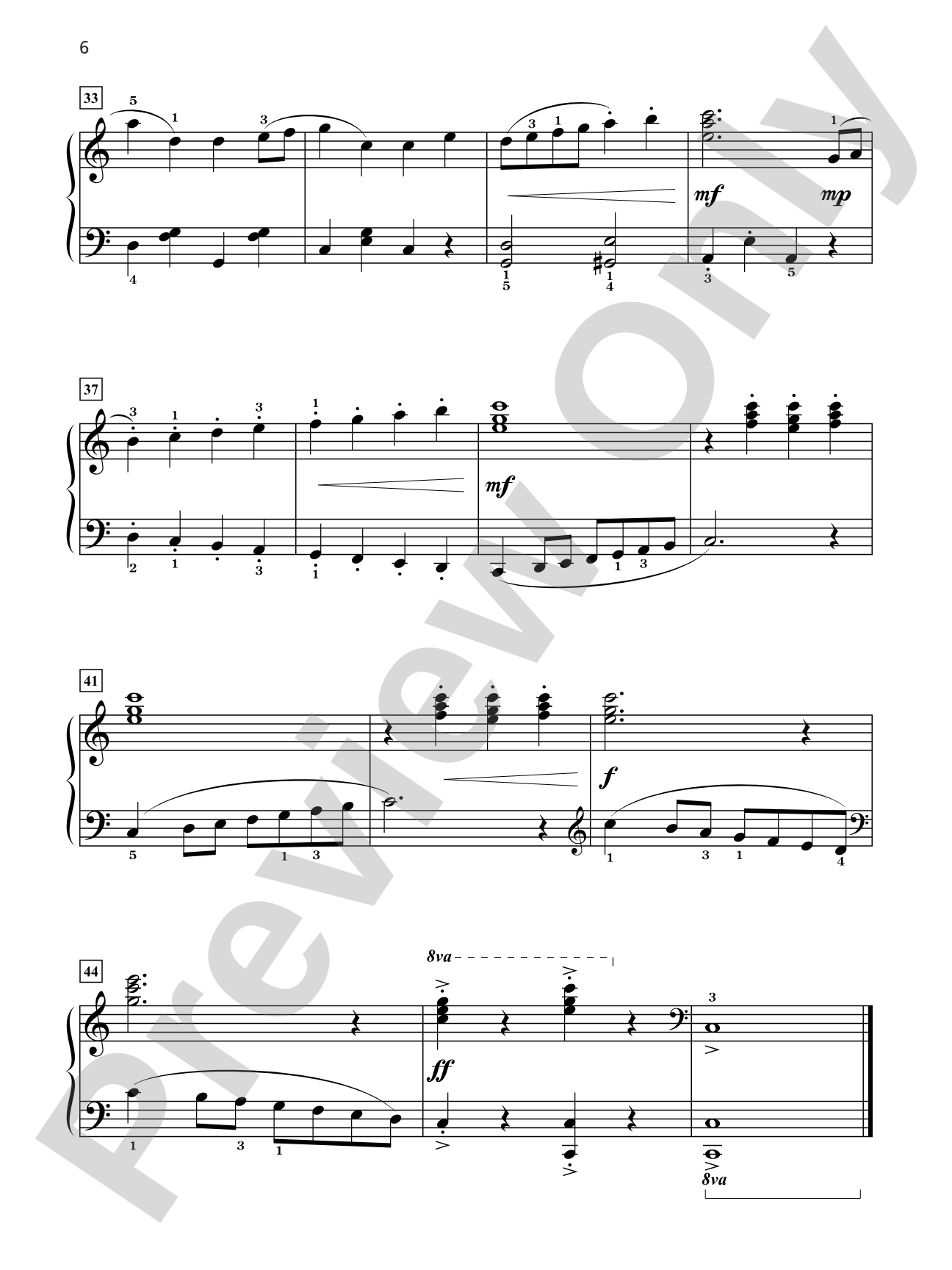
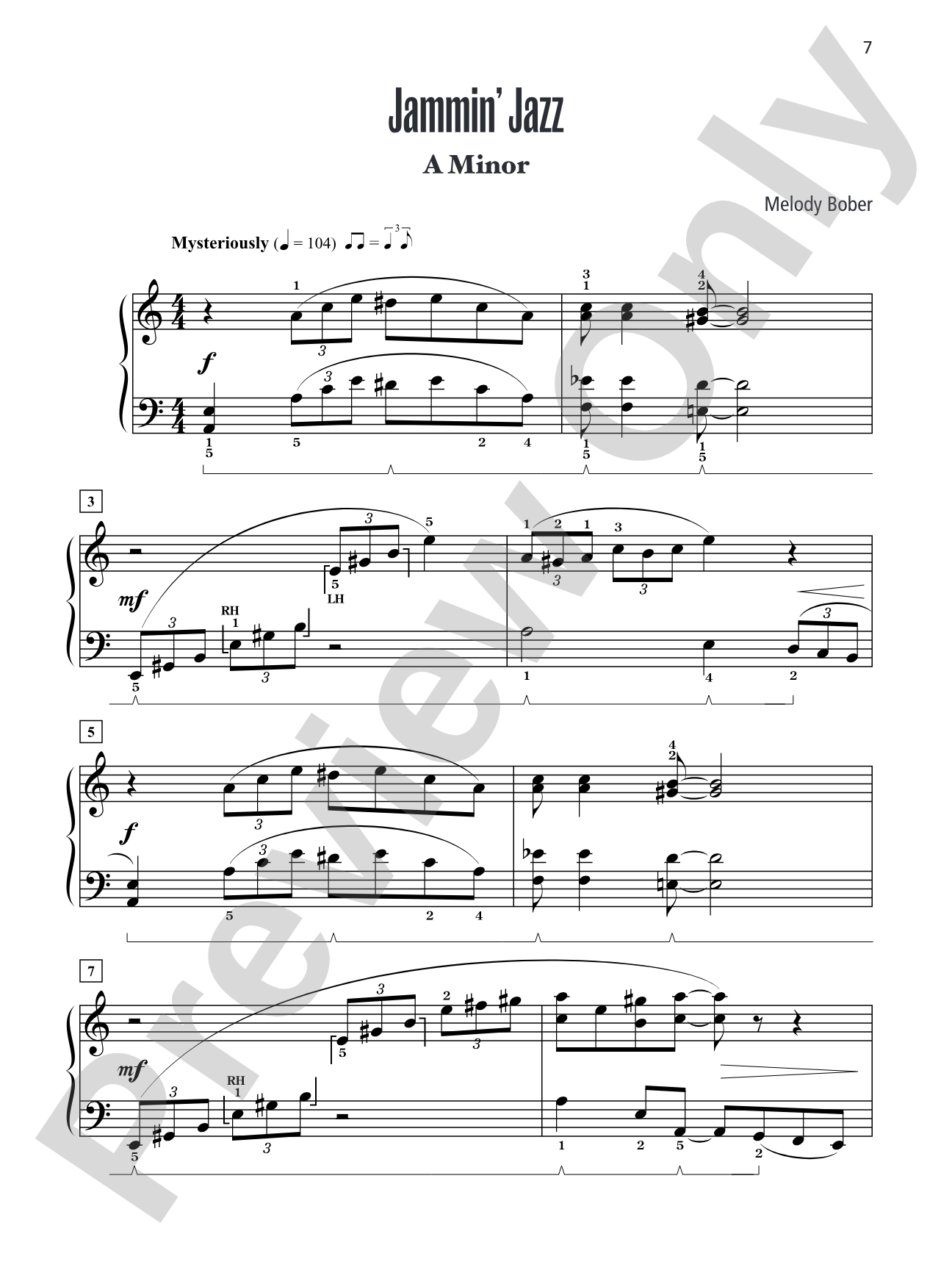
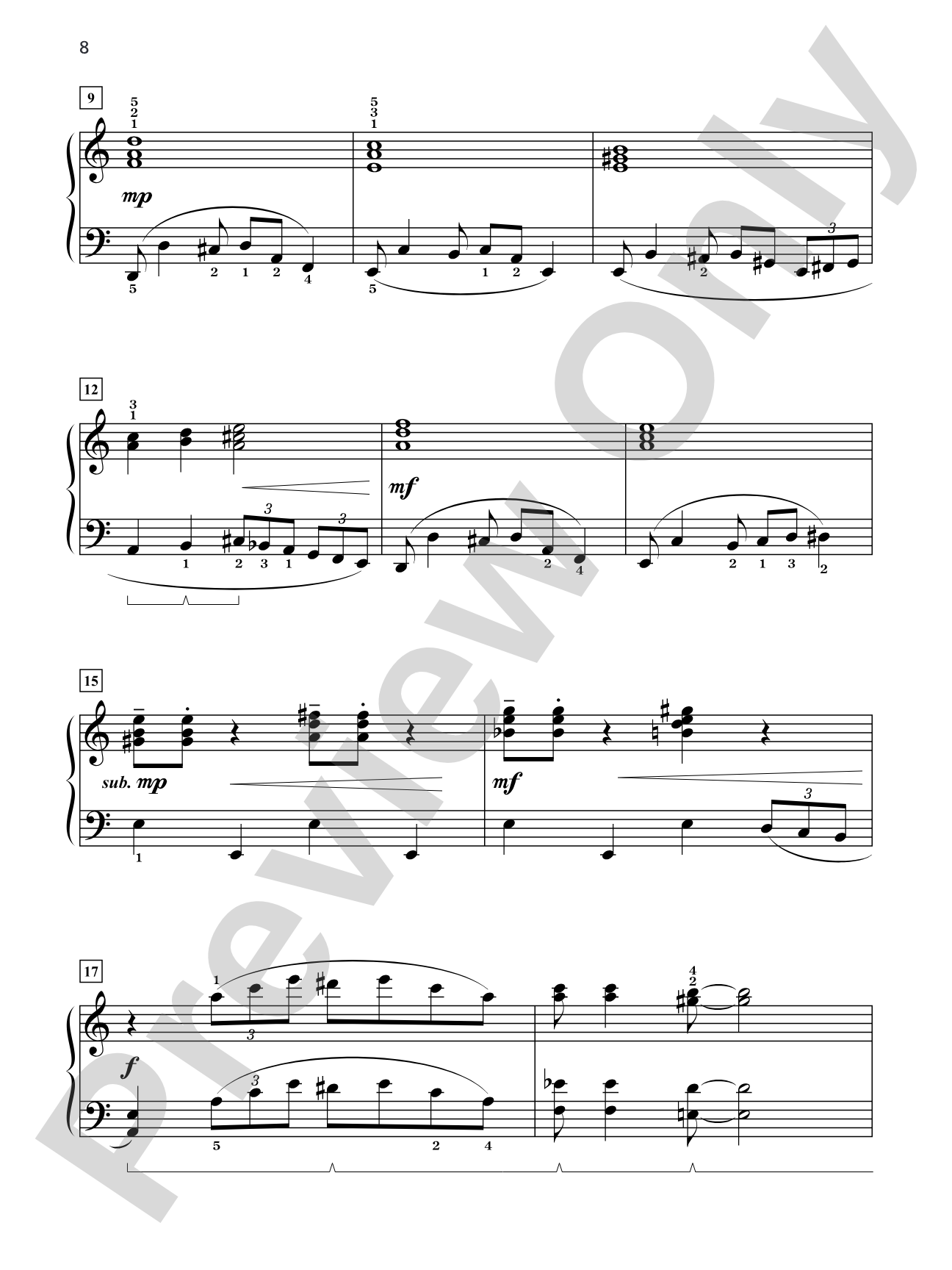
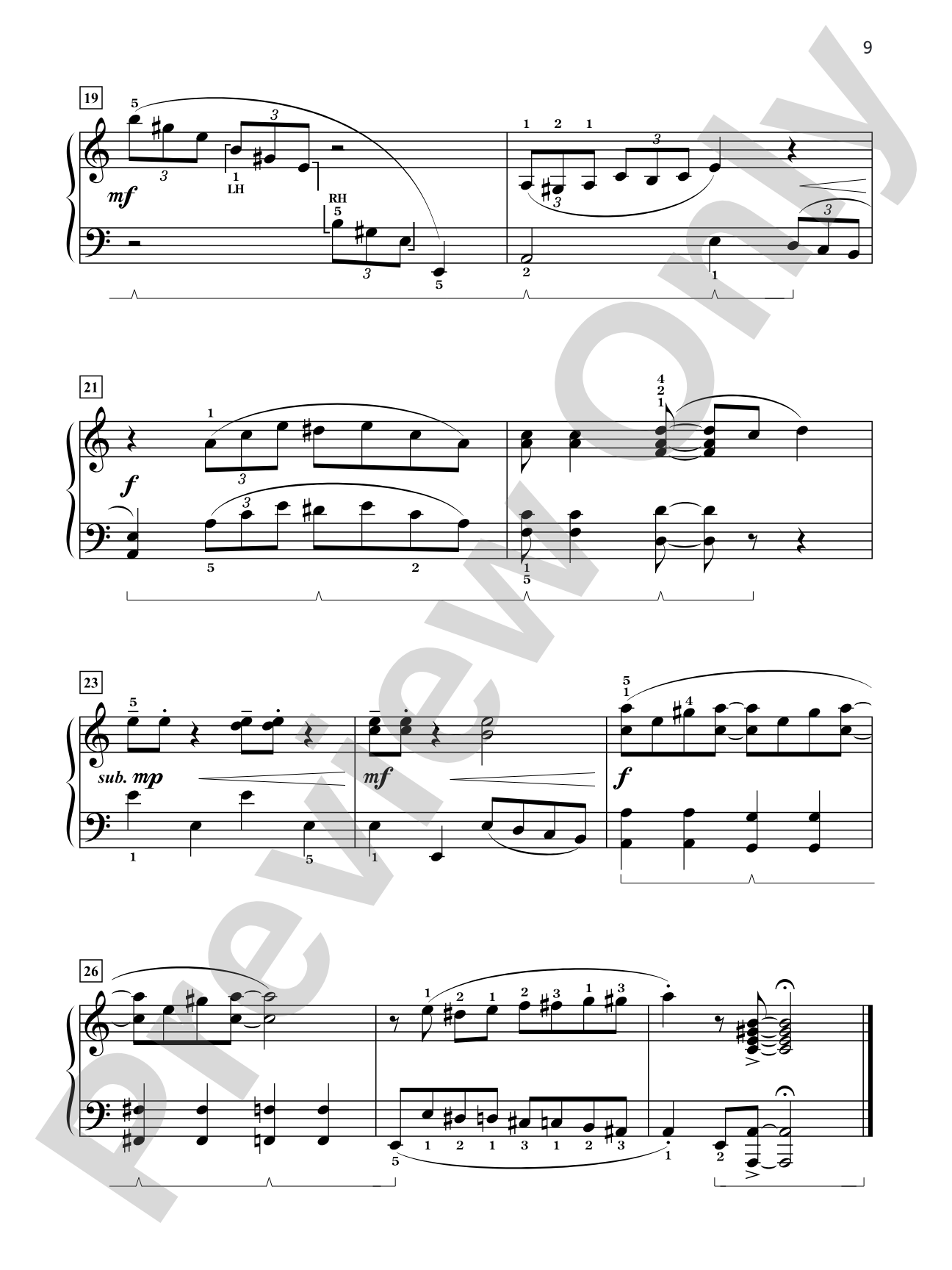
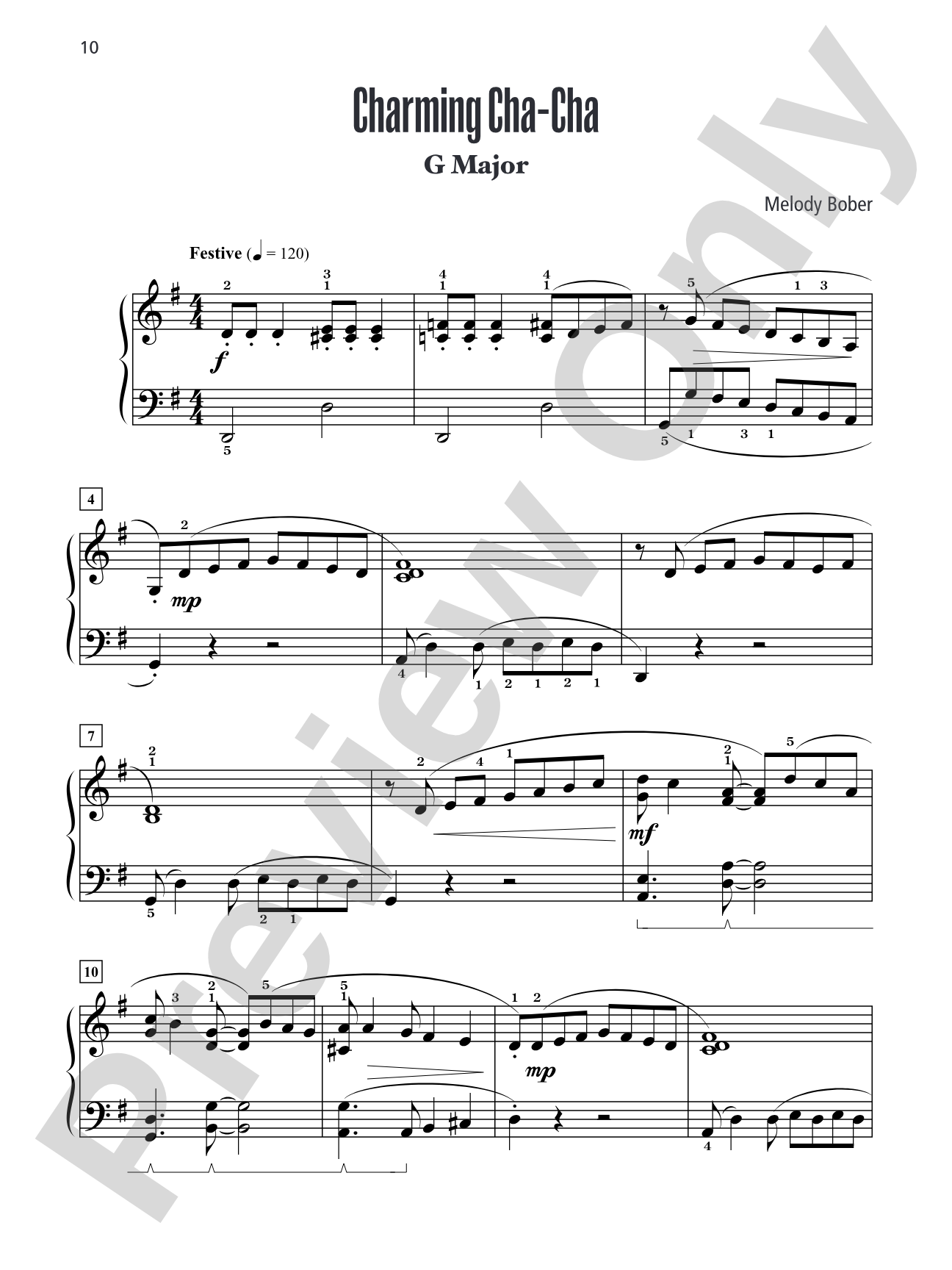
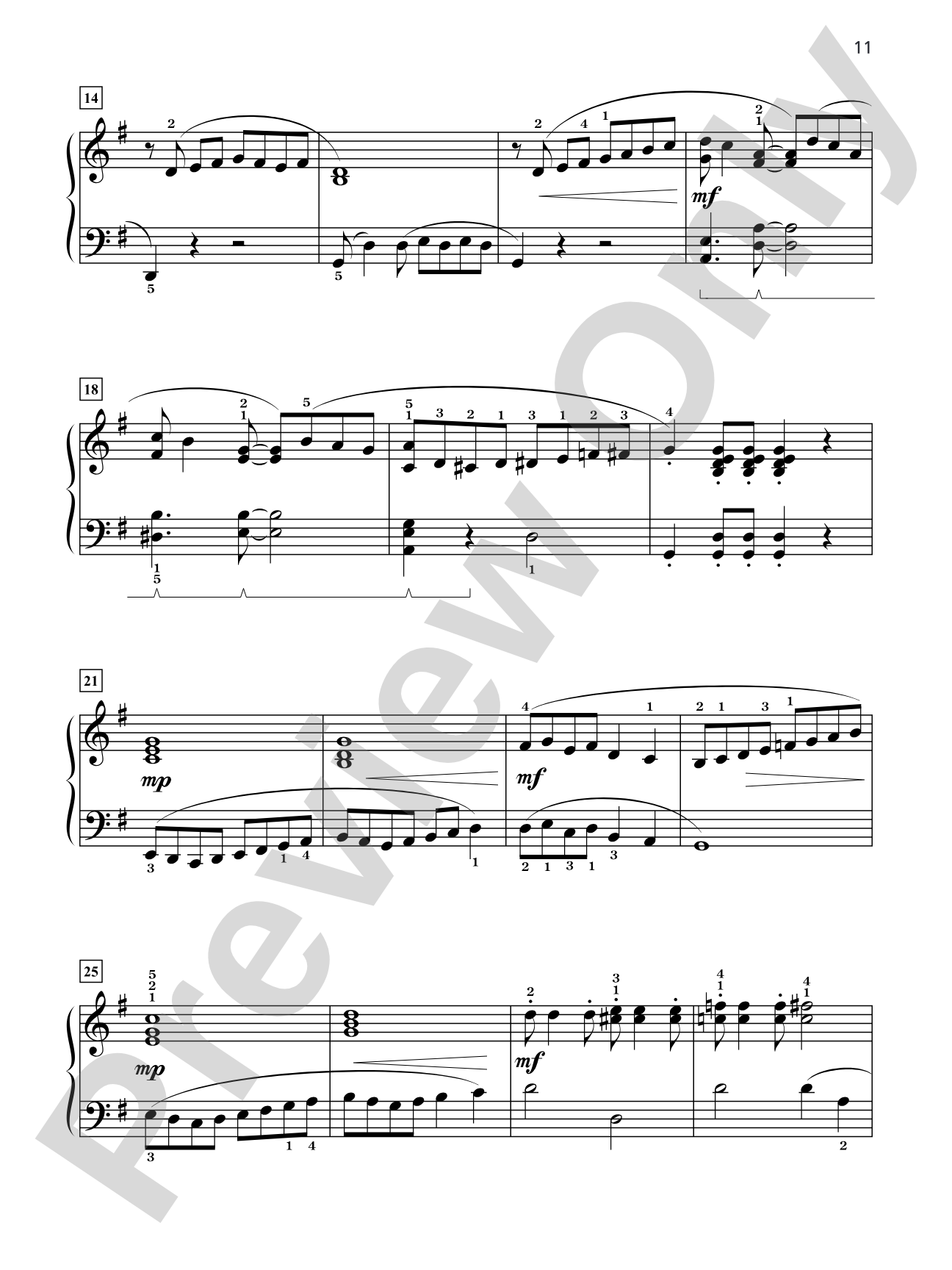
Following in the tradition of Bach, Chopin, and other composers, Melody Bober has written the In All Keys series, which includes original piano solos in all major and minor keys. Each book in the series contains 16 pieces and follows the circle of fifths, with pieces in major keys followed by pieces in relative minor keys. Book 1 features one piece in C major, one piece in A minor, and the seven major "sharp" keys (G, D, A, E, B, F-sharp, and C-sharp major) and their relative minors (E, B, F-sharp, C-sharp, G-sharp, D-sharp, and A-sharp minor). Book 2 includes one piece in C major, one piece in A minor, and the seven major "flat" keys (F, B-flat, E-flat, A-flat, D-flat, G-flat, and C-flat major) and their relative minors (D, G, C, F, B-flat, E-flat, and A-flat minor). The C major and A minor pieces of Book 1 are different than the C major and A minor pieces of Book 2. The pieces with five, six, and seven sharps in Book 1 have been transposed to their enharmonic flat keys for Book 2. These pieces help develop reading skills, and they reinforce the study of scales, arpeggios, and chords. Titles: Classical March (C Major) * Jammin' Jazz (A Minor) * Charming Cha-Cha (G Major) * Intrepid Mission (E Minor) * Seafaring Adventure (D Major) * A Winter Wind (B Minor) * My Heart Belongs to You (A Major) * Rushing River Rapids (F-sharp Minor) * American Ragtime Band (E Major) * Energetic Escape (C-sharp Minor) * Beach Boogie (B Major) * Sands of the Sahara (G-sharp Minor) * Reflections in the Stream (F-sharp Major) * A Night in Cordoba (D-sharp Minor) * Enchantment Waltz (C-sharp Major) * Ancient Anthem (A-sharp Minor). A Federation Festivals 2020-2024 selection. A Federation Festivals 2024-2028 selection.


In All Keys, Book 1: Sharp Keys: Intermediate to Late Intermediate Piano Solos in All Major and Minor Sharp Keys: Piano isn't in MakeMusic Cloud just yet...but it could be. Let us know you'd like to see it, and you'll help shape what comes next. In the meantime, start a free trial and dive into thousands of interactive titles your students can play along with today.
Request This Title
Tell us you want it.
Start Your Free Trial
Explore everything that's ready to play right now.
Sample Audio
No sample audio found.
Sample Video
No sample videos found.
Additional Details
Series:
In All Keys
Publisher:
Alfred Music
Page Count:
52
SKU:
00-PB-0000620
More about this title
About the Composer: Melody Bober

Melody Bober holds degrees in music education from the University of Illinois and a Master of Arts in piano performance from Minnesota State University, Moorhead. Her teachers included pianist Joel Shapiro and Andrew Froelich, alongside music education specialist Mary Hoffman and jazz instructor Tony Caramia. Beyond her private studio teaching, Bober spent two decades in public school music education and later taught at the university level.
Active as both a church pianist and accompanist, Bober has also served as church music director. She is a sought-after clinician and presenter at piano teacher conventions and workshops across North America, bringing her thoughtful, student-centered approach to composition and pedagogy. She lives in Minnesota with her husband Jeff.
Why we love this
This collection answers a real pedagogical need: students drilling sharp keys have limited stylistically diverse, genuinely engaging material to work with. Bober's pieces span classical march, jazz, cha-cha, ragtime, and adventure themes, so students aren't just cycling through dry etudes but actually looking forward to practice. The circle of fifths structure means you can assign pieces strategically, moving from easier sharp keys toward the more challenging ones while naturally reinforcing relative major-minor relationships.
What to expect
Rhythmically alive and stylistically eclectic. You'll move from the stately character of a classical march into the groove of jazz and ragtime, then into exotic and adventurous landscapes. Each piece has enough personality to hold your interest while staying focused on the technical task of reading and playing comfortably in unfamiliar keys.
Who it's for
Intermediate and late intermediate piano students who are ready to move beyond C major and A minor and need systematic, musically rewarding work in all sharp keys. This collection works equally well for students preparing for festivals or recitals and those whose teachers want to build confidence across the full range of sharp key signatures.
How to get the most out of it
- Pay attention to the stylistic markings in each piece. A jazz idiom demands different voicing and rhythmic feel than a classical march; let the character guide your articulation and pedaling choices.
- Use the relative minor pieces to deepen your understanding of how the same key signature functions differently depending on tonal center. This shifts how you think about harmonic movement.
- Record yourself playing through multiple pieces in succession. You'll hear both how your finger patterns are improving across keys and where your key-specific weaknesses still need work.
- Explore the arpeggios and scales embedded in the accompaniment patterns. Spotting these shapes reinforces your muscle memory for the key and deepens your harmonic literacy.
How to use it
Build a recital around contrasting pieces from the book, mixing styles to show off your growing command of sharp keys. Alternatively, assign pieces sequentially throughout a semester, using the circle of fifths progression as a natural curriculum that pairs key study with technique and repertoire development.
Skills your students will build
- Reading fluency in sharp key signatures (up to seven sharps)
- Relative major-minor key relationships and tonal center shifts
- Stylistic flexibility across classical, jazz, ragtime, and character piece idioms
- Arpeggiation and chord recognition within varied harmonic contexts
- Finger pattern consistency and hand position efficiency across transpositions