
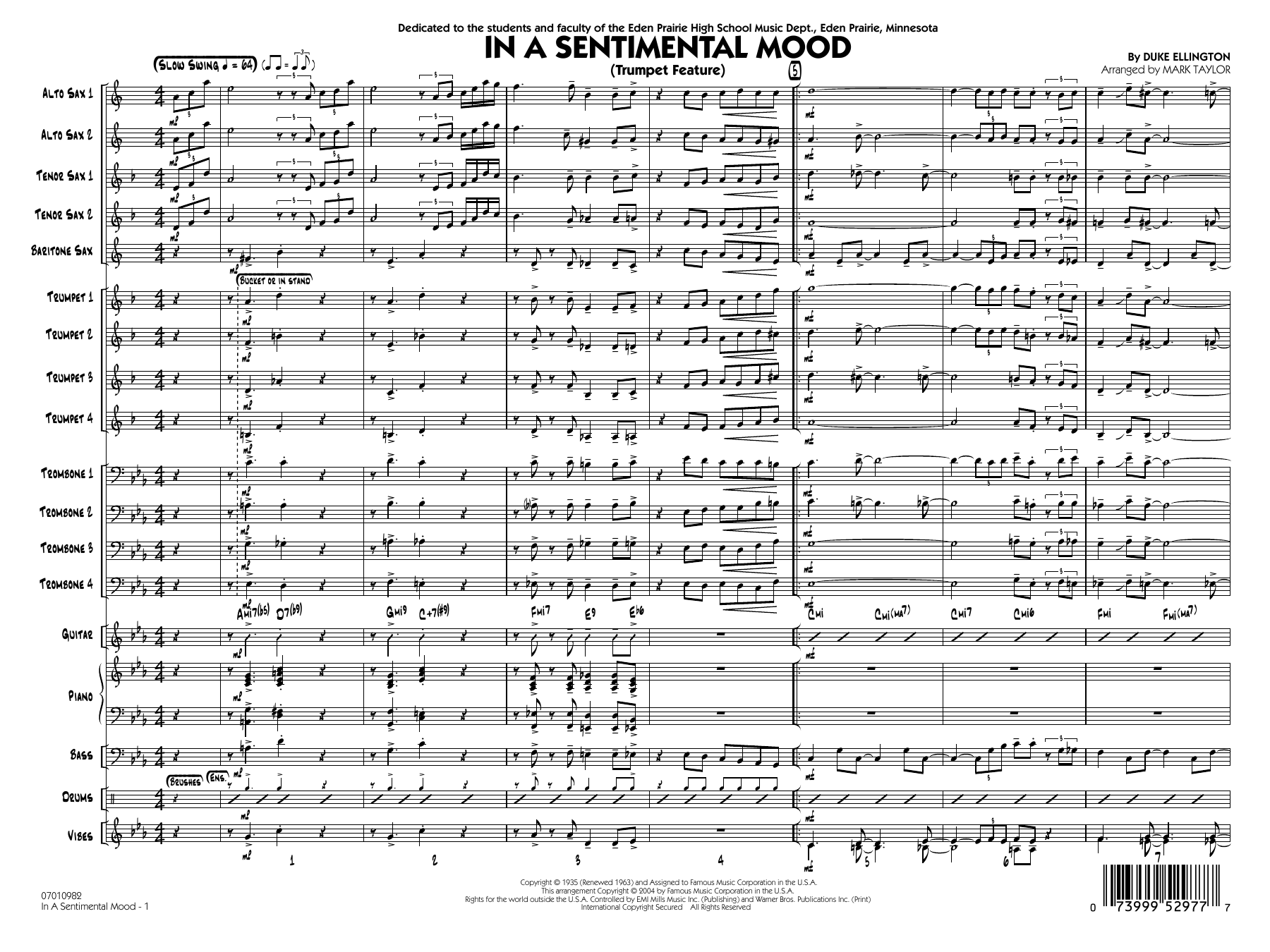

In a Sentimental Mood (arr. Mark Taylor): Jazz Ensemble Conductor Score & Parts
As performed by Duke Ellington / Arranged by Mark Taylor
Grade: 3
Item: 35-PK01209996
$50.00
Pickup currently not available
Buy Extra Parts (Digital PDF Download)
Parts Added to Cart!
Description
Jazz Classics for the Young Ensemble - Grade 3. No one handles Ellington for younger ensembles better than Mark Taylor, and this well-crafted arrangement shows why. Although Mark uses a written trumpet solo on the bridge, the main theme is handled by the full ensemble playing primarily tutti rhythms. Included are solos for trumpet and tenor (written or ad lib.) then a brief double time swing section featuring the entire ensemble. We think the Duke himself would have liked this one.


In a Sentimental Mood (arr. Mark Taylor): Jazz Ensemble Conductor Score & Parts isn't in MakeMusic Cloud just yet...but it could be. Let us know you'd like to see it, and you'll help shape what comes next. In the meantime, start a free trial and dive into thousands of interactive titles your students can play along with today.
Request This Title
Tell us you want it.
Start Your Free Trial
Explore everything that's ready to play right now.
Sample Audio
No sample audio found.
Sample Video
No sample videos found.
Additional Details
Publisher:
Hal Leonard
SKU:
35-PK01209996
More about this title
About the Artist: Duke Ellington
Duke Ellington (1899–1974) was an American composer and bandleader whose influence on jazz and American music remains unmatched. He wrote thousands of compositions across his career, from short instrumental pieces to extended works, and his harmonic sophistication and orchestration mastery shaped how jazz could sound. In the classroom and rehearsal, his music teaches ensemble balance, sophisticated harmony, and the blues tradition all at once.
Why we love this
Mark Taylor's sensibility for what Grade 3 ensembles can actually execute shines here. He gives young players ownership of the main melody through tutti writing while still offering soloists room to shine, and the bridge features a written trumpet solo that sounds composed rather than like a workaround. The double time section near the end energizes the ensemble without losing musicality.
What to expect
Sophisticated but approachable. The opening melody has Ellington's graceful melancholy, and the full ensemble writing gives it weight without pretension. By the double time swing section, the piece takes flight with genuine energy.
Who it's for
Young jazz ensembles ready to engage with Ellington's vocabulary without drowning in technical demands. Directors looking for a piece that teaches jazz fundamentals while keeping student energy high.
How to get the most out of it
- Balance the full ensemble melody so it sings without overwhelming the harmony voices. The tutti sections need cohesion, not volume.
- Shape the written trumpet solo on the bridge with deliberate phrasing; it's the compositional anchor of the arrangement and deserves distinct character.
- Establish a clear swing pocket before the tenor solo enters. Lock the rhythm section first, then bring in the melody players.
- The double time section works best when the ensemble commits fully to the tempo shift. Rehearse it separately until the band feels the new pulse naturally.
How to use it
Pair this with a straight-ahead blues or another Ellington-influenced tune to build a mini jazz exploration within a concert. It also works well as a midseason morale booster once your ensemble has developed basic jazz vocabulary. The piece sits comfortably in a mixed jazz and classical program because it respects both worlds.
Skills your students will build
- Swing phrasing and rhythmic feel
- Reading and executing tutti ensemble passages with clarity
- Understanding jazz chord changes and harmonic movement
- Solo improvisation over chord changes (trumpet and tenor)
- Tempo flexibility and navigating written meter changes