
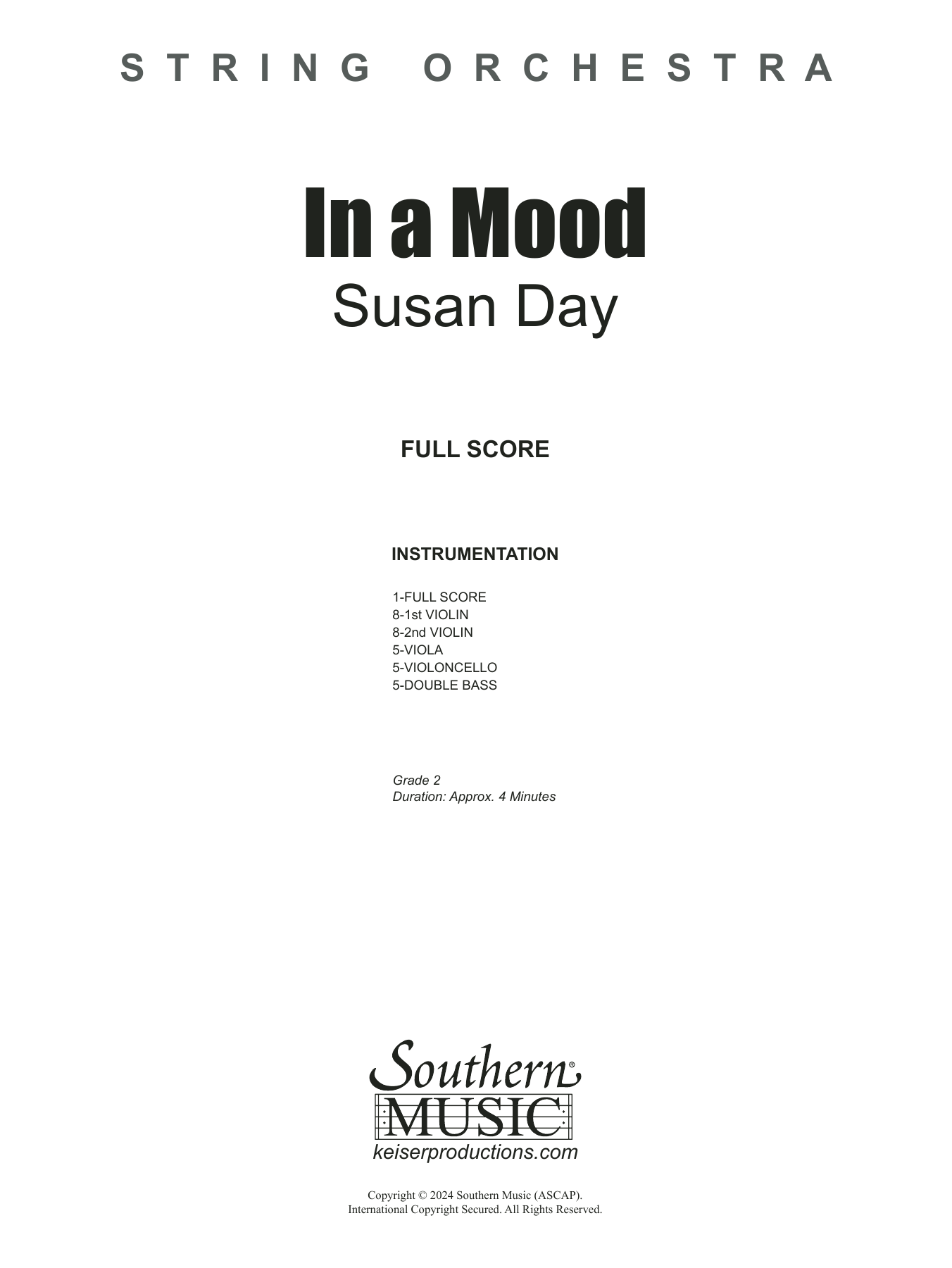

In a Mood: String Orchestra Conductor Score & Parts
By Susan Day
Grade: 2
Item: 35-PK01512522
$40.00
Pickup currently not available
Buy Extra Parts (Digital PDF Download)
| Product | Price | Quantity |
|---|---|---|
| In a Mood - Full Score | $6.00 | |
| In a Mood - Violin 1 | $2.50 | |
| In a Mood - Violin 2 | $2.50 | |
| In a Mood - Viola | $2.50 | |
| In a Mood - Cello | $2.50 | |
| In a Mood - Bass | $2.50 |
Parts Added to Cart!
Description
Starting with an eight-measure violin solo, this simple but elegant melody weaves its way through the orchestra, providing different sections the opportunity to shine, and play expressively. Written entirely in the key of C with no accidentals, teaching skills include two note slurs, hooked bowing, a few notes in 3rd position in violin 1 part, and expressive playing. Attention to dynamic markings and legato bowing will bring out the best. This piece is a great addition to any concert program and suitable for contest!


In a Mood: String Orchestra Conductor Score & Parts isn't in MakeMusic Cloud just yet...but it could be. Let us know you'd like to see it, and you'll help shape what comes next. In the meantime, start a free trial and dive into thousands of interactive titles your students can play along with today.
Request This Title
Tell us you want it.
Start Your Free Trial
Explore everything that's ready to play right now.
Sample Audio
No sample audio found.
Sample Video
No sample videos found.
Additional Details
Publisher:
Hal Leonard
SKU:
35-PK01512522
More about this title
Why we love this
Susan Day writes for student musicians with genuine insight into what works in the rehearsal room. The melody travels through every section without feeling contrived, and the technical demands sit right at the threshold where students feel challenged but capable. Dynamics and bowing articulation become real teaching moments rather than abstract concepts.
What to expect
The piece unfolds with quiet introspection, allowing each voice to step forward with grace. There is warmth in the simplicity; the lack of accidentals creates a clarity that lets young players focus entirely on how they sound rather than what they are reading.
Who it's for
String orchestras at the Grade 2 level will find this piece immediately playable yet musically rewarding. Directors preparing young ensembles for concert or contest settings gain a piece that develops expressive control without requiring advanced technique.
How to get the most out of it
- Shape the opening violin solo with clear phrase breathing; the eight measures set the emotional tone for everything that follows.
- Balance dynamic changes across sections carefully. When the melody passes from violins to violas or cellos, adjust ensemble balance so the new voice projects cleanly.
- Work the legato bowing passages separately, establishing consistent bow speed and pressure before putting everything together.
- Mark your score with cues showing exactly where each section enters with the main theme; this reduces rehearsal time spent hunting for entrances.
How to use it
Position this as a centerpiece on a concert that balances technical development pieces with those that showcase musicality. It pairs well in a program that includes faster, more rhythmically driven selections, offering audiences a moment of reflection without dropping energy.
Skills your students will build
- Two-note slurs in string writing
- Hooked bowing technique
- Playing in 3rd position (Violin 1)
- Responding to dynamic markings with appropriate bow control
- Legato bowing and phrase shaping
- Melodic responsibility when carrying the primary theme