
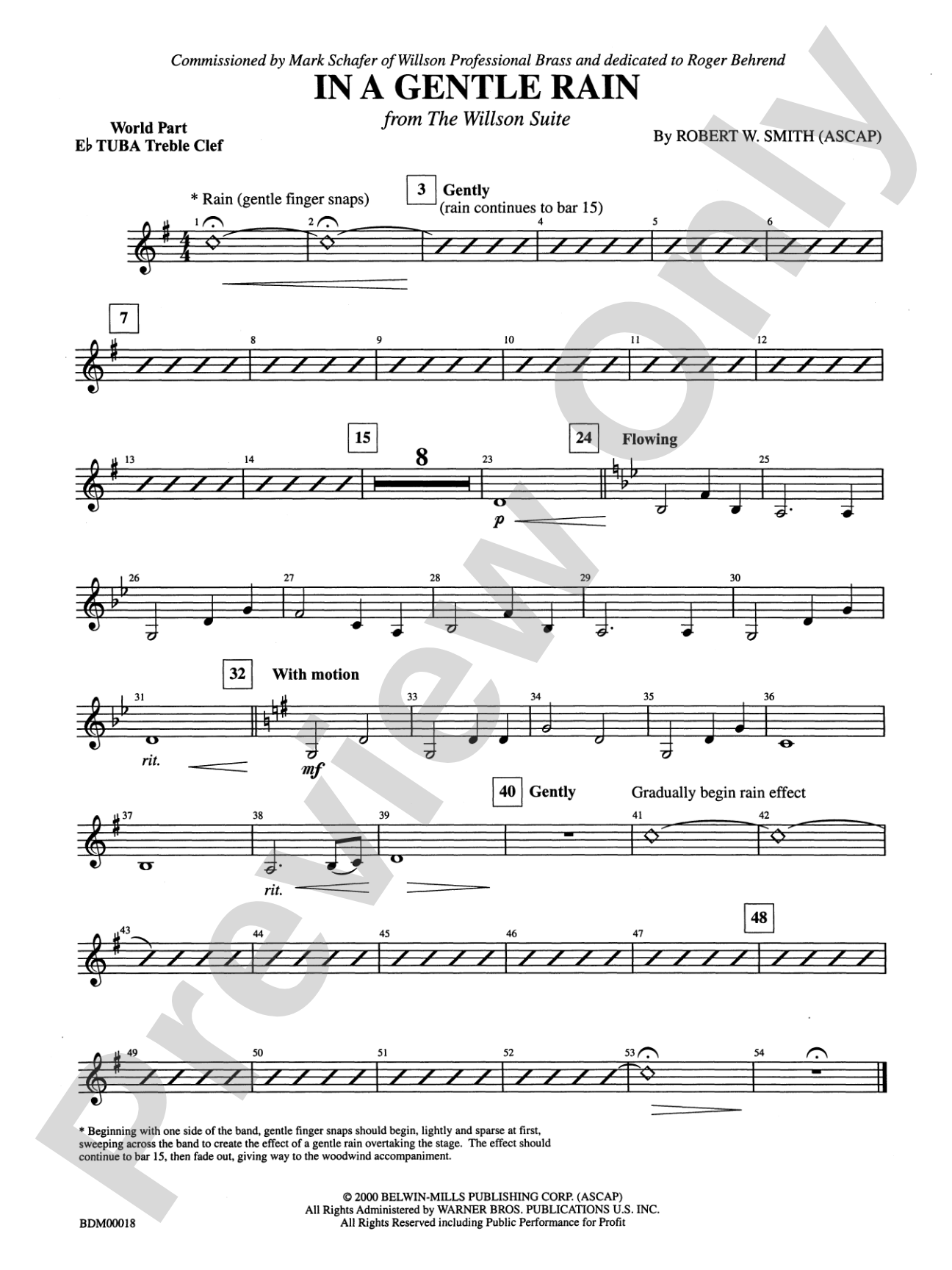

In a Gentle Rain: (wp) E-flat Tuba T.C.
Wind Instrument Solo
By Robert W. Smith
Grade: 4 (Medium)
Item: 00-PC-0002119_wpTBETC
$3.00
Pickup currently not available
Description
This second movement of The Willson Suite has been restructured to accommodate virtually any wind instrument as the soloist. Serene by nature, the charismatic melody is accompanied by unique effects reminiscent of a gentle rain. The solo may be divided to permit multiple soloists to be featured. This creative approach is the perfect opportunity to feature outstanding soloists at your spring concert. An incredibly musical work. Your audience will be in awe.


Don't just read it, hear it, play along with it, and watch your students grow with it. In MakeMusic Cloud, In a Gentle Rain: (wp) E-flat Tuba T.C. comes alive with professional accompaniment, adjustable tempo, and built-in practice tools that turn solo practice into real progress.
Open in the Player
Jump straight in and assign it today.
Start Your Free Trial
Open this title and explore the full library in minutes.
Sample Audio
1
Audio File
--:--
0:00
0:00
Sample Video
No sample videos found.
Additional Details
Series:
Belwin Symphonic Band
Publisher:
Alfred Music
Page Count:
136
SKU:
00-PC-0002119_wpTBETC
More about this title
About the Composer: Robert W. Smith

Robert W. Smith has established himself as one of America's most frequently performed composers for concert band and orchestra, with over 400 works in print through Alfred Music. His education includes a Bachelor of Music Education from Troy State University and a Master of Music from the University of Miami, training that prepared him for a compositional career spanning multiple continents and contexts.
Smith's catalog ranges from large-scale symphonic works like The Divine Comedy and The Odyssey to accessible pieces for developing ensembles, many of which have become repertoire standards. His music has been performed at major events including the Olympic Games, the Macy's Thanksgiving Day Parade broadcast, and Opening Day at Dodger Stadium. As a conductor and clinician, he continues to work with ensembles across the United States, Canada, Japan, Australia, and Europe.
Why we love this
This arrangement transforms a demanding solo feature into a democratic opportunity for your band. Rather than limiting your spotlight to a single standout player, you can divide the melody among multiple soloists, making spring concert planning easier and giving more students a chance to shine. The writing is melodically gorgeous without requiring virtuosic technique, which means your solid players will sound exceptional over that distinctive rain accompaniment.
What to expect
The piece creates an intimate, contemplative mood through gentle accompaniment patterns that evoke actual rainfall. A lyrical solo melody floats above, unhurried and expressive, inviting the listener into a moment of quiet reflection. The combination feels both contemporary in orchestration and timeless in emotional appeal.
Who it's for
Concert bands at the Grade 4 level will find this approachable in terms of technical demands while offering authentic musical satisfaction. Directors seeking a spring feature that showcases multiple soloists without compromising ensemble sound will value the flexibility this score provides.
How to get the most out of it
- Balance the rain effects in the ensemble so the rhythmic patterns support rather than overshadow the solo line. The accompaniment should feel atmospheric, not heavy.
- If you're splitting the solo among multiple players, ensure consistent phrasing and tone color across the group. Rehearse the soloists together to establish unified interpretation.
- Shape the melody with subtle dynamic contours that rise and fall naturally. Avoid playing it straight; the serene character comes from responsive, breathing phrasing.
- Consider the timbral possibilities of your available soloists. A clarinet solo will read differently than a trumpet or saxophone, so choose instrumentation that matches your ensemble's strengths.
How to use it
Program this as a concert centerpiece where it can stand alone and receive full audience attention. The serene character makes it an ideal transition piece between more energetic works, or a graceful closer for a first half. The solo-with-ensemble format also works beautifully for a spring solo and ensemble showcase where you want to feature multiple players within a single published work.
Skills your students will build
- Balancing solo projection with ensemble accompaniment
- Sustained legato phrasing and long-line melodic shaping
- Playing rhythmic rain effects that are clearly defined but not prominent
- Maintaining serenity and control while carrying a featured melody