
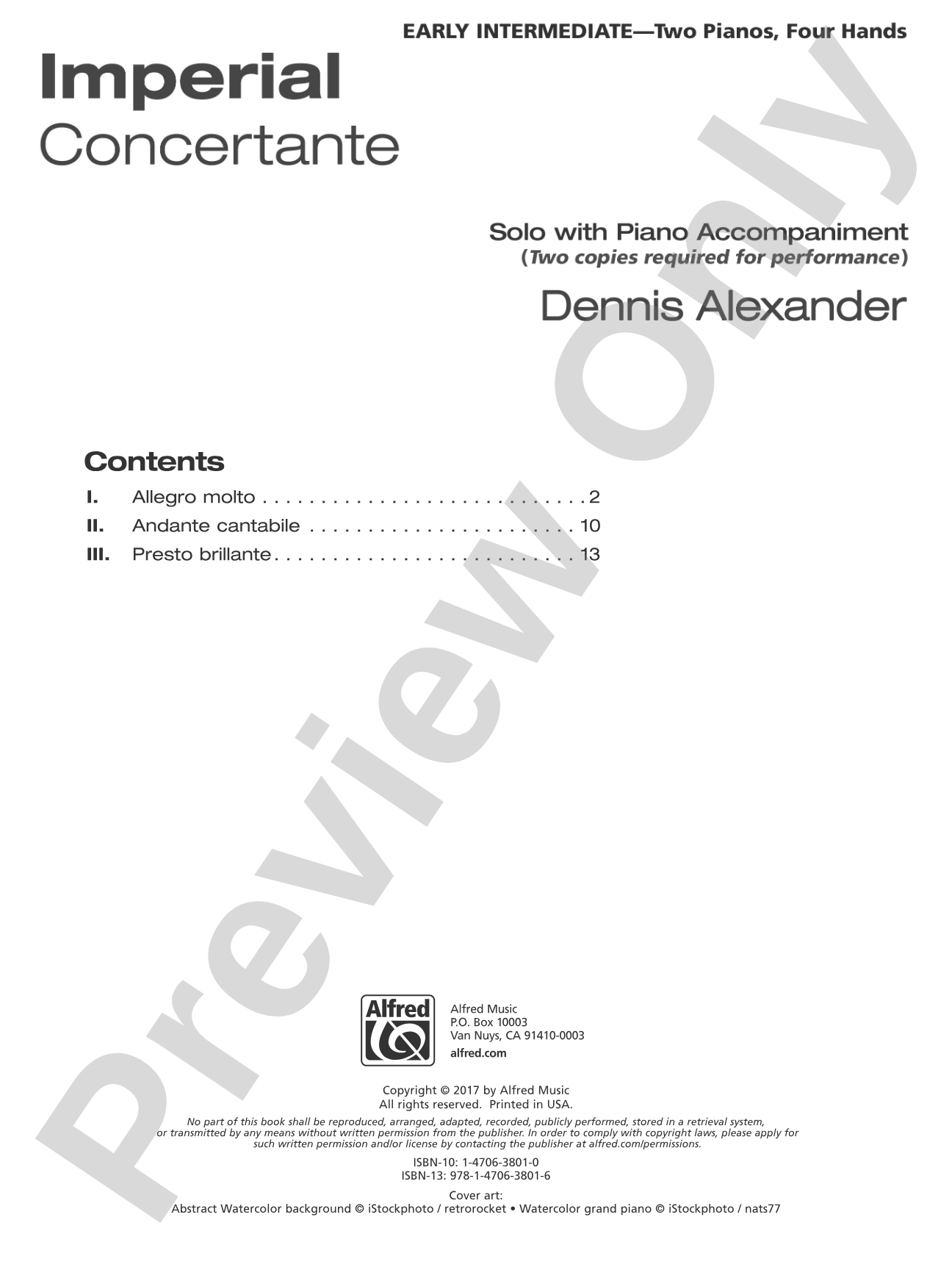

Imperial Concertante: Solo with Piano Accompaniment - Piano Duo (2 Pianos, 4 Hands): Piano Duets & Four Hands
Solo with Piano Accompaniment
By Dennis Alexander
Level: Early Intermediate
Item: 00-PB-0000896

$7.99
Pickup currently not available
Related Items
Imperial Concertante: Piano Duo (2 Pianos, 4 Hands) Book (2 copies required) |
$7.99
|
View |
Description
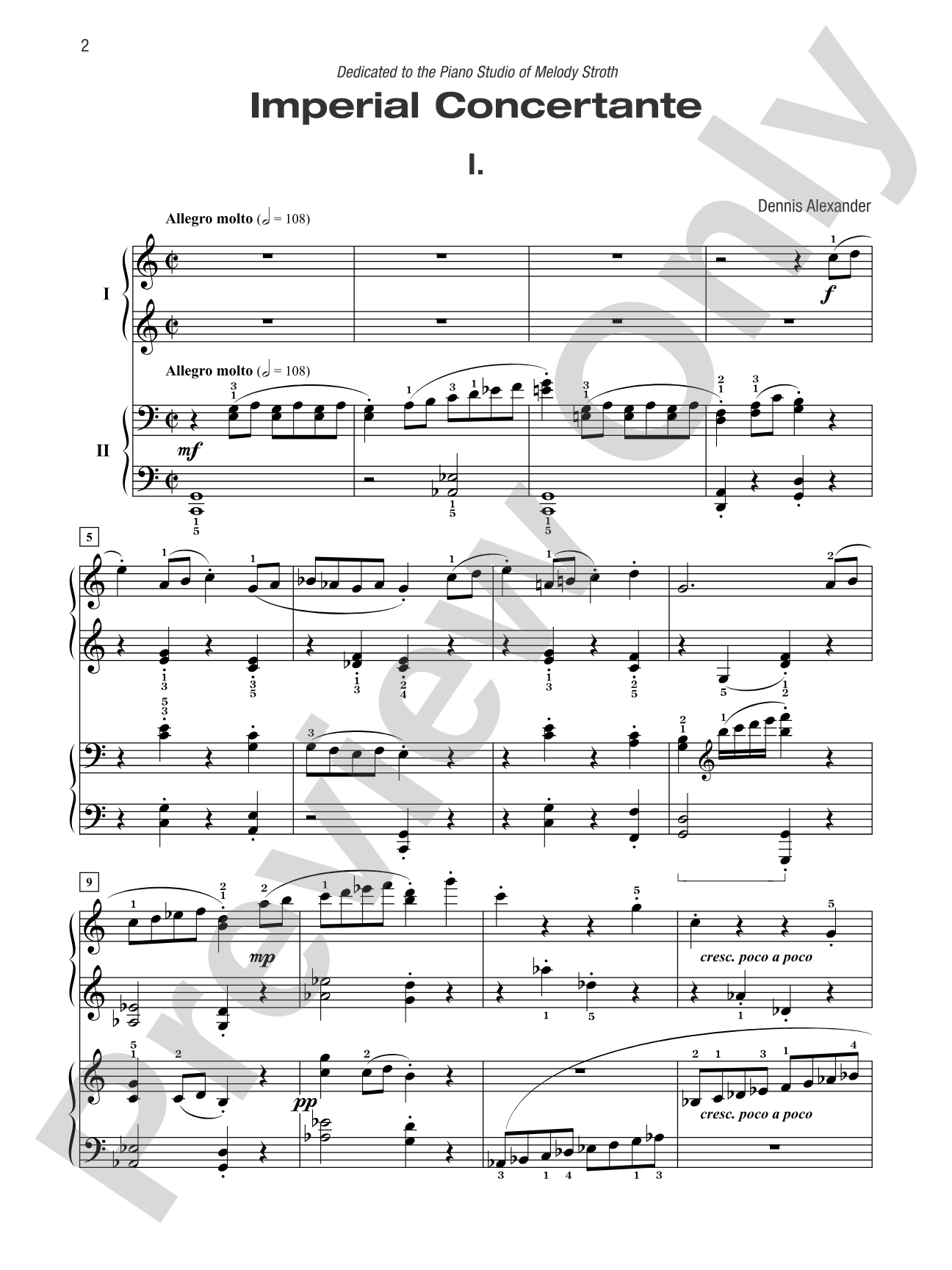
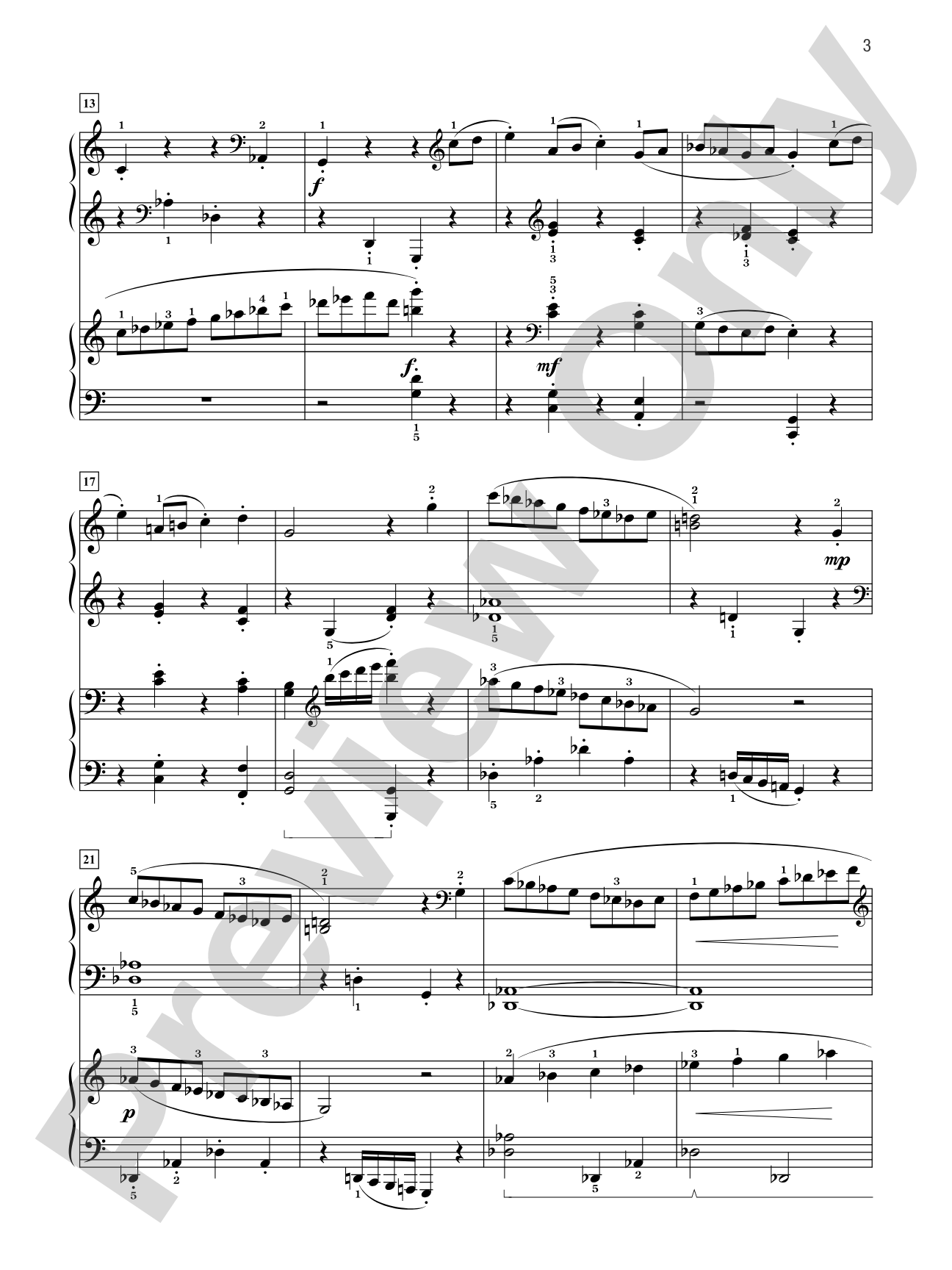
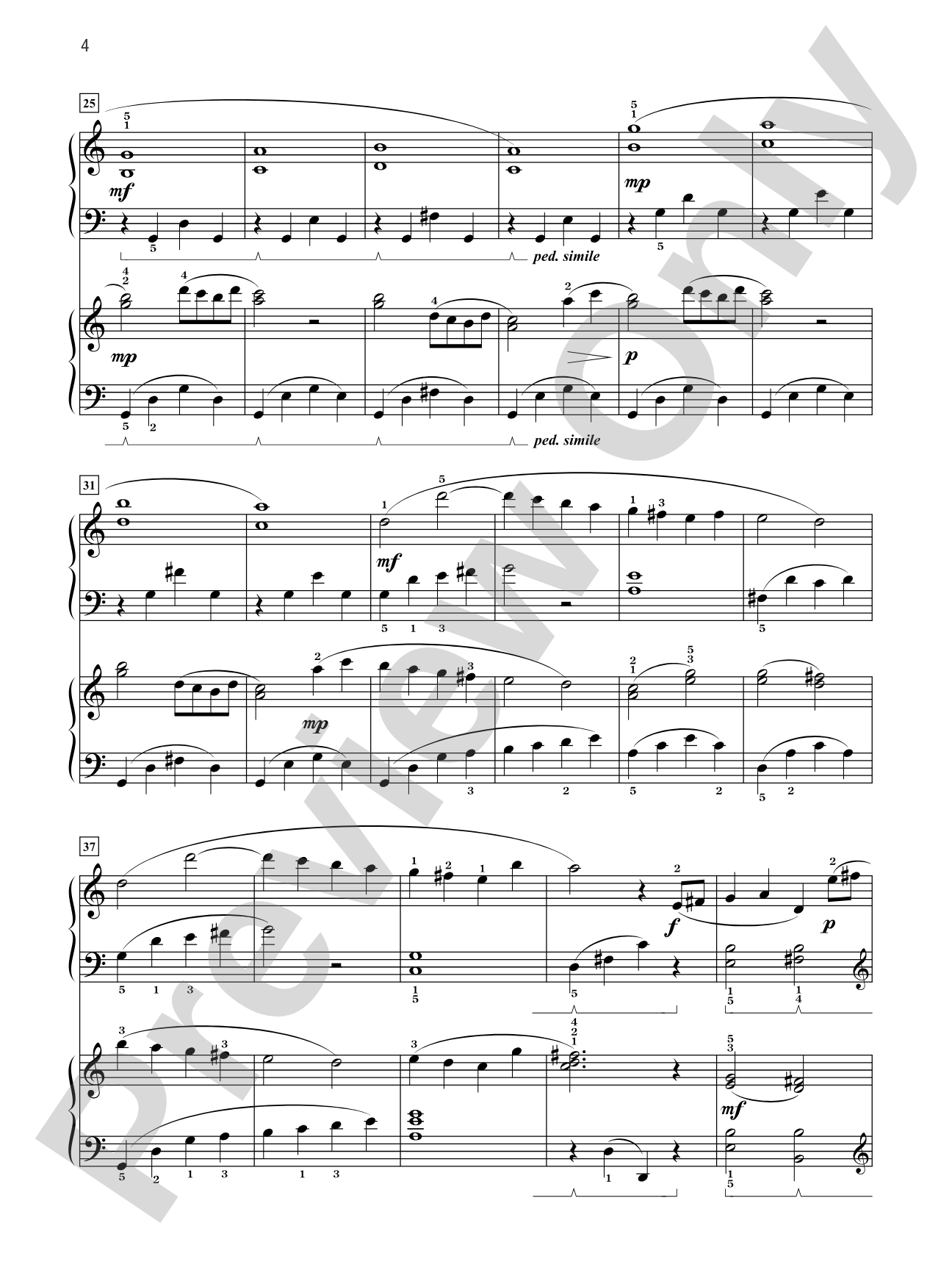
Pianists at the early intermediate level will delight in the sounds of this concerto written especially for them. Each movement conveys a different spirit and sound, from the fast and energetic feel of the first movement to the brilliant and sparkling third movement. In between, the second movement presents a lyrical contrast with its singing melody and lush harmonies. Together with the second piano accompaniment, students will experience the thrill and fun of performing a concerto. Movements: Allegro molto * Andante cantabile * Presto brillante. A Federation Festivals 2024-2028 selection.


Don't just read it, hear it, play along with it, and watch your students grow with it. In MakeMusic Cloud, Imperial Concertante: Solo with Piano Accompaniment - Piano Duo (2 Pianos, 4 Hands): Piano Duets & Four Hands comes alive with professional accompaniment, adjustable tempo, and built-in practice tools that turn solo practice into real progress.
Open in the Player
Jump straight in and assign it today.
Start Your Free Trial
Open this title and explore the full library in minutes.
Sample Audio
No sample audio found.
Sample Video
No sample videos found.
Additional Details
Series:
Student Concertos
Publisher:
Alfred Music
Page Count:
20
SKU:
00-PB-0000896
More about this title
About the Composer: Dennis Alexander

Dennis Alexander has shaped educational piano literature for nearly four decades through his work with Alfred Music Publishing, beginning in 1986. His catalog exceeds 400 published works and recordings, establishing him as one of the most performed composers of student piano repertoire worldwide. He spent 24 years teaching piano pedagogy at the University of Montana before relocating to California, where he taught at Cal State Fullerton and Cal State Northridge. A University of Kansas graduate and student of Richard Reber, Alexander has maintained an active performance career as soloist, accompanist, and chamber musician, including his 1987 New York debut at Carnegie Recital Hall. His work has taken him across Asia for recitals and master classes, and he has judged international competitions and conducted at national conventions.
Beyond his publishing relationship, Alexander served as chair of the Montana State Music Teachers Association and remains a sought-after clinician at state and national conferences. His compositions have been commissioned by numerous organizations, and his writing consistently balances accessibility with musical substance. He currently resides in Albuquerque, where he continues composing and touring for Alfred Music Publishing.
Why we love this
Alexander writes concertos for young pianists with the same attention to structure and musical arc that defines professional concert works. Rather than padding the score with empty showiness, each movement serves a clear purpose: the first movement establishes energy and confidence, the second offers expressive depth, and the third delivers genuine sparkle without technical tricks. Students leave the experience understanding what it means to perform a real concerto, not a simplified imitation.
What to expect
Opening with the Allegro molto, you feel the forward momentum and excitement of a genuine solo performance. The Andante cantabile then creates intimacy and space for expressive playing, before the final Presto brillante sends everyone home exhilarated by the sheer pleasure of sounding polished and accomplished.
Who it's for
This concerto belongs in the hands of early intermediate pianists ready to experience ensemble playing at a substantial level. It works equally well for students preparing for competitions, festivals, or concert performances where they want to perform something with genuine orchestral scope.
How to get the most out of it
- Balance the solo and accompaniment parts during rehearsal by playing the second piano part at full volume; students often underestimate how much sound their duet partner produces and compensate with too much force.
- Shape the lyrical melody of the second movement by thinking of it as a singing line separate from the accompanying textures; avoid letting the lush harmonies blur the primary voice.
- Lock in the rhythmic precision of the Presto brillante during sectional rehearsals before combining both pianos; syncopation and scalar passages demand exact coordination between players.
How to use it
Schedule this as a feature item on a spring recital or festival performance, where the three-movement structure allows students to demonstrate range in a single piece. It also serves beautifully in a studio or school concert where you want early intermediate pianists to shine without programming multiple short pieces.
Skills your students will build
- Ensemble coordination between two pianists in a solo and accompaniment relationship
- Phrasing and balance of melody against harmonic accompaniment
- Tempo control and rhythmic precision in contrasting movement styles (fast, lyrical, brilliant)
- Expression and musicality within a multi-movement form
- Confidence performing a full concerto with its attendant performance presence