
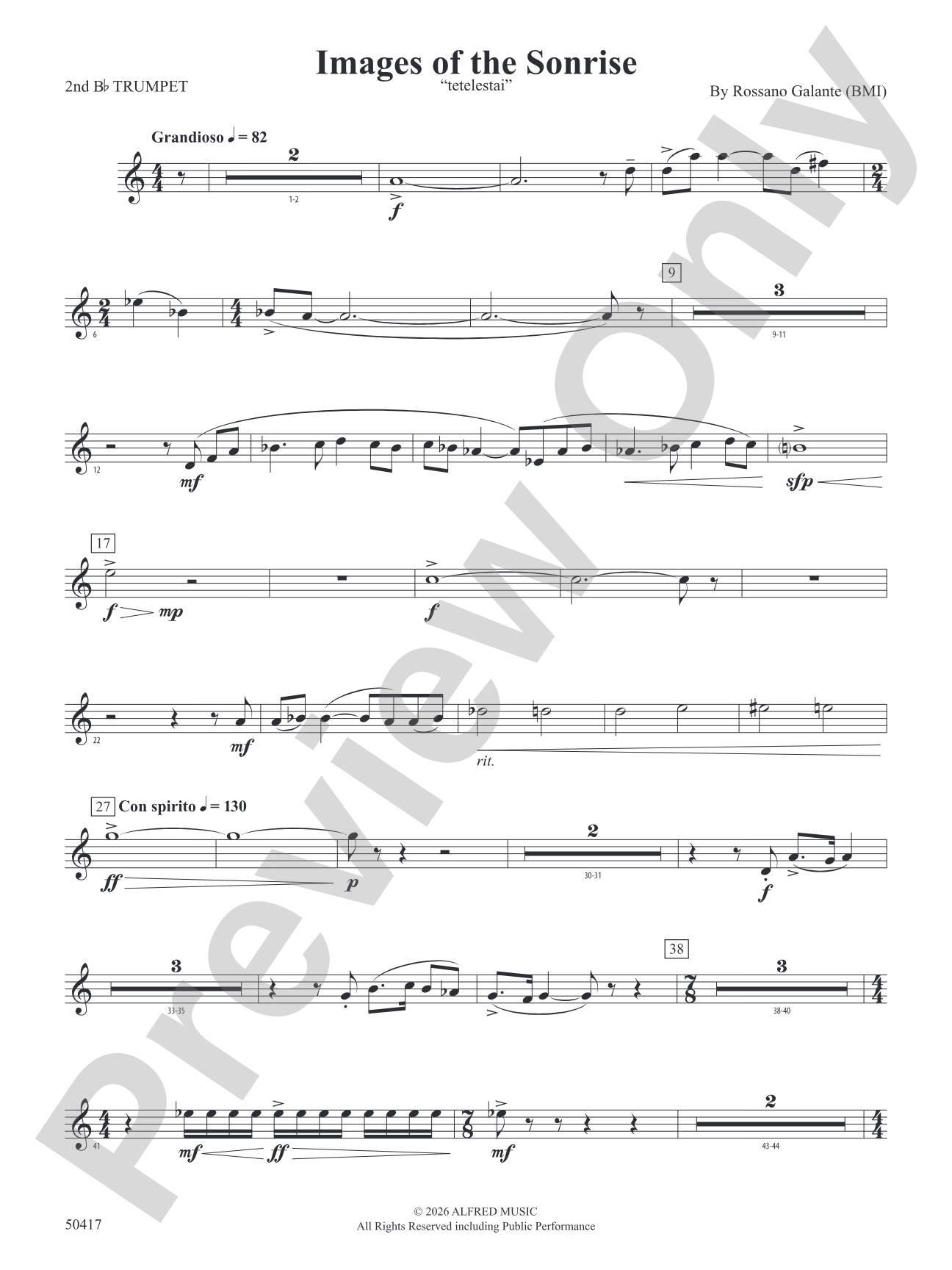

Images of the Sonrise: 2nd B-flat Trumpet
"tetelestai"
By Rossano Galante
Grade: 4.5
Item: 00-PC-0019769_T2
$3.00
Pickup currently not available
Description
Filled with bold statements, challenging runs, and persistent themes, Images of the Sonrise, by Rossano Galante, is captivating. It opens with a bold statement in horns followed by a Middle Eastern, fast-paced theme. The work evolves into a slower, more lyrical statement based on the opening material. The piece transitions to a fast-paced section of the work based on motivic material earlier in the composition. After a broad, majestic reprise of the main theme, the piece comes to a riveting conclusion!


Don't just read it, hear it, play along with it, and watch your students grow with it. In MakeMusic Cloud, Images of the Sonrise: 2nd B-flat Trumpet comes alive with professional accompaniment, adjustable tempo, and built-in practice tools that turn solo practice into real progress.
Open in the Player
Jump straight in and assign it today.
Start Your Free Trial
Open this title and explore the full library in minutes.
Sample Audio
1
Audio File
--:--
0:00
0:00
Sample Video
Additional Details
Series:
Alfred Concert Band Series
Publisher:
Alfred Music
SKU:
00-PC-0019769_T2
More about this title
About the Composer: Rossano Galante

Rossano Galante studied trumpet performance at SUNY Buffalo, graduating in 1992, then earned acceptance to the University of Southern California's Film Scoring Program that same year. There he studied composition under Jerry Goldsmith, the Academy Award-winning composer of The Omen, and went on to collaborate with Oscar-nominated composers Marco Beltrami, Christophe Beck, Brian Tyler, and Christopher Lennertz as an orchestrator across more than eighty feature films.
Galante's film work includes orchestrations for major studio releases such as Fast X, The Super Mario Brothers Movie, A Quiet Place and its sequel, Avengers: Age of Ultron, Logan, Prisoners, and The Wolverine, among many others. Beyond Hollywood, he has become a prolific composer of concert works, with over 68 published compositions for band and orchestra published through Alfred, Schirmer, Hafabra, C.L. Barnhouse, and other major houses. His work regularly receives commissions from concert ensembles worldwide.
Why we love this
Galante paces this piece with genuine dramatic momentum, opening with a commanding horn statement before introducing a kinetic Middle Eastern-inflected theme that keeps the ensemble engaged. The architecture moves from bold declaration to lyrical reflection and back to propulsive action, then closes with a majestic reprise that gives every section of the band a moment to shine. At Grade 4.5, it sits in that sweet spot where the writing is sophisticated enough to feel like real concert music but entirely manageable for strong high school programs.
What to expect
Images of the Sonrise unfolds like a musical sunrise itself, beginning with confident assertion before exploring a rhythmically energetic, almost exotic middle section. The work breathes through moments of genuine lyricism that arise organically from what came before, then accelerates again with purpose, finally arriving at a glowing, triumphant statement of the main theme.
Who it's for
High school concert bands with solid ensemble cohesion and section leaders capable of handling exposed material. The piece demands accurate intonation in the slower moments and clean execution in the fast passages, making it ideal for programs ready to tackle repertoire that balances technical demand with musical payoff.
How to get the most out of it
- Establish the opening horn statement with weight and clarity; it's the thematic anchor for everything that follows, so let it resonate before the band enters.
- Keep the Middle Eastern-influenced fast section rhythmically locked and articulate. This material benefits from crisp, unified attacks across the wind sections.
- Shape the lyrical slower passage with a singing, connected tone throughout the ensemble. This is where the opening material shows its expressive side.
- Build the final majestic reprise as a cumulative moment. Layer in dynamic support from the full band to reinforce the sense of inevitable arrival.
How to use it
This makes a strong centerpiece for a concert band festival appearance or a spring pops program seeking something with real compositional substance. Pair it with a lighter opening number and a vocal feature to round out a diverse concert, or position it as the climactic piece in a program built around thematic programming of world music influences.
Skills your students will build
- Ensemble balance and intonation in exposed, lyrical passages
- Rhythmic precision in syncopated and fast-paced sections
- Thematic development and recall across formal sections
- Dynamic contrast and phrasing in both bold and introspective material
- Sectional independence in passages featuring motivic interplay