Il Est Bel Et Bon (arr. David Das) Sheet Music Preview

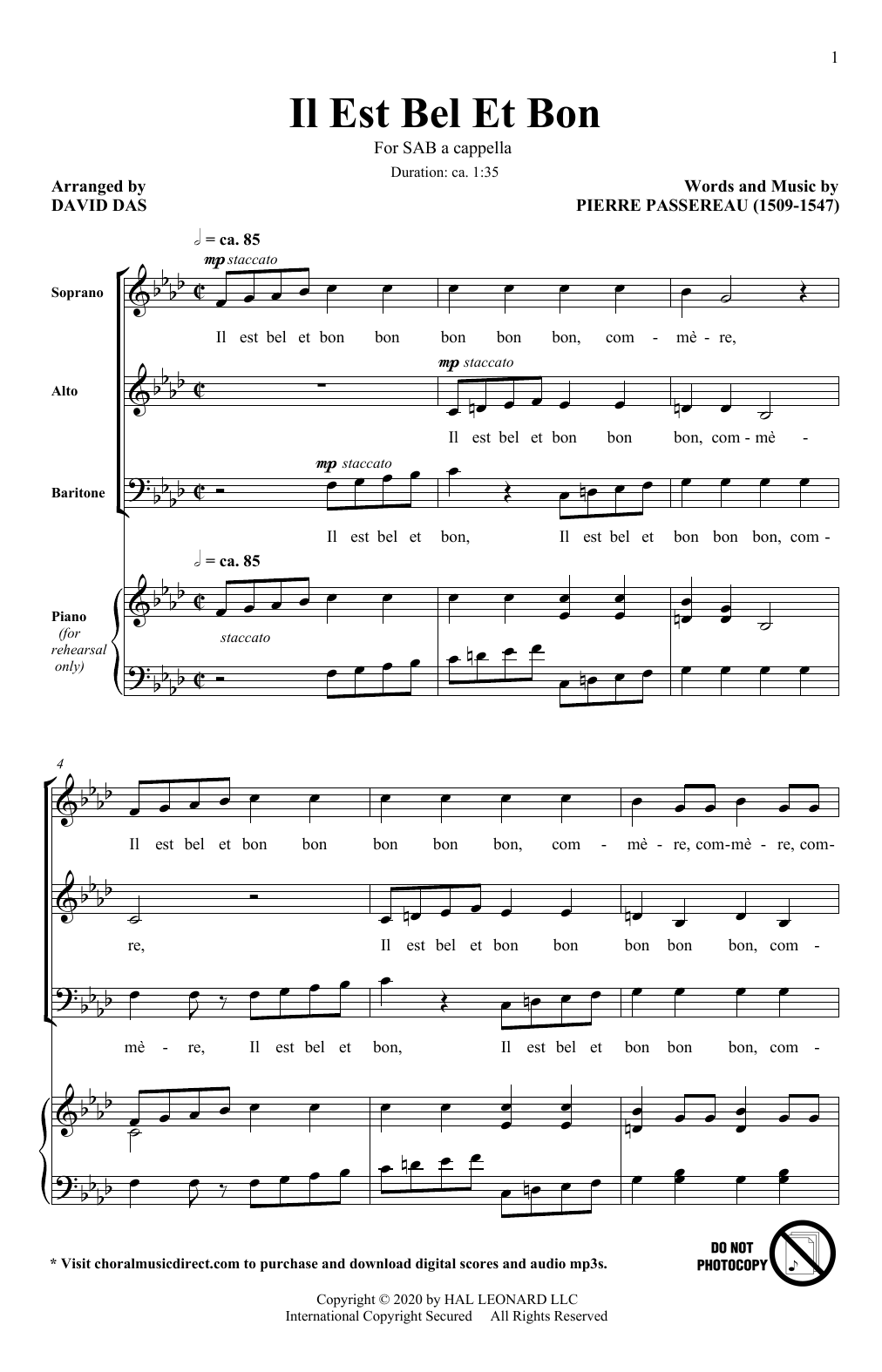
Il Est Bel Et Bon (arr. David Das): SAB Choral Octavo

By Pierre Passereau / Arranged by David Das

Item: 35-DS00469944

Digital Download
$2.99
Description

Il Est Bel Et Bon (arr. David Das): SAB Choral Octavo isn't in MakeMusic Cloud just yet...but it could be. Let us know you'd like to see it, and you'll help shape what comes next. In the meantime, start a free trial and dive into thousands of interactive titles your students can play along with today.

Sample Audio
No sample audio found.
Sample Video
Additional Details
Publisher: Hal Leonard
Page Count: 10
SKU: 35-DS00469944

More about this title

About the Composer: Pierre Passereau

Pierre Passereau was a French Renaissance composer and singer active in the early 16th century, known for his chansons and vocal works that captured the wit and charm of court life. His secular songs circulated widely across Europe and remain touchstones of the Renaissance repertoire, valued by educators for their singable melodies and accessible harmonic language.

Why we love this

David Das has reimagined this Renaissance gem for modern SAB ensembles without flattening its character. The arrangement respects the melodic integrity of the original while making it genuinely singable for mixed-voice choirs, and it's substantial enough (10 pages) to feel like a real contribution to a concert program, not filler.

What to expect

Charming and direct, with the transparency of Renaissance vocal music rendered in a warm, accessible harmonic frame. There's a lightness here, an intimacy that invites the audience in rather than dazzling them with technical display.

Who it's for

Directors building a concert that mixes Renaissance and early modern works, or those seeking repertoire with genuine historical roots that doesn't require a specialized early music ensemble to sound authentic. It works equally well for choirs wanting to expand beyond contemporary fare without jumping into the technical demands of dense polyphonic arrangements.

How to get the most out of it

  • Shape the phrase arcs gently; Renaissance counterpoint rewards legato singing over driving forward motion. Let the text breathe naturally rather than pushing the tempo.
  • Balance the soprano line as the primary melody while keeping alto and bass parts audible and independent. These voices need clarity to bring out the contrapuntal writing.
  • Consider the text painting opportunities embedded in the original melody. Passereau's original often set text with playful melodic gestures that Das's arrangement preserves.

How to use it

Pair this with other Renaissance secular works to create a thematic concert section, or place it as a contrast point between heavier contemporary or classical pieces. The relative brevity and charm also make it a strong choice for holiday concerts seeking something with substance beyond the obvious seasonal selections.

Skills your students will build

  • Reading and balancing independent melodic lines in SAB voicing
  • Sustaining legato in Renaissance harmonic contexts
  • Understanding text declamation and phrase shaping in early vocal music
  • Blending parts with clear diction in secular choral works

You May Also Like