

Ikan Kekek: 2-Part Choral Octavo
(Ponyfish)
Traditional Malaysian Folksong / arr. Jerry Lim
Item: 00-PO-0007422
$2.30
Minimum order quantity: 20 copies
Pickup currently not available
Description
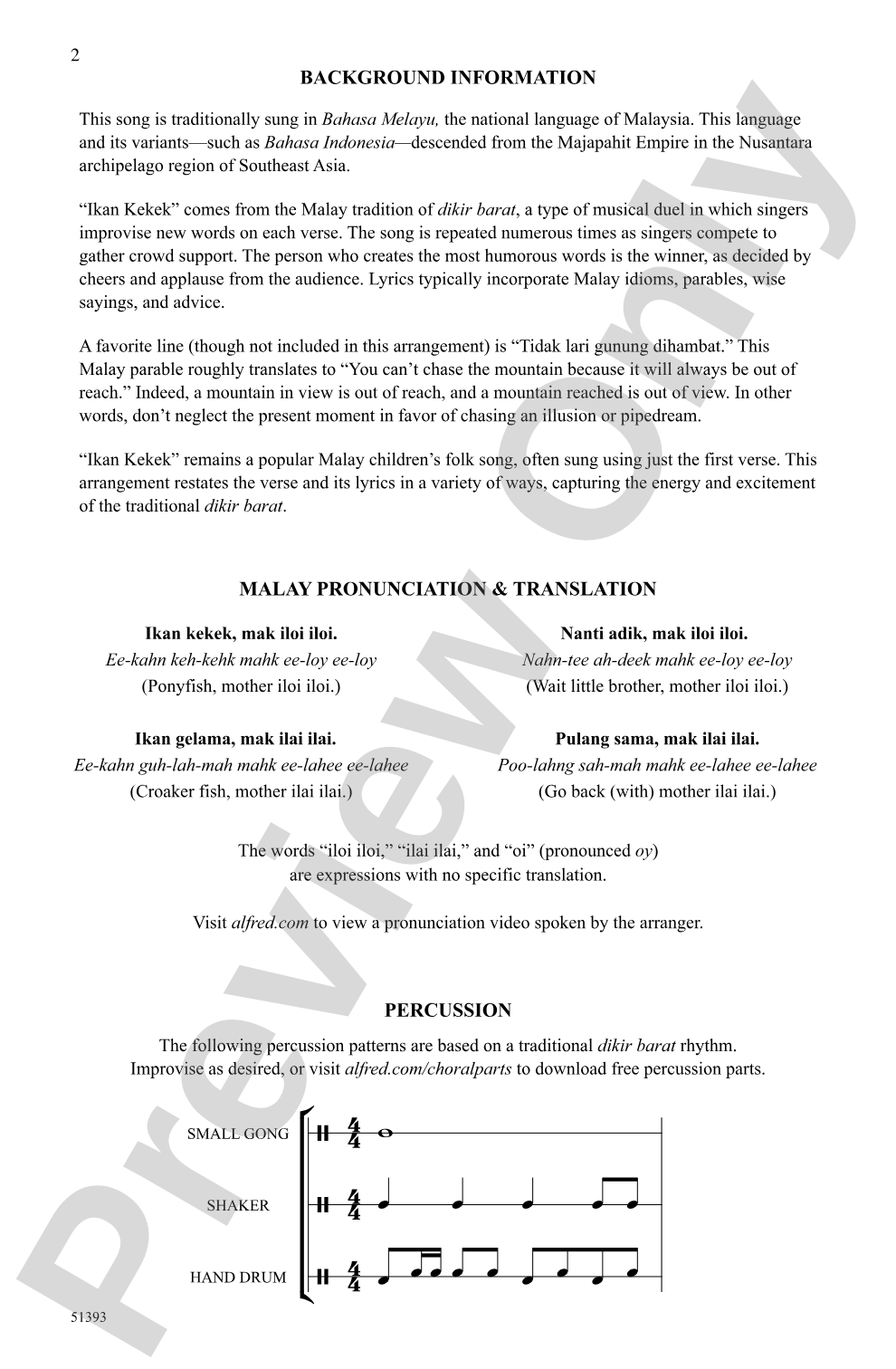
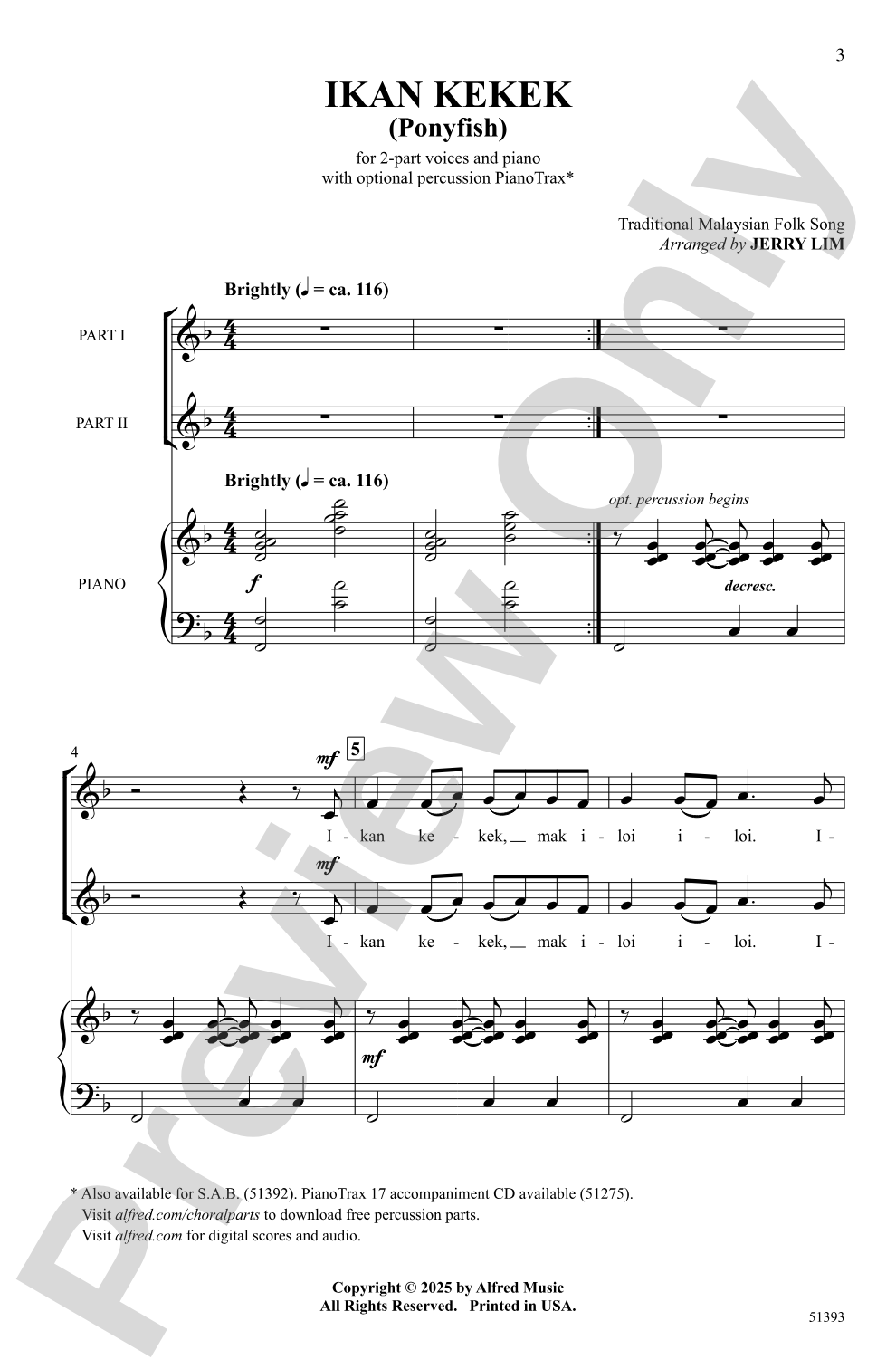
This Malaysian folk song comes from the tradition of dikir barat, an improvisatory musical duel. Jerry Lim's fast-paced arrangement develops the pentatonic theme in a variety of ways, including sung in canon, stacked in thirds, and paired with a tuneful counterline. Downloadable parts for a small gong, shaker, and hand drum enhance the style, and a Malay pronunciation/translation guide is included in the publication.


Discover MakeMusic Cloud: thousands of interactive titles your students can play along with today.
Sample Audio
1
Audio File
--:--
0:00
0:00
Sample Video
1 / 2
Additional Details
Series:
Alfred Choral Designs
Publisher:
Alfred Music
Page Count:
12
SKU:
00-PO-0007422
Instrumentation:
Small Gong, Shaker, Hand Drum
More about this title
About the Arranger: Jerry Lim

Jerry Lim brings three decades of classroom experience across all K–12 levels to his arrangements and compositions. A native of Malaysia, he studied piano performance while absorbing the musical traditions of Europe, Asia, and America, an upbringing that shapes his distinctive approach to blending Western and Eastern musical languages. He holds degrees in Music Education from the University of Washington and currently directs high school choir in Washington state.
Beyond the classroom, Lim has contributed significantly to the music education community as an active ACDA and NAfME member, assisting with festival and conference management. His 2001 video game soundtrack for Magi Nation earned critical recognition for its musical innovation, and he continues to write and arrange regularly for his own ensembles, bringing fresh perspectives rooted in his multicultural musical foundation.
Why we love this
Lim captures the improvisatory energy of dikir barat while keeping the arrangement accessible to developing choirs. The compositional variety keeps singers engaged; canon writing, thirds stacking, and countermelody work all emerge from a single pentatonic theme rather than feeling imposed. Adding percussion parts (even downloadable ones your singers can learn) transforms a folk arrangement into a full ensemble experience that brings authentic cultural practice into rehearsal.
What to expect
Fast-paced and playful, with the spirited competition of dikir barat built into the musical fabric. The pentatonic melody dances through canon, stacks into rich harmonic clusters, and weaves around a supporting counterline, creating layers of texture that feel spontaneous even though they're carefully composed.
Who it's for
Choirs with at least one year of 2-part singing experience, from middle school through community ensembles. The piece works equally well for choirs exploring world music and those seeking contest or concert repertoire with genuine cultural roots and contemporary arranging energy.
How to get the most out of it
- Learn the Malay pronunciation guide early in rehearsal so singers own the text's authentic sound rather than approximating it by ear.
- Lock the pentatonic outline before layering canon and harmonic textures; singers need the melodic skeleton secure before managing rhythmic independence.
- If using the optional percussion parts, bring those players into rehearsals once the vocal parts solidify; their rhythmic clarity helps accelerate the fast-paced sections.
- Shape the dynamic arc around the textural changes rather than treating each section at a uniform level; the canon feels fresh when it emerges from a softer foundation.
How to use it
Program this alongside other world music selections to build a culturally diverse concert, or use it as a high-energy closer that showcases your choir's rhythmic precision and textural flexibility. The optional percussion parts make it ideal for a collaborative performance with your school's world music or percussion ensemble, transforming a choral octavo into a cross-curricular event.
Skills your students will build
- Singing in canon with secure pentatonic melody
- Stacking harmony in thirds while maintaining rhythmic alignment
- Reading and performing world music pronunciation guides
- Responding to percussion accompaniment while singing layered textures
- Sustaining fast tempos with clear diction in a non-English language
- Understanding dikir barat as a musical and cultural form