If You Could See Me Now: Piano Digital Sheet Music

If You Could See Me Now: Piano Digital Sheet Music

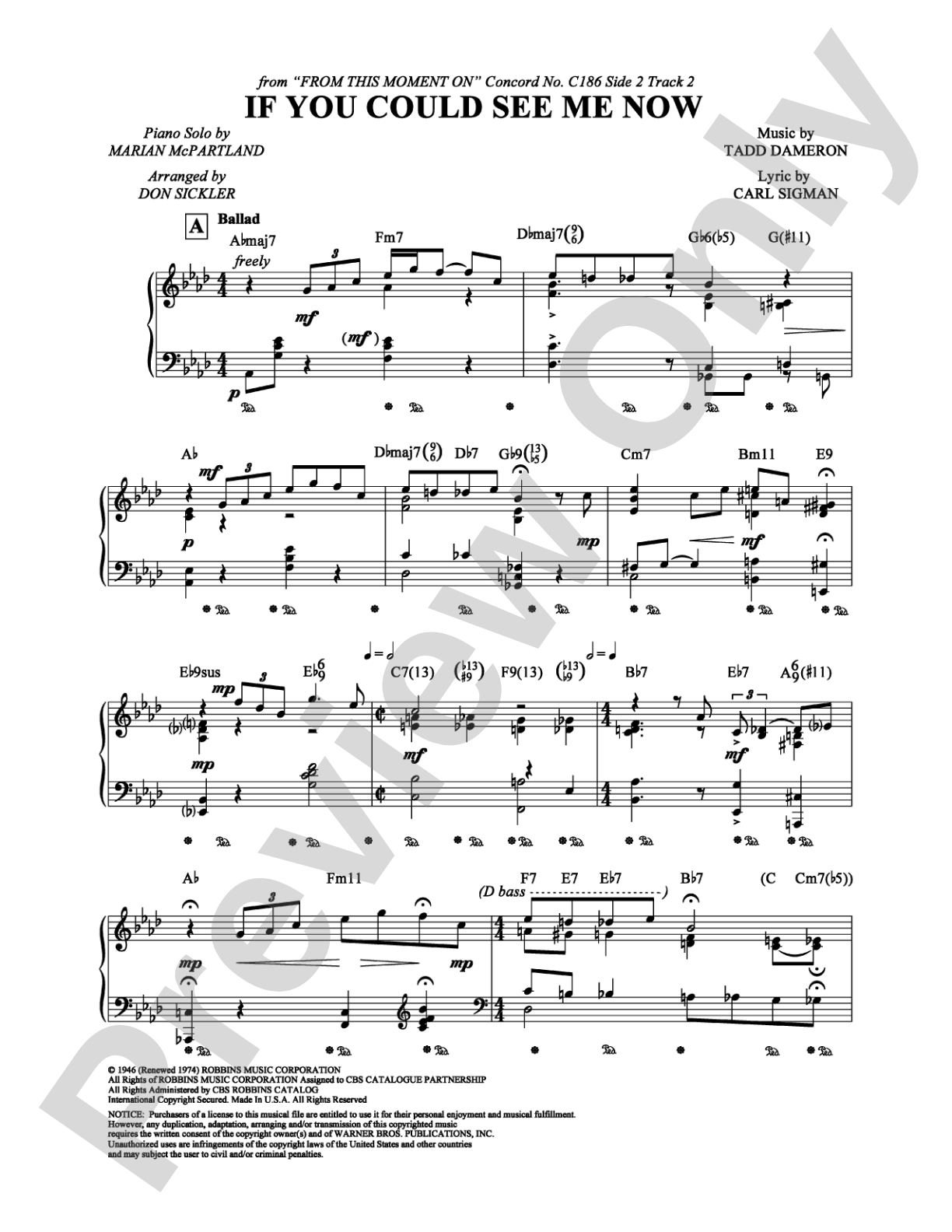
Tadd Dameron, Marian McPartland

Item: 00-PS-0004299

Digital Download
$3.99
Description

If You Could See Me Now: Piano Digital Sheet Music isn't in MakeMusic Cloud just yet...but it could be. Let us know you'd like to see it, and you'll help shape what comes next. In the meantime, start a free trial and dive into thousands of interactive titles your students can play along with today.

Sample Audio
No sample audio found.
Sample Video
Additional Details
SKU: 00-PS-0004299

More about this title

About the Artist: Marian McPartland

Marian McPartland (1918-2011) was a British-American jazz pianist and composer who became one of the most influential figures in modern jazz. She co-founded the Hickory House jazz club in New York, where she performed for decades, and hosted the long-running NPR program Jazz Piano. Her compositions and interpretations shaped how generations of musicians understood the jazz standard repertoire.

Why we love this

McPartland's interpretation of this standard captures the intimate, conversational quality that made her a master of the jazz ballad. The piece offers pianists a direct window into how a truly great jazz musician approaches voicing, phrasing, and the art of accompanying a melody with harmonic depth.

What to expect

A quiet conversation between piano and singer, even when performed solo. The music moves with gentle introspection, rich harmonies supporting a tender melody that unfolds without urgency. There's an emotional directness here, a sense of watching someone reflect on connection and presence.

Who it's for

Jazz pianists working to deepen their understanding of ballad interpretation and harmonic sophistication. This piece suits intermediate to advanced players who are comfortable with jazz chord symbols and want to study how a legendary pianist constructs a solo arrangement.

How to get the most out of it

  • Listen to McPartland's recorded version to absorb the rubato and breathing quality of her phrasing; her time feel is precise but never rigid.
  • Emphasize the lyrical quality of the left hand accompaniment rather than treating it as mere harmonic foundation.
  • Pay close attention to chord voicings and substitutions; McPartland's harmonic choices often reharmonize the standard in subtle, elegant ways.
  • Allow space between phrases for the melody to breathe, resisting the urge to fill every moment with accompaniment.

How to use it

Feature this in a jazz recital or concert featuring standards interpreted by different pianists, allowing audiences to hear how one of jazz's greats shaped the repertoire. It also works beautifully as a study piece in jazz piano ensembles or combo rehearsals exploring different approaches to the same standard.

Skills your students will build

  • Jazz voicing and reharmonization techniques
  • Rubato and expressive phrasing in ballad interpretation
  • Reading and interpreting jazz chord symbols
  • Balance between melody and accompaniment in solo jazz piano
  • Understanding the difference between literal chord reading and artistic harmonic interpretation

You May Also Like