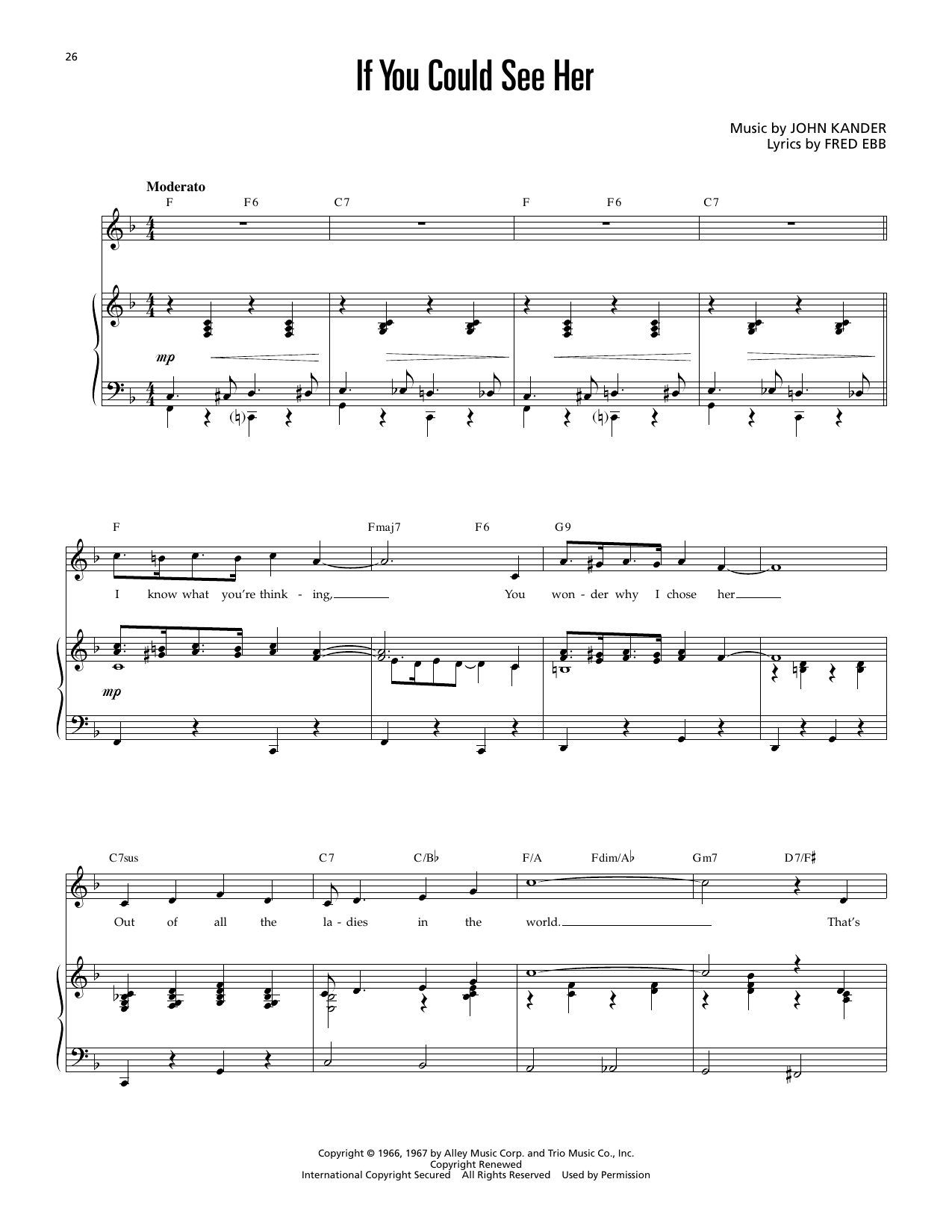
Stephen Sondheim composed the music and lyrics for Cabaret alongside John Kander and Fred Ebb, creating one of musical theater's most iconic scores. Sondheim's work in this show demonstrates his gift for writing songs that reveal character while advancing narrative, a hallmark of his approach to musical dramaturgy throughout his career.
Why we love this
This number sits at the emotional core of Cabaret, demanding both vocal control and dramatic vulnerability from singers. The piano part provides essential harmonic color and rhythmic anchor while staying transparent enough to let the text land, making it an excellent teaching tool for understanding how accompaniment serves character.
What to expect
Bittersweet and deceptively intimate, this song wraps cynicism in a tender melody. The piano setting creates a cabaret club atmosphere where confession and performance blur together, inviting both the singer and listener into a moment of dangerous honesty.
Who it's for
Soprano, mezzo soprano, and tenor singers preparing audition material or performance repertoire will find this piece essential to their Broadway toolkit. Pianists working with musical theater singers benefit from understanding how to accompany vulnerable, introspective moments while maintaining harmonic support.
How to get the most out of it
Shape the melody line with careful attention to phrasing rather than strict pulse; the accompaniment can flex slightly to follow the emotional weight of each phrase.
Explore the satirical edge beneath the surface sentiment. The song's charm masks genuine pain, and singers who find that duality create a more compelling interpretation.
Balance legit vocal production with naturalistic speech rhythms in the text. Oversinging this melody can flatten its irony and psychological complexity.
How to use it
Pair this with other intimate musical theater moments to create a concert section that explores character vulnerability and emotional depth. It works particularly well in recital programs or concert readings exploring the inner lives of complex stage characters.
Skills your students will build
Sustaining emotional focus across longer legit vocal lines
Balancing lyrical content with melodic shape
Coordinating with piano accompaniment in rubato passages
Interpreting subtext and dramatic intention in a character song
Managing the technical demands of a four-page arrangement with varied accompaniment textures
You May Also Like
Scan to Complete Your Purchase
Use your phone's camera to scan the code below
You'll log in on your phone and the order will be added to your account