If You Are But A Dream Sheet Music Preview

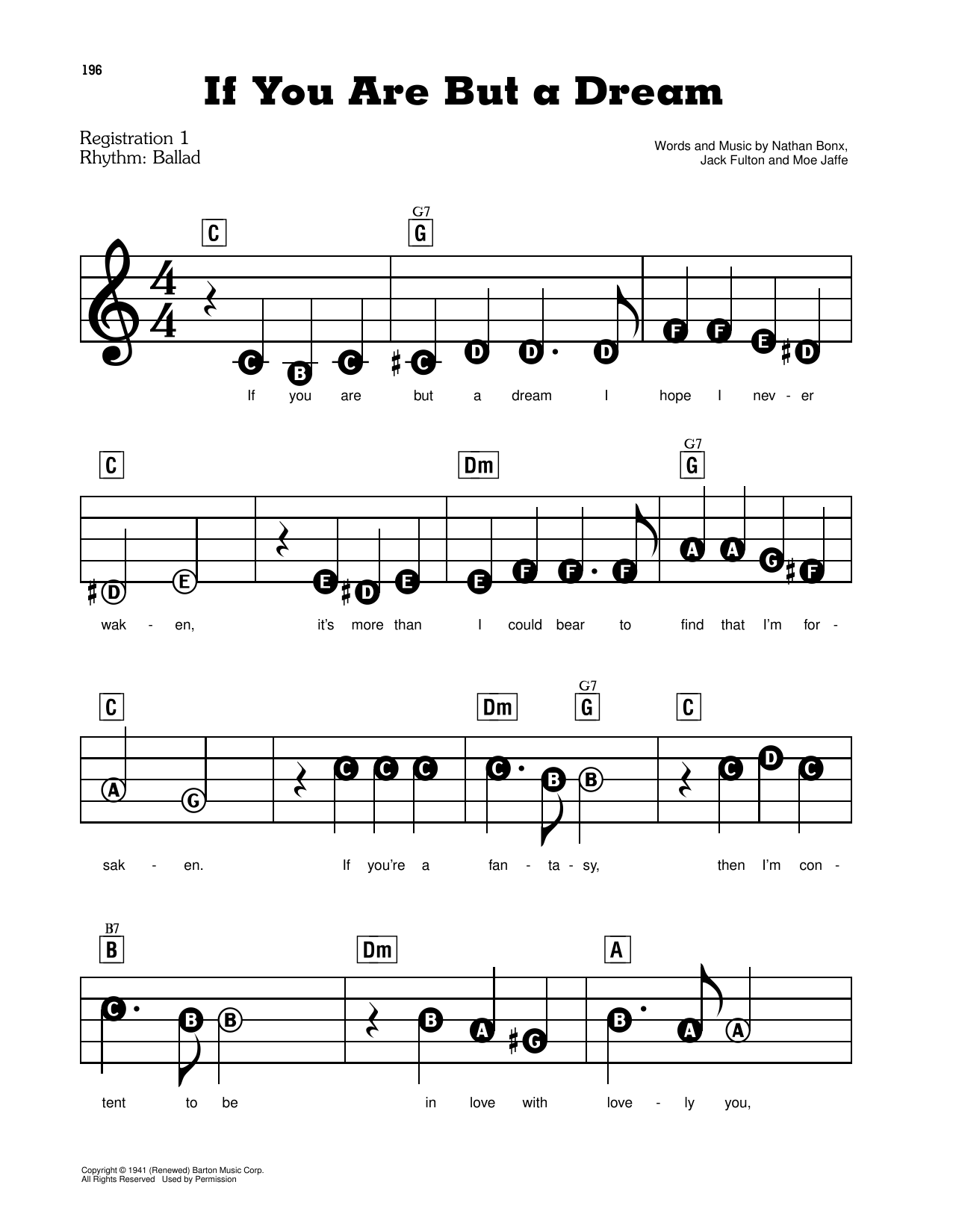
If You Are But A Dream: E-Z Play Today

As performed by Frank Sinatra / As performed by Sarah Vaughan

Item: 35-DS00460070

Digital Download
$4.99

One moment…

Description

If You Are But A Dream: E-Z Play Today isn't in MakeMusic Cloud just yet...but it could be. Let us know you'd like to see it, and you'll help shape what comes next. In the meantime, start a free trial and dive into thousands of interactive titles your students can play along with today.

Sample Audio
No sample audio found.
Sample Video
Additional Details
Publisher: Hal Leonard
Page Count: 2
SKU: 35-DS00460070

More about this title

About the Artist: Frank Sinatra

Frank Sinatra fundamentally shaped how American popular song is performed and interpreted. His phrasing, breath control, and ability to inhabit a lyric set the standard for vocal jazz and remain central to music education; studying his recordings teaches students how to serve the composer's intent while bringing personal musicality to a standard.

Sinatra's influence extends beyond the voice. His collaborations with arrangers like Nelson Riddle created the sonic template for mid-century jazz vocals, and his interpretations of the Great American Songbook remain essential references for understanding how melody, harmony, and storytelling converge in jazz and popular music.

Why we love this

This standard sits at the intersection of accessible and musically rich. The melody is straightforward enough for intermediate players, yet the jazz harmonies and rubato phrasing invite genuine artistic interpretation. Sinatra and Vaughan's recordings provide perfect models for understanding how the same song can be shaped in multiple compelling ways.

What to expect

Contemplative and searching. The lyric poses a question about the reality of love, and the music mirrors that uncertainty with its gentle, introspective melody. There's intimacy here, not drama; the piece unfolds like a private conversation rather than a grand statement.

Who it's for

Intermediate pianists ready to engage with jazz standards and students learning to navigate the tension between strict rhythm and interpretive phrasing. This works well for anyone building a solo repertoire grounded in American vocal jazz.

How to get the most out of it

  • Pay attention to the harmonic language beneath the melody. Even at moderate tempo, these chords reward being voiced with intention and allowing them to breathe slightly.
  • Notice where Sinatra and Vaughan place emphasis differently within phrases. Use the recordings to hear how lyrical phrasing isn't always metrically predictable, then experiment with adapting that approach for your own interpretation.
  • Balance rubato with harmonic stability. The melody may float across the beat, but the accompaniment should provide an anchor so the listener always knows where the harmonic progression lands.
  • Consider the dynamic arc across the full piece. At only two pages, every moment shapes the emotional trajectory, so map where intensity builds and where it pulls back.

How to use it

Pair this with other standards to create a jazz vocals recital or showcase. It's also valuable as a rehearsal and practice tool for singers, offering pianists the chance to develop accompanying skills and learn how to listen and respond to a vocalist's phrasing.

Skills your students will build

  • Interpreting jazz harmonies and chord quality
  • Reading and executing rubato without losing harmonic grounding
  • Accompanying a vocalist with sensitivity to phrasing and breath
  • Balancing rubato with rhythmic stability in the left hand

You May Also Like