If Then The Light Sheet Music Preview

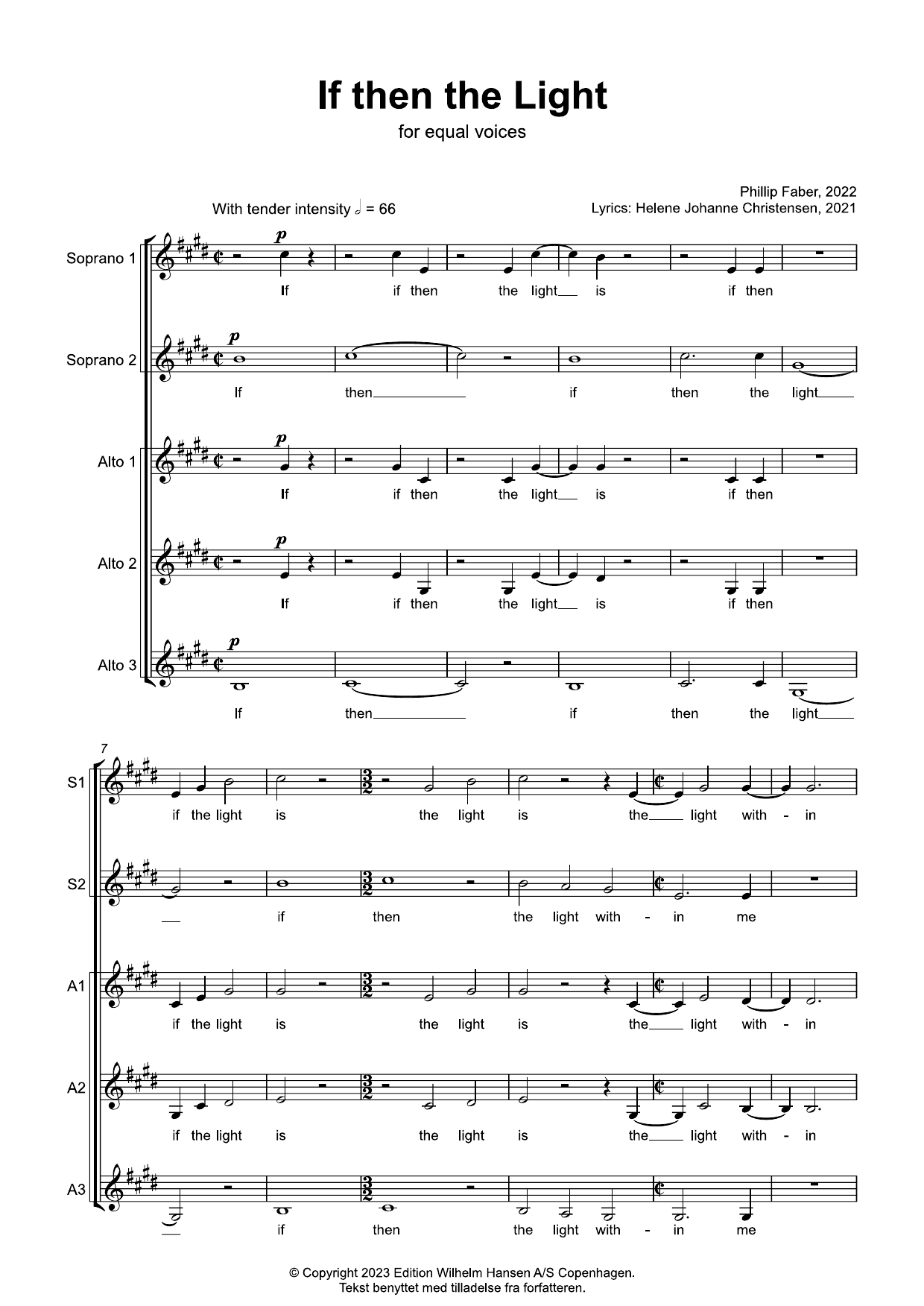
If Then The Light: SSAA Choral Octavo

By Phillip Faber

Item: 35-DS01538577

Digital Download
$4.95
Description

If Then The Light: SSAA Choral Octavo isn't in MakeMusic Cloud just yet...but it could be. Let us know you'd like to see it, and you'll help shape what comes next. In the meantime, start a free trial and dive into thousands of interactive titles your students can play along with today.

Sample Audio
No sample audio found.
Sample Video
Additional Details
Publisher: Hal Leonard
Page Count: 18
SKU: 35-DS01538577

More about this title

About the Composer: Phillip Faber

Phillip Faber is a composer whose work spans choral, instrumental, and vocal genres with a gift for lyrical expression and textural clarity. His compositions for choir demonstrate a strong understanding of voice leading and acoustic balance, making his pieces accessible without sacrificing musical substance.

Why we love this

Faber's writing for women's voices strikes a rare balance between musical sophistication and singability. The piece offers your choir a contemporary work that doesn't demand extreme ranges or chromatic complexity, allowing singers to focus on tone quality and the emotional arc of the text.

What to expect

The piece unfolds with clarity and intention, allowing moments of harmonic richness to resonate without overwhelming the listener. There's a sense of contemplation woven through the setting, creating space for singers to connect meaningfully with the musical gesture.

Who it's for

This octavo works well for treble choirs at the intermediate to advanced level. It's substantial enough to showcase your singers' musicianship without overwhelming newly divided ensembles.

How to get the most out of it

  • Pay close attention to vowel consistency across the SSAA divisi; shifting vowels between sections will expose balance issues that blend otherwise.
  • Shape phrases toward natural stress points in the text rather than metric beats; this prevents the piece from feeling metrically rigid.
  • Record a rehearsal once all parts are secure and listen for spots where thinner voicing occurs, then adjust dynamics accordingly to maintain transparency.

How to use it

Consider programming this as a centerpiece for a concert focused on contemporary choral writing, or pair it with contrasting repertoire from other eras to highlight Faber's modern harmonic language. Its moderate length also makes it suitable for inclusion in a varied program without overshadowing lighter works.

Skills your students will build

  • Voice independence within SSA and SSAA divisi textures
  • Sustained legit tone production across phrase lengths
  • Interpretation of contemporary text setting and musical gesture
  • Balance and intonation in divided soprano sections

You May Also Like