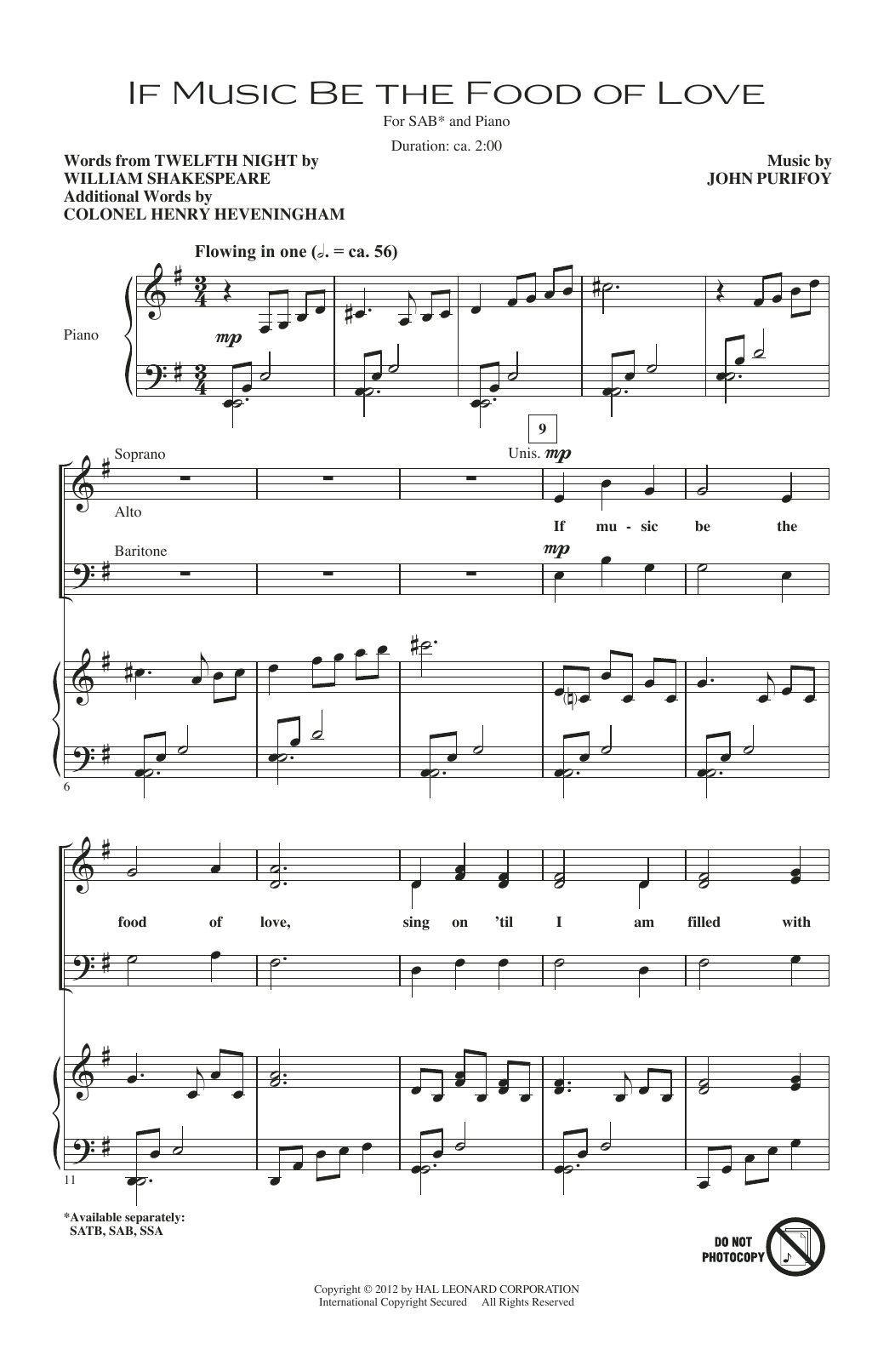
If Music Be The Food Of Love (from Shakespeare's Twelfth Night) Sheet Music Preview

If Music Be The Food Of Love (from Shakespeare's Twelfth Night): SAB Choral Octavo

By John Purifoy

Item: 35-DS01562053

Digital Download
$1.80
Description

If Music Be The Food Of Love (from Shakespeare's Twelfth Night): SAB Choral Octavo isn't in MakeMusic Cloud just yet...but it could be. Let us know you'd like to see it, and you'll help shape what comes next. In the meantime, start a free trial and dive into thousands of interactive titles your students can play along with today.

Sample Audio
No sample audio found.
Sample Video
Additional Details
Publisher: Hal Leonard
Page Count: 7
SKU: 35-DS01562053

More about this title

About the Composer: John Purifoy

John Purifoy has established himself as a composer who brings clarity and accessibility to choral writing without sacrificing musical substance. His settings of literary texts demonstrate a gift for matching melodic shape to poetic language, making his work particularly valuable for ensembles seeking repertoire that engages singers and audiences alike.

Why we love this

Purifoy's approach to this immortal Shakespeare text feels conversational and singable, giving SAB choirs a sophisticated option that doesn't require extensive vocal prowess to sound beautiful. The seven-page setting manages to be both musically interesting for the singers and immediately rewarding for listeners, landing in that sweet spot where literary substance meets choral accessibility.

What to expect

There's an intimate, contemplative quality to this setting that honors the famous opening lines of Twelfth Night. The music invites listeners into a moment of quiet reflection on desire and beauty, with harmonic language that feels both warm and slightly mysterious.

Who it's for

This arrangement suits concert choirs, festival showcases, and contest programs where directors want to program something with literary weight and genuine musical substance. It works equally well for secondary school choirs looking to deepen their engagement with Shakespeare and collegiate groups seeking shorter, high-quality secular repertoire.

How to get the most out of it

  • Shape the melodic line with the poetry's natural speech patterns rather than forcing metric regularity; let the text breathe where Shakespeare intended.
  • Balance the three parts so that the soprano line doesn't overshadow the alto and baritone material, which often carries important harmonic color.
  • Approach transitions between sections with clear but unhurried tempo shifts to maintain the reflective quality throughout.
  • Consider how the acoustics of your venue affect the text clarity; rehearse articulation specifically in whatever space you'll perform in.

How to use it

Pair this with other Shakespeare settings or with Renaissance-inspired madrigals for a thematic concert focus, or use it as a contrast piece alongside more energetic contemporary works. Its moderate length makes it ideal as a second-half opener when you want to reset the audience's attention without losing momentum.

Skills your students will build

  • Sustaining emotional line through longer phrases while maintaining text clarity
  • Balancing three-part harmony as equal contributors rather than soprano-dominated voices
  • Connecting melodic contour to poetic meaning and inflection
  • Blending with Renaissance-influenced harmonic language

You May Also Like