If I Sing (from Closer Than Ever) Sheet Music Preview

If I Sing (from Closer Than Ever): Piano Vocal

Edited by Richard Walters

Item: 35-DS02018660

Digital Download
$5.99
One moment…
Description

Discover MakeMusic Cloud: thousands of interactive titles your students can play along with today.

Sample Audio
No sample audio found.
Sample Video
Additional Details
Publisher: Hal Leonard
Page Count: 6
SKU: 35-DS02018660

More about this title

About the Creator: Stephen Sondheim

Stephen Sondheim (1930-2021) was a lyricist and composer who fundamentally changed what musical theater could express. His work demands intelligence from audiences and performers alike, layering complex harmonies with lyrics that shift meaning on repeated hearings. Closer Than Ever, his 1989 musical revue, collects songs spanning decades of his career, each one a small story told with surgical precision.

Sondheim's influence on music education extends beyond Broadway; his songs teach musicians how to navigate chromaticism, rubato, and subtext simultaneously. Directors and singers return to his work repeatedly because it rewards close study at every level.

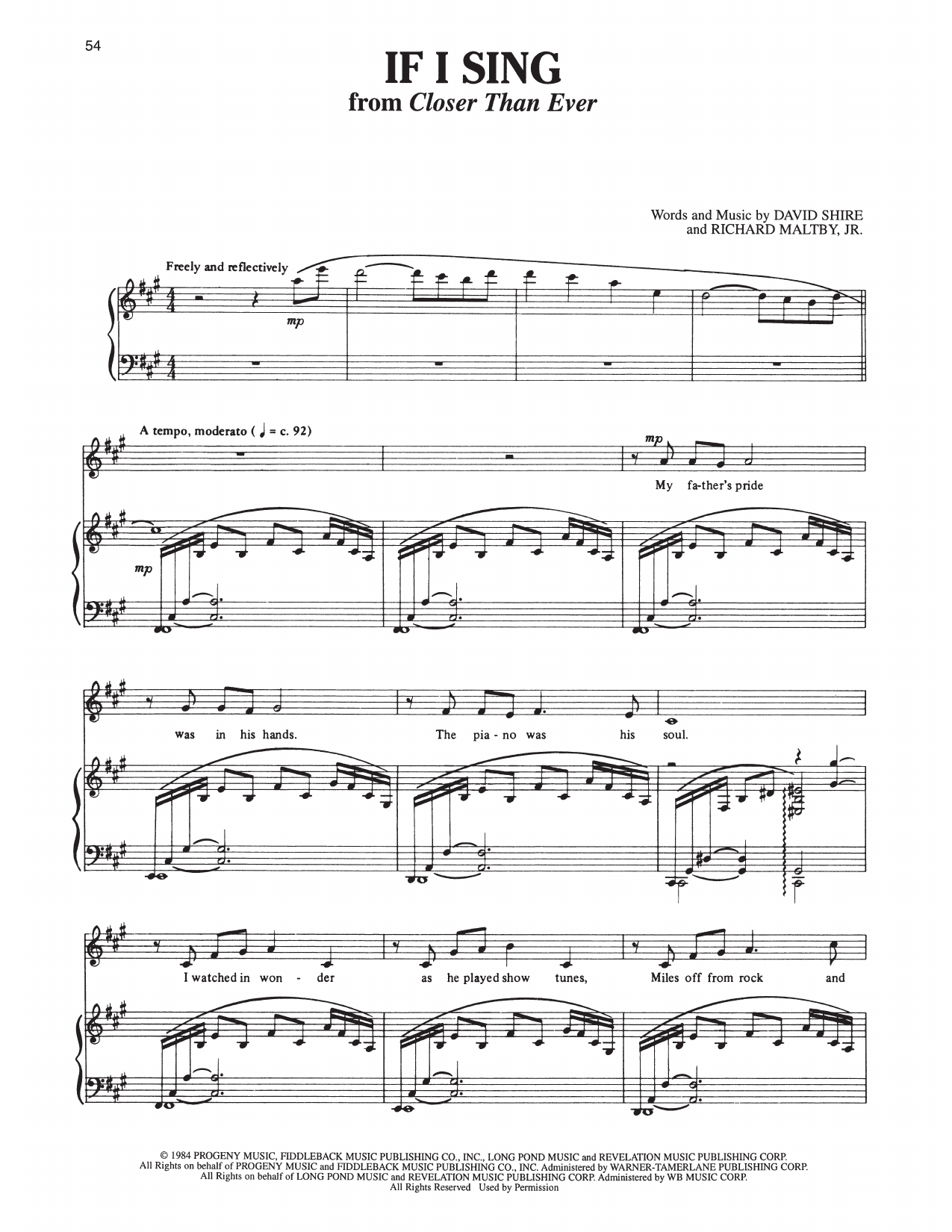
Why we love this

This baritone/bass number gives lower male voices a genuine moment in the spotlight, which doesn't happen nearly often enough in musical theater programming. The song's harmonic language sits comfortably in the voice while remaining sophisticated enough to hold a concert audience's attention, and the piano part supports without overwhelming.

What to expect

Intimate and slightly vulnerable. The music unfolds like someone thinking out loud, circling ideas without quite landing on a conclusion. There's warmth in the lower register and honesty in how the harmony surprises without showboating.

Who it's for

Solo singers (baritone or bass) preparing audition repertoire, school musicals needing a legitimate male solo, or ensemble singers ready to work with sophisticated harmony and text. This works equally well as a concert piece for high school or community theater singers who can handle introspection.

How to get the most out of it

  • Treat the lyrics as spoken conversation first, sung second. Sondheim's phrasing often works against the bar line deliberately, so let the text drive the rhythm rather than locking rigidly to the piano.
  • The piano part contains more harmonic information than the vocal line; resist the urge to simplify it for a school pianist. This is where the accompanist earns their moment.
  • Find the emotional beat of each phrase before worrying about hitting the notes. This song is confessional, not demonstrative.

How to use it

Pair this with other Sondheim material for a focused concert program, or use it as a character song in a revue or concert setting. It also serves as an excellent audition piece for male singers applying to college musical theater programs because it demonstrates musical maturity and interpretive range.

Skills your students will build

  • Singing through complex harmonic movement without losing phrase direction
  • Coordinating vocal phrasing against the piano's rhythmic independence
  • Lyrical clarity and storytelling in a lower tessitura
  • Navigating chromatic voice leading and unexpected harmonic turns

You May Also Like