

If All the Skies: SAB Choral Octavo
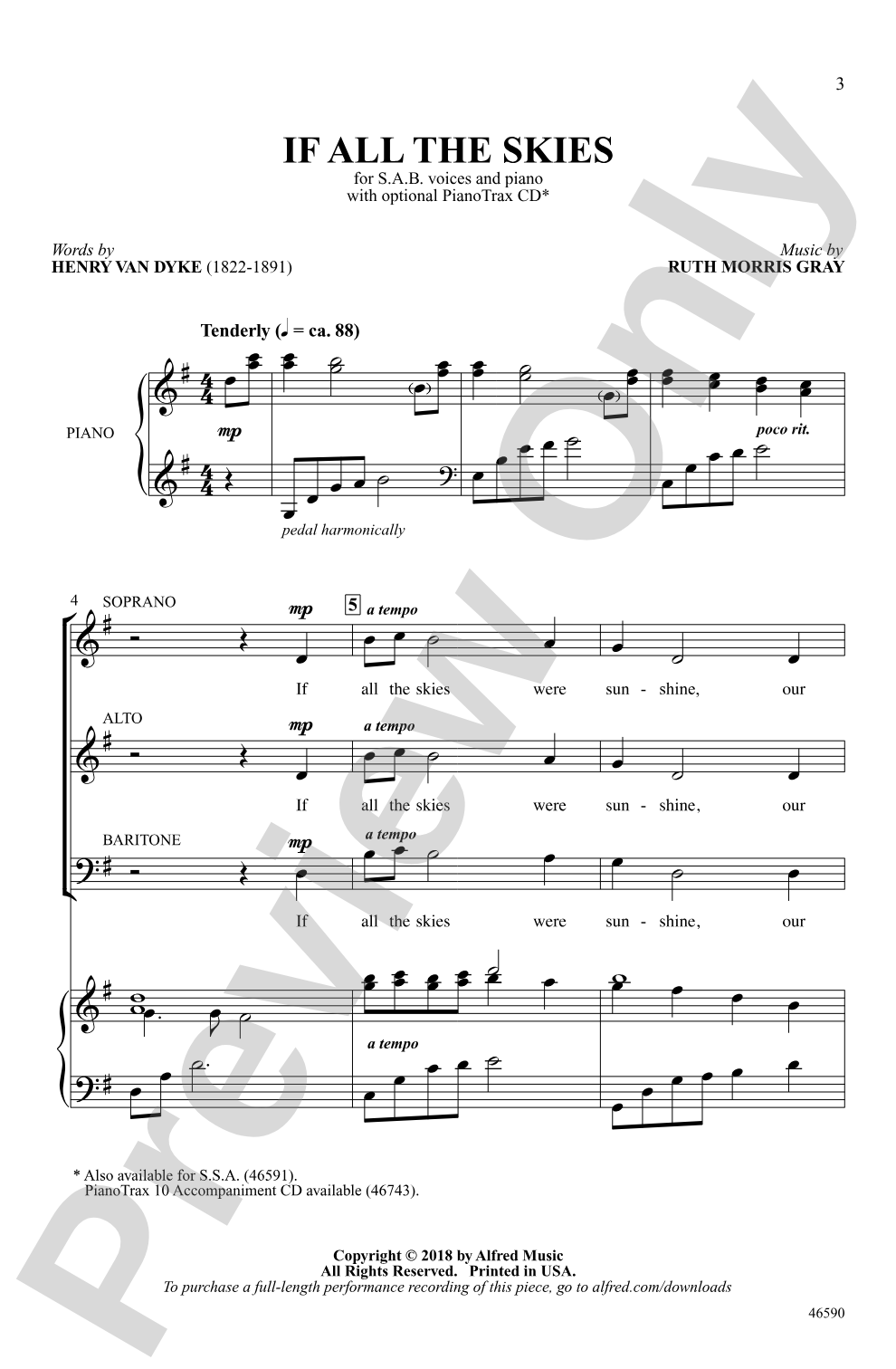
Words by Henry Van Dyke, music by Ruth Morris Gray
Item: 00-PO-0005755
$2.05
Minimum order quantity: 20 copies
Pickup currently not available
Description
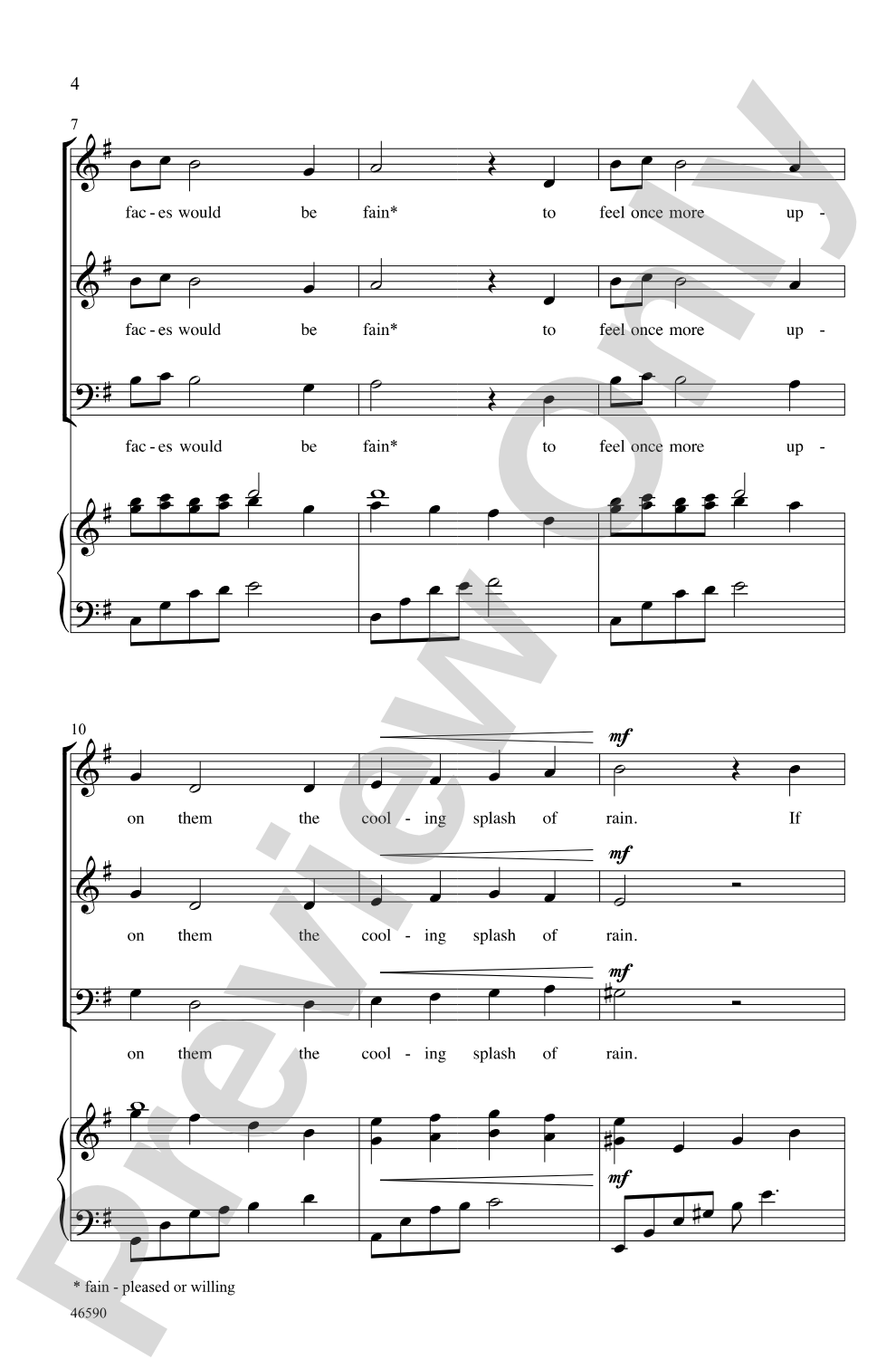
Expressive legato vocal lines are set to Henry Van Dyke's powerful poem about the need for balance in all things. A flowing piano accompaniment provides harmonic support, while the voices remain independent. Serene and lovely.


If All the Skies: SAB Choral Octavo isn't in MakeMusic Cloud just yet...but it could be. Let us know you'd like to see it, and you'll help shape what comes next. In the meantime, start a free trial and dive into thousands of interactive titles your students can play along with today.
Request This Title
Tell us you want it.
Start Your Free Trial
Explore everything that's ready to play right now.
Sample Audio
1
Audio File
--:--
0:00
0:00
Sample Video
1 / 2
Additional Details
Series:
Alfred Choral Designs
Publisher:
Alfred Music
Page Count:
12
SKU:
00-PO-0005755
More about this title
About the Composer: Ruth Morris Gray

Ruth Morris Gray brings over two decades of classroom experience to her compositional work, having directed choirs and taught piano at Rosemead High School since 2004. Her training spans performance and composition, with degrees from Biola University, UC Santa Barbara, and a California Single Subject Music Credential. Her output includes more than 100 published choral works that reflect her deep understanding of how voices work together and what resonates in a rehearsal room.
Beyond the music building, Gray is an active traveler, swimmer, and cyclist who brings curiosity and vitality to everything she undertakes. Her dual identity as both a working director and prolific composer means her pieces are written not from theory but from the lived experience of getting singers to make beautiful sound together.
Why we love this
Gray's setting respects Van Dyke's meditative text by giving each voice line room to breathe while maintaining a cohesive harmonic foundation. The piece strikes that rare balance between accessibility for SAB ensembles and genuine musical depth, making it equally effective at a festival or a school concert where the audience actually listens.
What to expect
The piece settles into a calm, contemplative mood from the first measure. Singing these legato lines feels natural rather than labored, and the piano provides gentle harmonic anchoring that keeps the voices grounded without crowding them. There is something inherently satisfying about how the voices move both together and apart, creating texture that feels both simple and complete.
Who it's for
SAB choirs ranging from high school concert ensembles to adult community groups will find this piece within reach musically while still offering interpretive depth. It works for singers who have solid intonation and basic independence but need not have advanced sight-reading skills.
How to get the most out of it
- Shape each phrase toward its natural peak rather than treating the legato lines as uniform. Encourage singers to feel the slight arch in their melodies even as they maintain the serene quality.
- Let the piano accompaniment breathe alongside the voices. A pianist who rushes or overplays will undermine the piece's reflective character; chamber-like collaboration works here.
- Pay attention to blend where the three parts move independently. Balance is more important than volume; clarity of line matters more than thickness of sound.
- Reserve your dynamic peak for moments where all three voices align in the text. Those moments of unison carry extra weight when the surrounding texture is more dispersed.
How to use it
This works beautifully as a transition piece between more energetic selections, or as a thoughtful closer for a program centered on reflection or balance. Its concert and contest appeal makes it suitable for festival submissions, and the literary dimension pairs well with programming that includes poetry or spoken word elements.
Skills your students will build
- Independent voice part singing in SAB voicing
- Sustaining legato lines while maintaining intonation across phrases
- Blend and balance with moving harmonic texture
- Interpretation of text through dynamic and phrasing nuance
- Listening to and responding to piano accompaniment as collaborative partner