

If: SAB Choral Octavo
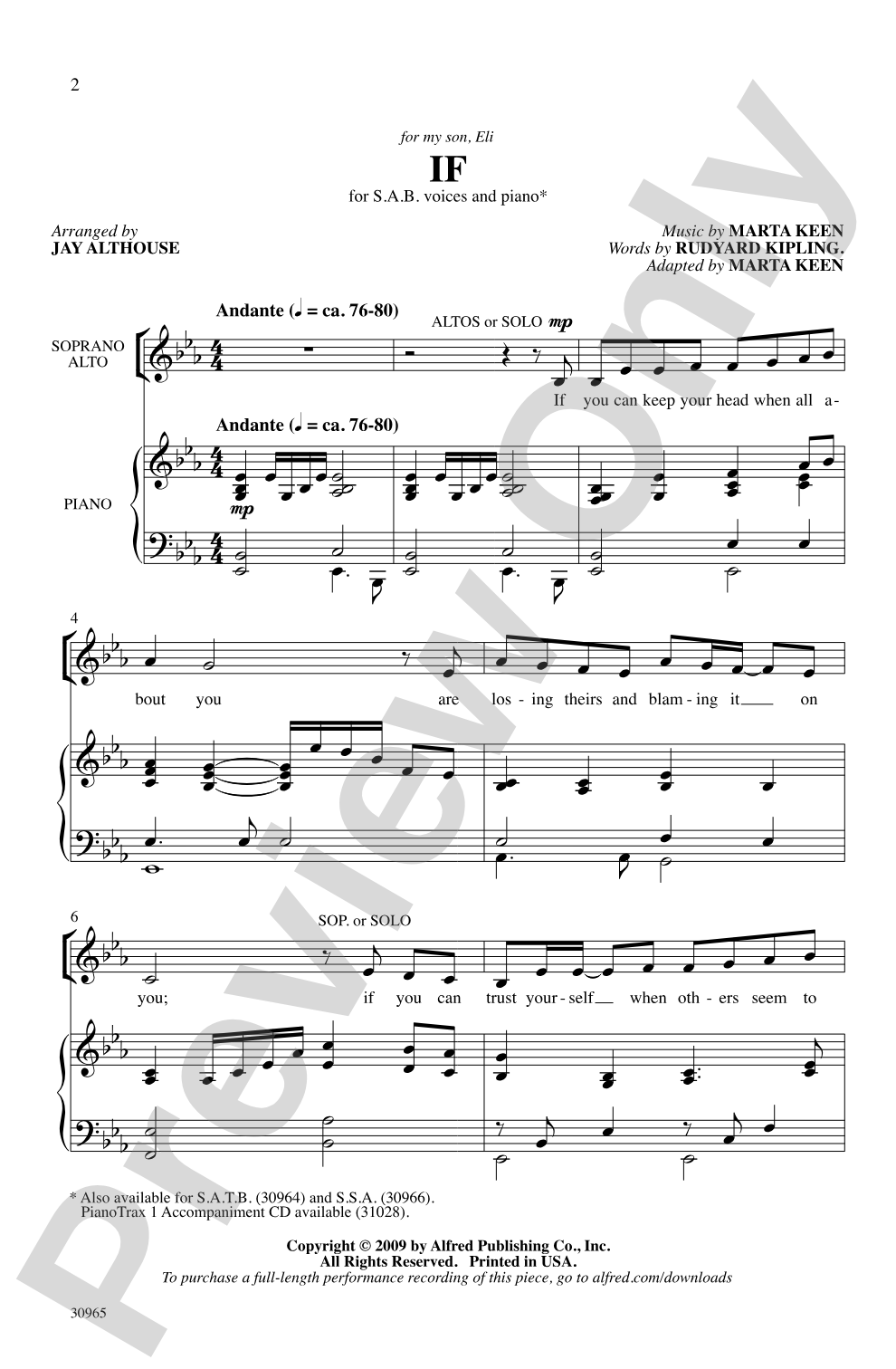
Music by Marta Keen, words by Rudyard Kipling, adapted by Marta Keen / arr. Jay Althouse
Item: 00-PO-0000725
$1.75
Minimum order quantity: 20 copies
Pickup currently not available
Description
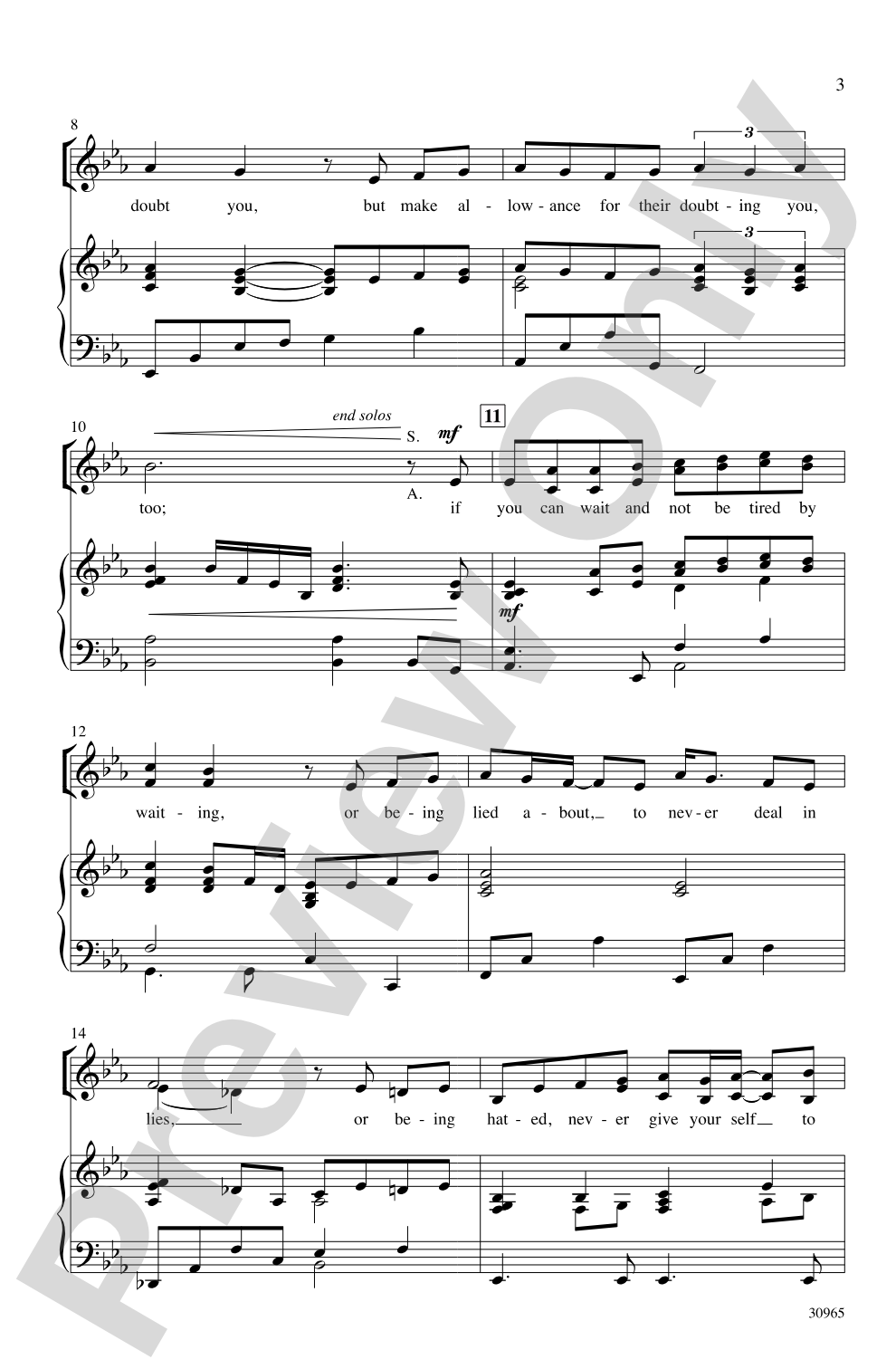
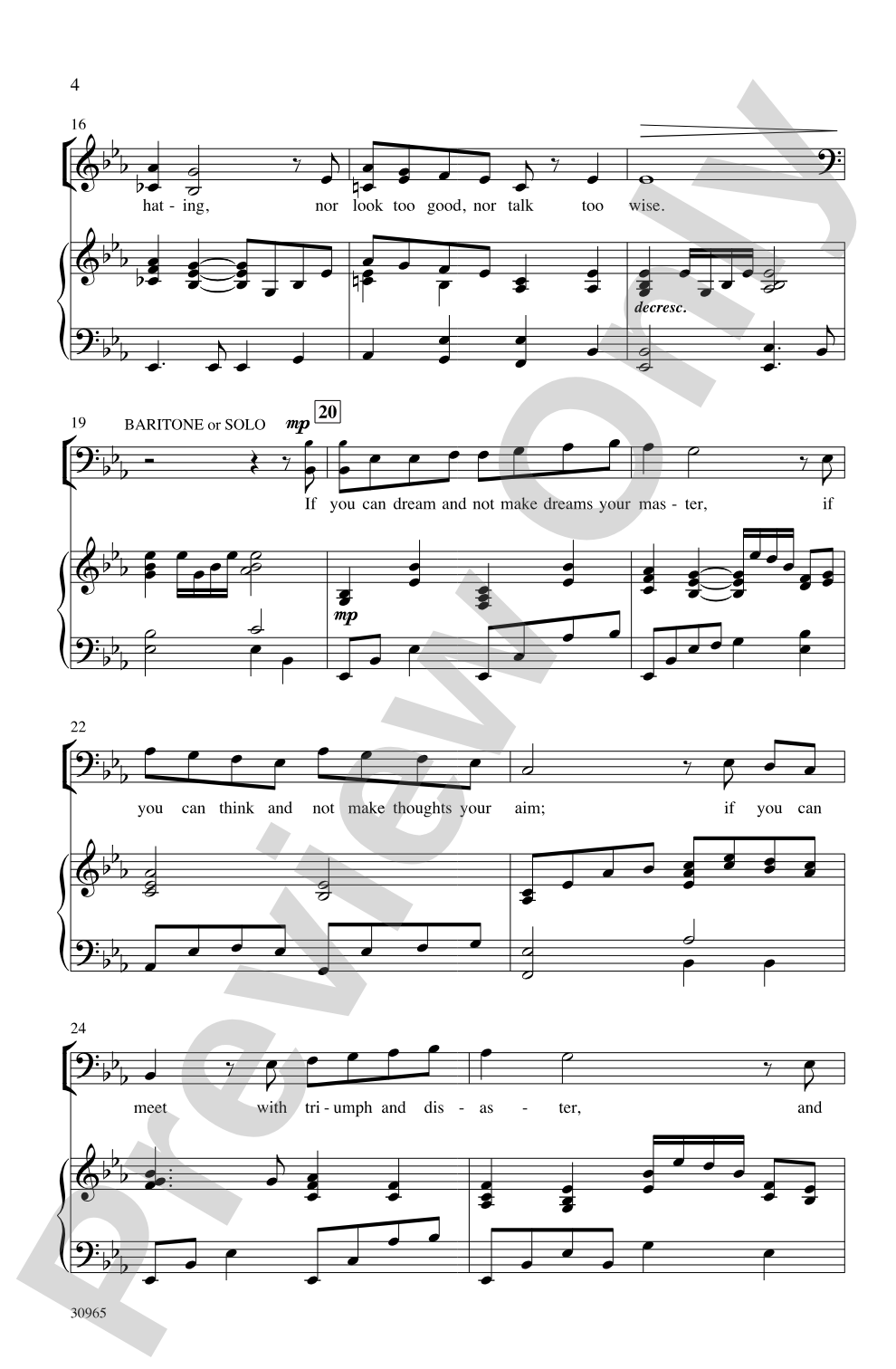
You will grow as a person if you learn to deal with the intricacies of daily life. This strong text based on Rudyard Kipling's poem will inspire and lift your singers to new heights. Optional solo opportunities for your best singers. A masterpiece for your choral ensembles. Accompaniment included on PianoTrax 1 CD (00-31028).


If: SAB Choral Octavo isn't in MakeMusic Cloud just yet...but it could be. Let us know you'd like to see it, and you'll help shape what comes next. In the meantime, start a free trial and dive into thousands of interactive titles your students can play along with today.
Request This Title
Tell us you want it.
Start Your Free Trial
Explore everything that's ready to play right now.
Sample Audio
1
Audio File
--:--
0:00
0:00
Sample Video
No sample videos found.
Additional Details
Series:
Alfred Choral Designs
Publisher:
Alfred Music
Page Count:
12
SKU:
00-PO-0000725
More about this title
Why we love this
Keen's setting of Kipling's beloved poem carries genuine weight without demanding a large ensemble or complex vocal writing. The optional solo moments give you flexibility to feature strong singers while keeping the piece accessible for mixed voices, making it a natural fit for groups building confidence in contemporary choral literature.
What to expect
The piece carries the reflective wisdom of Kipling's original poem while remaining immediately singable and emotionally open. It builds from introspection to affirmation, creating a sense of personal growth and collective resolve that resonates long after the final chord.
Who it's for
SAB choirs and community ensembles seeking meaningful secular repertoire with accessible vocal ranges and optional soloists built in. This works equally well for high school chamber choirs, college non-majors ensembles, and adult community groups.
How to get the most out of it
- Balance the optional solos carefully so they enhance rather than interrupt the collective power of the text. Rehearse with and without them to find what serves your singers best.
- Give the accompaniment room to breathe during passages where the text takes center stage. The piano is a partner, not a driving force.
- Encourage clear diction throughout. Kipling's language is direct and conversational, so singers should land each word with intention.
- Work the final sections with attention to dynamic control. The piece aims to lift without pushing; build intensity through focus and ensemble cohesion, not volume alone.
How to use it
Use this as a centerpiece for a concert exploring themes of resilience or personal development, or pair it alongside contrasting selections to show range in your choral program. It works particularly well in spring concerts or as a culminating piece that leaves audiences with something meaningful to consider.
Skills your students will build
- Balancing solo and ensemble textures
- Shaping longer phrases with sustained legit singing
- Conveying emotional content through clear text delivery
- Reading three-part mixed voicing across soprano, alto, and baritone ranges