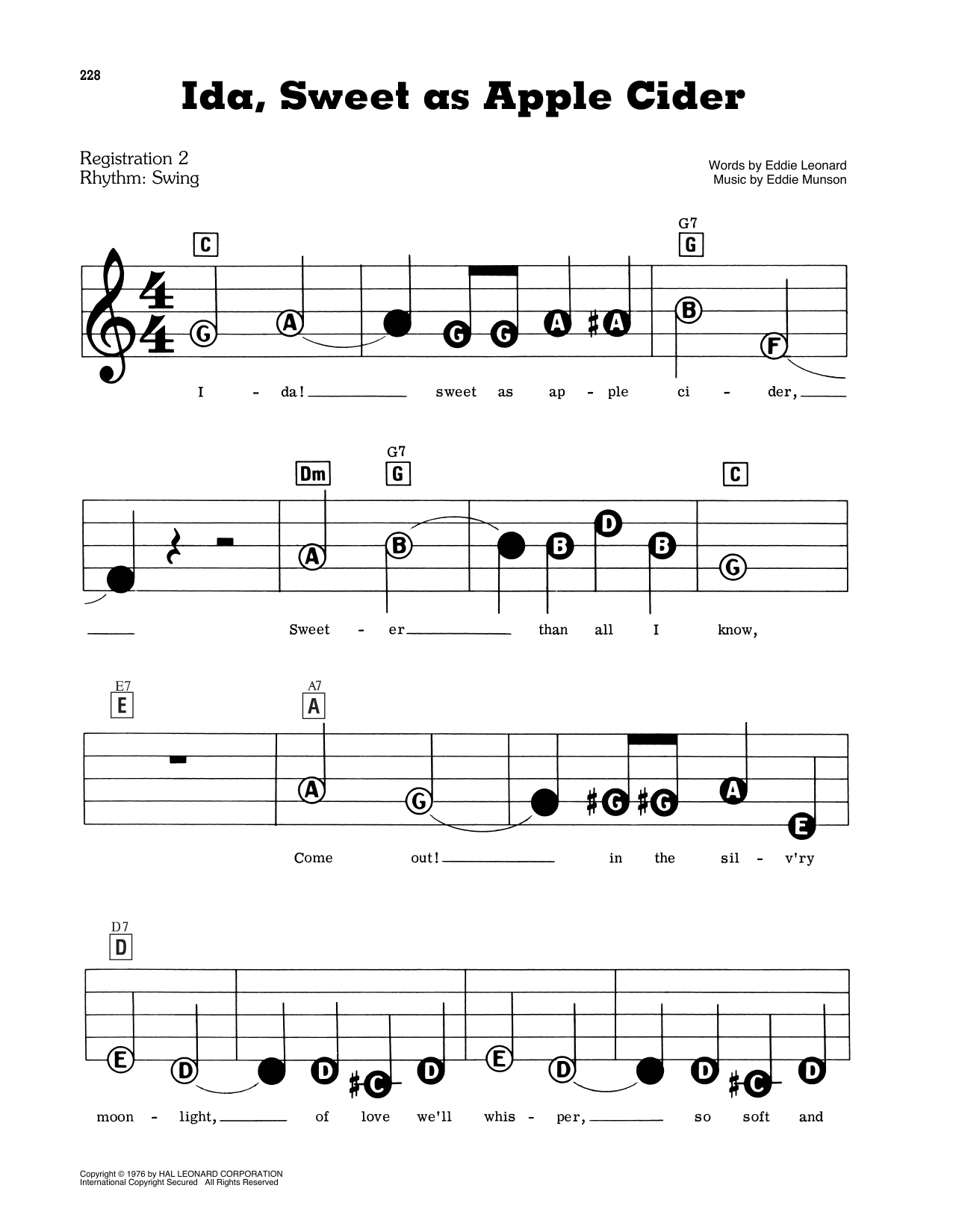
Ida, Sweet As Apple Cider Sheet Music Preview

Ida, Sweet As Apple Cider: E-Z Play Today

Item: 35-DS00455602

Digital Download
$4.99
Description

Ida, Sweet As Apple Cider: E-Z Play Today isn't in MakeMusic Cloud just yet...but it could be. Let us know you'd like to see it, and you'll help shape what comes next. In the meantime, start a free trial and dive into thousands of interactive titles your students can play along with today.

Sample Audio
No sample audio found.
Sample Video
Additional Details
Publisher: Hal Leonard
Page Count: 2
SKU: 35-DS00455602

More about this title

Why we love this

This standard arrives in E-Z Play format without losing its genuine charm, making it accessible to pianists who might otherwise skip over it. The two-page length keeps the scope manageable while leaving room for interpretation and personal flourish.

What to expect

Warm and nostalgic, with the kind of gentle sweetness that actually earned the title. The tune sits naturally under the hands and invites a lyrical, unhurried approach.

Who it's for

Beginning to early intermediate pianists looking for real standards with melodic substance, rather than simplified arrangements that feel thin. This works equally well for solo study or as part of a casual ensemble setting.

How to get the most out of it

  • Lean into the swing feel rather than playing it straight; this tune breathes best when the rhythm section can play with a little behind-the-beat relaxation.
  • Balance the melody line so it sings over any accompaniment, especially if you're playing with others who might fill out the harmony.
  • Let the harmonic changes speak for themselves. The progression has character built in, so resist over-complicating the voicings.

How to use it

Pair this with other early 20th-century standards to show students how the vocabulary of jazz harmony grew from folk and popular song. It's ideal for end-of-year recitals or studio showcases where variety in genre serves the program.

Skills your students will build

  • reading lead-sheet notation and single-line melody
  • recognizing and navigating jazz chord changes
  • phrasing over harmonic movement
  • balancing melody against implied harmony in a two-page format

You May Also Like