
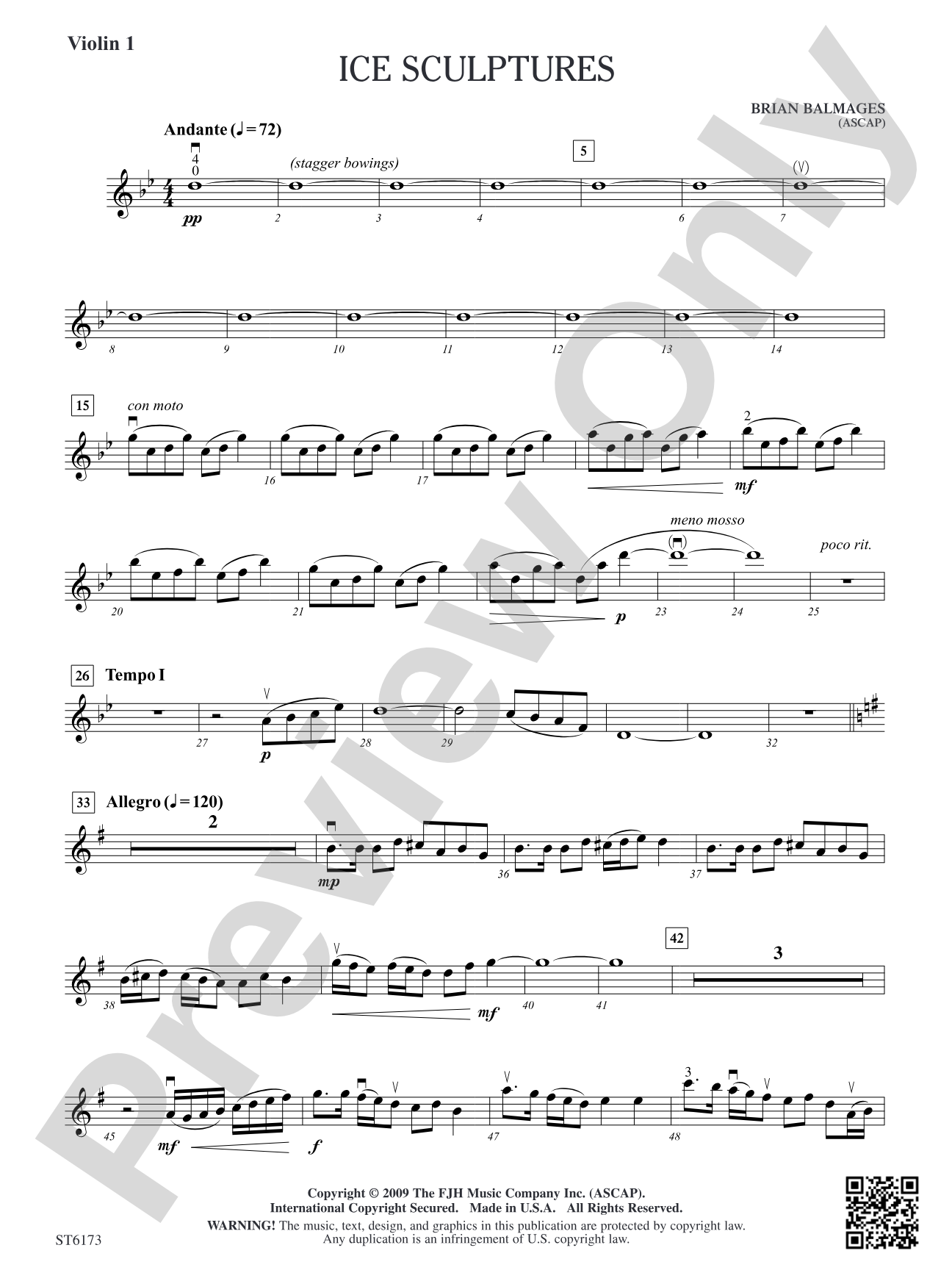

Ice Sculptures: Violin 1
By Brian Balmages
Grade: 3
Item: 98-PC-DST6173_VN1
$7.00
Pickup currently not available
Description
Premiered at the Midwest Band and Orchestra Clinic, this predominately lyrical work draws its inspiration from ice hotels - temporary hotels made entirely of ice and snow. Strong elements of film scoring prevail throughout the work as it tells the story of the construction, visitors, and eventual melting of the hotel. There are extensive opportunities to feature both your cello soloist and cello section. A very unique work that will captivate your audience.


Don't just read it, hear it, play along with it, and watch your students grow with it. In MakeMusic Cloud, Ice Sculptures: Violin 1 comes alive with professional accompaniment, adjustable tempo, and built-in practice tools that turn solo practice into real progress.
Open in the Player
Jump straight in and assign it today.
Start Your Free Trial
Open this title and explore the full library in minutes.
Sample Audio
1
Audio File
--:--
0:00
0:00
Sample Video
No sample videos found.
Additional Details
Series:
FJH String Orchestra
Publisher:
The FJH Music Company, Inc.
SKU:
98-PC-DST6173_VN1
More about this title
About the Composer: Brian Balmages

Brian Balmages has built a career composing and conducting across orchestral, band, and chamber music with equal fluency. His works have been commissioned and performed by groups spanning professional symphony orchestras to school ensembles in major venues including Carnegie Hall, the Kennedy Center, and Sydney Opera House. He holds membership in the American Bandmasters Association, received the A. Austin Harding Award from the American School Band Directors Association, and won the 2020 NBA William D. Revelli Composition Contest.
As a conductor, Balmages maintains an active schedule guest conducting all-state ensembles, university orchestras, and professional groups internationally. His music has been performed at the Presidential Inaugural Prayer Service and commissioned by universities including Miami and James Madison. Currently, he serves as Director of MakeMusic Publications and Digital Education for Alfred and MakeMusic.
Why we love this
The film scoring language Balmages employs here creates immediate dramatic engagement without sacrificing the lyricism that makes this accessible for Grade 3 ensembles. The generous cello features give you natural solo opportunities within a piece that works equally well in concert or festival settings. A work this distinctive at this level doesn't come along often.
What to expect
Ice Sculptures evokes the luminous, shifting beauty of its subject matter through flowing string textures and graceful melodic arcs. The work moves from the precision and energy of construction through moments of quiet wonder as visitors encounter the hotel, before dissolving into the melancholy of inevitable thaw. It reads as both intimate and cinematic.
Who it's for
String orchestras at the Grade 3 level looking for a piece that combines accessible musicianship with distinctive character. Directors seeking meaningful solo opportunities for cellists will find this particularly valuable. Groups performing at contests or festivals need programming that stands out without excessive technical demands.
How to get the most out of it
- Shape the lyrical passages with long, connected lines in the strings. Balmages' film scoring idiom relies on sustained phrasing, not fragmented articulation.
- Give your cello soloist space to breathe during the featured passages. These moments deserve projection and clarity from the section beneath them.
- Let the programmatic arc guide your tempi and dynamics. The piece tells a story from construction through melting; your interpretation should reflect that narrative arc.
- Balance transparency with weight in the accompanimental textures. String orchestra writing at this level can muddy quickly if multiple parts are equally weighted.
How to use it
This works exceptionally well as a centerpiece for a concert exploring programmatic or narrative-driven works. Pair it with lighter fare on either side to let its distinctive character breathe. Festival programming benefits from its unique story and strong visual hook for audiences.
Skills your students will build
- Sustaining long, connected phrases across multiple measures
- Balancing solo and section textures in collaborative ensemble playing
- Responding to programmatic content through interpretive tempo and dynamic choices
- Reading and executing extended cello solos as featured parts of the orchestration
- Maintaining tonal consistency and transparency in multi-part string writing