

Ib Ashe: Choral Instrumental Pak
As performed by Traditional West African Chant / Arranged by Brian Tate
Item: 35-PK00291878
$20.00
Pickup currently not available
Buy Extra Parts (Digital PDF Download)
| Product | Price | Quantity |
|---|---|---|
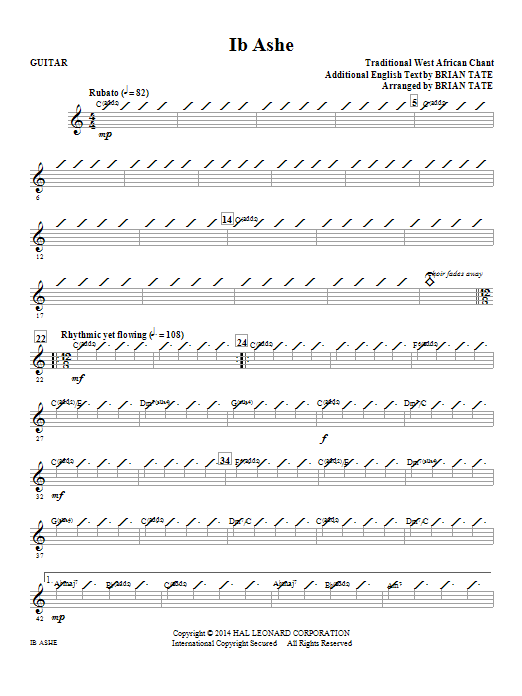
| Ib Ashe - Guitar: Choral Instrumental Pak | $7.00 | |
| Ib Ashe - Bass: Choral Instrumental Pak | $7.00 | |
| Ib Ashe - Drums: Choral Instrumental Pak | $7.00 | |
| Ib Ashe - Percussion: Choral Instrumental Pak | $7.00 |
Parts Added to Cart!
Description
From West Africa comes this celebratory chant honoring one's ancestors. It is an invitation for all to gather and bring their energy together in celebration. Beginning with a wash of vocal sound, the solo takes over and a 12/8 dance rhythm begins, setting a joyous mood. There are many opportunities for improvisation, capturing the West African sound in both the vocals and the accompaniment.


Ib Ashe: Choral Instrumental Pak isn't in MakeMusic Cloud just yet...but it could be. Let us know you'd like to see it, and you'll help shape what comes next. In the meantime, start a free trial and dive into thousands of interactive titles your students can play along with today.
Request This Title
Tell us you want it.
Start Your Free Trial
Explore everything that's ready to play right now.
Sample Audio
No sample audio found.
Sample Video
No sample videos found.
Additional Details
Publisher:
Hal Leonard
SKU:
35-PK00291878
More about this title
About the Artist: Traditional West African Chant
West African choral traditions emerged from the rich cultural practices of communities across the continent, where music serves as the primary vehicle for storytelling, spiritual connection, and communal celebration. These chants have been passed down through generations, evolving within specific cultural contexts while maintaining their core purpose: to unite people in shared experience and to honor those who came before.
Why we love this
Brian Tate's arrangement opens the door to authentic West African musical language without requiring your ensemble to become ethnomusicologists. The built-in improvisational framework means every performance will sound fresh and genuinely alive, which is rare in printed scores; most groups will find themselves reaching for this piece again because it rewards rehearsal in unexpected ways.
What to expect
The piece unfolds like an invitation that grows warmer with each moment. What begins as a shimmering vocal backdrop transforms into an irresistible dance, propelled by the infectious 12/8 rhythm that makes it nearly impossible to sit still. There's joy here, but also reverence; this is celebration grounded in purpose.
Who it's for
This arrangement works equally well for choral festivals seeking uplifting, accessible contemporary music and for concert programs that want to expand beyond European repertoire. It's suitable for advanced high school and college ensembles, as well as community and professional choirs looking to engage audiences with rhythmic vitality and cultural authenticity.
How to get the most out of it
- Encourage singers to shape the opening wash of sound with gradual dynamic swells rather than entering at full volume; this builds anticipation for the solo entrance and honors the ceremonial quality of the text.
- Lock the ensemble into the 12/8 pulse early by having instrumentalists establish the groove first, then layer in vocals once the rhythmic foundation is solid.
- Invite soloists to claim ownership of their improvised passages by rehearsing specific melodic gestures that feel comfortable to them, even if they vary from rehearsal to rehearsal.
- Balance the West African articulation style (often more clipped and percussive than typical classical singing) against clear vowel formation so diction doesn't blur at faster tempos.
How to use it
Consider placing this as a second-half opener to energize an audience after intermission, or as the emotional heart of a thematic program exploring African diaspora and cultural resilience. It pairs naturally with spirituals and contemporary gospel settings, creating a compelling arc that connects historical and present-day musical traditions.
Skills your students will build
- Singing in 12/8 meter with confidence and rhythmic independence
- Improvising melodically within a given harmonic and cultural framework
- Balancing ensemble blend with West African articulation and percussive tone
- Responding to soloist leadership while maintaining group cohesion
- Understanding and respecting cultural context in musical performance