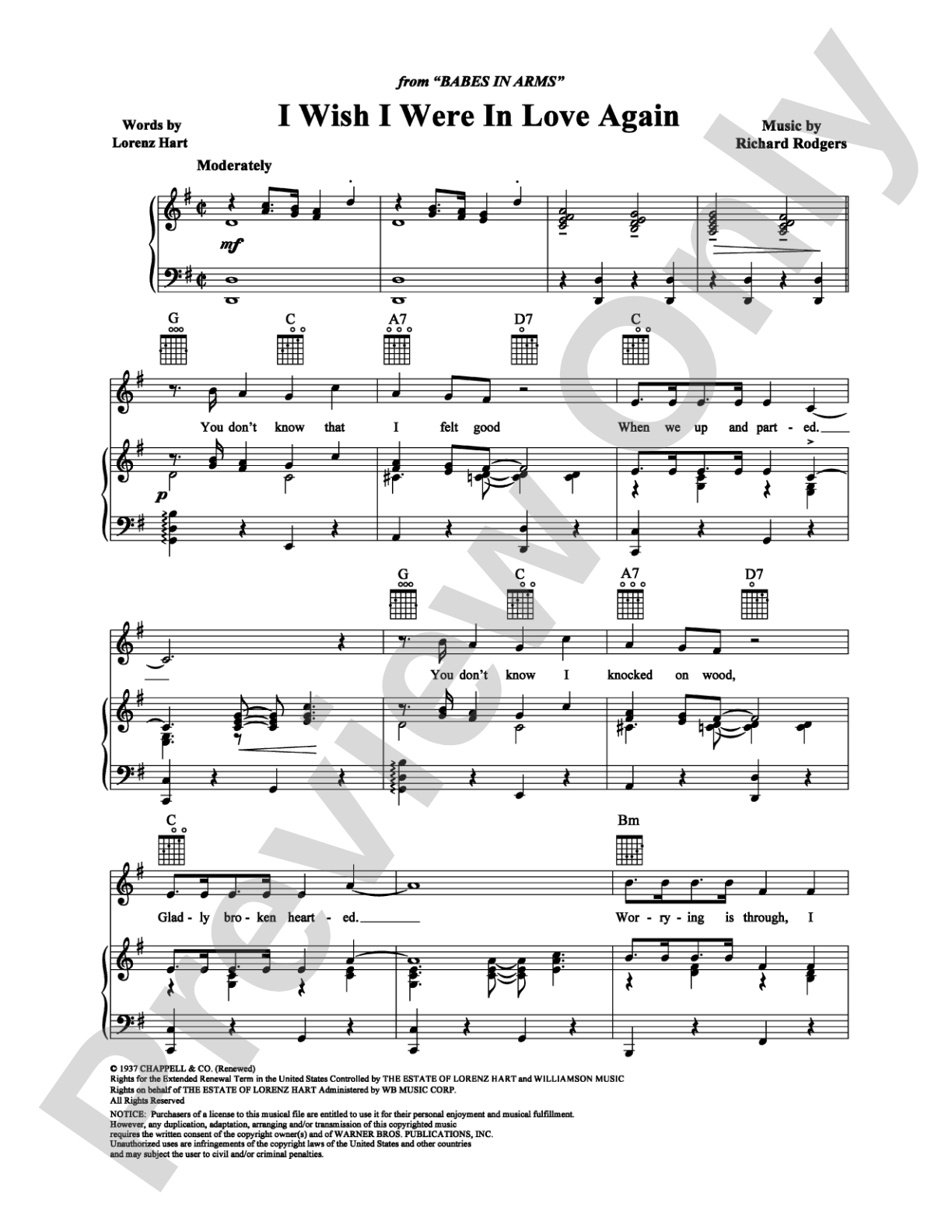
I Wish I Were In Love Again: Piano/Vocal/Chords Digital Sheet Music

I Wish I Were In Love Again: Piano/Vocal/Chords Digital Sheet Music

Richard Rodgers, Judy Garland, Mickey Rooney

Item: 00-PS-0004519

Digital Download
$3.99
Description

I Wish I Were In Love Again: Piano/Vocal/Chords Digital Sheet Music isn't in MakeMusic Cloud just yet...but it could be. Let us know you'd like to see it, and you'll help shape what comes next. In the meantime, start a free trial and dive into thousands of interactive titles your students can play along with today.

Sample Audio
No sample audio found.
Sample Video
Additional Details
SKU: 00-PS-0004519

More about this title

About the Artist: Judy Garland

Judy Garland redefined what it meant to be a musical performer in Hollywood's Golden Age. Her ability to inhabit a song, to make lyrics feel lived-in and immediate, set a standard for vocal interpretation that singers still study today. Her phrasing, timing, and emotional directness transformed popular song into genuine art.

Why we love this

Garland's version of this Rodgers and Hart standard captures the wit and energy of the original duet while remaining accessible for classroom singers and private voice students. The song's clever lyric and playful melodic contours make it engaging material for teaching vocal expression without requiring an operatic voice, and it works equally well as a solo piece or as a duet.

What to expect

This is a song brimming with romantic frustration and playful cynicism. The melody dances between acceptance and longing, supported by a sophisticated harmonic language that feels both intimate and theatrical. Garland's version radiates charm and vulnerability in equal measure, inviting performers to find their own balance between humor and sincerity.

Who it's for

Voice students preparing jazz or standards repertoire, pianists accompanying singers, and music theater programs looking for accessible duet material that teaches both style and storytelling. High school and college singers benefit from the song's conversational vocal writing and its built-in opportunity to explore character interpretation.

How to get the most out of it

  • Approach the rhythmic syncopations with a light touch; the humor of the lyric depends on crisp articulation rather than legit operatic phrasing.
  • Balance the piano part carefully so it supports the vocal line without overwhelming it. The accompaniment should feel conversational, not heavy.
  • Experiment with the tempo markings and rubato in the verse sections to shape the character of the text. Garland's recording uses subtle tempo flexibility to land the comedy.

How to use it

Program this alongside other Rodgers and Hart standards to build a concert around Golden Age songwriting, or use it as a lighter moment in a recital that also includes more serious vocal literature. It pairs well with other duets or partner songs and works particularly well in a music theater or cabaret-style event.

Skills your students will build

  • Singing with rhythmic precision and syncopation
  • Shaping lyrical content through vocal phrasing and character work
  • Managing musical style shifts between verse and refrain
  • Collaborating vocally with a pianist or duet partner
  • Reading piano-vocal score layout and chord symbols

You May Also Like