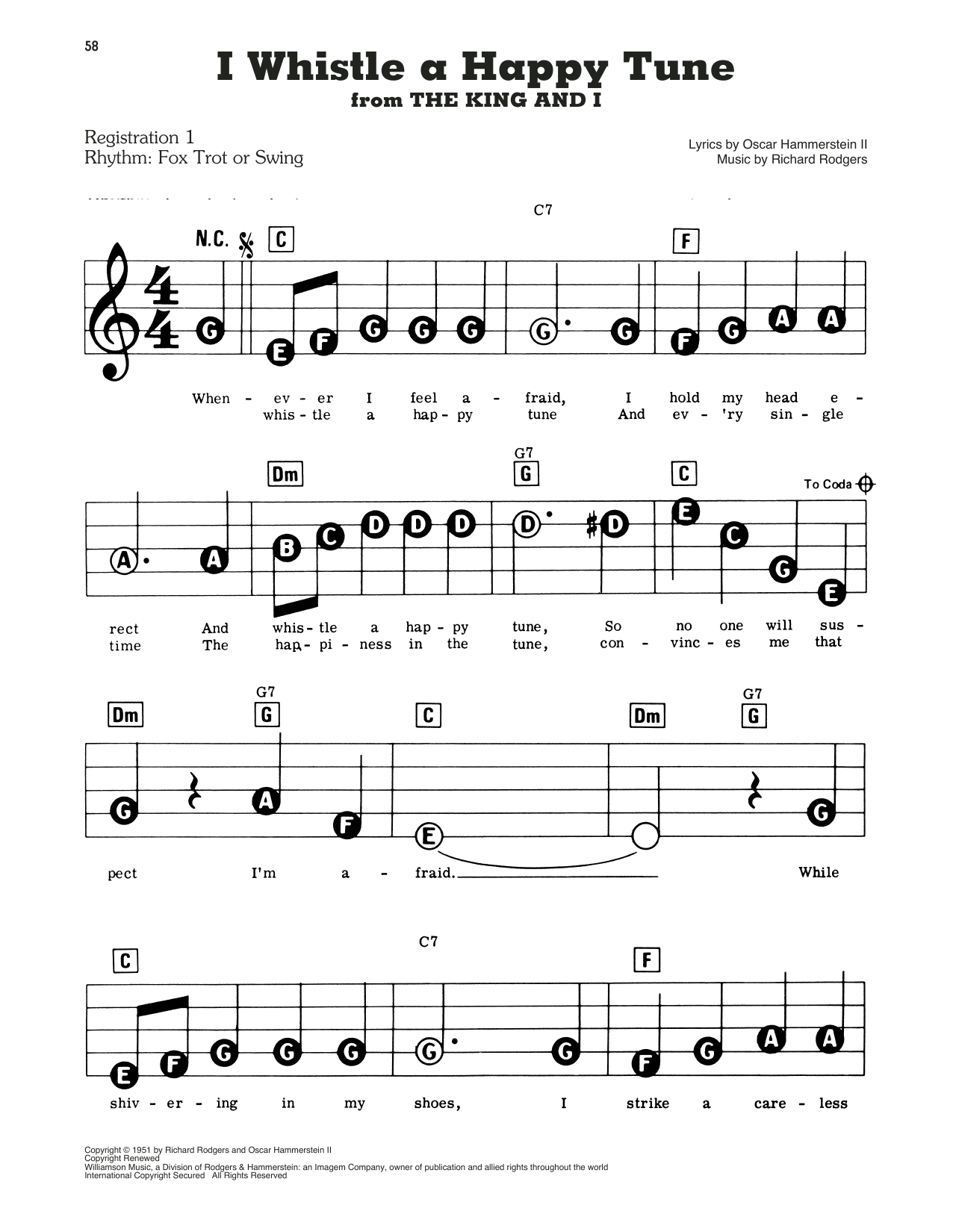
I Whistle A Happy Tune (from The King And I) Sheet Music Preview

I Whistle A Happy Tune (from The King And I): E-Z Play Today

Item: 35-DS00498324

Digital Download
$4.99
Description

I Whistle A Happy Tune (from The King And I): E-Z Play Today isn't in MakeMusic Cloud just yet...but it could be. Let us know you'd like to see it, and you'll help shape what comes next. In the meantime, start a free trial and dive into thousands of interactive titles your students can play along with today.

Sample Audio
No sample audio found.
Sample Video
Additional Details
Publisher: Hal Leonard
Page Count: 2
SKU: 35-DS00498324

More about this title

About the Creator

Richard Rodgers and Oscar Hammerstein II created the score for The King and I in 1951, bringing together one of musical theater's greatest songwriting partnerships. Rodgers' gift for memorable melody combined with Hammerstein's lyrical storytelling produced a show that remains a cornerstone of the American musical theater canon, with "I Whistle a Happy Tune" becoming one of its most enduring and beloved songs.

Why we love this

This E-Z Play Today arrangement strips away unnecessary complexity while preserving the song's character, making it accessible for piano students who want to play a genuine Broadway standard without years of advanced technique behind them. The straightforward presentation lets the melody shine, which is exactly what makes this tune so charming in the first place.

What to expect

Warm, optimistic, and genuinely human. The melody carries the quiet confidence of someone choosing to look on the bright side, supported by a gentle harmonic foundation that never demands technical showiness. It's the musical equivalent of a genuine smile.

Who it's for

Elementary and early intermediate pianists ready for Broadway repertoire, community music programs seeking accessible singalong material, and anyone wanting to explore the Great American Songbook at a manageable level.

How to get the most out of it

  • Shape the melody with subtle dynamic control rather than relying on pedal to sustain the line; this keeps the accompaniment clear and lets each phrase breathe.
  • Find a tempo that allows the lyric to feel natural if you're singing along, rather than chasing a metronomic beat.
  • Balance the left hand accompaniment so it supports rather than overwhelms; listeners should hear the tune first.

How to use it

Pair this with other accessible Broadway selections for a "Golden Age Musical Theater" recital or community event, or use it as a gateway piece when introducing students to music theater beyond classical pedagogy. It also works beautifully in a program exploring musical theater history and the craft of the American songbook.

Skills your students will build

  • Playing lyrical melody with consistent tone and phrasing
  • Balancing melody and accompaniment textures
  • Interpreting jazz-influenced harmonic movement
  • Sight-reading straightforward lead-sheet style arrangements

You May Also Like