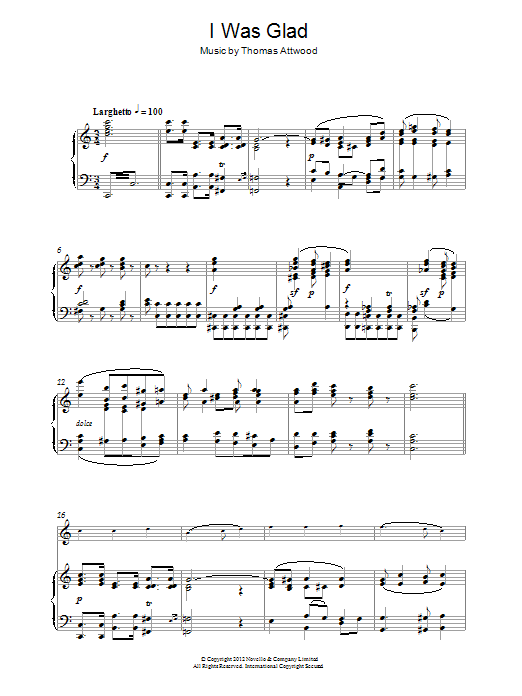
Thomas Attwood (1765-1838) was a leading English composer and organist whose sacred music became the backbone of Anglican cathedral repertoire. A student of Mozart in Vienna, Attwood brought Continental sophistication to English church music while respecting the liturgical traditions of his time. He served as organist at St. Paul's Cathedral for nearly fifty years, composing extensively for the liturgy and establishing himself as one of the most performed sacred composers in British music education.
Why we love this
Attwood's setting stands apart for its textural clarity and direct emotional expression. The piece balances choral accessibility with genuine sophistication, offering directors a work that sounds substantial in performance without demanding excessive rehearsal time from amateur or developing choirs.
What to expect
Radiant and reverent, with an underlying confidence that comes from secure harmonic ground. The writing evokes the spaciousness of cathedral acoustics while maintaining an intimate connection to the words.
Who it's for
Intermediate to advanced church choirs, cathedral singers, and concert ensembles seeking authentic liturgical repertoire. The piece works equally well in festival settings or Sunday worship where musical substance enhances the text.
How to get the most out of it
Clarify the harmonic progression by bringing out inner voices during the transition sections; Attwood's voice leading rewards attention to each melodic strand.
Shape phrases according to the text accentuation rather than phrase marks alone. The natural speech rhythm of the psalm text guides phrasing more reliably than architectural symmetry.
Balance the soloistic moments with the full choir carefully. When passages reduce to smaller voice groups, maintain the same dynamic energy you establish in tutti sections to avoid loss of momentum.
How to use it
Pair this with other English sacred music from the same period to create a focused concert theme, or include it on a liturgical service where the text of rejoicing fits the occasion. Its moderate length makes it an excellent closer for a choral program.
Skills your students will build
Singing in mixed textures (full choir, small ensembles, optional solos)
Harmonic awareness and voice independence within functional harmony
Text setting and phrasing in liturgical English
Sustaining tone quality across dynamic changes and longer phrases
You May Also Like
Scan to Complete Your Purchase
Use your phone's camera to scan the code below
You'll log in on your phone and the order will be added to your account