
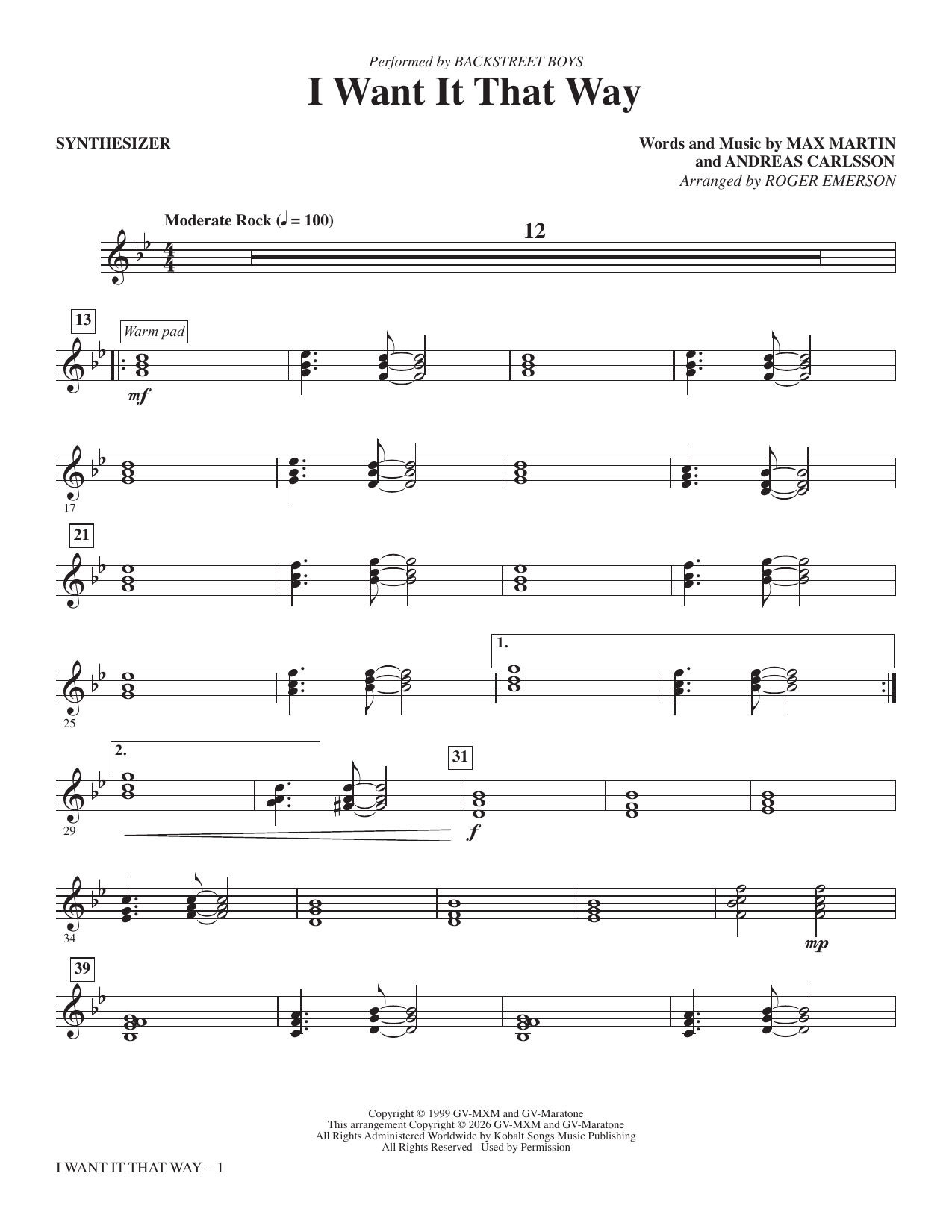

I Want It That Way (arr. Roger Emerson): Choral Instrumental Pak
As performed by Backstreet Boys / Arranged by Roger Emerson
Item: 35-PK01889497
$35.00
Pickup currently not available
Buy Extra Parts (Digital PDF Download)
Parts Added to Cart!
Description
This signature song from the Backstreet Boys was a late 90s chart topper all over the world. A great choice for any pops concert, your singers will sound their best with this true-to-the-style arrangement.


I Want It That Way (arr. Roger Emerson): Choral Instrumental Pak isn't in MakeMusic Cloud just yet...but it could be. Let us know you'd like to see it, and you'll help shape what comes next. In the meantime, start a free trial and dive into thousands of interactive titles your students can play along with today.
Request This Title
Tell us you want it.
Start Your Free Trial
Explore everything that's ready to play right now.
Sample Audio
No sample audio found.
Sample Video
No sample videos found.
Additional Details
Publisher:
Hal Leonard
SKU:
35-PK01889497
More about this title
About the Artist: Backstreet Boys
The Backstreet Boys emerged from the late 1990s boy band phenomenon with a formula that proved remarkably durable: infectious pop hooks, tight vocal arrangements, and crossover appeal that transcended their original teen audience. Their self-titled debut album and its follow-up established them as one of the decade's dominant pop acts, with "I Want It That Way" becoming their signature song and a staple of radio worldwide. The group's emphasis on vocal harmony and production polish has made their catalog enduringly popular in educational settings, where their songs offer students contemporary material with genuine melodic substance.
What makes the Backstreet Boys relevant to music educators is their influence on how pop music is structured and performed. Their arrangements showcase layered vocals, sophisticated production techniques, and rhythmic sophistication that invites meaningful analysis and performance. Teachers and directors have found their music particularly valuable for engaging students in contemporary repertoire while maintaining the kind of harmonic and textural interest that rewards serious ensemble work.
Why we love this
Roger Emerson has distilled what makes this song unforgettable into an arrangement that actually works for singers and stays true to the recording. Pop concert programming often calls for pieces that satisfy both your ensemble and an audience already humming along, and this delivers on that front. The rhythmic vitality and modern sound make it the kind of number that energizes a show without sacrificing musicianship.
What to expect
The arrangement captures the song's blend of sincerity and pop sheen; it feels both earnest and energetic, with moments of sparse simplicity giving way to fuller vocal textures. There's a modern, radio-ready quality here that doesn't sacrifice musicality for accessibility.
Who it's for
This arrangement suits intermediate to advanced high school choirs and adult ensembles who want to program contemporary pop material that students genuinely connect with. It works equally well for concert choirs looking to diversify their setlist and community groups seeking accessible, audience-friendly repertoire.
How to get the most out of it
- Lock the rhythmic groove in your rhythm section early; the pocket is what drives this arrangement, so get drums, bass, and keyboards aligned before the choir enters.
- Emphasize the conversational quality of the melody. This song lives in the contrast between intimate vocal moments and big ensemble swells, so shape your dynamics accordingly.
- Keep the harmonic blend tight in unison and octave sections. Pop style can feel loose, but the vocal precision here is what makes it shine.
- Use the recorded accompaniment as a reference for tempo and feel, then rehearse without it frequently so your singers internalize the groove.
How to use it
This piece functions best on a pops or contemporary music concert where it can anchor a set of familiar songs that audiences know and love. It also works as a showstopper for end-of-year or spring concerts, particularly when you want to shift the energy after more traditional repertoire.
Skills your students will build
- Singing in a contemporary pop style with appropriate rhythmic placement
- Maintaining rhythmic precision within a groove-based accompaniment
- Balance between solo/featured vocal lines and ensemble textures
- Interpreting dynamic contrast in modern popular music