I Wanna Be Loved By You: Lead Sheet Digital Sheet Music

I Wanna Be Loved By You: Lead Sheet Digital Sheet Music

Herbert Stothart, Harry Ruby, Helen Kane, Marilyn Monroe

Item: 00-PS-0008411

Digital Download
$1.99
Description

I Wanna Be Loved By You: Lead Sheet Digital Sheet Music isn't in MakeMusic Cloud just yet...but it could be. Let us know you'd like to see it, and you'll help shape what comes next. In the meantime, start a free trial and dive into thousands of interactive titles your students can play along with today.

Sample Audio
No sample audio found.
Sample Video
Additional Details
SKU: 00-PS-0008411

More about this title

About the Artist: Helen Kane

Helen Kane pioneered the "baby talk" vocal style that became iconic in 1920s jazz and popular music. Her signature sound, breathy, playful, and rhythmically inventive, influenced generations of singers and defined an era of American entertainment. Kane's recordings remain essential listening for vocalists exploring jazz phrasing and character interpretation.

Why we love this

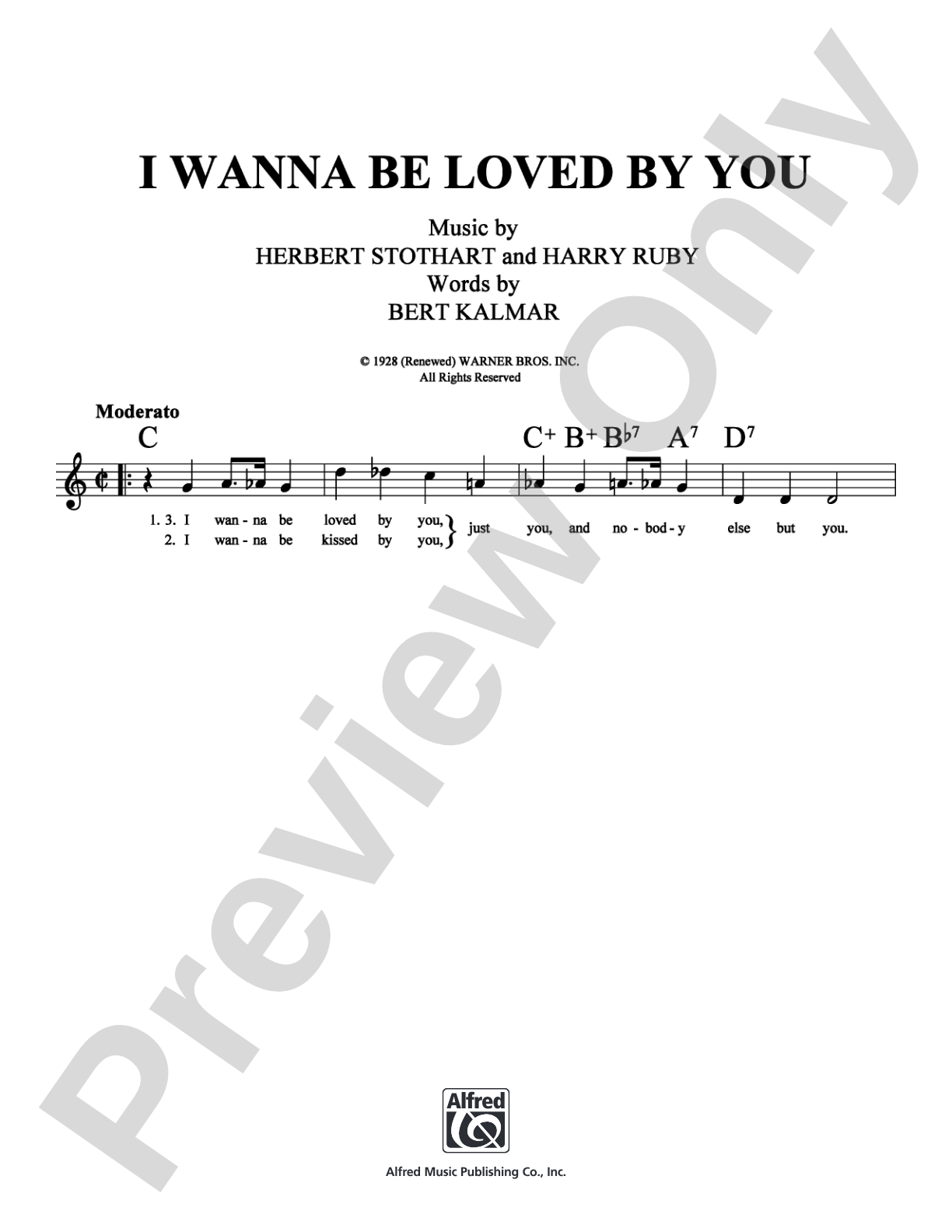
This lead sheet captures a beloved standard in its most iconic form, complete with the melodic variations and rhythmic flourishes that made the original recording unforgettable. Singers and instrumentalists working in jazz, pop standards, or musical theater repertoire will find this essential for understanding how to navigate the tune's playful character and lyrical wit. The lead sheet format gives performers the freedom to interpret the melody while staying grounded in the composition's harmonic foundation.

What to expect

Flirtatious and light-hearted, with a melody that invites playfulness and rhythmic interpretation. The tune bounces with personality, capturing the spirited energy of Jazz Age entertainment and the charm of a performer utterly comfortable commanding a room.

Who it's for

Jazz musicians, singers, and music educators working with standards and early 20th-century popular music. This lead sheet serves jazz ensembles, cabaret performers, and classroom presentations exploring the history of American vocal jazz and the Great American Songbook.

How to get the most out of it

  • Shape phrases with the lyrical accents and rhythmic bounces that defined the original recording; don't play it straight.
  • Experiment with the melody line's flexibility in the higher passages; this tune rewards expressive rubato and playful timing variations.
  • Ground your interpretation in the chord changes; the harmony supports surprising turns and emphatic moments that enhance the comedic intent.
  • Let the vocal character inform your instrumental approach; this piece thrives when it sounds conversational and cheeky rather than polished.

How to use it

Program this when exploring the vocal traditions of early American popular music or presenting a jazz standards concert. It pairs well with other 1920s-1930s material and serves as an engaging entry point for students new to swing phrasing and jazz interpretation.

Skills your students will build

  • Jazz phrasing and swing rhythms
  • Interpreting lead sheet notation with stylistic flexibility
  • Understanding the relationship between melody and chord changes
  • Vocal or instrumental character work through comedic timing

You May Also Like