
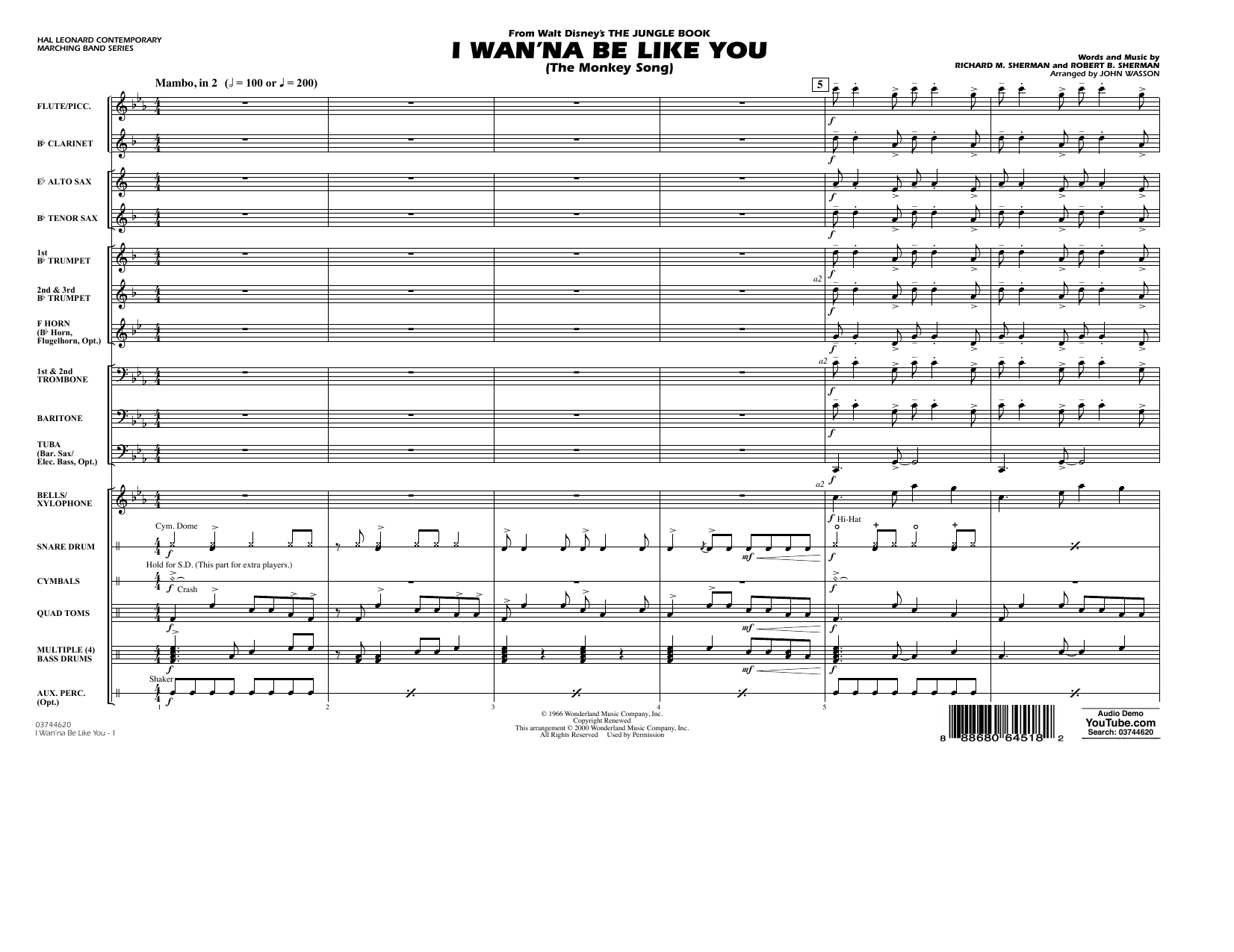

I Wan'na Be Like You: Marching Band Conductor Score & Parts
As performed by Robert B. Sherman / As performed by Richard M. Sherman / As performed by Big Bad Voodoo Daddy / Arranged by John Wasson
Grade: 4
Item: 35-PK00342362
$55.00
Pickup currently not available
Buy Extra Parts (Digital PDF Download)
Parts Added to Cart!
Description
Originally from Disney's "The Jungle Book," this hot Latin version from Big Bad Voodoo Daddy's latest CD shows they can do more than just swing.


I Wan'na Be Like You: Marching Band Conductor Score & Parts isn't in MakeMusic Cloud just yet...but it could be. Let us know you'd like to see it, and you'll help shape what comes next. In the meantime, start a free trial and dive into thousands of interactive titles your students can play along with today.
Request This Title
Tell us you want it.
Start Your Free Trial
Explore everything that's ready to play right now.
Sample Audio
No sample audio found.
Sample Video
No sample videos found.
Additional Details
Publisher:
Hal Leonard
SKU:
35-PK00342362
More about this title
About the Artist: Robert B. Sherman
Robert B. Sherman, along with his brother Richard M. Sherman, shaped American popular music and film scoring across five decades. Their work on Disney animated features, from "Mary Poppins" to "The Jungle Book," became the soundtrack to childhoods worldwide. The Shermans understood how to write melodies that stick in your head while maintaining genuine musical craft underneath the accessibility.
Their songs have been performed, recorded, and taught in classrooms for generations. What made them exceptional educators (even indirectly) was their refusal to condescend to young audiences. Every Sherman Brothers melody carries real harmonic interest and clever construction that rewards repeated listening and careful study.
Why we love this
Wasson's Latin arrangement flips the switch on a song most students know from childhood, giving it an infectious swagger that feels contemporary without losing the Sherman Brothers' melodic clarity. The chart respects both the original charm and adds genuine percussion interest, making this work equally well as a crowd-pleaser on a spring concert or as a parade closer. Your students will discover this isn't novelty music; it's a genuinely fun arrangement that teaches solid musicianship.
What to expect
Tropical, confident, and playful. The arrangement cracks with energy and swagger; this is music that makes people move. Underneath the obvious charm runs a current of genuine musicality that keeps it from ever feeling thin or throwaway.
Who it's for
High school and advanced middle school marching bands looking for repertoire that connects with audiences while keeping students engaged. Directors who want to program something recognizable and fun without sacrificing musical integrity. Ensembles developing facility with Latin feels and syncopated phrasing.
How to get the most out of it
- Nail the clave rhythm in your percussion section first. Once that Latin backbone sits solidly in the ensemble, the horn lines will lock naturally against it.
- Push the bright, syncopated hits in the brass without letting them blur together. These moments define the chart's energy, so precision matters more than volume.
- Let the melody breathe during the more lyrical passages. The swing feeling works best when your section leaders understand when to sit back and when to drive forward.
- Use your recorded accompaniment to lock the overall groove, but have your rhythm section prepare independently so they own the feel rather than follow it.
How to use it
Save this for late in the season when your ensemble has developed the precision and pocket awareness to execute Latin feels with style. It works brilliantly as a closer to a concert or parade set, especially following something more serious. Consider pairing it with other film or pop-based repertoire to build a thematic set that celebrates how modern composers and arrangers approach familiar material.
Skills your students will build
- Reading and executing Latin rhythm figures, particularly clave and syncopated cues
- Coordinating horn lines against an independent percussion groove
- Balancing rhythmic precision with the flexibility required in swing-inflected passages
- Understanding how arrangement transforms source material while preserving melodic integrity
- Ensemble control at dynamic extremes, from punchy accents to sustained passages