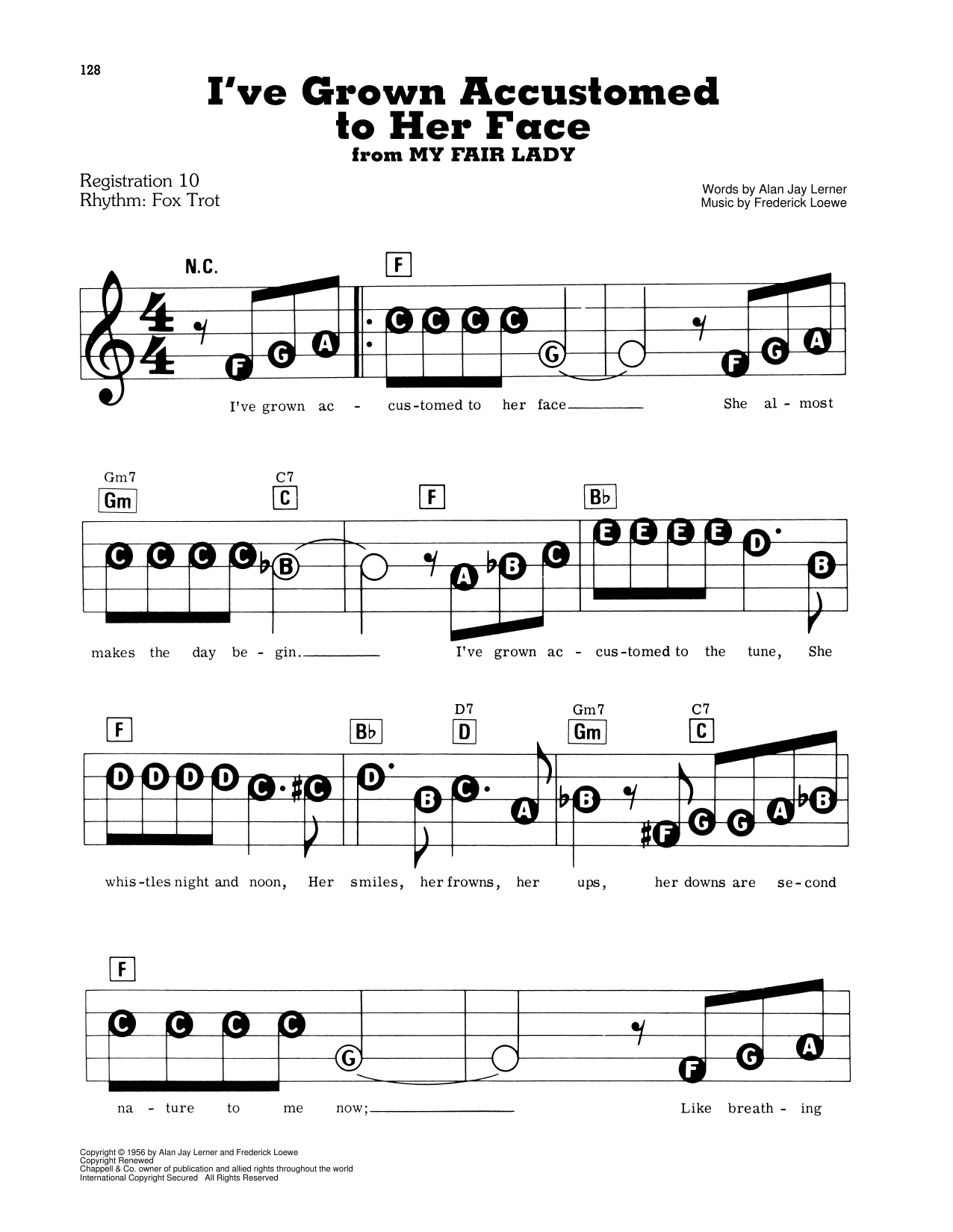
I've Grown Accustomed To Her Face (from My Fair Lady) Sheet Music Preview

I've Grown Accustomed To Her Face (from My Fair Lady): E-Z Play Today

Item: 35-DS00454209

Digital Download
$4.99
Description

I've Grown Accustomed To Her Face (from My Fair Lady): E-Z Play Today isn't in MakeMusic Cloud just yet...but it could be. Let us know you'd like to see it, and you'll help shape what comes next. In the meantime, start a free trial and dive into thousands of interactive titles your students can play along with today.

Sample Audio
No sample audio found.
Sample Video
Additional Details
Publisher: Hal Leonard
Page Count: 2
SKU: 35-DS00454209

More about this title

About the Creator: Frederick Loewe

Frederick Loewe composed the score for My Fair Lady in 1956, creating one of musical theater's most enduring catalogues. His melodies balance sophistication with memorability, proving that Broadway music could achieve both popular appeal and artistic depth. Working alongside Alan Jay Lerner's lyrics, Loewe crafted songs that reveal character through music, setting a standard for how theater composition should serve storytelling.

Why we love this

Students respond instantly to this song because it distills emotional maturity into a simple, singable melody. The E-Z Play Today arrangement makes it accessible without reducing what makes the song work: those gentle harmonic turns that suggest affection without sentimentality.

What to expect

Quiet revelation. The melody unfolds like someone recognizing something they've always known but never admitted. There's warmth without fussiness, affection without drama, and a sense of time passing reflected in the gentle harmonic progressions.

Who it's for

Pianists working through standard repertoire who want material that sounds sophisticated but doesn't demand conservatory technique. This suits students developing their touch and ability to shape melody with restraint, and teachers looking for accessible Broadway material that teaches genuine musicality.

How to get the most out of it

  • Let the melody breathe in the opening phrase. Resist the urge to rush; the strength comes from restraint and clarity of line.
  • Balance the accompaniment so it supports without overwhelming. The harmony is simple enough that every chord choice matters.
  • Shape the middle section with slightly more color and intensity, then return to the opening's intimacy for the final statement.
  • Pay attention to the lyrics even as an instrumentalist. The melody was written to serve those words, and that underlying sentiment should guide your phrasing.

How to use it

Pair this with other theater standards for a concert exploring how songs function both on stage and in recital. It works well as a bridge piece between classical study and more contemporary popular music, or as a closing number where its reflective quality can settle over an audience.

Skills your students will build

  • Shaping melodic phrases with harmonic awareness
  • Balancing accompaniment textures to support rather than dominate
  • Interpreting popular music with clarity and taste
  • Understanding how lyrical content informs instrumental interpretation

You May Also Like