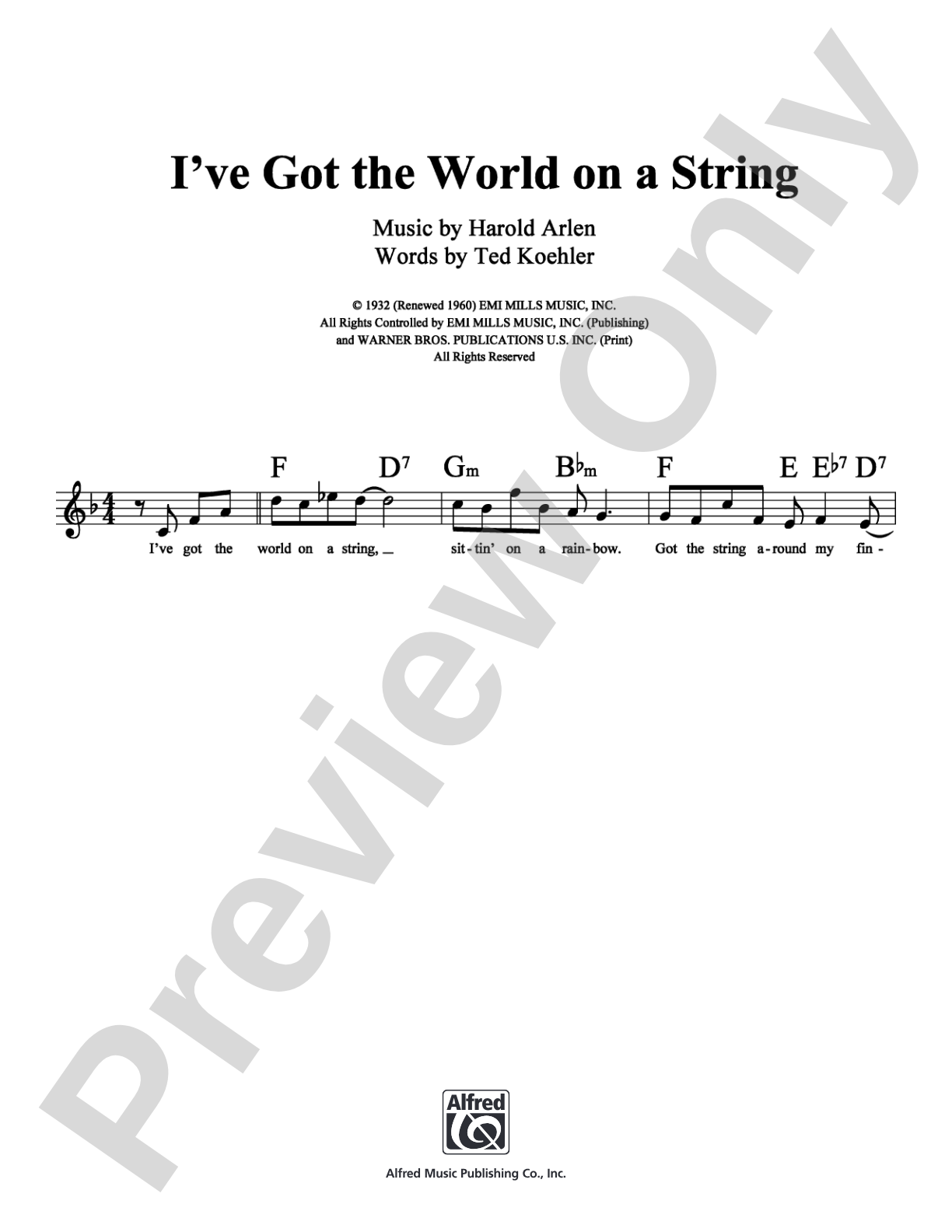
I've Got the World On A String: Lead Sheet Digital Sheet Music

I've Got the World On A String: Lead Sheet Digital Sheet Music

Harold Arlen, Bing Crosby, Cab Calloway, Frank Sinatra

Item: 00-PS-0002489

Digital Download
$1.99
Description

I've Got the World On A String: Lead Sheet Digital Sheet Music isn't in MakeMusic Cloud just yet...but it could be. Let us know you'd like to see it, and you'll help shape what comes next. In the meantime, start a free trial and dive into thousands of interactive titles your students can play along with today.

Sample Audio
No sample audio found.
Sample Video
Additional Details
SKU: 00-PS-0002489

More about this title

About the Artist: Bing Crosby

Bing Crosby (1903-1977) was an American singer and actor whose warm baritone and conversational phrasing defined popular music in the 1930s and 1940s. His interpretations of standards set the template for generations of jazz and popular singers, and his recordings remain essential listening for anyone studying vocal interpretation and swing-era phrasing.

Crosby's influence on music education extends beyond his own performances. His approach to melodic storytelling and rhythmic flexibility demonstrates how a soloist can shape a standard while respecting its harmonic foundation, making his recordings valuable references for jazz studies and vocal jazz instruction.

Why we love this

This standard has been recorded by nearly every major jazz and popular vocalist, giving your students multiple reference points for interpretation and phrasing. The straightforward lead sheet format lets pianists, guitarists, and instrumentalists focus on comping choices and solo development without the scaffolding of a fully notated arrangement. Programming it creates natural bridges between jazz history, standards repertoire, and ensemble work.

What to expect

Optimistic and swinging, with a melody that sits comfortably in the middle register and invites rhythmic reshaping. The harmonic movement is smooth and singable, creating a sense of ease and confidence that makes the tune feel both accessible and endlessly interpretable.

Who it's for

Jazz pianists and guitarists learning the standard repertoire, jazz combo players preparing lead sheets for small ensemble work, and vocalists building their foundational jazz song book. It also serves music students studying American songwriting and performers exploring how the same tune sounds across different interpretive traditions.

How to get the most out of it

  • Study recordings by Crosby, Sinatra, and Calloway to hear three distinctly different rhythmic approaches to the same melody; notice how each shapes the phrase differently without altering the core tune.
  • Lock in the harmonic rhythm early. The changes move predictably, giving you room to explore swing feel and melodic phrasing rather than wrestling with unfamiliar harmony.
  • Experiment with how much space you leave in the melody. The standard was written for singers, so pianists and instrumentalists often find their best sound by thinning out certain phrases rather than playing through every note.

How to use it

Pair this with a unit on standards interpretation, asking different students or ensembles to perform their own versions and discuss what changes across interpretations. It works equally well as a jazz combo feature, a vocal jazz recital selection, or a reference recording study in a jazz history or arrangement class.

Skills your students will build

  • Reading and interpreting lead sheet notation with chord symbols
  • Recognizing and responding to swing rhythms and swing feel
  • Analyzing melodic phrasing and how soloists reshape melody while keeping harmonic integrity
  • Understanding how the same standard supports multiple interpretive approaches
  • Building familiarity with essential American songbook repertoire

You May Also Like