
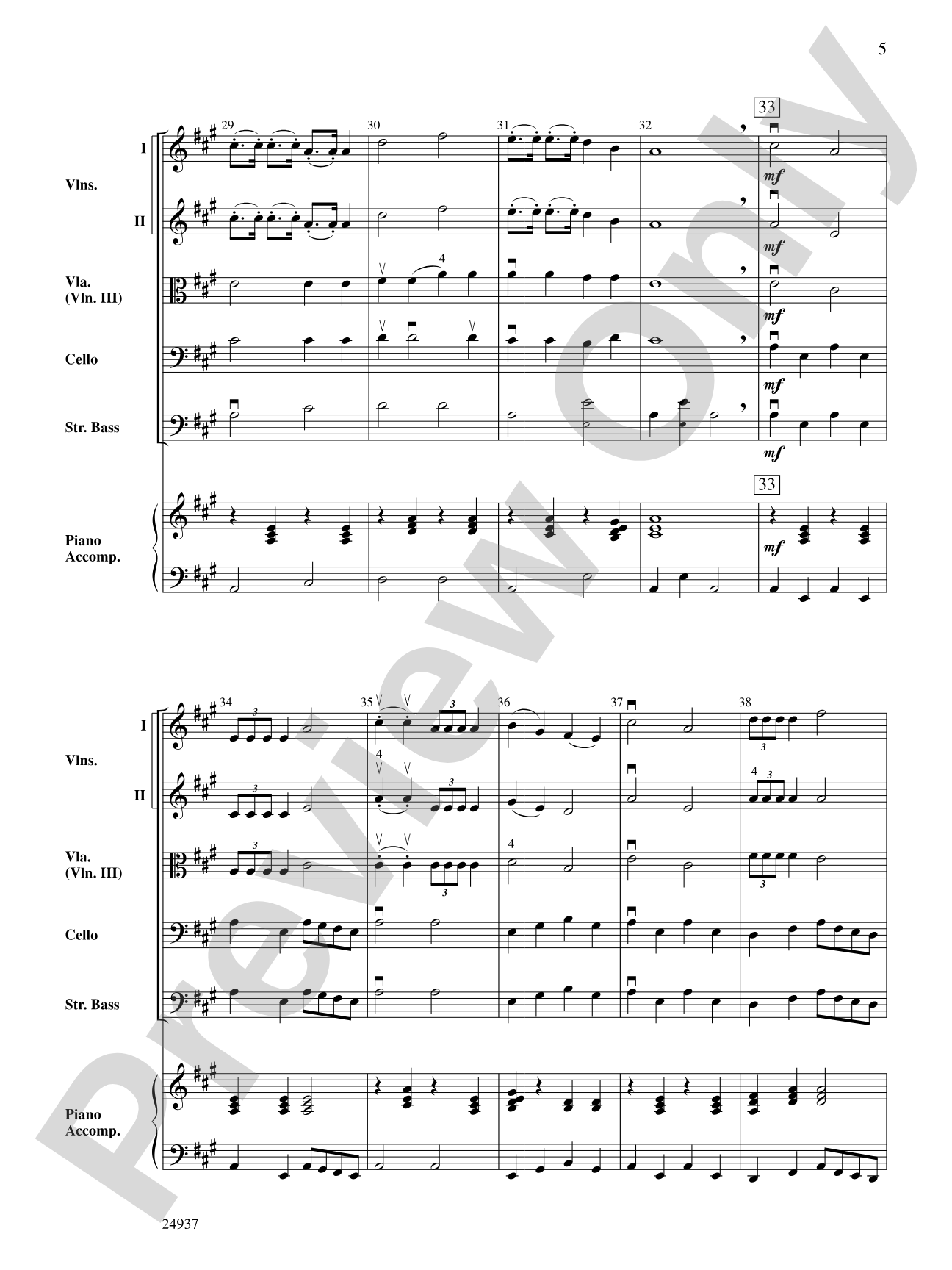
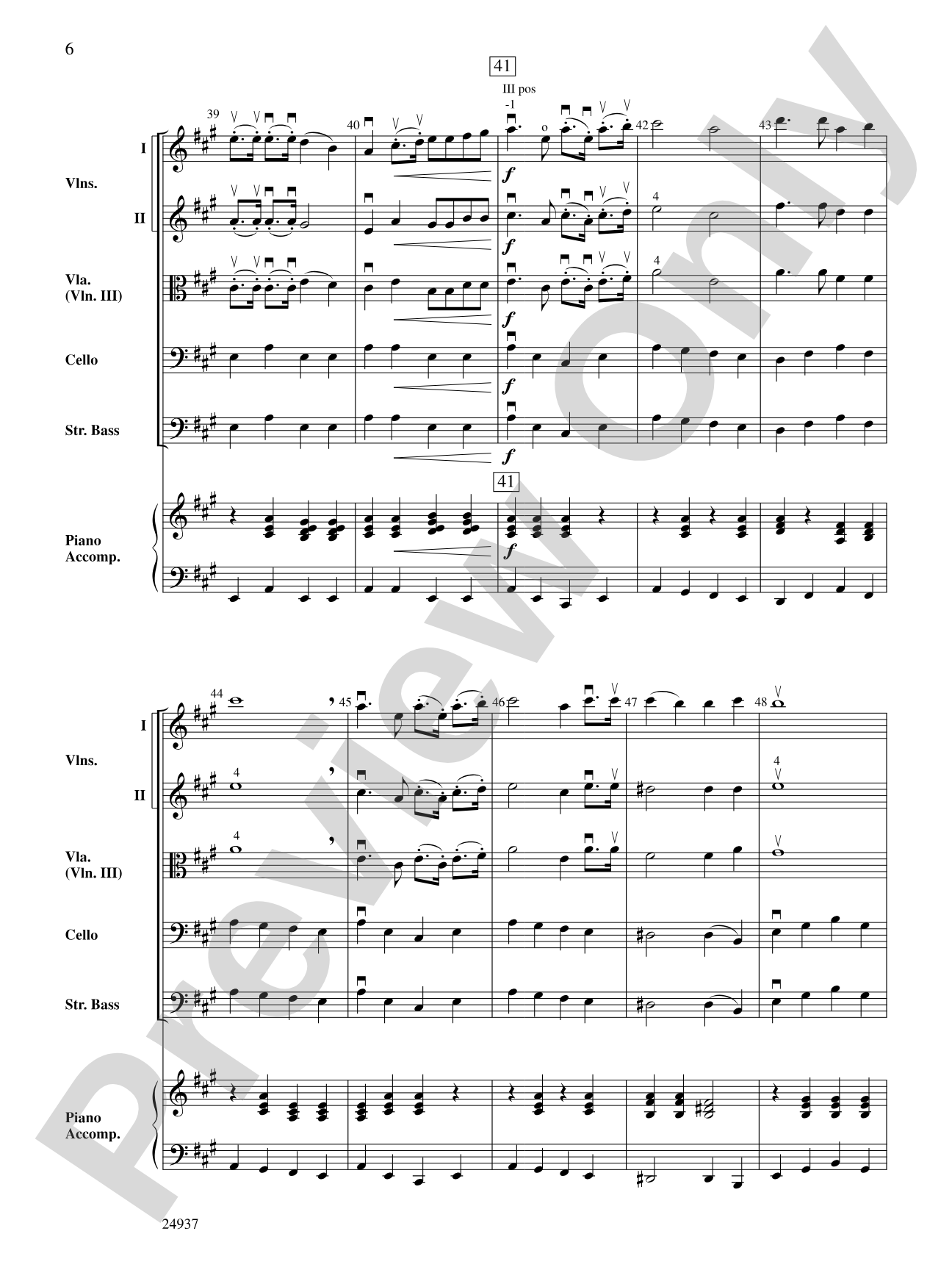
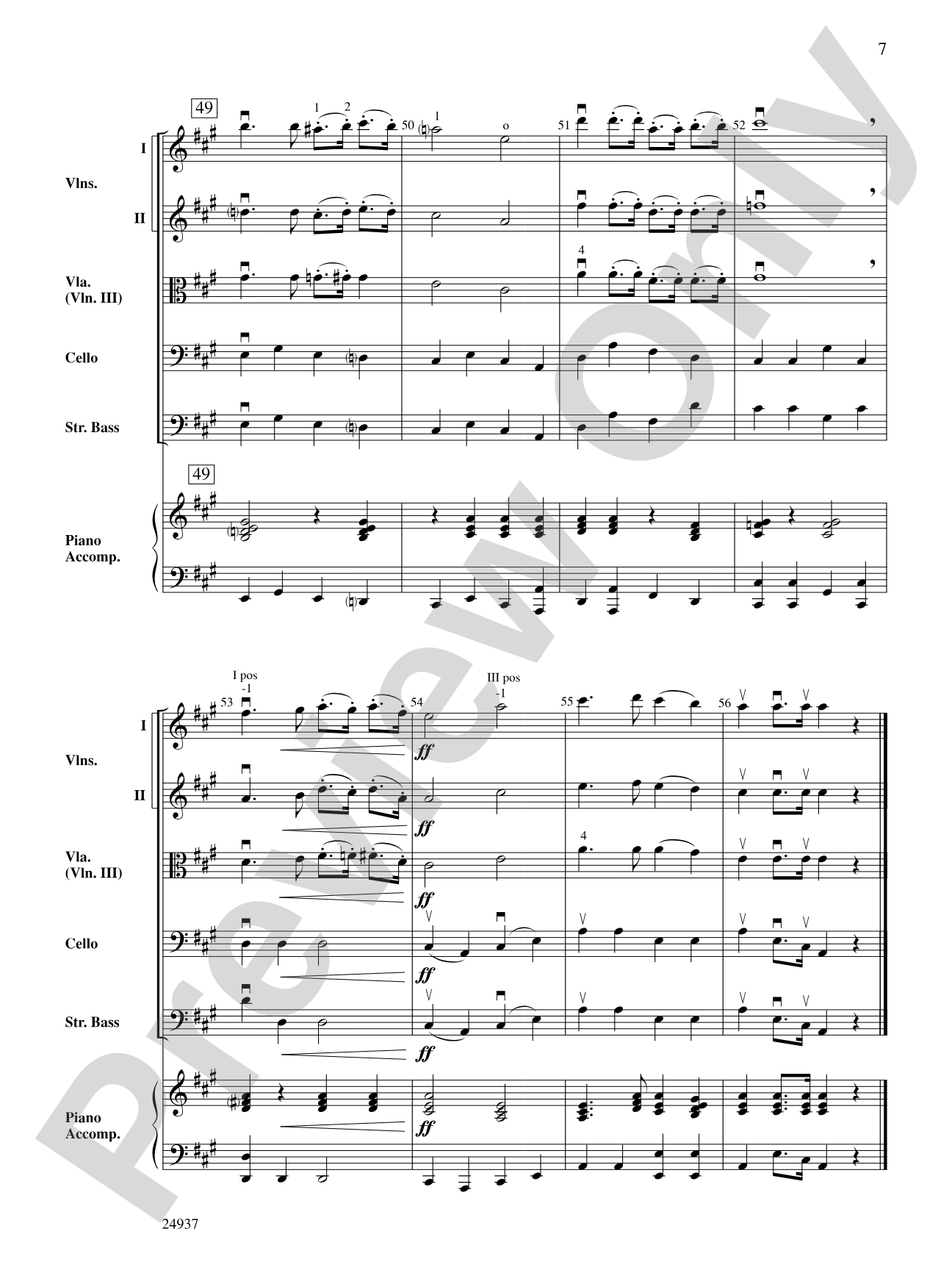


I've Been Working on the Railroad: String Orchestra Conductor Score & Parts
Traditional / arr. Edmund J. Siennicki
Grade: 2.5
Item: 00-PK-0000937

$42.00
Pickup currently not available
Buy Extra Parts (Digital PDF Download)
Parts Added to Cart!
Description
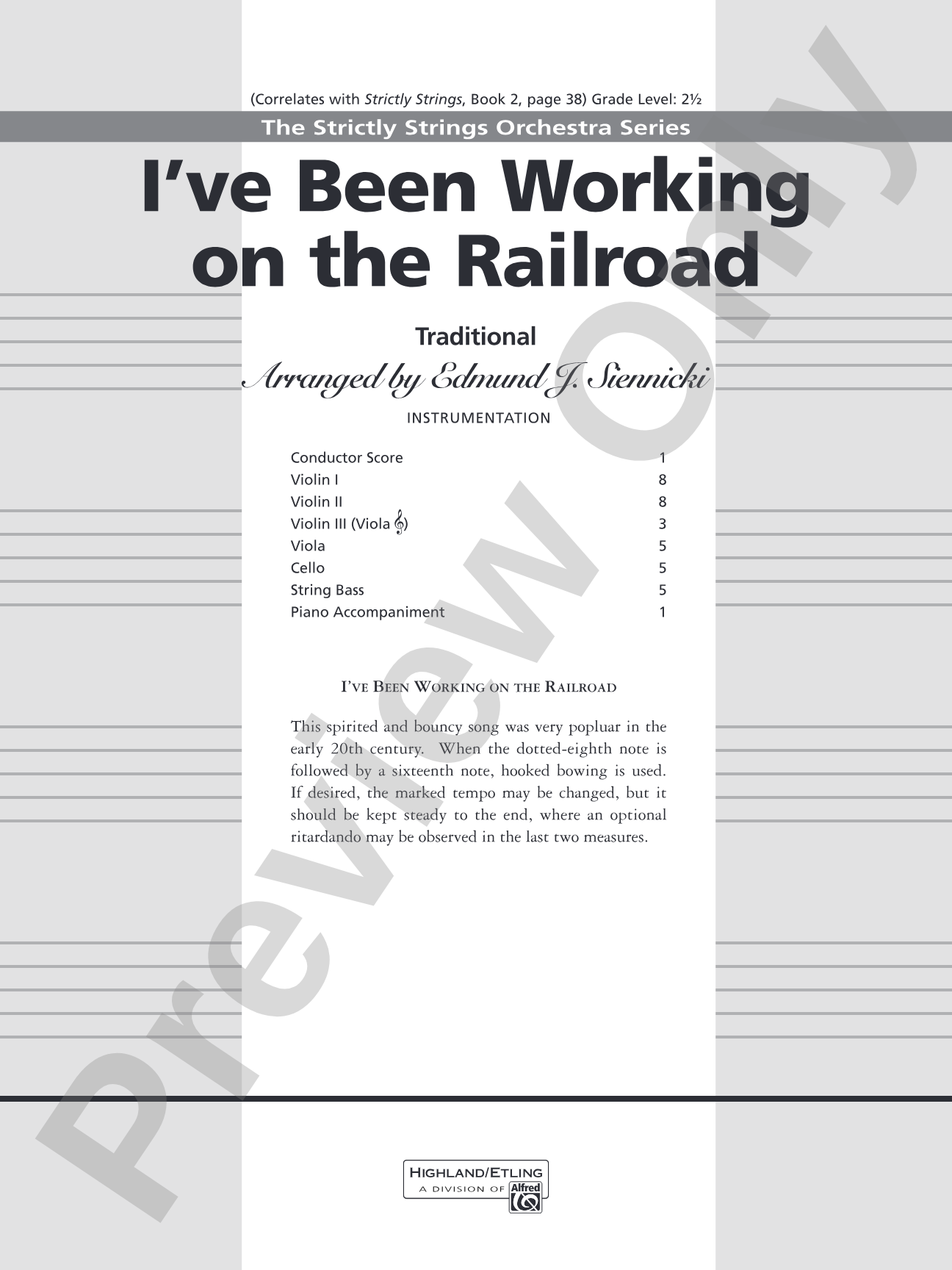
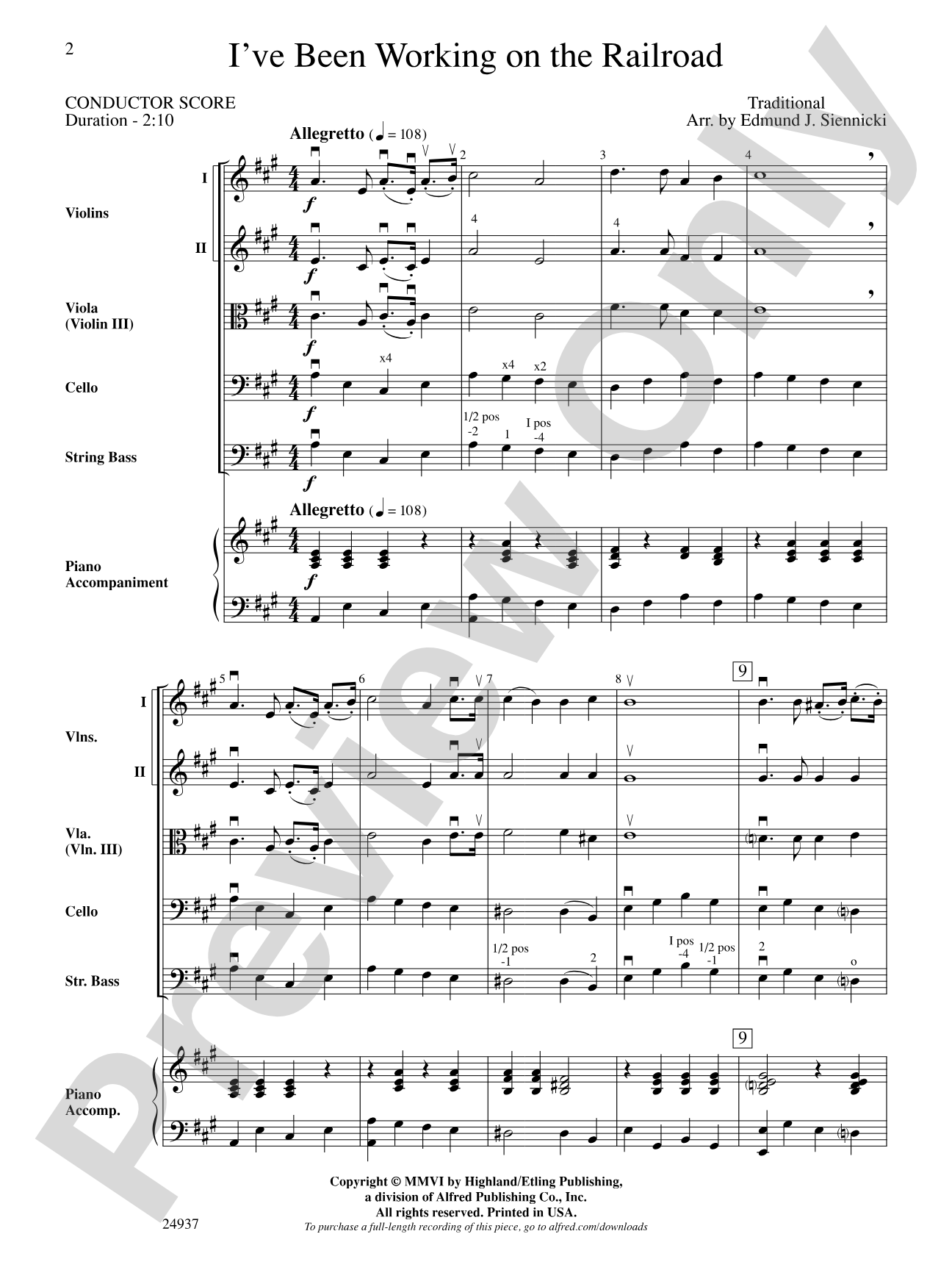
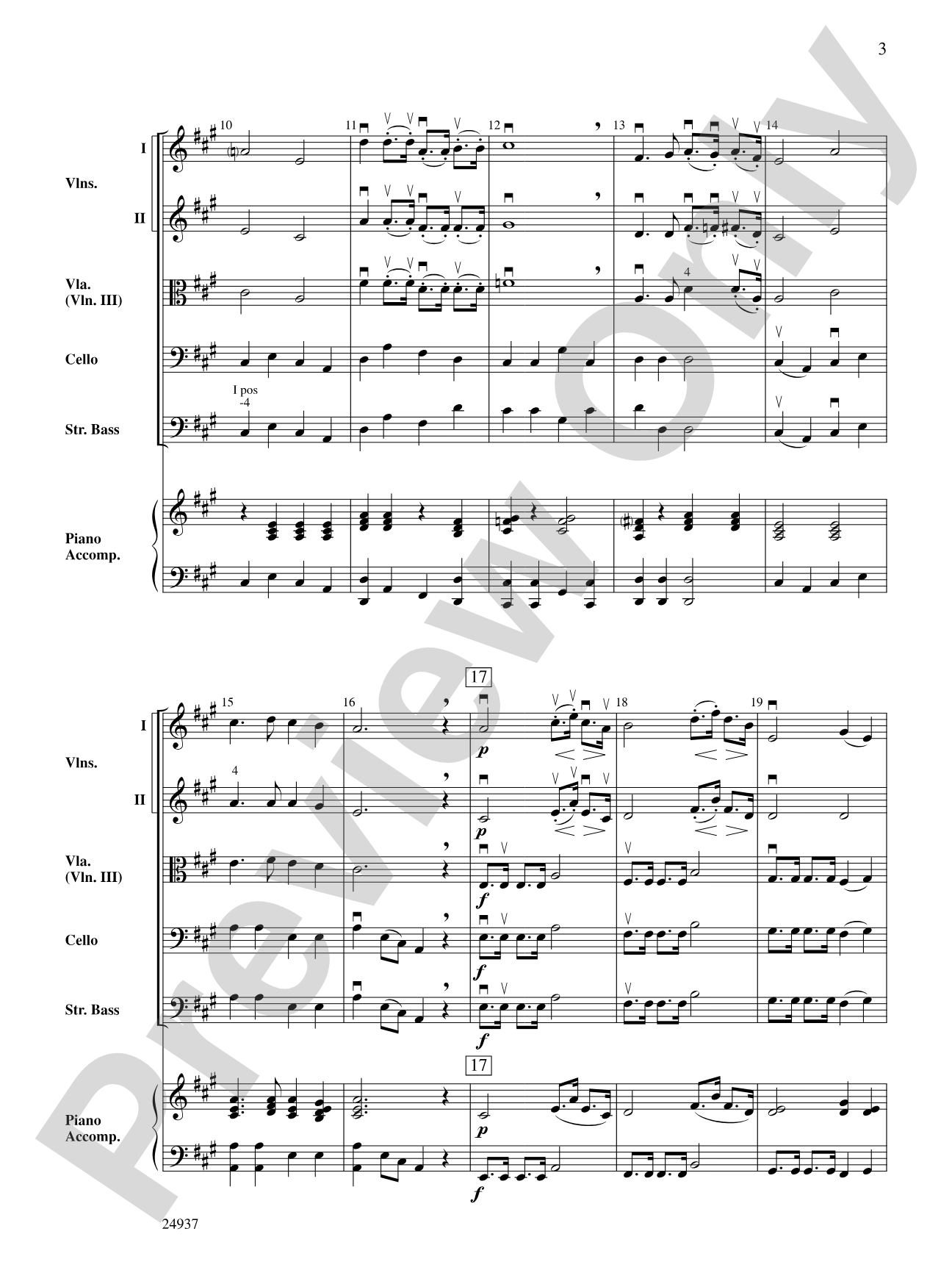
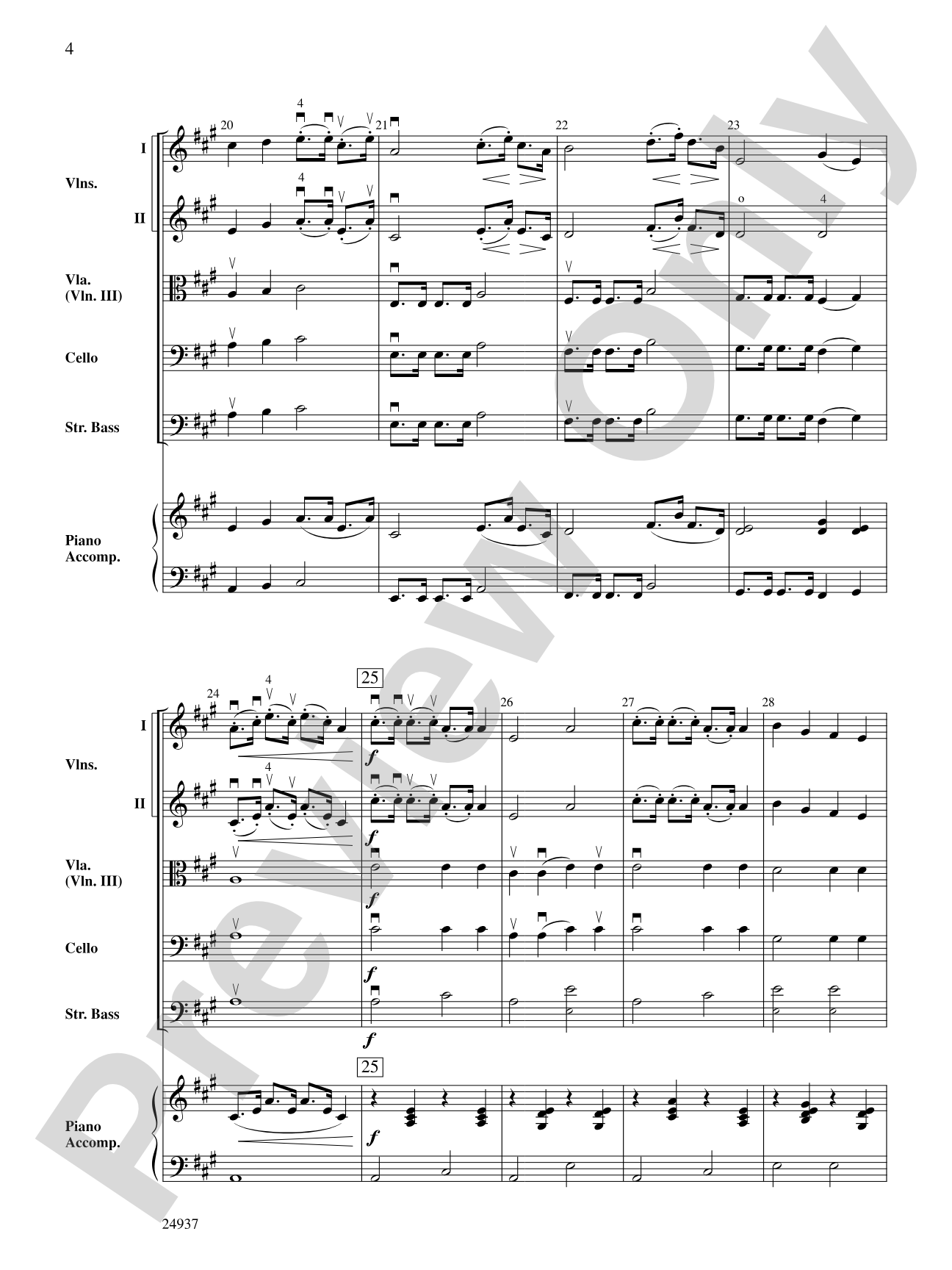
This song was very popular early in the 20th century. It is spirited and bouncy. Hooked bowing is used, along with other bowing. This occurs when the dotted eighth note is followed by a 16th note. The marked tempo can be changed, if desired. The tempo should be kept steady to the end. If a retard is desired for the last two measures -- OK!


Don't just read it, hear it, play along with it, and watch your students grow with it. In MakeMusic Cloud, I've Been Working on the Railroad: String Orchestra Conductor Score & Parts comes alive with professional accompaniment, adjustable tempo, and built-in practice tools that turn solo practice into real progress.
Open in the Player
Jump straight in and assign it today.
Start Your Free Trial
Open this title and explore the full library in minutes.
Sample Audio
1
Audio File
--:--
0:00
0:00
Sample Video
No sample videos found.
Additional Details
Series:
Highland/Etling Strictly Strings
Publisher:
Alfred Music
Page Count:
72
SKU:
00-PK-0000937
More about this title
About the Arranger: Edmund J. Siennicki
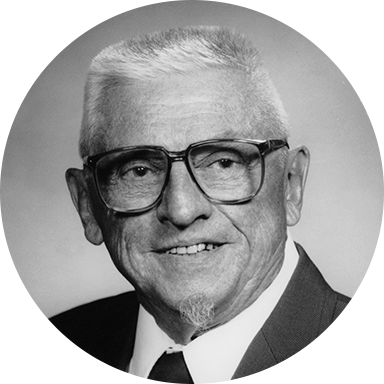
Edmund J. Siennicki (born 1920) grew up in Cleveland, Ohio, where he had a formative encounter with pianist Ignacy Jan Paderewski at age twelve that shaped his artistic direction. He earned his Bachelor's degree from Kent State University, where he composed the fight song still performed at football games today, and later completed his MA at Teachers College, Columbia University studying composition with Herbert Elwell and electronic music with Sergio Barroso.
Siennicki built a distinguished career as both a composer and educator, with roughly 200 published compositions to his name and multiple prizes from National School Orchestra composition contests. He served on the faculty at Michigan and Kent State University while also teaching in Cleveland's junior high schools, and spent two residencies composing at the MacDowell Colony. For the past two decades he has received annual recognition from ASCAP, continuing to compose, visit schools, and lead clinics.
Why we love this
Siennicki captures the folk energy of this well-known tune while building genuine string technique. The hooked bowing patterns (dotted eighth followed by sixteenth) sit naturally under young players' hands, and his setting allows for flexible tempo choices without sacrificing musical integrity. It's a piece that sounds spirited and accomplished without requiring advanced shifting or position work.
What to expect
Spirited and bouncy, with the infectious lightness of early twentieth-century Americana. The steady pulse and clean rhythmic figure create forward motion that feels energetic without being taxing, and the familiar melody gives students the confidence that comes from playing music they recognize.
Who it's for
String orchestras at the Grade 2 to 2.5 level looking for accessible folk repertoire with real bow technique content. Directors seeking a piece that rehearses rhythmic precision and string articulation while delivering instant musical satisfaction.
How to get the most out of it
- Lock the hooked bowings early in sectional rehearsals. The dotted eighth-sixteenth figure is straightforward rhythmically but requires clean articulation to keep the bouncy character intact.
- Establish a steady tempo from measure one and maintain it all the way through. If you want a gentle ritardando in the final two measures, Siennicki welcomes it; just communicate the choice clearly to all sections.
- Balance the melodic line between first violins and supporting voices so the familiar tune shines without the accompaniment disappearing.
How to use it
Program this as a concert opener or a bridge between longer classical works, where it brings energy and accessibility to audiences. It works equally well as a home concert piece for younger students or as part of a family-friendly pops-style program.
Skills your students will build
- Hooked bowing technique (dotted eighth and sixteenth-note patterns)
- Steady tempo maintenance across full arrangements
- Rhythmic precision and clean articulation in fast-moving figures
- Balanced ensemble playing across multiple voice parts
- Stylistic interpretation of folk material