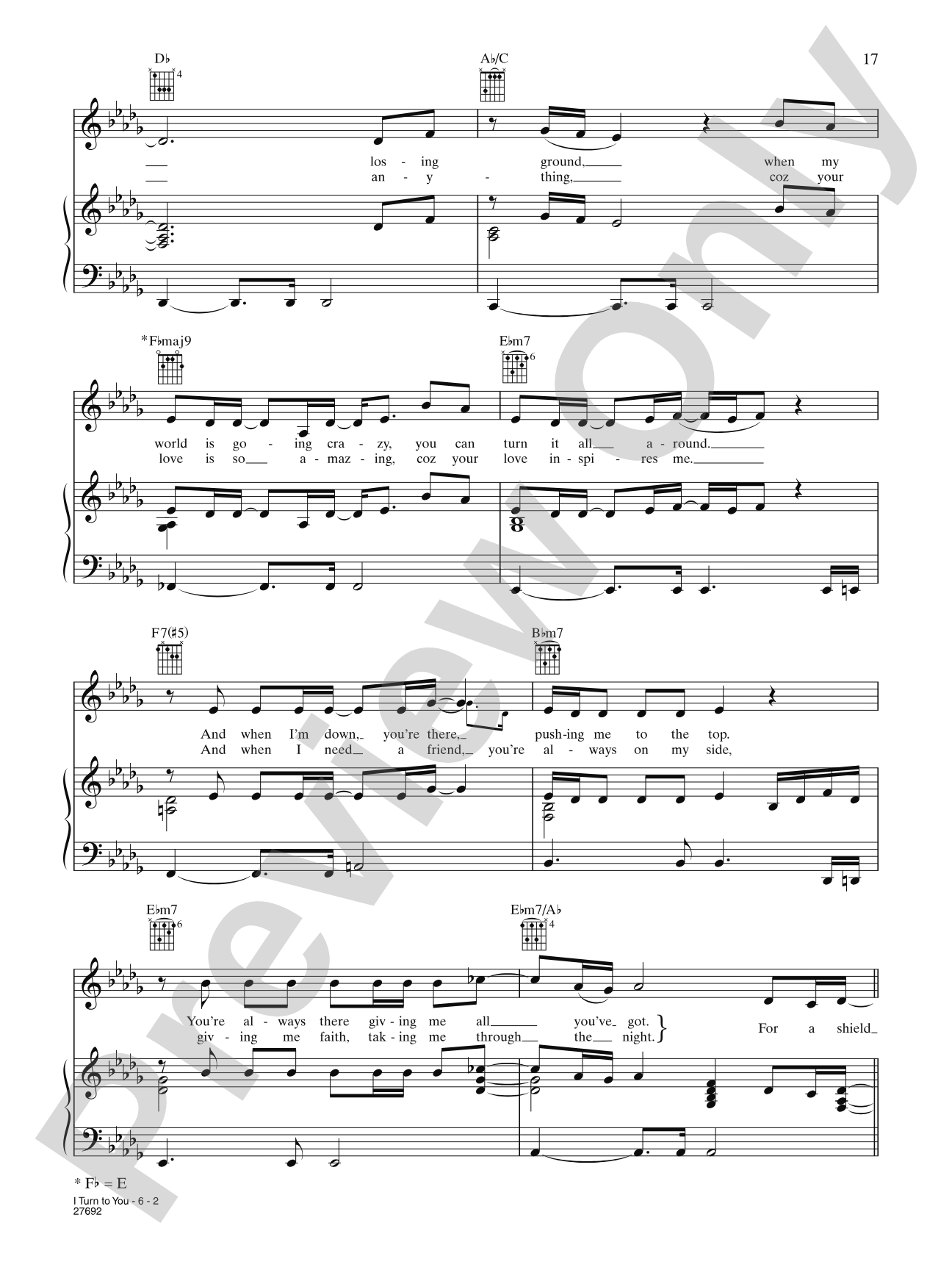
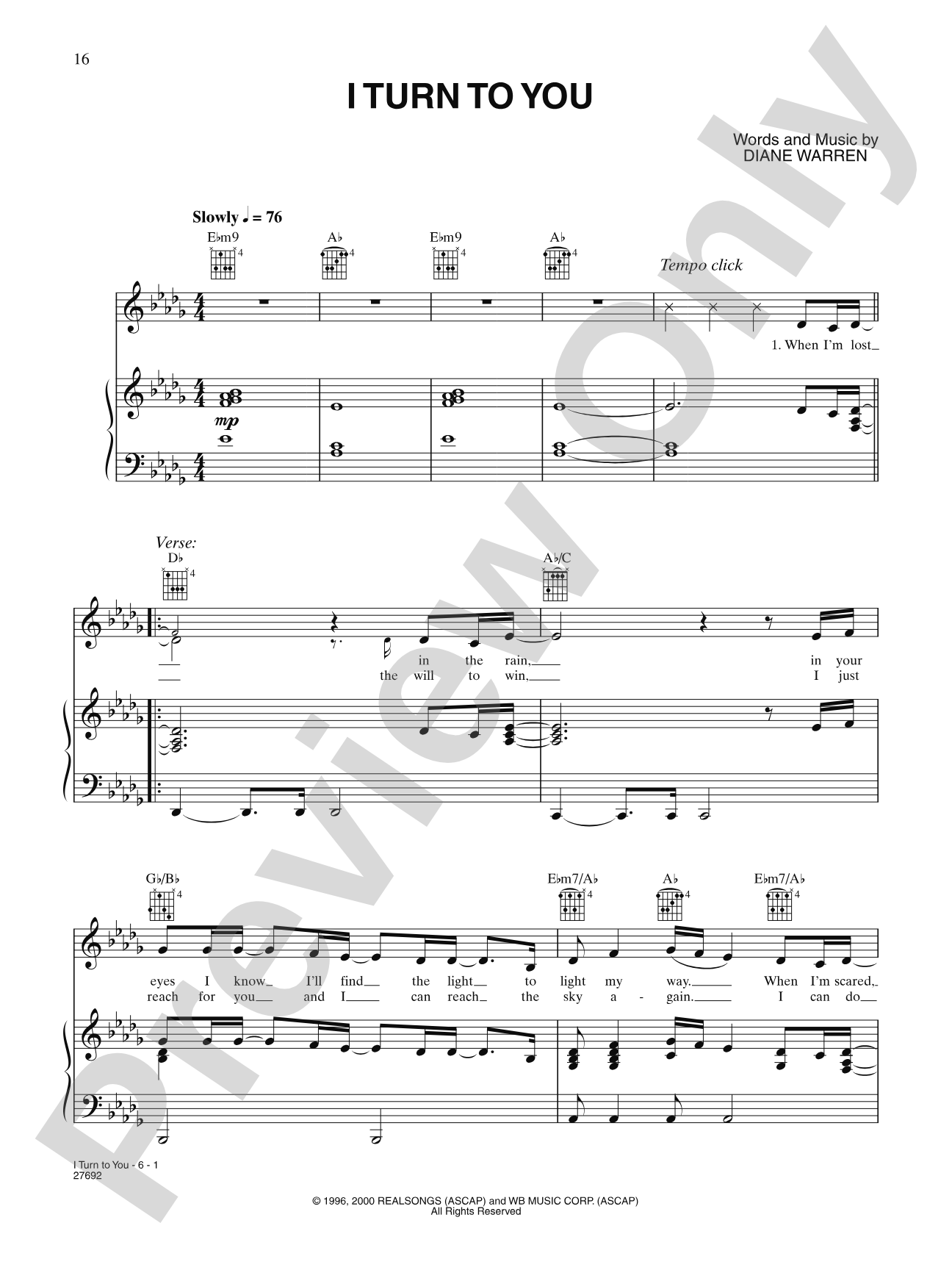
I Turn To You Sheet Music Preview

I Turn To You: Piano/Vocal/Chords

Item: 00-PSP-000224

Digital Download
$5.99
Description
Ten years of sheet music bestsellers from the world's biggest pop superstars! This book contains more than 300 pages of top hits. Titles: 21 Guns (Green Day) * Almost Lover (A Fine Frenzy) * Chariot (Gavin DeGraw) * Crush (David Archuleta) * Haven't Met You Yet (Michael Bublé) * Hey There Delilah (Plain White T's) * Hips Don't Lie (Shakira) * Hot N Cold (Katy Perry) * Inside Your Heaven (Carrie Underwood) * Whatever You Like (T.I.) * Wild Horses (Susan Boyle) * and more.

I Turn To You: Piano/Vocal/Chords isn't in MakeMusic Cloud just yet...but it could be. Let us know you'd like to see it, and you'll help shape what comes next. In the meantime, start a free trial and dive into thousands of interactive titles your students can play along with today.

Sample Audio
No sample audio found.
Sample Video
Additional Details
Series: 2000–2009 Best
Publisher: Alfred Music
Page Count: 320
SKU: 00-PSP-000224

More about this title

About the Composer: Dianne Warren

Dianne Warren is one of the most commercially successful songwriters in modern pop music, with a catalog spanning multiple decades and genres. Her compositions have earned Grammy nominations and platinum certifications, establishing her as a defining voice in contemporary pop songwriting.

Why we love this

This collection captures a full decade of radio hits in one accessible volume, giving pianists and vocalists immediate access to songs their audiences actually know and love. The mix of artists and styles means there's something for every performer, whether you're building a setlist for a recital or teaching a student who wants to work with current material.

What to expect

These songs carry the emotional directness and melodic memorability that defined 2000s pop culture. Whether you're playing an upbeat anthem, a tender ballad, or a rhythmically driven groove, the material speaks in the language of contemporary songwriting: clear hooks, relatable lyrics, and production-informed arrangements that feel immediate and alive.

Who it's for

Pianists and guitarists who want to perform contemporary pop hits in recitals, church services, or private studio settings, as well as vocalists seeking sheet music for songs that matter to modern audiences. This book is equally valuable for music students exploring how to interpret pop material and for performers building accessible, engaging setlists.

How to get the most out of it

  • Study the recorded versions of these songs to internalize the melodic phrasing and production details that made them hits; the sheet music captures the core melody and harmony, but the arrangement in your voice or on your instrument should reflect the emotional arc of the original.
  • Pay attention to the chord voicings provided, especially in contemporary pop where guitar and keyboard textures shape the song's identity; experiment with how you voice these chords to match the energy of each track.
  • Use the chord charts as a springboard for improvisation if you're accompanying yourself or another vocalist; pop arrangements are often more flexible than classical scores, and understanding the harmonic structure lets you adapt to different ensemble sizes or instrumentation.
  • Approach dynamics and pacing with the production style of each song in mind; some tracks thrive on restraint and intimacy, while others need the full energy of the arrangement to land effectively.

How to use it

Weave these songs into a recital alongside art songs, classical repertoire, or other contemporary material to create programming that connects with listeners across generations. Many of these tracks work beautifully as solo features in ensemble concerts, and they're ideal for student showcases or informal performances where accessibility and recognition matter.

Skills your students will build

  • Reading and interpreting contemporary pop chord progressions and voicings
  • Balancing melody, harmony, and rhythm in arrangements designed for small ensembles or solo performance
  • Adapting interpretation to match the production aesthetic and emotional character of each song
  • Sight-reading from lead sheets and chord charts with confidence
  • Understanding how popular music differs from classical repertoire in phrasing, dynamics, and stylistic delivery

You May Also Like