
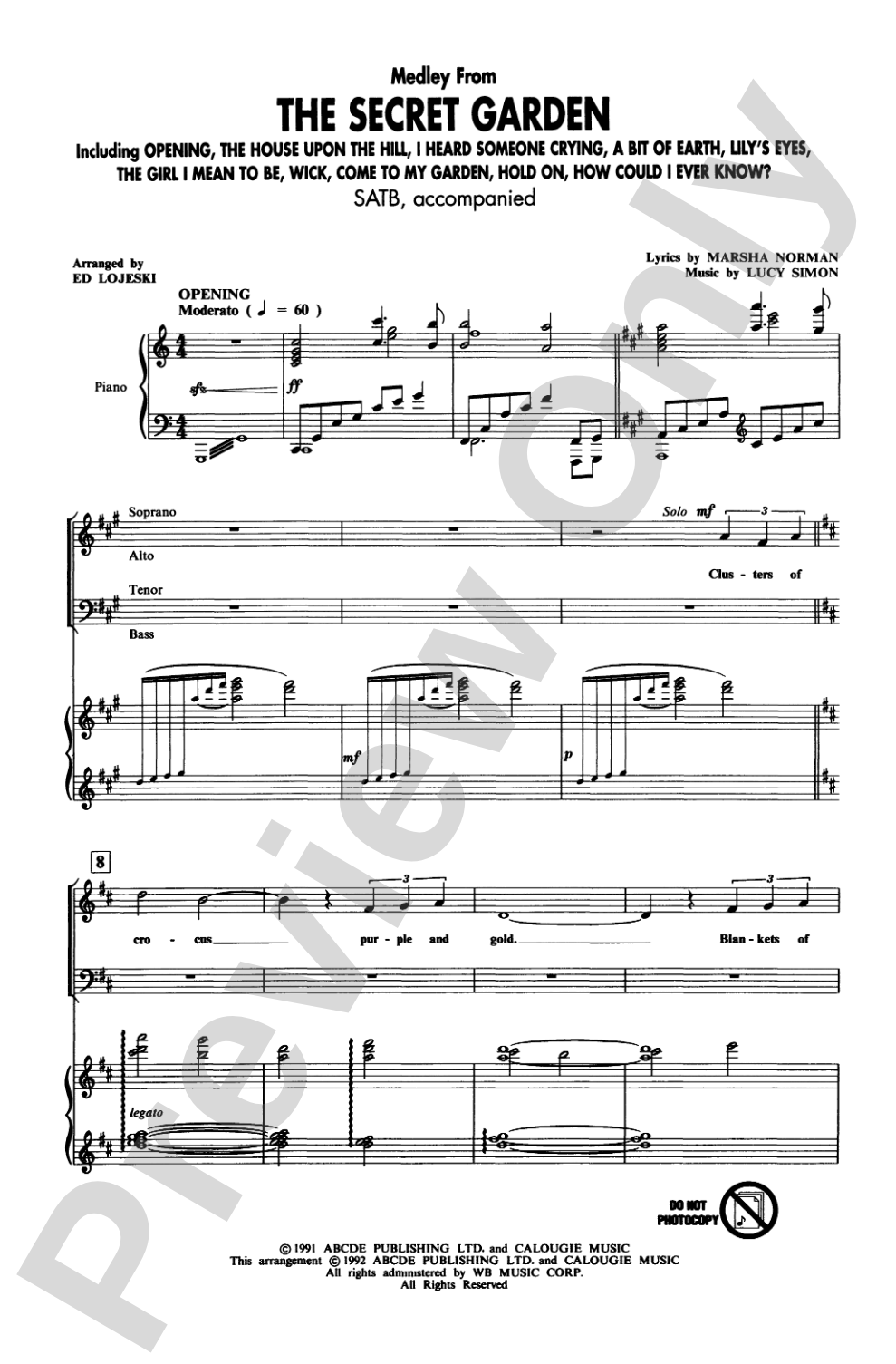
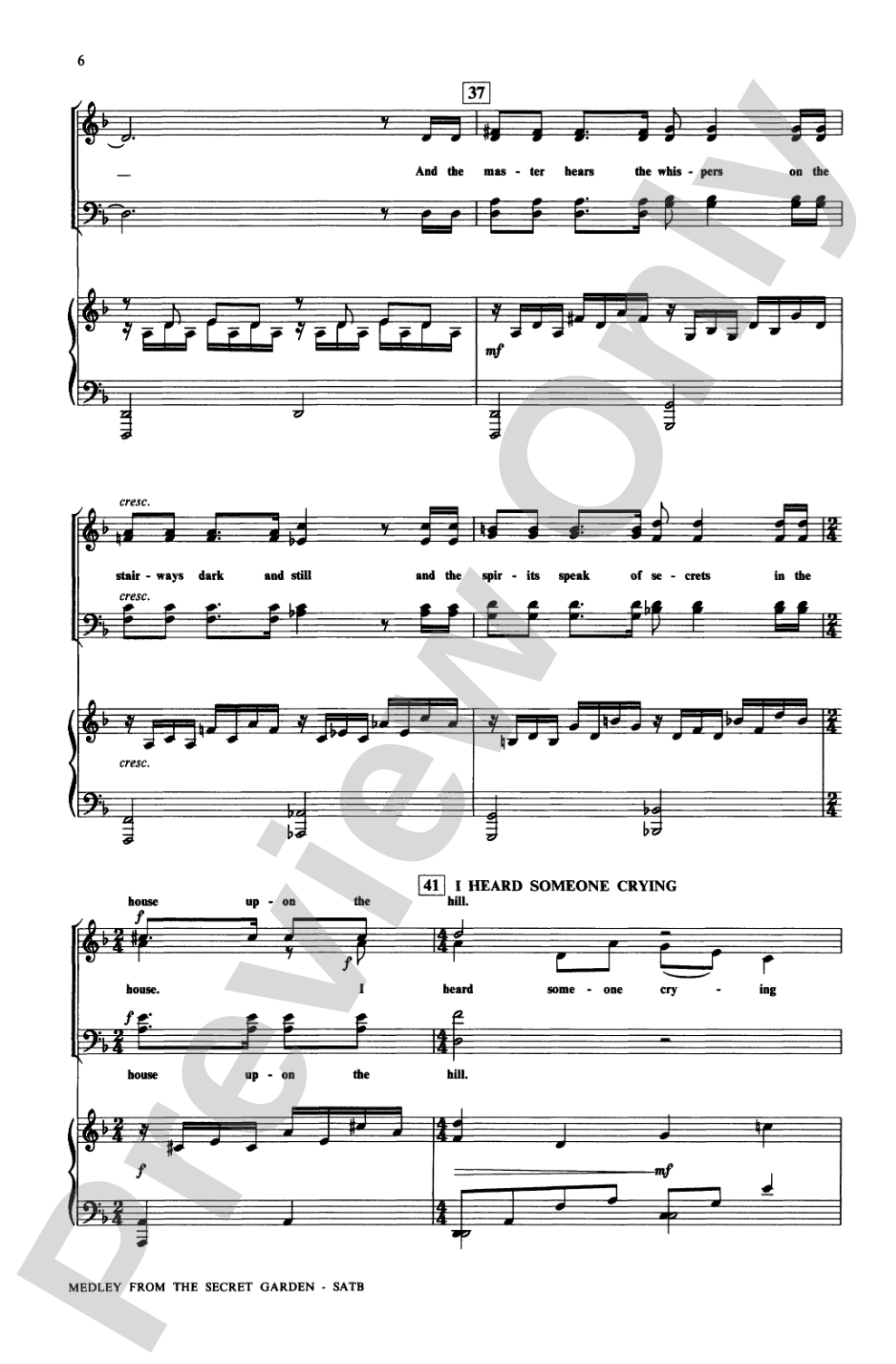
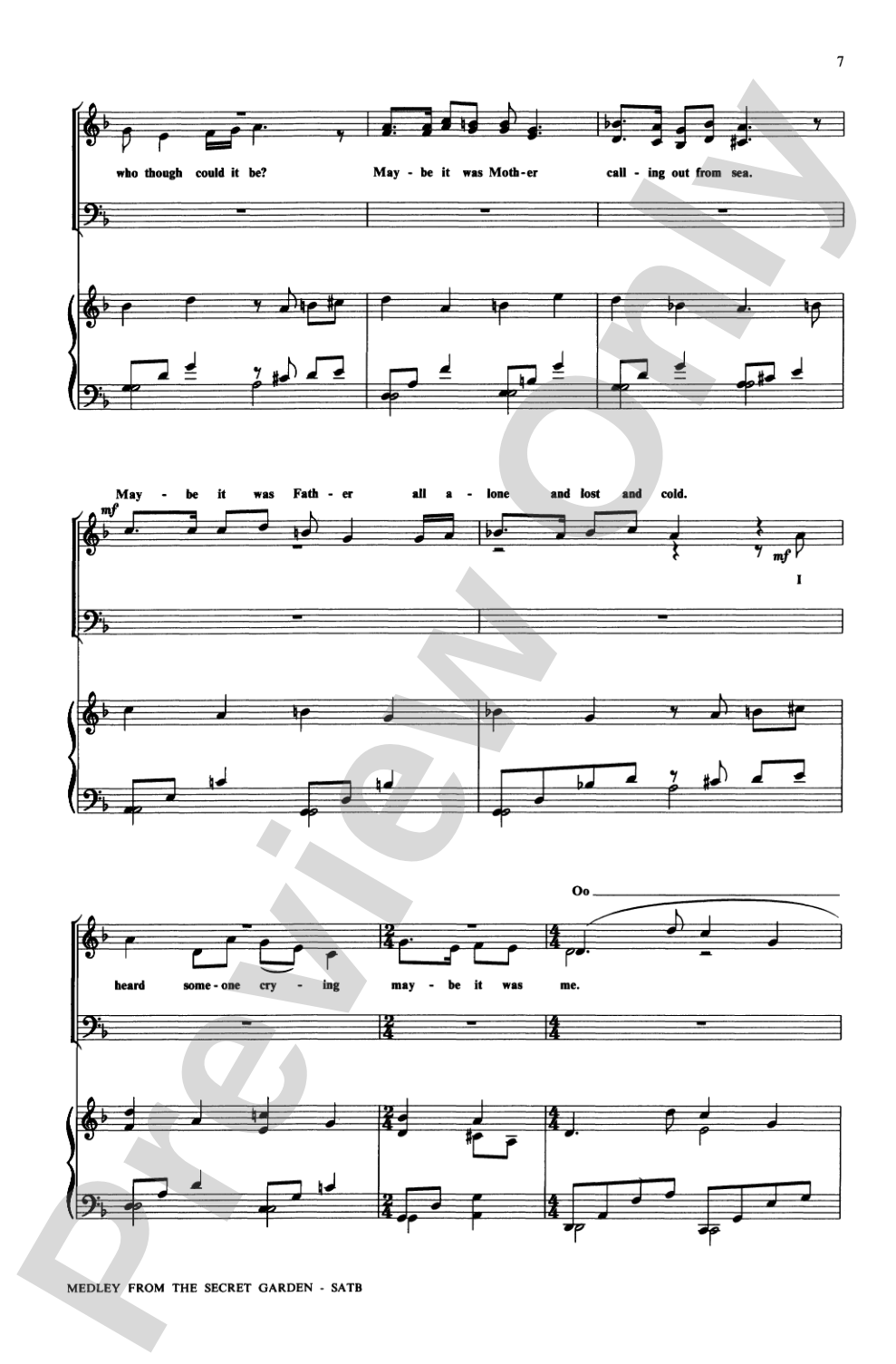
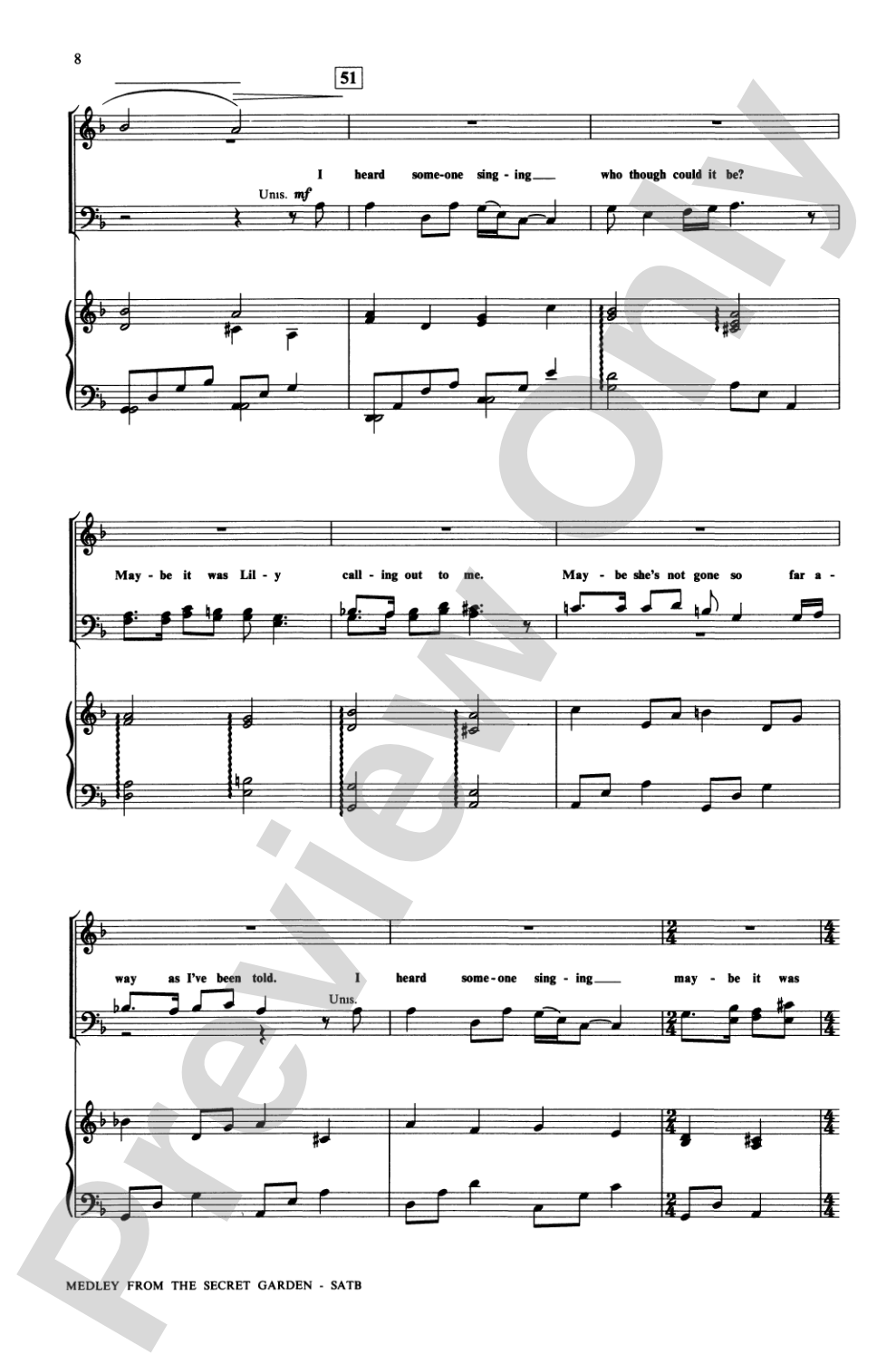
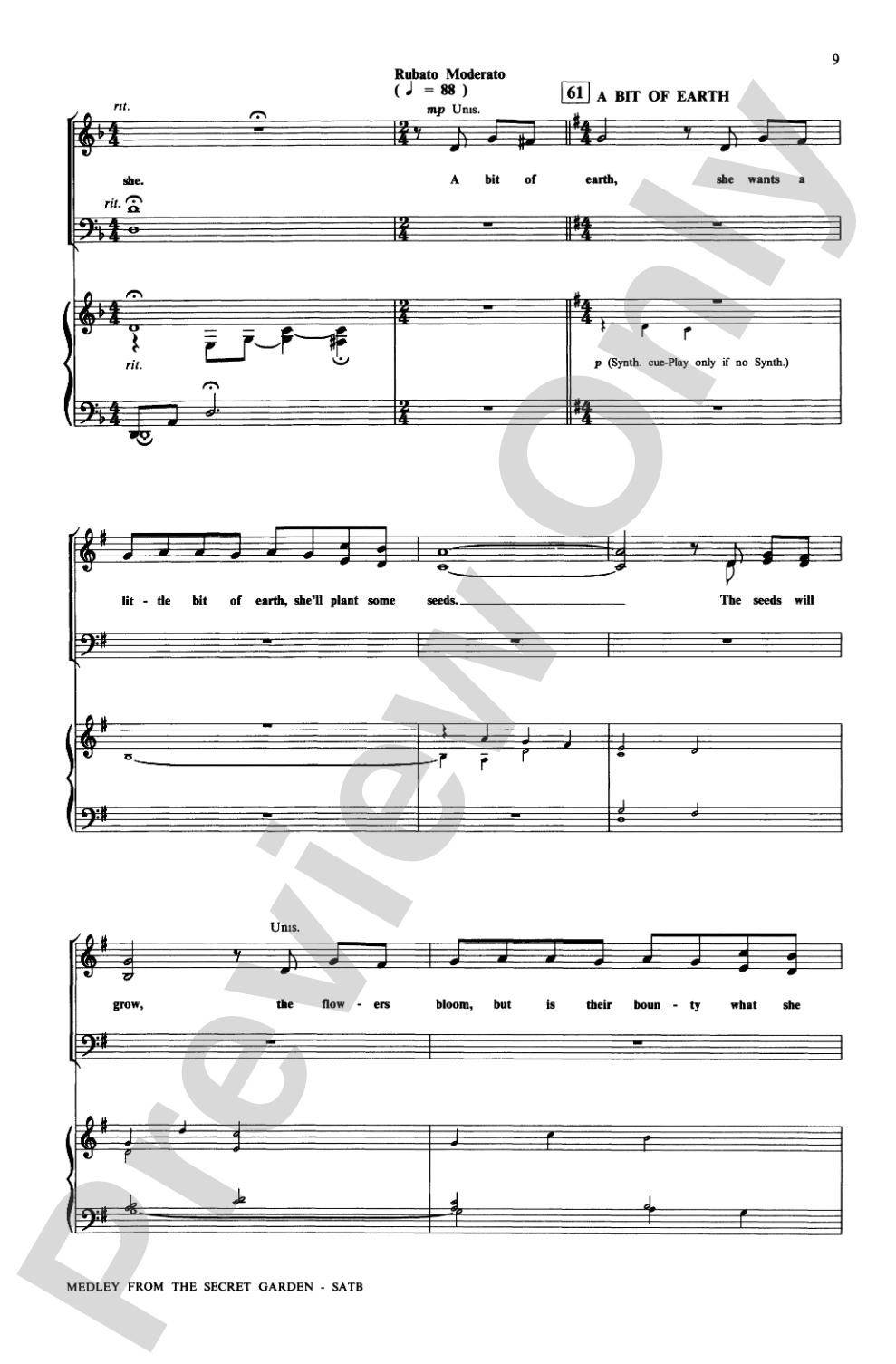

The Secret Garden, Medley from: SATB Choral Octavo
Featuring: Opening / The House Upon the Hill / I Heard Someone Crying / A Bit of Earth / Lily's Eyes / The Girl I Mean to Be / Wick / Come to My Garden / Hold On / How Could I Ever Know?
By Marsha Norman and Lucy Simon / arr. Ed Lojeski
Item: 00-PO-0003106

$4.95
Minimum order quantity: 20 copies
Pickup currently not available
Related Items
The Secret Garden, Medley from: SATB Choral Octavo |
$4.95
|
View |
Description
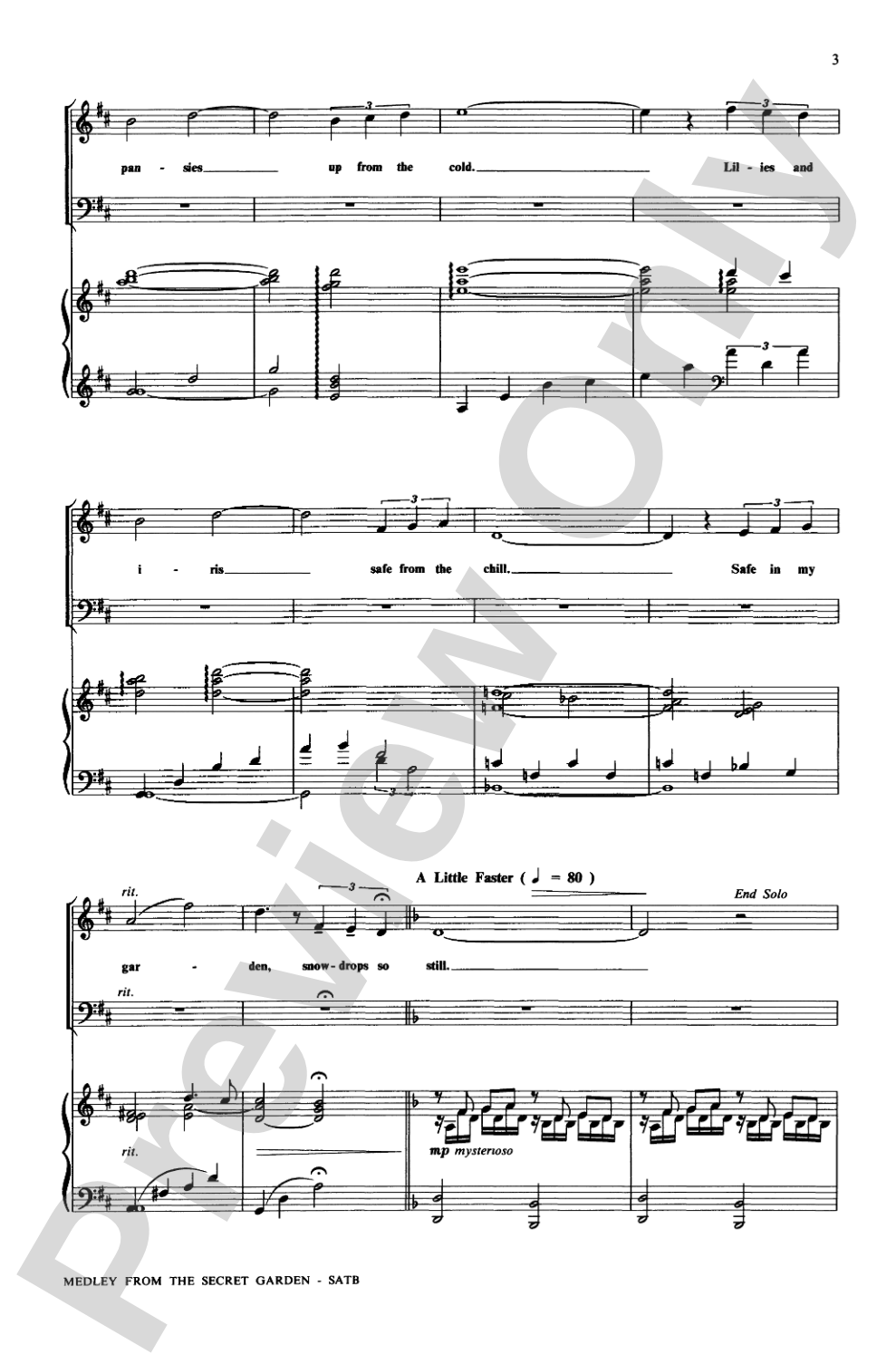
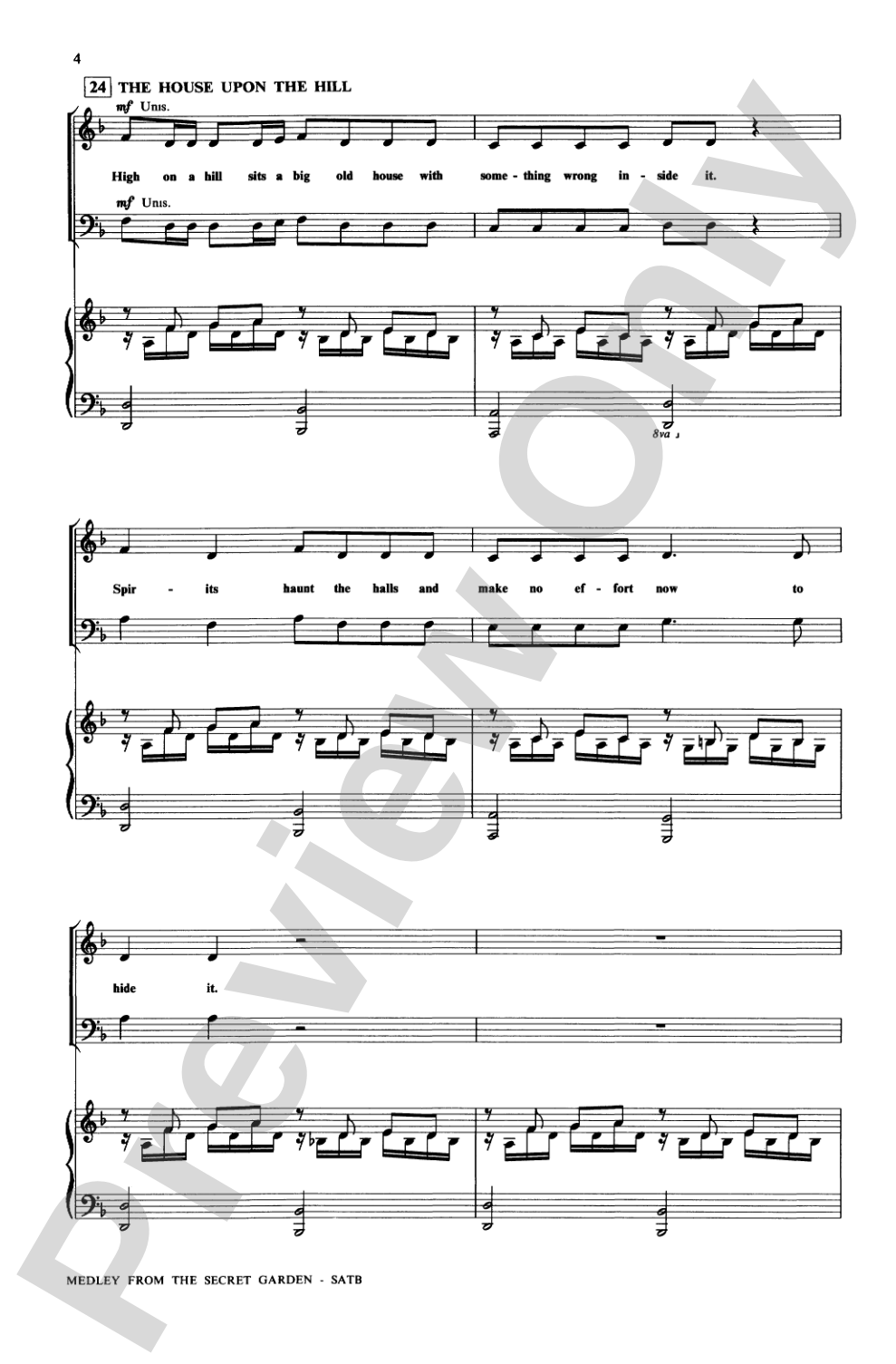
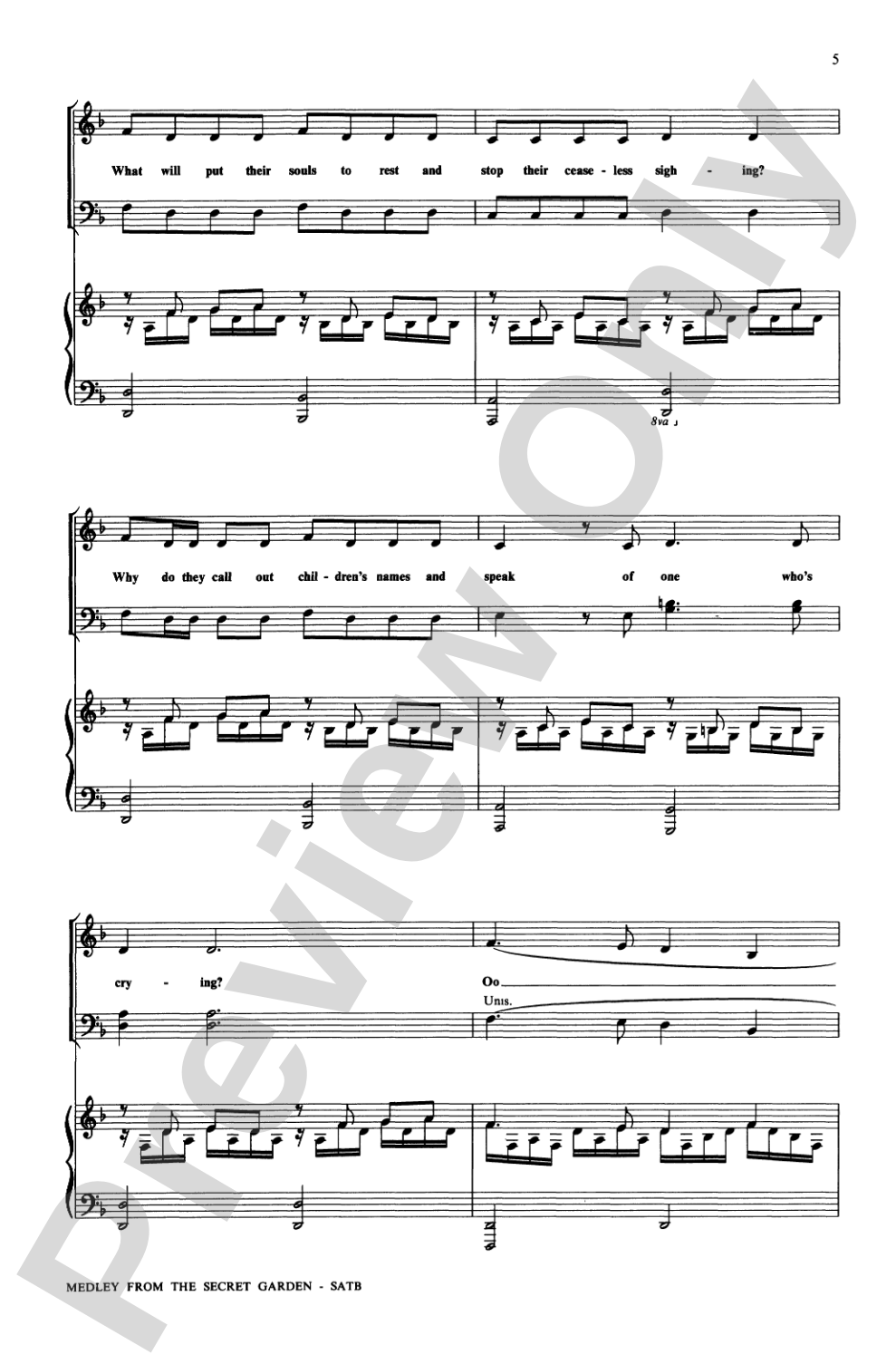
This medley from the Broadway production of The Secret Garden includes: "Opening," "The House Upon the Hill," "I Heard Someone Crying," "A Bit of Earth," "Lily's Eyes," "The Girl I Meant to Be," "Wick," "Come to My Garden," "Hold On," "How Could I Ever Know?"


Don't just read it, hear it, play along with it, and watch your students grow with it. In MakeMusic Cloud, The Secret Garden, Medley from: SATB Choral Octavo comes alive with professional accompaniment, adjustable tempo, and built-in practice tools that turn solo practice into real progress.
Open in the Player
Jump straight in and assign it today.
Start Your Free Trial
Open this title and explore the full library in minutes.
Sample Audio
No sample audio found.
Sample Video
No sample videos found.
Additional Details
Series:
Alfred Archive Edition: Alfred Pop Choral Series
Publisher:
Alfred Music
Page Count:
40
SKU:
00-PO-0003106
More about this title
About the Composer: Marsha Norman
Marsha Norman is a Pulitzer Prize-winning playwright whose work spans theater, film, and musical theater. She co-wrote the book and lyrics for The Secret Garden with composer Lucy Simon, creating one of Broadway's most beloved family musicals. Her gift for emotional storytelling and character-driven drama shaped the score into music that resonates deeply with audiences of all ages.
Norman's approach to musical theater emphasizes lyrical clarity and emotional authenticity. The Secret Garden showcases her ability to craft moments of quiet introspection alongside soaring ensemble passages, giving singers meaningful material that demands both vocal control and dramatic sensitivity.
Why we love this
This medley captures the emotional heart of The Secret Garden without requiring elaborate staging or principal soloists. Lojeski's arrangement gives every voice part genuine musical interest, and the progression through ten songs lets your choir move seamlessly between intimate moments and expansive choral climaxes, making it equally rewarding in concert and in context.
What to expect
Moving between hope and longing, mystery and discovery. The score carries the magical, slightly wistful quality of the show itself, with moments of pure joy balanced against deeper emotional searching. Singing this medley feels like walking through a hidden garden with others, where every voice finds both solitude and belonging.
Who it's for
Intermediate to advanced SATB choirs looking for engaging Broadway repertoire that tells a cohesive story without demanding a full musical production. This medley works for choirs comfortable with 40 pages of material, moderate range demands, and the interpretive flexibility that musical theater requires.
How to get the most out of it
- Establish clear character for each section before rehearsing the notes. "Opening" sets wonder; "The House Upon the Hill" carries mystery; "Hold On" demands driving urgency. The music will lock in faster when singers understand the emotional arc.
- Balance the solo lines that emerge within the SATB texture. These moments often carry the narrative thread, so ensure soloists project over the supporting harmonies without sacrificing blend.
- Shape the transitions between songs deliberately. Brief pauses, tempo adjustments, or dynamic resets signal the shift in mood and keep the medley from feeling like a series of excerpts.
- Lean into the lyrical warmth of Simon's melodies, especially in "Lily's Eyes" and "How Could I Ever Know?" These songs depend on singers connecting to the text's vulnerability.
How to use it
Program this medley as a centerpiece of a spring concert celebrating Broadway or contemporary musical theater. It pairs well with other show tunes and gives audiences a complete emotional journey in one piece. The ten-song sweep also works beautifully as a concert finale, leaving singers and listeners with a sense of cathartic completion.
Skills your students will build
- Sustained legit singing tone and control over extended passages
- Musical storytelling through lyrical phrasing and dramatic interpretation
- Blending solo lines within four-part harmony
- Managing tonal shifts across multiple sections and moods
- Reading and performing Broadway-style choral arrangements with varied rhythmic and melodic demands