

I Sing to Use the Waiting: SSAA Choral Octavo
Words by Emily Dickinson, music by Bruce W. Tippette
Item: 00-PO-0005479
$1.90
Minimum order quantity: 20 copies
Pickup currently not available
Related Items
I Sing to Use the Waiting: SSAA Choral Octavo |
$1.90
|
View |
Description
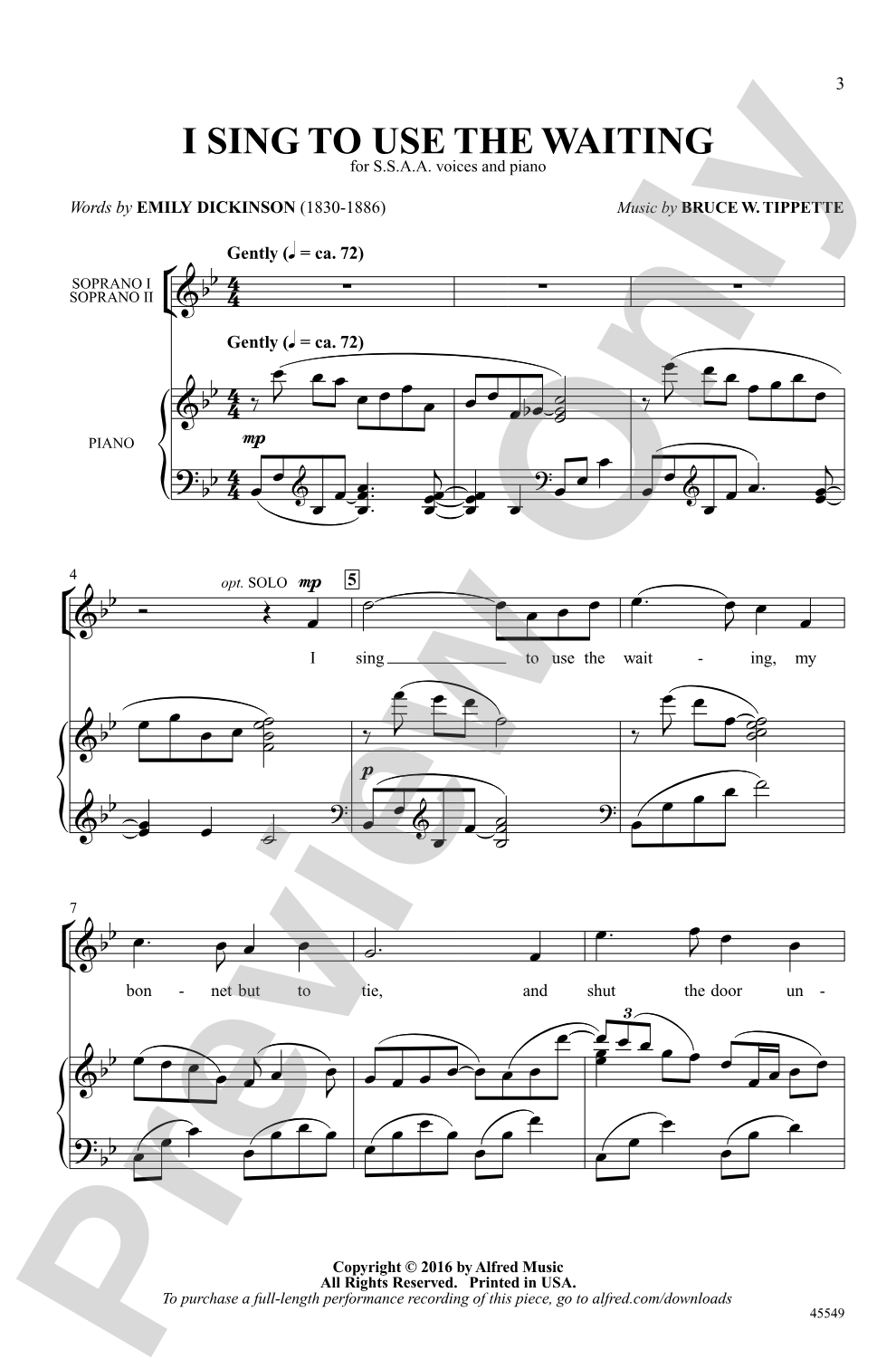
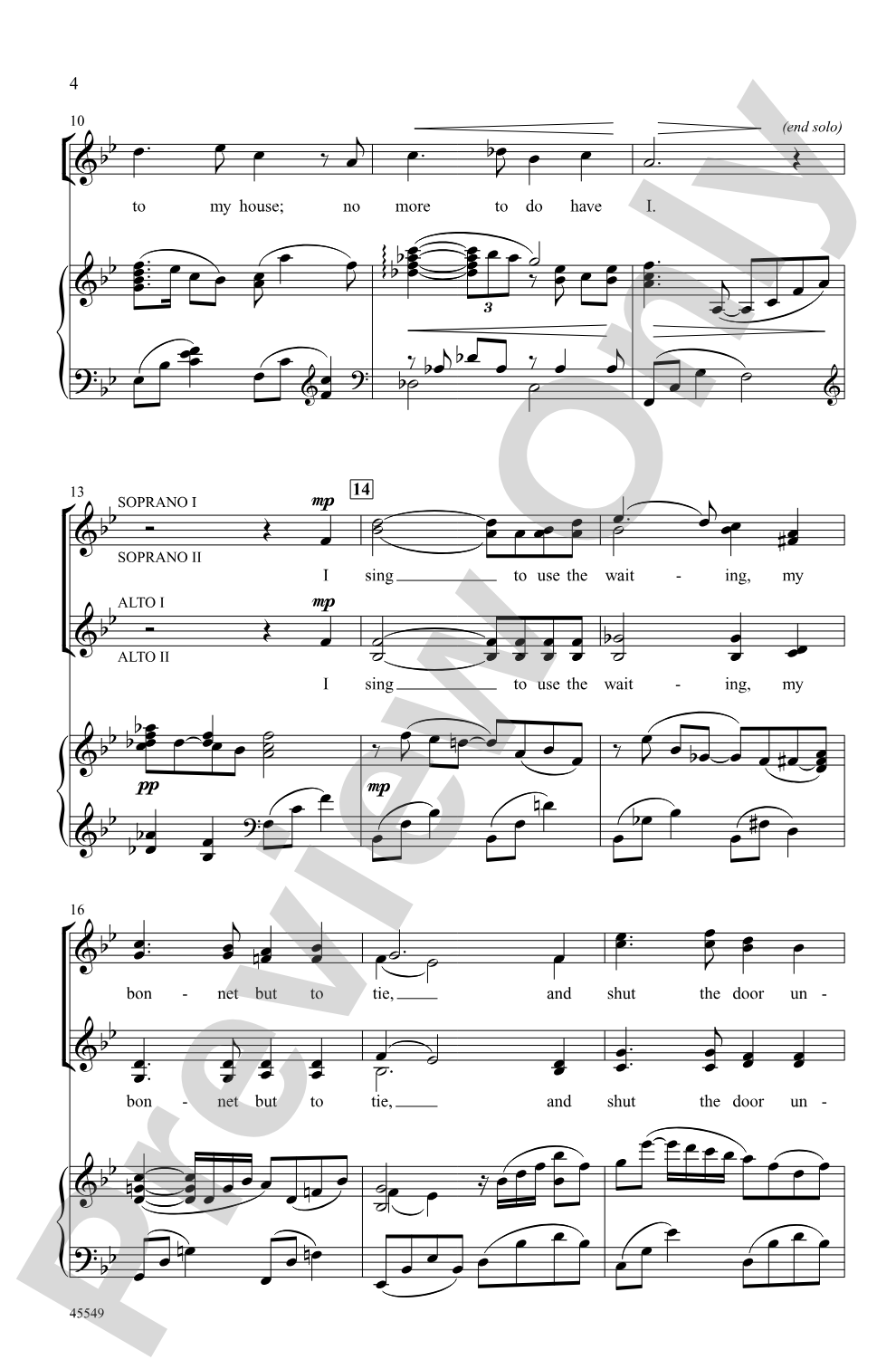
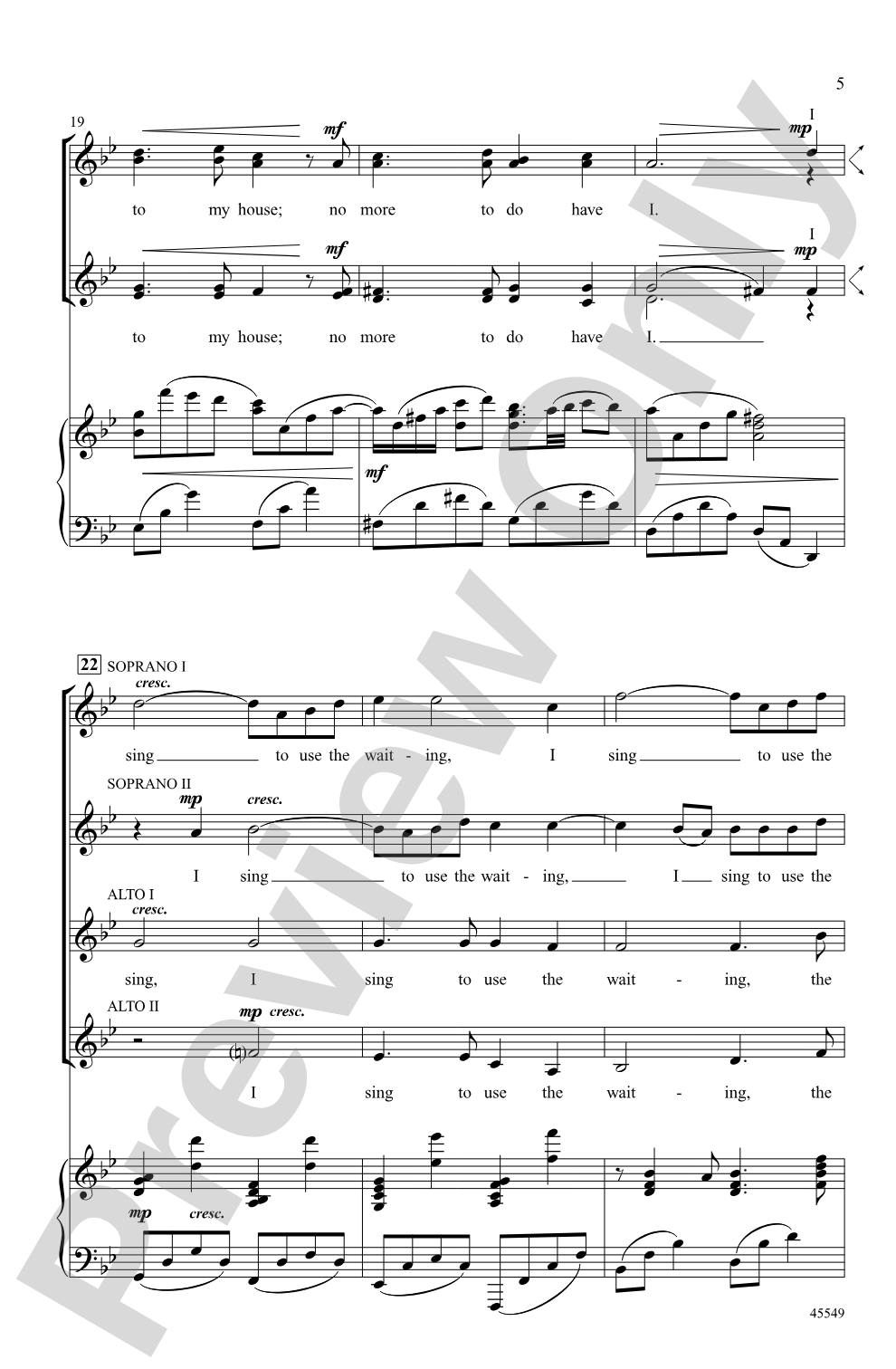
Complementary vocal and piano writing combines in this distinctive treatment for treble choirs. Artistic and impressive, well-suited for concert or contest/festival use.


I Sing to Use the Waiting: SSAA Choral Octavo isn't in MakeMusic Cloud just yet...but it could be. Let us know you'd like to see it, and you'll help shape what comes next. In the meantime, start a free trial and dive into thousands of interactive titles your students can play along with today.
Request This Title
Tell us you want it.
Start Your Free Trial
Explore everything that's ready to play right now.
Sample Audio
1
Audio File
--:--
0:00
0:00
Sample Video
Additional Details
Series:
Lawson-Gould
Publisher:
Alfred Music
Page Count:
16
SKU:
00-PO-0005479
More about this title
About the Composer: Bruce W. Tippette

Bruce W. Tippette is a composer and educator whose work spans concert music, choreography, and film. He earned his Master of Music in composition from the University of North Carolina School of the Arts and dual bachelor degrees in composition/theory and music education from Appalachian State University. His orchestral work Unconquered won the 2012 Mary Starling Composition Competition and received multiple performances from the Winston-Salem Symphony.
Tippette has received commissions from both choral and instrumental ensembles and was selected in 2012, 2013, and 2014 to compose works for an experimental collaboration between Cirque du Soleil and UNCSA. His piano solo Dance of Fire earned the Lynn Freeman Olson Composition Award. He teaches music composition, theory, piano, and voice at the Community Music School of UNCSA, directs youth music and handbell programs at Augsburg Lutheran Church, and works as a collaborative pianist and rehearsal accompanist.
Why we love this
Tippette crafts an arrangement where the piano actively participates in shaping the musical narrative rather than simply supporting the voices. The writing feels fresh and compositionally intentional, making this octavo stand out from typical contest fare. The pairing of artistic sophistication with genuine accessibility gives treble choirs a piece that challenges musicianship without overwhelming rehearsal time.
What to expect
The music moves with intention and lyrical grace, the voices and piano weaving together in ways that feel both natural and deliberately composed. There is substance here, a sense that something genuine is being expressed through the interplay of vocal and instrumental sound. The piece carries an artistic weight that lifts it beyond routine programming.
Who it's for
Treble choirs preparing for concert performances or festival/competition settings will find a piece that rewards careful preparation and yields impressive results. This octavo suits choirs with strong sight-reading skills and the time to explore its artistic dimensions during rehearsal.
How to get the most out of it
- Balance the inner voices carefully against the sopranos; Tippette writes counterpoint here that deserves to be heard, not buried.
- Collaborate closely with your accompanist during early rehearsals to establish how the piano's thematic material integrates with the vocal lines.
- Allow time for your singers to connect with the literary content before focusing on technical details; the poetic text anchors the emotional arc of the piece.
- Shape phrases through the piano writing as well as the voices; the two forces should breathe together.
How to use it
Place this as a showcase piece in a concert where it can anchor a set of treble choir repertoire, or program it in a festival round where the distinctive piano writing and vocal artistry will command attention from adjudicators. The 16-page score allows it to stand as a substantive contribution to any concert or competition program.
Skills your students will build
- Reading four-part SSAA voicing with sophisticated voice leading
- Interpreting poetic text with vocal expression and ensemble unity
- Coordinating vocal phrasing with piano accompaniment patterns
- Balancing inner voices against sopranos in counterpoint
- Sustaining ensemble intonation through chromatic and modulatory passages