

I Sing the Birth: SATB divisi a cappella Choral Octavo
Words by Ben Jonson, music by Andrew Bruhn
Item: 00-PO-0006405
$2.05
Minimum order quantity: 20 copies
Pickup currently not available
Related Items
I Sing the Birth: SATB divisi a cappella Choral Octavo |
$2.05
|
View |
Description
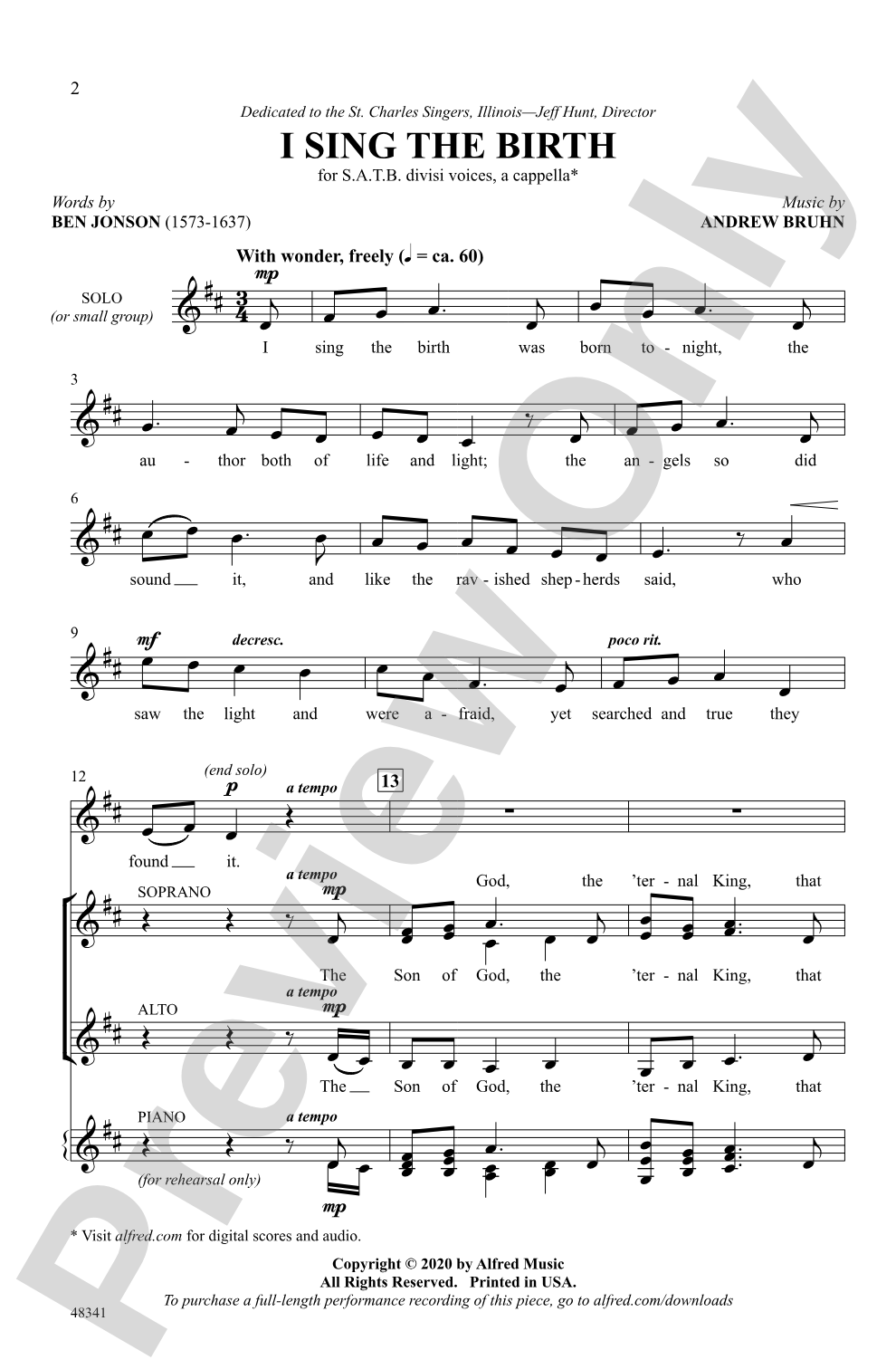
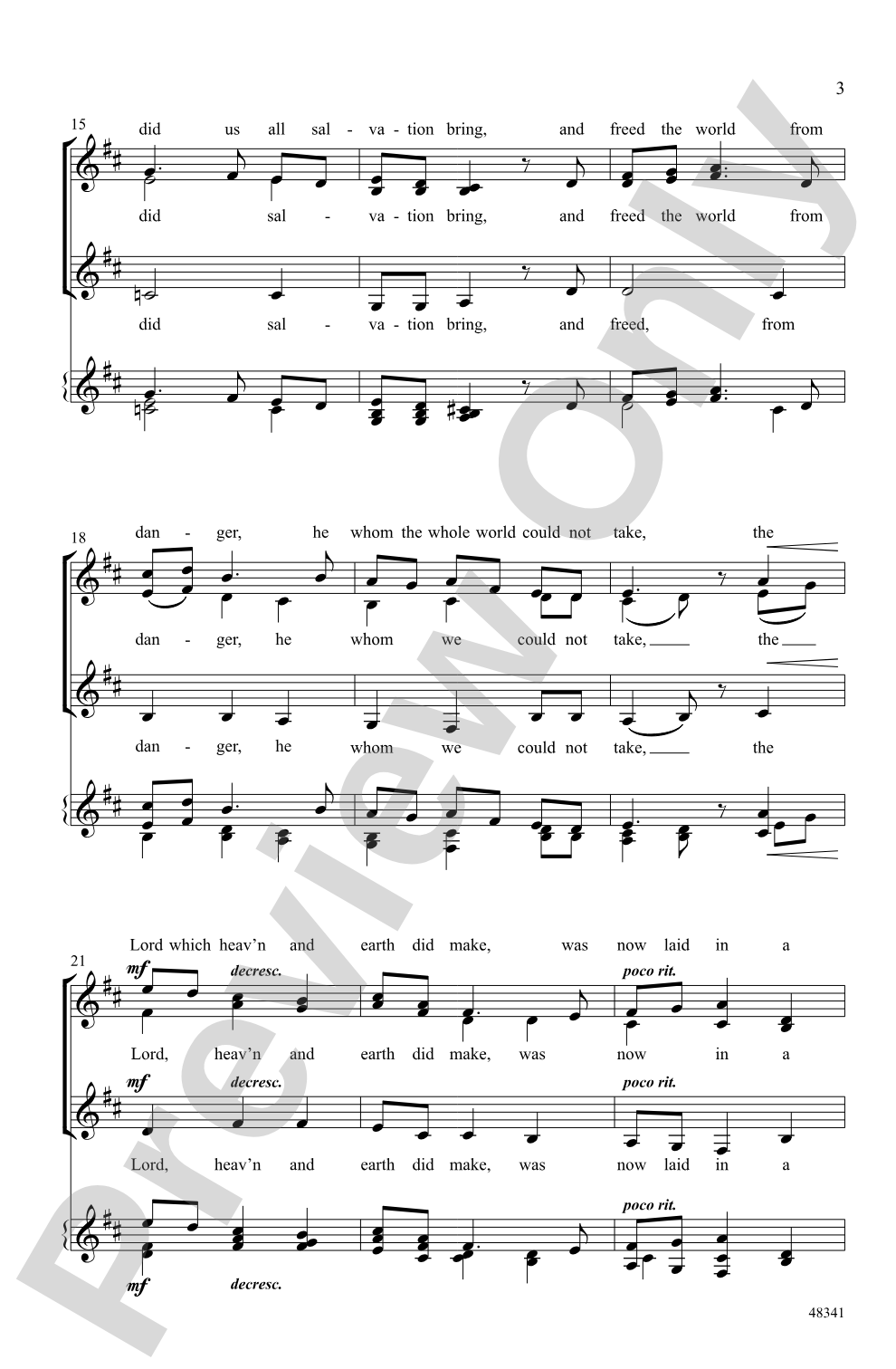
Sixteenth-century playwright and poet Ben Jonson wrote the text to this nativity hymn. This original a cappella setting begins with an expressive solo, then gives both the women's and men's voices a standalone feature verse before combining the choir in resonant contemporary harmony. Artistic repertoire for Christmas.


I Sing the Birth: SATB divisi a cappella Choral Octavo isn't in MakeMusic Cloud just yet...but it could be. Let us know you'd like to see it, and you'll help shape what comes next. In the meantime, start a free trial and dive into thousands of interactive titles your students can play along with today.
Request This Title
Tell us you want it.
Start Your Free Trial
Explore everything that's ready to play right now.
Sample Audio
1
Audio File
--:--
0:00
0:00
Sample Video
1 / 2
Additional Details
Series:
Lawson-Gould
Publisher:
Alfred Music
Page Count:
8
SKU:
00-PO-0006405
More about this title
About the Composer: Ben Jonson
Ben Jonson (1572-1637) was an English playwright and poet whose influence on Renaissance literature rivals that of his contemporary Shakespeare. Beyond his celebrated dramatic works, Jonson crafted intricate poetry that blended classical learning with vivid language and emotional depth. His nativity text for this piece demonstrates his gift for distilling spiritual themes into memorable verse, making it ideal material for musical settings across centuries.
Andrew Bruhn is a composer whose settings of literary texts bring contemporary harmonic thinking to traditional forms. His arrangement honors Jonson's original poetry while creating fresh musical opportunities for choral ensembles seeking repertoire that balances accessibility with artistic substance.
Why we love this
The architecture here is genuinely smart: opening with a solo voice creates intimacy before the choir enters, while the separate feature verses for treble and lower voices give everyone a moment to shine without sacrificing blend when the full choir combines. Contemporary harmonic language keeps this from feeling like a period piece, yet the nativity text grounds it firmly in Christmas tradition.
What to expect
The piece unfolds with restraint and grace. Opening as a lone voice, it gradually broadens into warm, layered harmony that feels both intimate and grand. The contemporary harmonic language gives it modern resonance while the Renaissance text keeps it spiritually grounded.
Who it's for
This octavo serves conductors building Christmas programs that move beyond carols and traditional hymns. Choirs with solid blend and the ability to manage divisi writing will find it accessible yet rewarding; the featured solo and sectional verses also make it flexible for ensembles of different sizes.
How to get the most out of it
- Shape the opening solo with space and breath; the expressive quality sets the emotional tone for what follows.
- Balance the divisi sections carefully so each voice part reads clearly without overblending the individual strands.
- In the full choir passages, lean into the contemporary harmonies without rushing the phrasing; let the resonance bloom.
- Use the silence between sections (solo to choir entrance, women's verse to men's verse) as active musical moments, not just transitions.
How to use it
Pair this with instrumental or organ-accompanied pieces to create variety in your Christmas concert's texture and sound. Its literary sophistication makes it well-suited for programs that emphasize artistry alongside tradition, or use it as an anchor piece in a service of lessons and carols.
Skills your students will build
- Singing exposed a cappella sections with secure intonation and blend
- Managing divisi voicing while maintaining individual line clarity
- Responding to contemporary harmonic language and voice leading
- Balancing solo and ensemble roles within a single work