
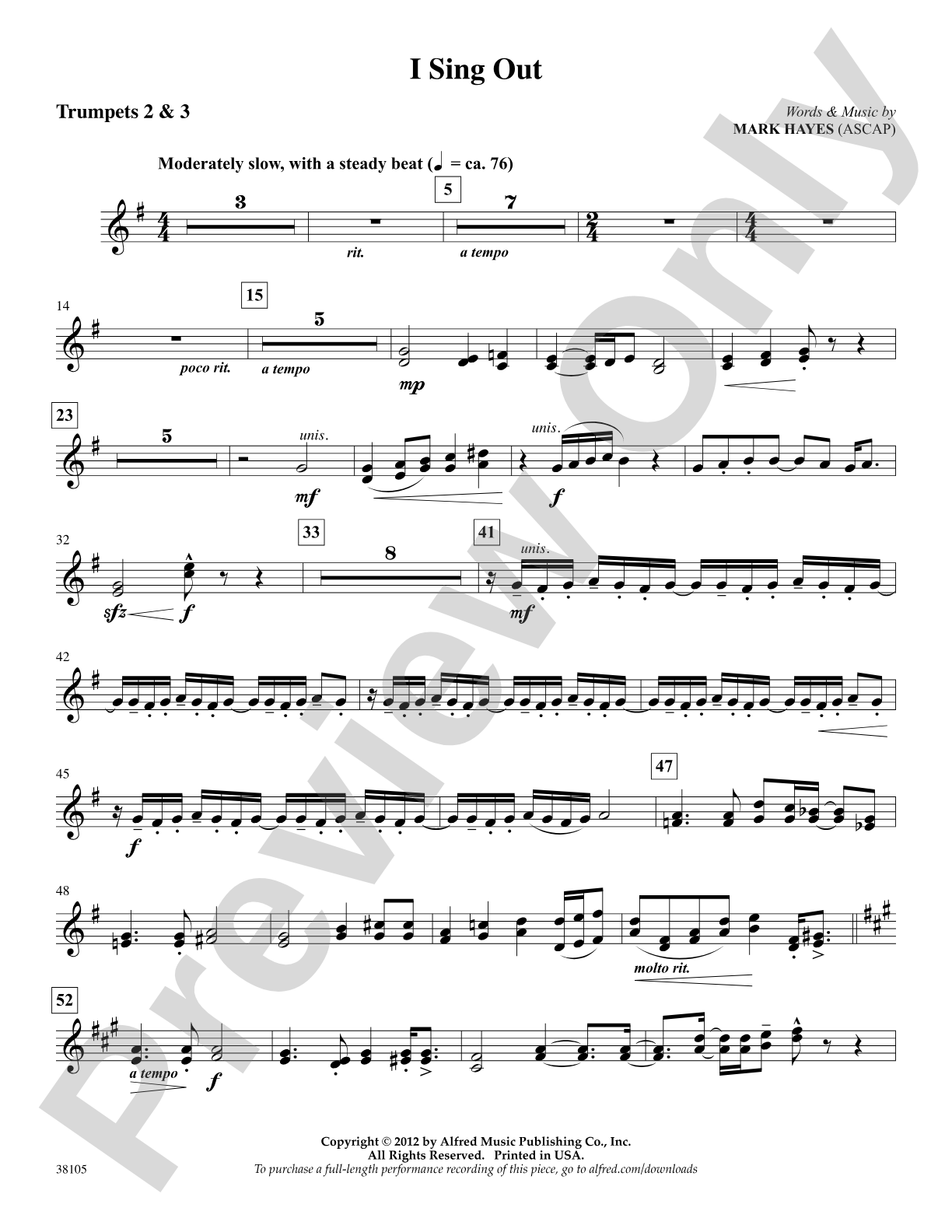

I Sing Out: 2nd & 3rd Trumpet: Choral SoundPax
Words and music by Mark Hayes
Item: 00-PC-0015381_T23
$3.00
Pickup currently not available
Description
From the sensitive opening solo, through the captivating textured polyphony, to the final choral refrain, this contemporary powerhouse teaches an inspiring lesson about the strength of song. "From the very best part of who I am, I sing out!"


Don't just read it, hear it, play along with it, and watch your students grow with it. In MakeMusic Cloud, I Sing Out: 2nd & 3rd Trumpet: Choral SoundPax comes alive with professional accompaniment, adjustable tempo, and built-in practice tools that turn solo practice into real progress.
Open in the Player
Jump straight in and assign it today.
Start Your Free Trial
Open this title and explore the full library in minutes.
Sample Audio
1
Audio File
--:--
0:00
0:00
Sample Video
No sample videos found.
Additional Details
Series:
Alfred Choral Designs
Publisher:
Alfred Music
Page Count:
92
SKU:
00-PC-0015381_T23
Instrumentation:
SoundPax
More about this title
About the Composer: Mark Hayes
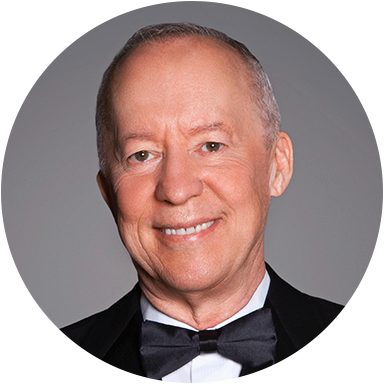
Mark Hayes brings more than five decades of creative work to the concert stage and the choral rehearsal room. A summa cum laude graduate in piano performance from Baylor University, he has established himself as a composer of remarkable range, with over 1,750 published works spanning sacred and secular genres, orchestral works, musicals, and an extensive catalog of piano literature. His conducting has taken him to Lincoln Center, the National Cathedral, and Carnegie Hall, where he has premiered major works including his Requiem at Lincoln Center in 2013 and again in Rome at the Vatican-sponsored Festival Pro Musica E Arte Sacra in 2014.
Beyond the concert hall, Hayes has demonstrated his versatility as an orchestrator and record producer. His musical theater work includes the orchestration of Madame Buttermilk and arrangements for We'll Meet Again. In 2015, he composed a large-scale work for treble voices, mixed voices, and orchestra to commemorate the centennial of St. Paul's Co-educational College in Hong Kong, which he conducted at the world premiere. Baylor University honored him in 2010 with the Award for Exemplary Leadership in Christian Music. Based in Kansas City, Missouri, Hayes continues to compose with a commitment to creating music of substance and beauty across all musical styles.
Why we love this
Hayes constructs this piece as a journey that moves singers through genuine emotional and musical development, beginning with vulnerability and building toward collective strength. The textured polyphony keeps every voice engaged with interesting material rather than static support, and the underlying message about individual worth and unified voice resonates powerfully with today's singers and audiences alike.
What to expect
The opening carries a quiet introspection, almost confessional in tone. As the piece unfolds, voices weave in and out, creating a sense of gathering and emergence. The final refrain lands with affirming strength, the kind of moment where singers feel the collective power of their voices and audiences recognize something true.
Who it's for
This piece suits choirs with at least moderate sight-reading skills and the ability to balance independent lines within a harmonic texture. The contemporary sound and uplifting message appeal to middle school through adult choirs in both school and community settings.
How to get the most out of it
- Shape the opening solo with intimate phrasing; this vulnerable moment sets the emotional foundation for the piece, so resist the urge to push volume or tempo.
- Attend carefully to the polyphonic layers in the middle section. Mark each voice part so singers understand their specific melodic contribution rather than defaulting to harmonic filler.
- Build the final choral refrain gradually through rehearsals, layering dynamic and textural growth so the climax feels earned rather than imposed.
- Use the recorded accompaniment to establish secure harmonic framework, freeing your choir to focus on blend and diction within the more complex passages.
How to use it
Program this as a centerpiece for a concert exploring themes of identity, belonging, or social-emotional learning. Its contemporary idiom and accessible message make it effective for spring concerts, diversity celebrations, or programs that aim to connect choral literature to students' lived experiences. The piece also works well as a closing number when you want to send audiences out with inspiration.
Skills your students will build
- Reading independent melodic lines within dense harmonic textures
- Balancing individual voice parts with the whole choir sound
- Sustaining musical phrasing through longer phrases without breath breaks
- Responding to dynamic and textural shifts that build toward climax
- Interpreting contemporary choral idiom and word painting