
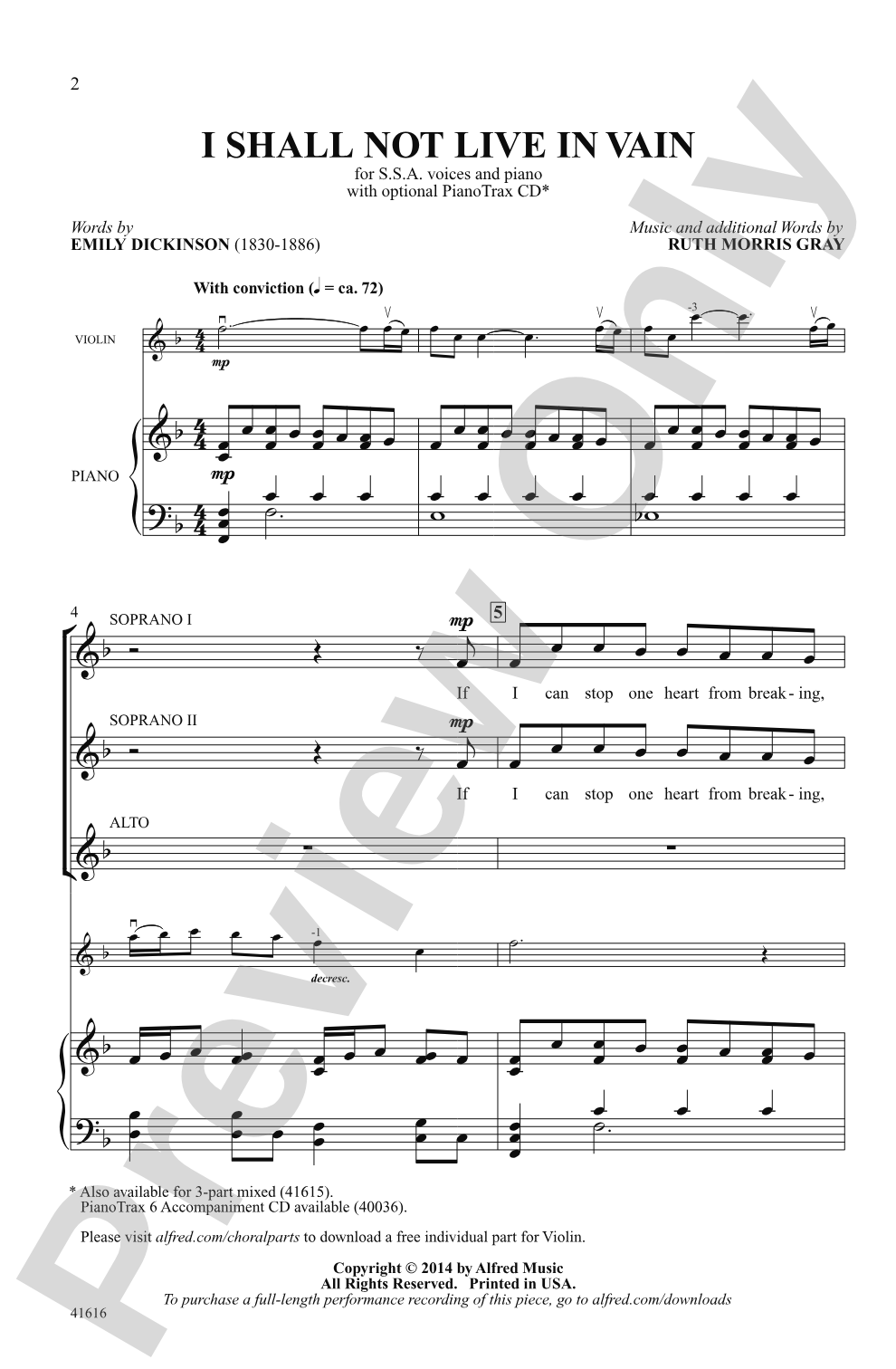
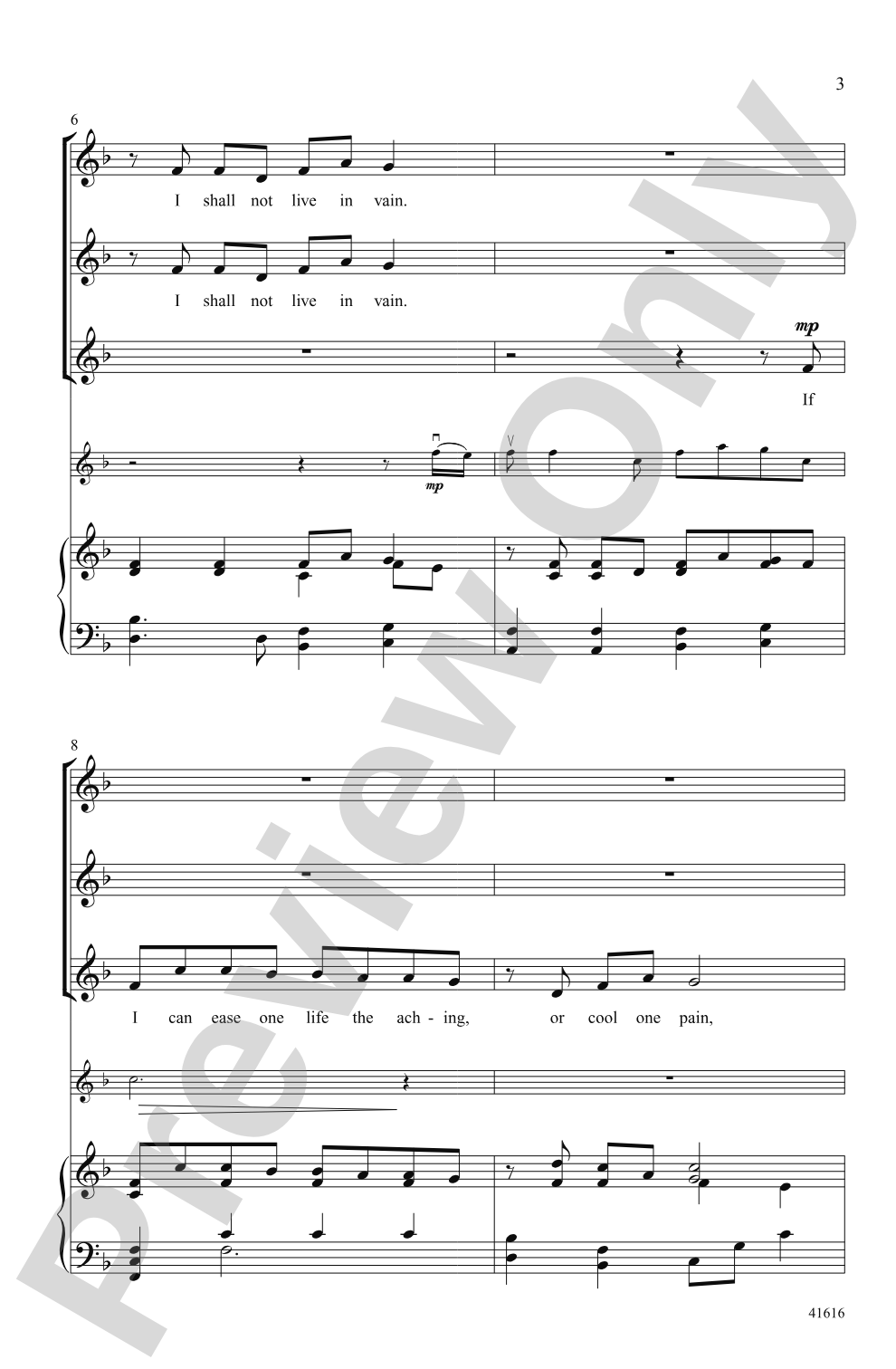

I Shall Not Live in Vain: SSA Choral Octavo
Words by Emily Dickinson, music and additional words by Ruth Morris Gray
Item: 00-PO-0001832

$1.85
Minimum order quantity: 20 copies
Pickup currently not available
Description
This textured work of art is built on a captivating melodic theme that echoes and overlaps through the voices and an optional instrumental obbligato. Emily Dickinson's words are truly inspiring. There is simply no better choice for three-part choirs. Visit alfred.com/choralparts to download the free violin part. This title is available in MakeMusic Cloud.


Don't just read it, hear it, play along with it, and watch your students grow with it. In MakeMusic Cloud, I Shall Not Live in Vain: SSA Choral Octavo comes alive with professional accompaniment, adjustable tempo, and built-in practice tools that turn solo practice into real progress.
Open in the Player
Jump straight in and assign it today.
Start Your Free Trial
Open this title and explore the full library in minutes.
Sample Audio
1
Audio File
--:--
0:00
0:00
Sample Video
No sample videos found.
Additional Details
Series:
Alfred Choral Designs
Publisher:
Alfred Music
Page Count:
12
SKU:
00-PO-0001832
More about this title
About the Composer: Ruth Morris Gray

Ruth Morris Gray serves as Director of Choirs at Rosemead High School in California, where she has shaped the choral program since 2004. She also teaches piano and has become a prolific composer with over 100 published choral works to her name. Her training spans performance and composition, with degrees from Biola University in Piano Performance and Composition, a Master of Arts in Music Composition from UC Santa Barbara, and a California Single Subject Music Credential from Cal State Northridge.
Beyond her work in the classroom and as a composer, Gray remains an active musician and community member. She brings a multifaceted perspective to her compositions, informed by years of direct experience teaching and performing with student ensembles. Her interests outside music include travel, swimming, reading, and cycling with her husband, Douglas.
Why we love this
Gray crafts a sophisticated three-part setting that gives SSA choirs room to breathe and shine without oversimplifying the harmonic language. The interplay of melodic material across the voices creates genuine musical architecture rather than a single line doubled by support parts, and Emily Dickinson's powerful text pairs beautifully with the optional violin obbligato that elevates the work into concert-ready territory.
What to expect
The work carries quiet dignity and reflection, with Dickinson's words woven through a gently unfolding melodic line that gains emotional weight as it cycles through the voices. There's an intimate quality to the texture, even as the optional violin part adds shimmer and ceremonial presence.
Who it's for
This piece suits intermediate to advanced three-part choirs preparing for concerts, festivals, or graduation ceremonies. It works especially well for high school ensembles with solid musicianship and the ability to manage layered voicing.
How to get the most out of it
- Balance the overlapping melodic material by rehearsing voice parts separately until singers can hear where the theme passes between sections; this prevents doubling or drowning out essential lines.
- If using the violin part, begin instrumental rehearsals only after all three choir sections are secure with their entrances and text, then blend the obbligato at appropriate dynamic levels rather than letting it dominate.
- Attend carefully to diction in the overlapping passages, where clear consonants help articulate the phrase structure and keep the texture from becoming murky.
How to use it
Position this as a centerpiece for a graduation concert or an anchor piece in a festival program that allows its literary text to resonate. It pairs well alongside other contemporary or classical choral works and gives SSA choirs a sophisticated vehicle that doesn't require a large ensemble.
Skills your students will build
- Reading independent melodic lines in overlapping texture
- Sustaining vocal control through longer phrases and dynamic shaping
- Interpreting literary text with musical sensitivity
- Ensemble balance when managing multiple thematic lines simultaneously
- Coordination with optional instrumental accompaniment